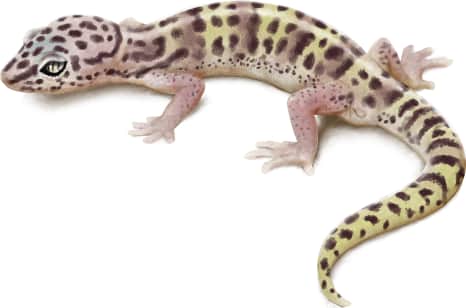
Western Banded Gecko
Coleonyx variegatus
Averaging between 4- 6 inches in length including the tail. Their coloring is sandy with dark bands and patches that span their whole body. The eyes are large, and promin…
How to identify
Averaging between 4- 6 inches in length including the tail. Their coloring is sandy with dark bands and patches that span their whole body. The eyes are large, and prominent with movable eyelids.
Range
Located throughout the United States, they range from southern California, Nevada, and Utah making their way into western and southern Arizona, as well New Mexico and Mexico.
Habitat
They can be found in arid deserts, rocky areas with sparse vegetation, and in densely packed urban areas.
Variations
Subspecies include the San Diego banded gecko, Tuscon banded gecko, Sonoran banded gecko, Utah banded gecko, and desert banded gecko. Each species varies in size, color, and habitat.
Name and etymology
Genus
Coleonyx
Greek for sheath (koleos) claw (onyx).
Origin
Sources
- Gray, 1845. Ann. Mag. Nat. Hist., Ser. 1, Vol. 16, p. 162 ↗
Coleonyx. Gray, 1845 - Ann. Mag. Nat. Hist., Ser. 1, Vol. 16, p. 162
Species epithet
variegatus
Latin for of different colours, variegated.
Origin
Sources
- (Baird, 1858). Proc. Acad. Nat. Sci. Philadelphia, Vol. 10, p. 254 ↗
Coleonyx variegatus. (Baird, 1858) - Proc. Acad. Nat. Sci. Philadelphia, Vol. 10, p. 254
Explore more names in the etymology index.
More illustrations
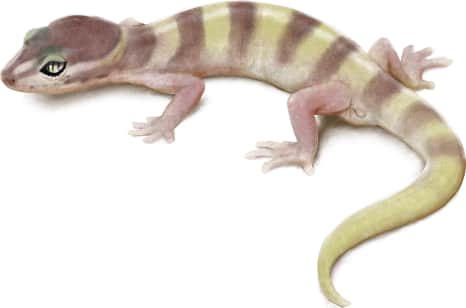
San Diego Banded Gecko
At a glance
Range
Located throughout the United States, they range from southern California, Nevada, and Utah making their way into western and…
Habitat
They can be found in arid deserts, rocky areas with sparse vegetation, and in densely packed urban areas.
Guide
Reptiles and Amphibians of North America
Range map
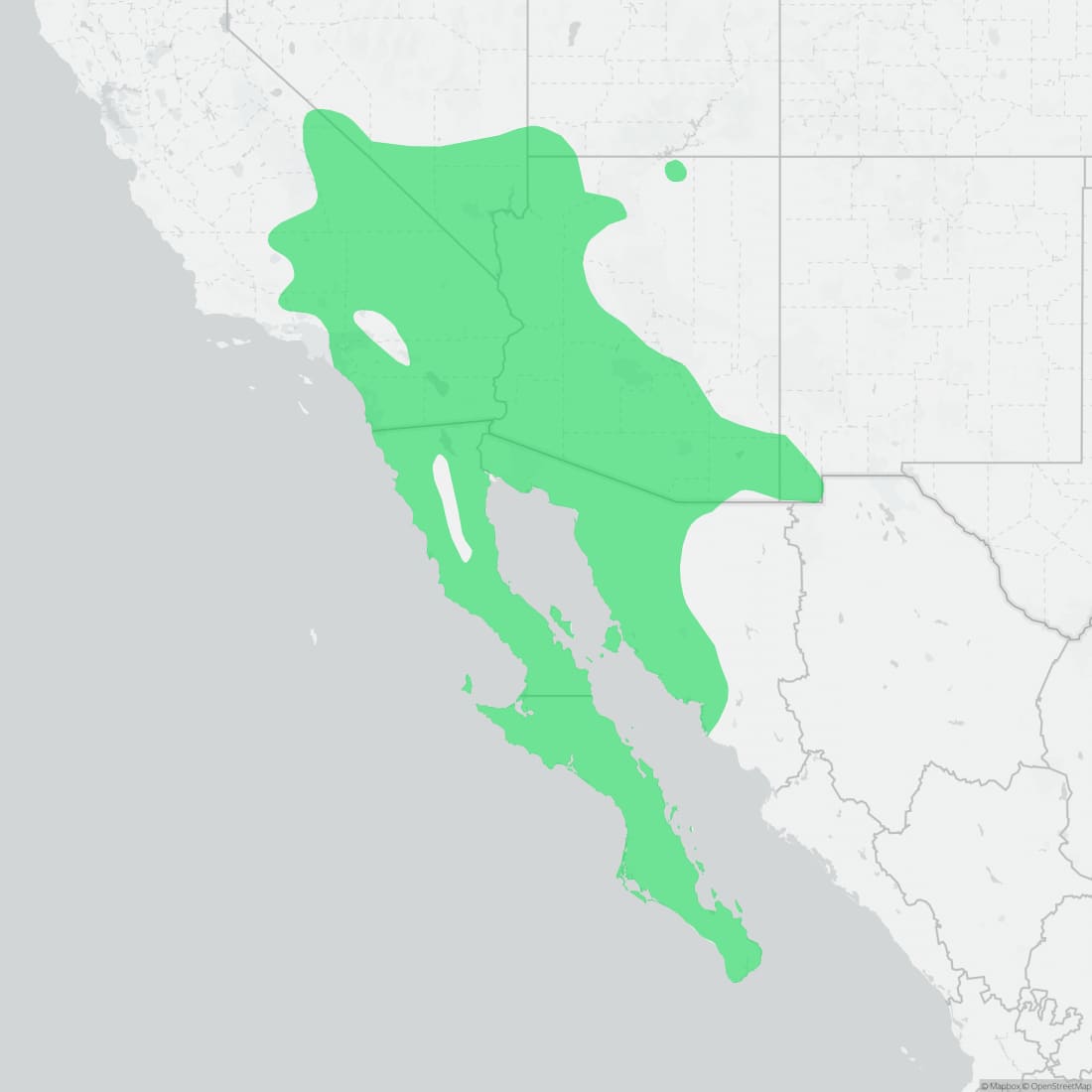
Approximate range. © Mapbox © OpenStreetMap