Amphibian
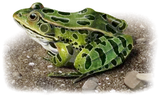
Acris blanchardi
Blanchard's Cricket Frog
Acris
locus
Greek
blanchardi
of Frank N. Blanchard
Person
Acris — Greek for locus (akris), referencing their insect like call.
blanchardi — Honoring herpetologist Frank N. Blanchard.
Loading etymologies…
The stories inside scientific names
Search the Latin, Greek, people, places, and myths behind North American animal names.
827 etymologies
Blanchard's Cricket Frog
Acris
locus
blanchardi
of Frank N. Blanchard
Acris — Greek for locus (akris), referencing their insect like call.
blanchardi — Honoring herpetologist Frank N. Blanchard.
Northern Cricket Frog
Acris
locus
crepitans
clattering
Acris — Greek for locus (akris), referencing their insect like call.
crepitans — Latin for clattering referencing it's repetitive clicking call.
Southern Cricket Frog
Acris
locus
gryllus
cricket or grasshopper
Acris — Greek for locus (akris), referencing their insect like call.
gryllus — Latin for cricket or grasshopper, referencing its cricket like call
Western Pond Turtle
Actinemys
turtle
marmorata
marbled
Actinemys — Greek for turtle (emys).
marmorata — Latin for marbled.
Sources
Genus
Ritgen, 1828. Nova Acta Acad. Leopold.-Carol., Vol. 14, Pt. 1, p. 272
Species
(Baird and Girard, 1852). Proc. Acad. Nat. Sci. Philadelphia, Vol. 6, p. 177Peters's Rock Agama
Agama
lizard
picticauda
painted tail
Agama — Creole word for lizard.
picticauda — Latin for painted (pictus) tail (cauda).
Sources
Florida Cottonmouth
Agkistrodon
fishhook tooth
conanti
of Roger Conant
Agkistrodon — Greek for fishhook (ankistron) tooth (odontos), referencing curved fangs.
conanti — Honoring Roger Conant.
Sources
Genus
Palisot de Beauvois, 1799. Trans. Amer. Philos. Soc., Vol. 4, p. 381Species
Rossman, 1958. Herpetologica, Vol. 14, p. 158
Species
Gloyd, 1969. Proc. Biol. Soc. Washington, Vol. 82, p. 226Eastern Copperhead
Agkistrodon
fishhook tooth
contortrix
contortionist
Agkistrodon — Greek for fishhook (ankistron) tooth (odontos), referencing curved fangs.
contortrix — Latin for contortionist .
Broad-banded Copperhead
Agkistrodon
fishhook tooth
laticinctus
broad branded
Agkistrodon — Greek for fishhook (ankistron) tooth (odontos), referencing curved fangs.
laticinctus — Latin for broad (latus) branded (cinctus).
Northern Cottonmouth
Agkistrodon
fishhook tooth
piscivorus
fish eater
Agkistrodon — Greek for fishhook (ankistron) tooth (odontos), referencing curved fangs.
piscivorus — Latin for fish (piscis) eater (voro).
Sources
Genus
Palisot de Beauvois, 1799. Trans. Amer. Philos. Soc., Vol. 4, p. 381Species
(Lacepede, 1789). Hist. Nat. Serp., Vol. 2, table meth. p. 130
Moose
Alces
Elk
alces
Elk
Alces — Latin for Elk
alces — Latin for Elk
Sources
American Alligator
Alligator
from Spanish for the lizard
mississippiensis
from Mississippi
Alligator — From Spanish for the lizard (el lagarto).
mississippiensis — Belonging to Mississippi.
Sources
Genus
Cuvier, 1807. Ann. Mus. Hist. Nat. Paris, Vol. 10, p. 25
Species
(Daudin, 1803). Daudin, Hist. Nat. Reptl., Vol. 2., 1803, p. 412Ringed Salamander
Ambystoma
to cram into the mouth
annulatum
furnished with rings
Ambystoma — Greek phrase meaning "to cram into the mouth".
annulatum — Latin for furnished with rings.
Streamside Salamander
Ambystoma
to cram into the mouth
barbouri
of Thomas Barbour
Ambystoma — Greek phrase meaning "to cram into the mouth".
barbouri — Honoring Thomas Barbour.
Sources
Genus
Tschudi, "1838" 1839. Classif. Batr., Mem. Soc. Sci. Nat. Neuchatel, p. 92Species
Carr and Marchand, 1942. Proc. New England Zool. Club, Vol. 20, p. 98, pls. 14 and 15
Species
Kraus and Petranka, 1989. Copeia, p. 95Reticulated Flatwoods Salamander
Ambystoma
to cram into the mouth
bishopi
of Sherman C. Bishop
Ambystoma — Greek phrase meaning "to cram into the mouth".
bishopi — Honoring Sherman C. Bishop.
California Tiger Salamander
Ambystoma
to cram into the mouth
californiense
from California
Ambystoma — Greek phrase meaning "to cram into the mouth".
californiense — Belonging to California.
Frosted Flatwoods Salamander
Ambystoma
to cram into the mouth
cingulatum
belt or girdle
Ambystoma — Greek phrase meaning "to cram into the mouth".
cingulatum — Latin for belt or girdle.
Northwestern Salamander
Ambystoma
to cram into the mouth
gracile
graceful or slender
Ambystoma — Greek phrase meaning "to cram into the mouth".
gracile — Latin for graceful or slender.
Jefferson Salamander
Ambystoma
to cram into the mouth
jeffersonianum
of Jefferson College
Ambystoma — Greek phrase meaning "to cram into the mouth".
jeffersonianum — Honoring Jefferson College, Pennsylvania
Sources
Genus
Tschudi, "1838" 1839. Classif. Batr., Mem. Soc. Sci. Nat. Neuchatel, p. 92Species
(Green, 1827). Contr. Maclurean Lyc., Vol. 1, No. 1, p. 4, pl. 1, fig. 1
Blue-spotted Salamander
Ambystoma
to cram into the mouth
laterale
to the side
Ambystoma — Greek phrase meaning "to cram into the mouth".
laterale — Latin for to the side.
Mabee's Salamander
Ambystoma
to cram into the mouth
mabeei
of William Bruce Mabee
Ambystoma — Greek phrase meaning "to cram into the mouth".
mabeei — Honoring William Bruce Mabee.
Sources
Genus
Tschudi, "1838" 1839. Classif. Batr., Mem. Soc. Sci. Nat. Neuchatel, p. 92Species
Bishop, 1928. Journ. Elisha Mitchell Sci. Soc., Vol. 43, No. 3-4, p. 157
Long-toed Salamander
Ambystoma
to cram into the mouth
macrodactylum
long toes
Ambystoma — Greek phrase meaning "to cram into the mouth".
macrodactylum — Greek for long (makros) toes (dakylos).
Spotted Salamander
Ambystoma
to cram into the mouth
maculatum
spotted
Ambystoma — Greek phrase meaning "to cram into the mouth".
maculatum — Latin for spotted.
Barred Tiger Salamander
Ambystoma
to cram into the mouth
mavortium
war-like
Ambystoma — Greek phrase meaning "to cram into the mouth".
mavortium — Latin for war-like
Marbled Salamander
Ambystoma
to cram into the mouth
opacum
opaque, shaded, obscure
Ambystoma — Greek phrase meaning "to cram into the mouth".
opacum — Latin for opaque, shaded, obscure.
Sources
Genus
Tschudi, "1838" 1839. Classif. Batr., Mem. Soc. Sci. Nat. Neuchatel, p. 92Species
(Gravenhorst, 1807). Gravenhorst, Vergl. Uebersicht Zool. Syst., p. 431
Mole Salamander
Ambystoma
to cram into the mouth
talpoideum
having the quality similar…
Ambystoma — Greek phrase meaning "to cram into the mouth".
talpoideum — Latin for having the quality (-eum) similar to (-oides) a mole (talpa), referencing its burrowing habits.
Small-mouthed Salamander
Ambystoma
to cram into the mouth
texanum
from Texas
Ambystoma — Greek phrase meaning "to cram into the mouth".
texanum — Belonging to Texas
Sources
Genus
Tschudi, "1838" 1839. Classif. Batr., Mem. Soc. Sci. Nat. Neuchatel, p. 92Species
(Matthes, 1855). Allg. Deutsche Naturhist. Zeitung, N.S., Vol. 1, p. 266
Tiger Salamander
Ambystoma
to cram into the mouth
tigrinum
tiger
Ambystoma — Greek phrase meaning "to cram into the mouth".
tigrinum — Latin for tiger.
Two-toed Amphiuma
Amphiuma
breathing both sides
means
fierceness
Amphiuma — Greek for breathing (pneuma) both sides (amphi).
means — Greek for fierceness (menos).
Source
Both
Garden, 1821.
One-toed Amphiuma
Amphiuma
breathing both sides
pholeter
one who lurks in a whole
Amphiuma — Greek for breathing (pneuma) both sides (amphi).
pholeter — Greek for one who lurks in a whole.
Sources
Genus
Garden, 1821.
Species
Neill, 1964. Herpetologica, Vol. 20, p. 62
Three-toed Amphiuma
Amphiuma
breathing both sides
tridactylum
three fingers
Amphiuma — Greek for breathing (pneuma) both sides (amphi).
tridactylum — Greek for three (tri) fingers (daktylos).
Sources
Genus
Garden, 1821.
Species
Cuvier, 1827. Mem. Mus. Hist. Nat. Paris, Vol. 14, p. 7, pl. 1, figs. 4-6, pl. 2, figs. 9-18American Toad
Anaxyrus
from Greek meaning a king or chief
americanus
from America
Anaxyrus — From Greek meaning a king or chief
americanus — Meaning belonging to America
Sources
Genus
Laurenti, 1768. Syn. Rept., p. 25
Species
Holbrook, 1836. N. Amer. Herp., Ed. 1, Vol. 1, p. 75, pl. 9Wyoming Toad
Anaxyrus
from Greek meaning a king or chief
baxteri
of George T. Baxter
Anaxyrus — From Greek meaning a king or chief
baxteri — Honoring biologist George T. Baxter who discovered the species.
Sources
Genus
Laurenti, 1768. Syn. Rept., p. 25
Species
Porter, 1968. Evolution, Vol. 22, p. 593
Western Toad
Anaxyrus
from Greek meaning a king or chief
boreas
from Greek meaning northern
Anaxyrus — From Greek meaning a king or chief
boreas — From Greek meaning northern
Sources
Genus
Laurenti, 1768. Syn. Rept., p. 25
Species
Baird and Girard, 1852. Proc. Acad. Nat. Sci. Philadelphia, Vol. 6, p. 174Arroyo Toad
Anaxyrus
from Greek meaning a king or chief
californicus
from California
Anaxyrus — From Greek meaning a king or chief
californicus — Meaning belonging to California
Sources
Genus
Laurenti, 1768. Syn. Rept., p. 25
Species
Camp, 1915. Univ. California Publ. Zool., Vol. 12, p. 331Yosemite Toad
Anaxyrus
from Greek meaning a king or chief
canorus
from Latin, meaning melodious, in…
Anaxyrus — From Greek meaning a king or chief
canorus — From Latin, meaning melodious, in reference to its breeding call.
Sources
Genus
Laurenti, 1768. Syn. Rept., p. 25
Species
Camp, 1916. Univ. California Publ. Zool., Vol. 17, No. 6, p. 59Great Plains Toad
Anaxyrus
from Greek meaning a king or chief
cognatus
related by blood
Anaxyrus — From Greek meaning a king or chief
cognatus — Latin for related by blood
Sources
Genus
Laurenti, 1768. Syn. Rept., p. 25
Species
Say, 1823.
Chihuahuan Green Toad
Anaxyrus
from Greek meaning a king or chief
debilis
crippled, probably in…
Anaxyrus — From Greek meaning a king or chief
debilis — Latin for crippled, probably in reference to its slender body and limbs
Sources
Genus
Laurenti, 1768. Syn. Rept., p. 25
Species
Girard, 1854. Proc. Acad. Nat. Sci. Philadelphia, Vol. 7, p. 87Black Toad
Anaxyrus
from Greek meaning a king or chief
exsul
exile
Anaxyrus — From Greek meaning a king or chief
exsul — Latin for exile
Sources
Genus
Laurenti, 1768. Syn. Rept., p. 25
Species
Myers, 1942. Occ. Papers Mus. Zool. Univ. Michigan, No. 460, p. 3, pl. 1 and 2Fowler's Toad
Anaxyrus
from Greek meaning a king or chief
fowleri
of Samuel Fowler
Anaxyrus — From Greek meaning a king or chief
fowleri — Honoring Samuel Fowler who described the toad in 1843
Sources
Genus
Laurenti, 1768. Syn. Rept., p. 25
Species
Hinckley, 1882. Proc. Boston Soc. Nat. Hist., Vol. 21, p. 310Canadian Toad
Anaxyrus
from Greek meaning a king or chief
hemiophrys
from the Greek
Anaxyrus — From Greek meaning a king or chief
hemiophrys — From the Greek, half (hemi) eyebrow (ophrys) possibly refering to the boss above the eye
Sources
Houston Toad
Anaxyrus
from Greek meaning a king or chief
houstonensis
from Houston
Anaxyrus — From Greek meaning a king or chief
houstonensis — Belonging to Houston
Sources
Genus
Laurenti, 1768. Syn. Rept., p. 25
Species
Sanders, 1953. Herpetologica, Vol. 9, No. 1, p. 27, fig. 1
Arizona Toad
Anaxyrus
from Greek meaning a king or chief
microscaphus
from greek, small shovel…
Anaxyrus — From Greek meaning a king or chief
microscaphus — From greek, small (mikros) shovel (skaphis), referencing its tarsal spade.
Sources
Genus
Laurenti, 1768. Syn. Rept., p. 25
Species
Cope, "1866" 1867. Proc. Acad. Nat. Sci. Philadelphia, Vol. 18, Oct., p. 301Hot Creek Toad
Anaxyrus
from Greek meaning a king or chief
monfontanus
mountain spring
Anaxyrus — From Greek meaning a king or chief
monfontanus — Latin for mountain (mons) spring (fons), referencing the high elevation spring habitat where this toad occurs.
Sources
Amargosa Toad
Anaxyrus
from Greek meaning a king or chief
nelsoni
of American
Anaxyrus — From Greek meaning a king or chief
nelsoni — Honoring American naturalist and ethnologist Edward William Nelson
Sources
Genus
Laurenti, 1768. Syn. Rept., p. 25
Species
Stejneger, 1893. N. Amer. Fauna, No. 7, p. 220, pl. 3, figs. 4a and 4bRailroad Valley Toad
Anaxyrus
from Greek meaning a king or chief
nevadensis
from Nevada referencing the type…
Anaxyrus — From Greek meaning a king or chief
nevadensis — Belong to Nevada referencing the type locality
Sources
Red-spotted Toad
Anaxyrus
from Greek meaning a king or chief
punctatus
from latin meaning spotted
Anaxyrus — From Greek meaning a king or chief
punctatus — From latin meaning spotted, referencing its red spots
Sources
Genus
Laurenti, 1768. Syn. Rept., p. 25
Species
Baird and Girard, 1852. Proc. Acad. Nat. Sci. Philadelphia, Vol. 6, p. 173Oak Toad
Anaxyrus
from Greek meaning a king or chief
quercicus
from the Latin for oak leaves
Anaxyrus — From Greek meaning a king or chief
quercicus — From the Latin for oak leaves(quercinus)
Sources
Genus
Laurenti, 1768. Syn. Rept., p. 25
Species
Holbrook, 1840. N. Amer. Herp., Ed. 1, Vol. 4, p. 109, pl. 22Sonoran Green Toad
Anaxyrus
from Greek meaning a king or chief
retiformis
from the latin
Anaxyrus — From Greek meaning a king or chief
retiformis — From the latin, net (retis) shape (forma), referencing its doral pattern.
Sources
Genus
Laurenti, 1768. Syn. Rept., p. 25
Species
Sanders and Smith, 1951. Field and Laboratory, Vol. 19, p. 153, pl. 3, fig. 1
Texas Toad
Anaxyrus
from Greek meaning a king or chief
speciosus
beautiful
Anaxyrus — From Greek meaning a king or chief
speciosus — Latin meaning beautiful.
Sources
Genus
Laurenti, 1768. Syn. Rept., p. 25
Species
Girard, 1854. Proc. Acad. Nat. Sci. Philadelphia, Vol. 7, p. 86Southern Toad
Anaxyrus
from Greek meaning a king or chief
terrestris
of the earth
Anaxyrus — From Greek meaning a king or chief
terrestris — Latin for of the earth
Sources
Genus
Laurenti, 1768. Syn. Rept., p. 25
Species
(Bonnaterre, 1789). Tabl. Encycl. Meth. Trois Reg. Nat., Erp., p. 8
Dixie Valley Toad
Anaxyrus
from Greek meaning a king or chief
williamsi
of Robert Williams
Anaxyrus — From Greek meaning a king or chief
williamsi — Honoring Robert Williams, former Field Supervisor of the U.S. Fish and Wildlife
Sources
Woodhouse's Toad
Anaxyrus
from Greek meaning a king or chief
woodhousii
of Samuel Washington Woodhouse
Anaxyrus — From Greek meaning a king or chief
woodhousii — Honoring Samuel Washington Woodhouse
Sources
Genus
Laurenti, 1768. Syn. Rept., p. 25
Species
Girard, 1854. Proc. Acad. Nat. Sci. Philadelphia, Vol. 7, p. 86Green Salamander
Aneides
lacking shape
aeneus
cooper or bronze
Aneides — Greek for lacking (an-) shape (eidos).
aeneus — Latin for cooper or bronze.
Sources
Hickory Nut Gorge Green Salamander
Aneides
lacking shape
caryaenis
Referencing the genus for Hickory…
Aneides — Greek for lacking (an-) shape (eidos).
caryaenis — Referencing the genus for Hickory trees; carya
Sources
Clouded Salamander
Aneides
lacking shape
ferreus
iron, referencing color of…
Aneides — Greek for lacking (an-) shape (eidos).
ferreus — Latin for iron, referencing color of clouded phase.
Sources
Speckled Black Salamander
Aneides
lacking shape
flavipunctatus
spotted yellow
Aneides — Greek for lacking (an-) shape (eidos).
flavipunctatus — Latin for spotted (punctatus) yellow (flavi).
Sources
Genus
Baird, 1849.
Species
(Strauch, 1870). Mem. Acad. Sci. St. Petersburg, Ser. 7, Vol. 16, No. 4, p. 71
Sacramento Mountain Salamander
Aneides
lacking shape
hardii
of D. Elmo Hardy
Aneides — Greek for lacking (an-) shape (eidos).
hardii — Honoring D. Elmo Hardy.
Sources
Shasta Black Salamander
Aneides
lacking shape
iecanus
from local Native American word Iëka
Aneides — Greek for lacking (an-) shape (eidos).
iecanus — Derived from local Native American word "Iëka" referencing Mount Shasta.
Sources
Klamath Black Salamander
Aneides
lacking shape
klamathensis
Referencing the Klamath Mountains…
Aneides — Greek for lacking (an-) shape (eidos).
klamathensis — Referencing the Klamath Mountains of Northern California.
Sources
Arboreal Salamander
Aneides
lacking shape
lugubris
gloomy or dark
Aneides — Greek for lacking (an-) shape (eidos).
lugubris — Latin for gloomy or dark
Sources
Santa Cruz Black Salamander
Aneides
lacking shape
niger
Black
Aneides — Greek for lacking (an-) shape (eidos).
niger — Latin for Black (niger) referencing its shiny black color.
Sources
Wandering Salamander
Aneides
lacking shape
vagrans
wandering
Aneides — Greek for lacking (an-) shape (eidos).
vagrans — Latin for wandering, vagrent.
Sources
Genus
Baird, 1849.
Species
(Wake and Jackman, 1999)
Temblor Legless Lizard
Anniella
little ring
alexanderae
of Annie Montague Alexander
Anniella — Latin for little (-ella) ring (annela).
alexanderae — Honoring Annie Montague Alexander.
Big Spring Legless Lizard
Anniella
little ring
campi
of Charles Lewis Camp
Anniella — Latin for little (-ella) ring (annela).
campi — Honoring Charles Lewis Camp.
Bakersfield Legless Lizard
Anniella
little ring
grinnelli
of Joseph Grinnell
Anniella — Latin for little (-ella) ring (annela).
grinnelli — Honoring Joseph Grinnell.
Northern Legless Lizard
Anniella
little ring
pulchra
beautiful
Anniella — Latin for little (-ella) ring (annela).
pulchra — Latin for beautiful
San Diegan Legless Lizard
Anniella
little ring
stebbinsi
of Robert C. Stebbins
Anniella — Latin for little (-ella) ring (annela).
stebbinsi — Honoring Robert C. Stebbins.
Sources
Genus
Gray, 1852. Ann. Mag. Nat. Hist., Ser. 2, Vol. 10, p. 440Species
Brame and Murray, 1968. Sci. Bull. Nat. Hist. Mus. Los Angeles Co., No. 4, p. 18
Green Anole
Anolis
lizard
carolinensis
from the Carolinas
Anolis — Antillean name for lizard.
carolinensis — Belonging to the Carolinas.
Sources
Crested Anole
Anolis
lizard
cristatellus
little crest
Anolis — Antillean name for lizard.
cristatellus — Latin for little (-ellus) crest (cristate)
Hispaniolan Stout Anole
Anolis
lizard
cybotes
cube
Anolis — Antillean name for lizard.
cybotes — Greek for cube (kubos)
Bark Anole
Anolis
lizard
distichus
two lines
Anolis — Antillean name for lizard.
distichus — Greek for two (di) lines (stikhos).
Knight Anole
Anolis
lizard
equestris
mounted, or knight
Anolis — Antillean name for lizard.
equestris — Latin for mounted, or knight.
Brown Anole
Anolis
lizard
sagrei
of Spanish
Anolis — Antillean name for lizard.
sagrei — Honoring of Spanish botanist Ramón de la Sagra
Pronghorn
Antilocapra
antelope and Latin for goat
americana
of America
Antilocapra — Greek for antelope (Antilo) and Latin for goat (capra)
americana — Latin for "of America"
Florida Softshell Turtle
Apalone
soft or tender
ferox
wild or feral
Apalone — Greek for soft or tender.
ferox — Latin for wild or feral.
Sources
Genus
Rafinesque, 1832. Atlantic J. Friend Knowledge Philadelphia, Vol. 2, No. 2, p. 64
Species
(Schneider, 1783). Naturg. Schildkr., p. 330
Smooth Softshell Turtle
Apalone
soft or tender
mutica
curtailed or unarmed
Apalone — Greek for soft or tender.
mutica — Latin for curtailed or unarmed, referencing the lack of tubercles on the front of the carapace.
Sources
Genus
Rafinesque, 1832. Atlantic J. Friend Knowledge Philadelphia, Vol. 2, No. 2, p. 64
Species
(Le Sueur, 1827). Mem. Mus. Hist. Nat. Paris, Vol. 15, p. 263, pl. 7Spiny Softshell Turtle
Apalone
soft or tender
spinifera
having thorns or spines
Apalone — Greek for soft or tender.
spinifera — Latin for having (-ifer) thorns or spines (spina).
Sources
Genus
Rafinesque, 1832. Atlantic J. Friend Knowledge Philadelphia, Vol. 2, No. 2, p. 64
Species
(Le Sueur, 1827). Mem. Mus. Hist. Nat. Paris, Vol. 15, p. 258, pl. 6Mountain Beaver
Aplodontia
simple tooth
rufa
reddish or red-haired
Aplodontia — Greek for simple (haploos) tooth (odous)
rufa — Latin for reddish or red-haired
Sources
Glossy Snake
Arizona
from Arizona
elegans
elegant
Arizona — Of Arizona.
elegans — Latin for elegant.
Sources
Both
Kennicott, 1859.
Species
(Baird and Girard, 1853). Cat. N. Amer. Rept., Pt. 1, p. 34Species
Bocourt, 1874
Rocky Mountain Tailed Frog
Ascaphus
from the greak meaning without a…
montanus
from latin meaning mountain
Ascaphus — From the greak meaning without (a) a spade (skaphis)
montanus — From latin meaning mountain, referencing its Rocky Mountain range
Coastal Tailed Frog
Ascaphus
from the greak meaning without a…
truei
of Frederick William True
Ascaphus — From the greak meaning without (a) a spade (skaphis)
truei — Honoring biologist Frederick William True
Chihuahuan Spotted Whiptail
Aspidoscelis
shield leg
exsanguis
similar to its family
Aspidoscelis — Greek for shield (aspido) leg (skelos).
exsanguis — Latin for similar to (ex) its family (sanguis)
Sources
Genus
Wagler, 1830. Nat. Syst. Amph., p. 154
Species
Lowe, 1956. Bull. Chicago Acad. Sci., Vol. 10, p. 138Common Spotted Whiptail
Aspidoscelis
shield leg
gularis
of the throat
Aspidoscelis — Greek for shield (aspido) leg (skelos).
gularis — Latin for of the throat.
Sources
Genus
Wagler, 1830. Nat. Syst. Amph., p. 154
Species
Baird and Girard, 1852. Proc. Acad. Nat. Sci. Philadelphia, Vol. 6, p. 128Orange-throated Whiptail
Aspidoscelis
shield leg
hyperythrus
above red
Aspidoscelis — Greek for shield (aspido) leg (skelos).
hyperythrus — Greek for above (hyper) red (erythros).
Sources
Genus
Wagler, 1830. Nat. Syst. Amph., p. 154
Species
Cope, 1863. Proc. Acad. Nat. Sci. Philadelphia, Vol. 15, p. 103Little Striped Whiptail
Aspidoscelis
shield leg
inornatus
without ornament
Aspidoscelis — Greek for shield (aspido) leg (skelos).
inornatus — Latin for without ornament
Sources
Genus
Wagler, 1830. Nat. Syst. Amph., p. 154
Species
Baird, 1858. Proc. Acad. Nat. Sci. Philadelphia, Vol. 10, p. 255Laredo Striped Whiptail
Aspidoscelis
shield leg
laredoensis
from Laredo, Texas
Aspidoscelis — Greek for shield (aspido) leg (skelos).
laredoensis — Belonging to Laredo, Texas
Sources
Genus
Wagler, 1830. Nat. Syst. Amph., p. 154
Species
McKinney, Kay and Anderson, 1973. Herpetologica, Vol. 29, p. 361
Marbled Whiptail
Aspidoscelis
shield leg
marmoratus
marbled
Aspidoscelis — Greek for shield (aspido) leg (skelos).
marmoratus — Latin for marbled.
Sources
Genus
Wagler, 1830. Nat. Syst. Amph., p. 154
Species
(Moore, 1899). Proc. Acad. Nat. Sci. Philadelphia, Vol. 51, p. 316, pl. 14, figs. 1-10Species
Baird and Girard, 1852. Proc. Acad. Nat. Sci. Philadelphia, Vol. 6, p. 128New Mexico Whiptail
Aspidoscelis
shield leg
neomexicanus
from New Mexico
Aspidoscelis — Greek for shield (aspido) leg (skelos).
neomexicanus — Belonging to New Mexico.
Sources
Genus
Wagler, 1830. Nat. Syst. Amph., p. 154
Species
Lowe and Zweifel, 1952. Bull. Chicago Acad. Sci., Vol. 9, p. 230Triploid Checkered Whiptail
Aspidoscelis
shield leg
neotesselatus
new checkered
Aspidoscelis — Greek for shield (aspido) leg (skelos).
neotesselatus — Latin for new (neo) checkered (tesselatus).
Sources
Genus
Wagler, 1830. Nat. Syst. Amph., p. 154
Species
Walker, Cordes and Taylor, 1997
Pai Striped Whiptail
Aspidoscelis
shield leg
pai
Referencing the Pai tribes of
Aspidoscelis — Greek for shield (aspido) leg (skelos).
pai — Referencing the Pai tribes of .
Sources
Genus
Wagler, 1830. Nat. Syst. Amph., p. 154
Species
Wright and Lowe, 1993 J. Arizona. Nevada Acad. Sci. 27:129-157
Plateau Spotted Whiptail
Aspidoscelis
shield leg
scalaris
stairs or ladder
Aspidoscelis — Greek for shield (aspido) leg (skelos).
scalaris — Latin for stairs or ladder
Sources
Six-lined Racerunner
Aspidoscelis
shield leg
sexlineatus
six lined
Aspidoscelis — Greek for shield (aspido) leg (skelos).
sexlineatus — Latin for six (sex) lined (lineatus).
Sources
Genus
Wagler, 1830. Nat. Syst. Amph., p. 154
Species
(Linnaeus, 1766). Syst. Nat., 12th ed., Vol. 1, p. 364Sonoran Spotted Whiptail
Aspidoscelis
shield leg
sonorae
from the Sonoran Desert
Aspidoscelis — Greek for shield (aspido) leg (skelos).
sonorae — Belong to the Sonoran Desert.
Sources
Genus
Wagler, 1830. Nat. Syst. Amph., p. 154
Species
Lowe and Wright, 1964. Journ. Arizona Acad. Sci., Vol. 3, p. 80
Giant Spotted Whiptail
Aspidoscelis
shield leg
stictogrammus
dotted writing
Aspidoscelis — Greek for shield (aspido) leg (skelos).
stictogrammus — Greek for dotted (stiktos) writing (gramme).
Sources
Common Checkered Whiptail
Aspidoscelis
shield leg
tesselatus
checkered
Aspidoscelis — Greek for shield (aspido) leg (skelos).
tesselatus — Latin for checkered.
Sources
Genus
Wagler, 1830. Nat. Syst. Amph., p. 154
Species
(Say, 1823).
Western Whiptail
Aspidoscelis
shield leg
tigris
tiger
Aspidoscelis — Greek for shield (aspido) leg (skelos).
tigris — Latin for tiger.
Sources
Genus
Wagler, 1830. Nat. Syst. Amph., p. 154
Species
Baird and Girard, 1852. Proc. Acad. Nat. Sci. Philadelphia, Vol. 6, p. 69Species
Kennicott, 1859.
Desert Grassland Whiptail
Aspidoscelis
shield leg
uniparens
one parent
Aspidoscelis — Greek for shield (aspido) leg (skelos).
uniparens — Latin for one (uni) parent (parens), referencing unisexual reproductive habits.
Sources
Genus
Wagler, 1830. Nat. Syst. Amph., p. 154
Species
Wright and Lowe, 1965. Journ. Arizona Acad. Sci., Vol. 3, p. 167
Plateau Striped Whiptail
Aspidoscelis
shield leg
velox
speed
Aspidoscelis — Greek for shield (aspido) leg (skelos).
velox — Latin for speed
Sources
Red-backed Whiptail
Aspidoscelis
shield leg
xanthonotus
orange back
Aspidoscelis — Greek for shield (aspido) leg (skelos).
xanthonotus — Greek for orange (xanthos) back (notos).
Sources
Genus
Wagler, 1830. Nat. Syst. Amph., p. 154
Species
Duellman and Lowe, 1953. Nat. Hist. Misc. , No. 120, p. 2Brown Basilisk
Basiliscus
little king
vittatus
striped
Basiliscus — Latin for little king.
vittatus — Latin for striped.
Sources
Greenhorn Mountains Slender Salamander
Batrachoseps
amphibian lizard
altasierrae
high Sierra
Batrachoseps — Greek for amphibian (batrachos) lizard (seps).
altasierrae — Latin for high (alta) Sierra
Sources
Genus
Bonaparte, 1841. Iconogr. Fauna Italica, Vol. 2, Fasc. 26, fol. 131, not paged
Species
Wikipedia: Batrachoseps brameiCalifornia Slender Salamander
Batrachoseps
amphibian lizard
attenuatus
slender
Batrachoseps — Greek for amphibian (batrachos) lizard (seps).
attenuatus — Latin for slender.
Sources
Genus
Bonaparte, 1841. Iconogr. Fauna Italica, Vol. 2, Fasc. 26, fol. 131, not paged
Species
(Eschscholtz, 1833). Zool. Atlas, Pt. 5, p. 1, pl. 21, figs. 1-14
Fairview Slender Salamander
Batrachoseps
amphibian lizard
bramei
of Arden H. Brame Jr
Batrachoseps — Greek for amphibian (batrachos) lizard (seps).
bramei — Honoring Arden H. Brame Jr.
Sources
Genus
Bonaparte, 1841. Iconogr. Fauna Italica, Vol. 2, Fasc. 26, fol. 131, not paged
Species
Wikipedia: Batrachoseps brameiInyo Mountains Salamander
Batrachoseps
amphibian lizard
campi
of Charles L. Camp
Batrachoseps — Greek for amphibian (batrachos) lizard (seps).
campi — Honoring Charles L. Camp.
Sources
Genus
Bonaparte, 1841. Iconogr. Fauna Italica, Vol. 2, Fasc. 26, fol. 131, not paged
Species
Marlow, Brode and Wake, 1979. Contrib. Sci. Nat. Hist. Mus. Los Angeles Co., No. 308, p. 3
Hell Hollow Slender Salamander
Batrachoseps
amphibian lizard
diabolicus
devilish
Batrachoseps — Greek for amphibian (batrachos) lizard (seps).
diabolicus — Greek for devilish.
Sources
Genus
Bonaparte, 1841. Iconogr. Fauna Italica, Vol. 2, Fasc. 26, fol. 131, not paged
Species
Wikipedia: Batrachoseps diabolicusSan Gabriel Slender Salamander
Batrachoseps
amphibian lizard
gabrieli
from San Gabriel Mountins
Batrachoseps — Greek for amphibian (batrachos) lizard (seps).
gabrieli — Of the San Gabriel Mountins
Sources
Genus
Bonaparte, 1841. Iconogr. Fauna Italica, Vol. 2, Fasc. 26, fol. 131, not paged
Species
Wake, 1996
Gabilan Mountains Slender Salamander
Batrachoseps
amphibian lizard
gavilanensis
from Gabilan Mountains
Batrachoseps — Greek for amphibian (batrachos) lizard (seps).
gavilanensis — Of the Gabilan Mountains.
Sources
Genus
Bonaparte, 1841. Iconogr. Fauna Italica, Vol. 2, Fasc. 26, fol. 131, not paged
Species
Jockusch, Yanev and Wake, 2001
Gregarious Slender Salamander
Batrachoseps
amphibian lizard
gregarius
herd
Batrachoseps — Greek for amphibian (batrachos) lizard (seps).
gregarius — Latin for herd.
Sources
Genus
Bonaparte, 1841. Iconogr. Fauna Italica, Vol. 2, Fasc. 26, fol. 131, not paged
Species
Jockusch, Wake and Yanev, 1998. Contribs. Los Angeles Co. Mus. Nat. Hist.
San Simeon Slender Salamander
Batrachoseps
amphibian lizard
incognitus
unknown
Batrachoseps — Greek for amphibian (batrachos) lizard (seps).
incognitus — Latin for unknown.
Sources
Genus
Bonaparte, 1841. Iconogr. Fauna Italica, Vol. 2, Fasc. 26, fol. 131, not paged
Species
Jockusch, Yanev and Wake, 2001 Herp. Monogr. 15.
Sequoia Slender Salamander
Batrachoseps
amphibian lizard
kawia
Referencing the Kawia indiginous…
Batrachoseps — Greek for amphibian (batrachos) lizard (seps).
kawia — Referencing the Kawia indiginous people.
Sources
Genus
Bonaparte, 1841. Iconogr. Fauna Italica, Vol. 2, Fasc. 26, fol. 131, not paged
Species
Jockusch, Wake and Yanev, 1998
Santa Lucia Mountains Slender Salamander
Batrachoseps
amphibian lizard
luciae
from Santa Lucia Mountains
Batrachoseps — Greek for amphibian (batrachos) lizard (seps).
luciae — Of the Santa Lucia Mountains.
Sources
Genus
Bonaparte, 1841. Iconogr. Fauna Italica, Vol. 2, Fasc. 26, fol. 131, not paged
Species
Jokusch et al. 2001, Herp. Monogr. 15: 1. 53
Southern California Slender Salamander
Batrachoseps
amphibian lizard
major
greater
Batrachoseps — Greek for amphibian (batrachos) lizard (seps).
major — Latin for greater.
Sources
Genus
Bonaparte, 1841. Iconogr. Fauna Italica, Vol. 2, Fasc. 26, fol. 131, not paged
Species
Camp, 1915. Univ. California Publ. Zool., Vol. 12, No. 12, p. 327Lesser Slender Salamander
Batrachoseps
amphibian lizard
minor
lesser
Batrachoseps — Greek for amphibian (batrachos) lizard (seps).
minor — Latin for lesser.
Sources
Genus
Bonaparte, 1841. Iconogr. Fauna Italica, Vol. 2, Fasc. 26, fol. 131, not paged
Species
Jockusch, Yanev and Wake, 2001. Herp. Monogr. 15., p. ___
Black-bellied Slender Salamander
Batrachoseps
amphibian lizard
nigriventris
black belly
Batrachoseps — Greek for amphibian (batrachos) lizard (seps).
nigriventris — Latin for black (niger) belly (ventris).
Sources
Genus
Bonaparte, 1841. Iconogr. Fauna Italica, Vol. 2, Fasc. 26, fol. 131, not paged
Species
Cope, 1869. Proc. Acad. Nat. Sci. Philadelphia, Vol. 21, p. 98Channel Islands Slender Salamander
Batrachoseps
amphibian lizard
pacificus
from Pacific Ocean
Batrachoseps — Greek for amphibian (batrachos) lizard (seps).
pacificus — Of the Pacific Ocean.
Sources
Genus
Bonaparte, 1841. Iconogr. Fauna Italica, Vol. 2, Fasc. 26, fol. 131, not paged
Species
(Cope, 1865). Proc. Acad. Nat. Sci. Philadelphia, Vol. 17, p. 195Kings River Slender Salamander
Batrachoseps
amphibian lizard
regius
regal, or the king…
Batrachoseps — Greek for amphibian (batrachos) lizard (seps).
regius — Latin for regal, or the king, referencing the King River of California.
Sources
Genus
Bonaparte, 1841. Iconogr. Fauna Italica, Vol. 2, Fasc. 26, fol. 131, not paged
Species
Jockusch, Wake and Yanev, 1998 Contribs. Los Angeles County Museum
Relictual Slender Salamander
Batrachoseps
amphibian lizard
relictus
left behind
Batrachoseps — Greek for amphibian (batrachos) lizard (seps).
relictus — Latin for left behind.
Sources
Genus
Bonaparte, 1841. Iconogr. Fauna Italica, Vol. 2, Fasc. 26, fol. 131, not paged
Species
Brame and Murray, 1968. Sci. Bull. Nat. Hist. Mus. Los Angeles Co., No. 4, p. 5
Kern Plateau Slender Salamander
Batrachoseps
amphibian lizard
robustus
large body
Batrachoseps — Greek for amphibian (batrachos) lizard (seps).
robustus — Latin for large body.
Sources
Genus
Bonaparte, 1841. Iconogr. Fauna Italica, Vol. 2, Fasc. 26, fol. 131, not paged
Species
Wake, Yanev, and Hansen, 2002 Copeia 4:1016. 1028.
Kern Canyon Slender Salamander
Batrachoseps
amphibian lizard
simatus
having a snub-nose
Batrachoseps — Greek for amphibian (batrachos) lizard (seps).
simatus — Latin for having a (-atus) snub-nose (simus).
Sources
Genus
Bonaparte, 1841. Iconogr. Fauna Italica, Vol. 2, Fasc. 26, fol. 131, not paged
Species
Brame and Murray, 1968. Sci. Bull. Nat. Hist. Mus. Los Angeles Co., No. 4, p. 15
Tehachapi Slender Salamander
Batrachoseps
amphibian lizard
stebbinsi
of Robert C. Stebbins
Batrachoseps — Greek for amphibian (batrachos) lizard (seps).
stebbinsi — Honoring Robert C. Stebbins.
Sources
Genus
Bonaparte, 1841. Iconogr. Fauna Italica, Vol. 2, Fasc. 26, fol. 131, not paged
Species
Brame and Murray, 1968. Sci. Bull. Nat. Hist. Mus. Los Angeles Co., No. 4, p. 18
Arguello Slender Salamander
Batrachoseps
amphibian lizard
wakei
of David Burton Wake
Batrachoseps — Greek for amphibian (batrachos) lizard (seps).
wakei — NHonoring herpetologist David Burton Wake
Sources
Genus
Bonaparte, 1841. Iconogr. Fauna Italica, Vol. 2, Fasc. 26, fol. 131, not paged
Species
Wikipedia: Batrachoseps wakeiOregon Slender Salamander
Batrachoseps
amphibian lizard
wrighti
of Albert H. Wright
Batrachoseps — Greek for amphibian (batrachos) lizard (seps).
wrighti — Honoring Albert H. Wright and Margaret R. Wright
Sources
Genus
Bonaparte, 1841. Iconogr. Fauna Italica, Vol. 2, Fasc. 26, fol. 131, not paged
Species
Wikipedia: Batrachoseps wrightiAmerican Bison
Bison
wild ox
bison
wild ox
Bison — Latin for wild ox
bison — Latin for wild ox
Sources
Boa Constrictor
Boa
large snake
constrictor
One who constricts
Boa — Latin for large snake.
constrictor — One who constricts.
Baja California Ratsnake
Bogertophis
of Charles M. Bogert
rosaliae
from Santa Rosalia
Bogertophis — Honoring Charles M. Bogert.
rosaliae — Belonging to Santa Rosalia, Mexico.
Sources
Genus
Dowling and Price, 1988. The Snake, Vol. 20, p. 52
Species
(Mocquard, 1899). Nouv. Arch. Mus. Hist. Natur. Paris, 4th Series, Vol. 1 (2nd fasc), p. 321
Trans-pecos Ratsnake
Bogertophis
of Charles M. Bogert
subocularis
below the eye
Bogertophis — Honoring Charles M. Bogert.
subocularis — Latin for below (sub) the eye (oculus), referencing the lorilabial scales below each eye.
Sources
Genus
Dowling and Price, 1988. The Snake, Vol. 20, p. 52
Species
(Brown, 1901). Proc. Acad. Nat. Sci. Philadelphia, Vol. 53, p. 492Spectacled Caiman
Caiman
crocodile
crocodilus
crocodile
Caiman — Spanish for crocodile.
crocodilus — Latin for crocodile.
Sources
Zebra-tailed Lizard
Callisaurus
beautiful lizard
draconoides
dragon like
Callisaurus — Greek for beautiful (kalos) lizard (saurus).
draconoides — Greek for dragon (draco) like (-eidos).
Loggerhead Sea Turtle
Caretta
Little (Latin
caretta
Little (Latin
Caretta — Little (Latin, -etta) turtle (Spanish carey).
caretta — Little (Latin, -etta) turtle (Spanish carey).
Sources
Genus
Rafinesque, 1814. Rafinesque, Specchio Sci., Palermo, Vol. 2, No. 9, Sept. 1, p. 66
Species
(Linnaeus, 1758). Syst. Nat., 10th ed., Vol. 1, p. 197Eastern Worm Snake
Carphophis
straw snake
amoenus
lovely
Carphophis — Greek for straw (karphos) snake (ophis).
amoenus — Latin for lovely.
Sources
Genus
Gervais, 1843. D'Orbigny's Dict. Univ. Hist. Nat., Vol. 3, p. 191
Species
(Say, 1825). Journ. Acad. Nat. Sci. Philadelphia, Vol. 4, Pt. 2, p. 237Western Worm Snake
Carphophis
straw snake
vermis
worm
Carphophis — Greek for straw (karphos) snake (ophis).
vermis — Latin for worm.
Sources
Genus
Gervais, 1843. D'Orbigny's Dict. Univ. Hist. Nat., Vol. 3, p. 191
Species
(Kennicott, 1859). Proc. Acad. Nat. Sci. Philadelphia, Vol. 11, p. 99American Beaver
Castor
beaver
canadensis
of Canada
Castor — Latin for beaver
canadensis — Neo-Latin for of Canada
Scarletsnake
Cemophora
muzzle bearing
coccinea
crimson or scarlet
Cemophora — Greek for muzzle (kemos) bearing (phoros).
coccinea — Latin for crimson or scarlet.
Sources
Genus
Cope, 1860. Proc. Acad. Nat. Sci. Philadelphia, Vol. 12, p. 244Species
(Blumenbach, 1788). Voigt's Mag. Neu. Phys. Naturg., Vol. 5, Pt. 1, p. 11, pl. 1
Texas Scarletsnake
Cemophora
muzzle bearing
lineri
of Ernest A. Liner
Cemophora — Greek for muzzle (kemos) bearing (phoros).
lineri — Honoring Ernest A. Liner
Sources
Genus
Cope, 1860. Proc. Acad. Nat. Sci. Philadelphia, Vol. 12, p. 244Species
Williams, Brown and Wilson, 1966. Texas Journ. Sci., Vol. 18, p. 85
Elk
Cervus
deer or stag
canadensis
of Canada
Cervus — Latin for deer or stag
canadensis — Latin for of Canada
Sources
Bailey's Pocket Mouse
Chaetodipus
bristle foot
baileyi
of American
Chaetodipus — Greek for bristle (chaite) foot (pous)
baileyi — Honoring American naturalist and mammalogist, Vernon Bailey
California Pocket Mouse
Chaetodipus
bristle foot
californicus
— not yet recorded
Etymology incomplete
The meaning of the species epithet has not been recorded yet.
Chaetodipus — Greek for bristle (chaite) foot (pous)
Eastern Desert Pocket Mouse
Chaetodipus
bristle foot
eremicus
pertaining to the desert
Chaetodipus — Greek for bristle (chaite) foot (pous)
eremicus — Greek for pertaining to (-icus) the desert (eremos)
San Diego Pocket Mouse
Chaetodipus
bristle foot
fallax
— not yet recorded
Etymology incomplete
The meaning of the species epithet has not been recorded yet.
Chaetodipus — Greek for bristle (chaite) foot (pous)
Long-tailed Pocket Mouse
Chaetodipus
bristle foot
formosus
— not yet recorded
Etymology incomplete
The meaning of the species epithet has not been recorded yet.
Chaetodipus — Greek for bristle (chaite) foot (pous)
Hispid Pocket Mouse
Chaetodipus
bristle foot
hispidus
— not yet recorded
Etymology incomplete
The meaning of the species epithet has not been recorded yet.
Chaetodipus — Greek for bristle (chaite) foot (pous)
Rock Pocket Mouse
Chaetodipus
bristle foot
intermedius
— not yet recorded
Etymology incomplete
The meaning of the species epithet has not been recorded yet.
Chaetodipus — Greek for bristle (chaite) foot (pous)
Nelson's Pocket Mouse
Chaetodipus
bristle foot
nelsoni
of American
Chaetodipus — Greek for bristle (chaite) foot (pous)
nelsoni — Honoring American naturalist and ethnologist Edward William Nelson
Desert Pocket Mouse
Chaetodipus
bristle foot
penicillatus
— not yet recorded
Etymology incomplete
The meaning of the species epithet has not been recorded yet.
Chaetodipus — Greek for bristle (chaite) foot (pous)
Baja Pocket Mouse
Chaetodipus
bristle foot
rudinoris
rough nose
Chaetodipus — Greek for bristle (chaite) foot (pous)
rudinoris — Latin for rough (rudis) nose (naris)
Spiny Pocket Mouse
Chaetodipus
bristle foot
spinatus
— not yet recorded
Etymology incomplete
The meaning of the species epithet has not been recorded yet.
Chaetodipus — Greek for bristle (chaite) foot (pous)
Veiled Chameleon
Chamaeleo
small lion
calyptratus
hidden or disappeared
Chamaeleo — Greek for small (chamae) lion (leo).
calyptratus — Greek for hidden or disappeared (kalyptos).
Sources
Northern Rubber Boa
Charina
graceful
bottae
of Paolo E. Botta
Charina — Greek for graceful.
bottae — Honoring Paolo E. Botta.
Sources
Genus
Gray, 1849. Cat. Snakes Brit. Mus., p. 113
Species
(Blainville, 1835). Nouv. Ann. Mus. Hist. Nat. Paris, Vol. 4, p. 289, pl. 26, figs. 1, 1BSouthern Rubber Boa
Charina
graceful
umbratica
living in shade
Charina — Greek for graceful.
umbratica — Latin for living in shade.
Sources
Green Sea Turtle
Chelonia
tortoise
mydas
damp or wetness
Chelonia — Greek for tortoise.
mydas — Greek for damp or wetness (mydos).
Sources
Genus
Brongniart, 1800. Bull. Sci. Soc. Philom. Paris, Vol. 2, p. 89
Species
(Linnaeus, 1758). Syst. Nat., 10th ed., Vol. 1, p. 197Common Snapping Turtle
Chelydra
water turtle
serpentina
snake-like
Chelydra — Greek for water (hydros) turtle (chelys).
serpentina — Latin for snake-like, referencing the species neck.
Sources
Genus
Schweigger, 1812. Konigsberg. Arch. Natur. Math., Vol. 1, Pt. 3, p. 292
Species
(Linnaeus, 1758). Syst. Nat., 10th ed., Vol. 1, p. 199Southern Painted Turtle
Chrysemys
golden turtle
dorsalis
of the back
Chrysemys — Greek for golden (khysos) turtle (emys).
dorsalis — Latin for of the back, referencing dorsal stripe.
Sources
Genus
Gray, 1844. Cat. Tort. Brit. Mus., p. 27
Species
Agassiz, 1857. Contr. Nat. Hist. U. S., Vol. 1, p. 440Painted Turtle
Chrysemys
golden turtle
picta
painted
Chrysemys — Greek for golden (khysos) turtle (emys).
picta — Latin for painted.
Sources
Genus
Gray, 1844. Cat. Tort. Brit. Mus., p. 27
Species
(Schneider, 1783). Naturg. Schildkr., p. 348
Spotted Turtle
Clemmys
turtle or tortoise
guttata
spotted
Clemmys — Greek for turtle or tortoise.
guttata — Latin for spotted.
Sources
Genus
Ritgen, 1828. Nova Acta Acad. Leopold.-Carol., Vol. 14, Pt. 1, p. 272
Species
(Schneider, 1792). Schr. Ges. Naturf. Freunde Berlin, Vol. 10, p. 264
Kirtland's Snake
Clonophis
twig snake
kirtlandii
of Jared P. Kirtland
Clonophis — Greek for twig (klonion) snake (ophis).
kirtlandii — Honoring Jared P. Kirtland.
Rainbow Whiptail
Cnemidophorus
wearing greaves
lemniscatus
decorated with ribbons
Cnemidophorus — Greek for wearing (phoros) greaves (knemidos).
lemniscatus — Latin for decorated with ribbons.
Sources
Texas Banded Gecko
Coleonyx
sheath claw
brevis
short or breif
Coleonyx — Greek for sheath (koleos) claw (onyx).
brevis — Latin for short or breif.
Reticulated Gecko
Coleonyx
sheath claw
reticulatus
netted
Coleonyx — Greek for sheath (koleos) claw (onyx).
reticulatus — Latin for netted.
Barefoot Banded Gecko
Coleonyx
sheath claw
switaki
of Karl H. Switak
Coleonyx — Greek for sheath (koleos) claw (onyx).
switaki — Honors Karl H. Switak.
Western Banded Gecko
Coleonyx
sheath claw
variegatus
of different colours
Coleonyx — Greek for sheath (koleos) claw (onyx).
variegatus — Latin for of different colours, variegated.
North American Racer
Coluber
snake
constrictor
one that constricts, oddly…
Coluber — Latin for snake.
constrictor — Latin for one that constricts, oddly this species does not constrict its prey.
Black-striped Snake
Coniophanes
appearing like dust
imperialis
imperial or kingly
Coniophanes — Greek for appearing like (phanes) dust (konis).
imperialis — Latin for imperial or kingly.
Sources
Genus
Hallowell, 1860.
Species
(Baird, 1859). U.S. Mex. Bound. Surv., Vol. 2, Rept., Pt. 2, p. 23, pl. 19, fig. 1Forest Sharp-tailed Snake
Contia
of John L. Le Conte
longicaudae
long tail
Contia — Honoring John L. Le Conte.
longicaudae — Latin for long (longus) tail (cauda)
Sharp-tailed Snake
Contia
of John L. Le Conte
tenuis
thin
Contia — Honoring John L. Le Conte.
tenuis — Latin for thin.
Greater Earless Lizard
Cophosaurus
deaf lizard
texanus
from Texas
Cophosaurus — Greek for deaf (kophos) lizard (saurus).
texanus — Belonging to Texas.
Source
Both
Troschel, "1850" 1852. Arch. Naturg., Vol. 16, Band 1, p. 389, pl. 6
Yellow-faced Pocket Gopher
Cratogeomys
powerful earth mouse
castanops
chestnut and Greek for face
Cratogeomys — Greek for powerful (kratos) earth (geo) mouse (mys)
castanops — Latin for chestnut (castanea) and Greek for face (-ops) referencing the chestnut color in the gopher's face
Barking Frog
Craugastor
from the greek
augusti
of Auguste H.A…
Craugastor — From the greek, meanig brittle(krauros)-belly(gastēr)
augusti — Honoring herpetologist Auguste H.A. Dumeril
Sources
American Crocodile
Crocodylus
crocodile
acutus
pointed or sharpened
Crocodylus — Greek for crocodile (krokodilos).
acutus — Latin for pointed or sharpened.
Sources
Genus
Laurenti, 1768. Syn. Rept., p. 53
Species
(Cuvier, 1807). Ann. Mus. Hist. Nat. Paris, Vol. 10, p. 55, pl. 1, fig. 3, pl. 2, fig. 5
Eastern Diamondback Rattlesnake
Crotalus
rattle
adamanteus
stubborn or unyielding
Crotalus — Greek for rattle (krotalon).
adamanteus — Greek for stubborn or unyielding.
Western Diamond-backed Rattlesnake
Crotalus
rattle
atrox
savage or fierce
Crotalus — Greek for rattle (krotalon).
atrox — Latin for savage or fierce.
Sidewinder
Crotalus
rattle
cerastes
horned
Crotalus — Greek for rattle (krotalon).
cerastes — Greek for horned (kerastes), referencing the "horns" above the eyes.
Arizona Black Rattlesnake
Crotalus
rattle
cerberus
Cerberus
Crotalus — Greek for rattle (krotalon).
cerberus — Referencing the three-headed Cerberus of Greek mythology.
Sources
Timber Rattlesnake
Crotalus
rattle
horridus
dreadful, referencing the…
Crotalus — Greek for rattle (krotalon).
horridus — Latin for dreadful, referencing the snake's venom.
Rock Rattlesnake
Crotalus
rattle
lepidus
pleasant, neat, or graceful
Crotalus — Greek for rattle (krotalon).
lepidus — Latin for pleasant, neat, or graceful.
Western Black-tailed Rattlesnake
Crotalus
rattle
molossus
mastiff or hound
Crotalus — Greek for rattle (krotalon).
molossus — Latin for mastiff or hound.
Western Rattlesnake
Crotalus
rattle
oreganus
from Oregon
Crotalus — Greek for rattle (krotalon).
oreganus — Belonging to Oregon.
Eastern Black-tailed Rattlesnake
Crotalus
rattle
ornatus
ornamented
Crotalus — Greek for rattle (krotalon).
ornatus — Latin for ornamented
Twin-spotted Rattlesnake
Crotalus
rattle
pricei
of William W. Price
Crotalus — Greek for rattle (krotalon).
pricei — Honoring William W. Price
Southwestern Speckled Rattlesnake
Crotalus
rattle
pyrrhus
of Pyrrhus
Crotalus — Greek for rattle (krotalon).
pyrrhus — Honoring Pyrrhus of Epirus or Greek for reddish
Red Diamond Rattlesnake
Crotalus
rattle
ruber
red
Crotalus — Greek for rattle (krotalon).
ruber — Latin for red.
Sources
Genus
Linnaeus, 1758. Syst. Nat., 10th ed., Vol. 1, p. 214Species
Cope, 1892. Proc. U.S. Natl. Mus., Vol. 14, p. 690Species
(Latreille, 1801).
Mojave Rattlesnake
Crotalus
rattle
scutulatus
diamond shaped
Crotalus — Greek for rattle (krotalon).
scutulatus — Latin for diamond shaped.
Panamint Rattlesnake
Crotalus
rattle
stephensi
of Frank Stephens
Crotalus — Greek for rattle (krotalon).
stephensi — Honoring Frank Stephens.
Tiger Rattlesnake
Crotalus
rattle
tigris
tiger
Crotalus — Greek for rattle (krotalon).
tigris — Latin for tiger.
Sources
Genus
Linnaeus, 1758. Syst. Nat., 10th ed., Vol. 1, p. 214Species
Baird and Girard, 1852. Proc. Acad. Nat. Sci. Philadelphia, Vol. 6, p. 69Species
Kennicott, 1859.
Prairie Rattlesnake
Crotalus
rattle
viridis
green, referencing the…
Crotalus — Greek for rattle (krotalon).
viridis — Latin for green, referencing the dorsum coloration of some adults.
Sources
Genus
Linnaeus, 1758. Syst. Nat., 10th ed., Vol. 1, p. 214Species
Rafinesque, 1818. Amer. Month. Mag. Crit. Rev., Vol. 4, No. 1, Nov. p. 41
Ridge-nosed Rattlesnake
Crotalus
rattle
willardi
of Frank C. Willard
Crotalus — Greek for rattle (krotalon).
willardi — Honoring Frank C. Willard
Sources
Genus
Linnaeus, 1758. Syst. Nat., 10th ed., Vol. 1, p. 214Species
Meek, 1905. Field Columb. Mus. Publ. Zool., Vol. 7, No. 1, p. 18, pl. 3
Desert Collared Lizard
Crotaphytus
side of head
bicinctores
two bands
Crotaphytus — Greek for side of head (krotaphos), referencing small plates on the head.
bicinctores — Latin for two (bi) bands (cinctus), referencing two black bands on neck and shoulder.
Eastern Collared Lizard
Crotaphytus
side of head
collaris
collared
Crotaphytus — Greek for side of head (krotaphos), referencing small plates on the head.
collaris — Latin for collared.
Sources
Sonoran Collared Lizard
Crotaphytus
side of head
nebrius
skin like a fawn
Crotaphytus — Greek for side of head (krotaphos), referencing small plates on the head.
nebrius — Greek for skin like a fawn (nebrios), referencing white spots.
Reticulate Collared Lizard
Crotaphytus
side of head
reticulatus
bearing a net
Crotaphytus — Greek for side of head (krotaphos), referencing small plates on the head.
reticulatus — Latin for bearing a net.
Baja California Collared Lizard
Crotaphytus
side of head
vestigium
footstep
Crotaphytus — Greek for side of head (krotaphos), referencing small plates on the head.
vestigium — Latin for footstep.
Mottled Snake-eyed Skink
Cryptoblepharus
hidden eyelid
poecilopleurus
spotted side
Cryptoblepharus — Greek for hidden eyelid.
poecilopleurus — Greek for spotted (poikilo) side.
Hellbender
Cryptobranchus
hidden gill
alleganiensis
from the Allegheny Mountains
Cryptobranchus — Greek for hidden (kryptos) gill (branchion), referencing no large external gills.
alleganiensis — Belonging to the Allegheny Mountains.
Sources
Genus
Leuckart, 1821. Encyklopadische Zeitung von Oken, Vol. 1, No. 6, p. 260, also an abstract
Species
(Daudin, 1803). Hist. Nat. Gen. Part. Rept., Vol. 8, p. 231
Western Spiny-tailed Iguana
Ctenosaura
comb lizard
pectinata
combed
Ctenosaura — Greek for comb (ctenos) lizard (saura), refereing to the comblike spines on its back and tail.
pectinata — Latin for combed.
Sources
Black Spiny-tailed Iguana
Ctenosaura
comb lizard
similis
similar to
Ctenosaura — Greek for comb (ctenos) lizard (saura), refereing to the comblike spines on its back and tail.
similis — Latin for similar to.
Sources
Chicken Turtle
Deirochelys
tortois neck
reticularia
net like
Deirochelys — Greek for tortois (chelys) neck (deire).
reticularia — Latin for net (reticulum) like (-aria).
Leatherback Sea Turtle
Dermochelys
skin turtle
coriacea
having the color of leather
Dermochelys — Greek for skin (derma) turtle (chelys).
coriacea — Latin for having the color of (-acea) leather (corium)
Sources
Genus
Blainville, 1816. Bull. Soc. Philom. Paris, p. 111 bis
Species
(Vandelli, 1761). "Epistola de Holothurio, et Testudine coriacea ad celeberrimum" Carolum Linnaeum Equitum Naturae Curiosum Dioscorcidem II. Conzatti, Patavii (Padova). 12 pp.
Cumberland Dusky Salamander
Desmognathus
jaw ligament
abditus
obscure or secret
Desmognathus — Greek for jaw (gnathos) ligament (desmos).
abditus — Latin for obscure or secret.
Sources
Genus
Baird, 1850. Journ. Acad. Nat. Sci. Philadelphia, Ser. 2, Vol. 1, p. 282 and p. 285Species
Anderson and Tilley, 2003. Systematics of the
Seepage Salamander
Desmognathus
jaw ligament
aeneus
bronze or copper
Desmognathus — Greek for jaw (gnathos) ligament (desmos).
aeneus — Latin for bronze or copper.
Southern Blackbelly Salamander
Desmognathus
jaw ligament
amphileucus
both white
Desmognathus — Greek for jaw (gnathos) ligament (desmos).
amphileucus — Greek for both (amphi) white (leukos).
Foothills Dusky Salamander
Desmognathus
jaw ligament
anicetus
of Greek
Desmognathus — Greek for jaw (gnathos) ligament (desmos).
anicetus — Greek for invincible (aniketos) named after Greek god Anicetus
Apalachicola Dusky Salamander
Desmognathus
jaw ligament
apalachicolae
from Apalachicola National Forest
Desmognathus — Greek for jaw (gnathos) ligament (desmos).
apalachicolae — Of the Apalachicola National Forest
Sources
Genus
Baird, 1850. Journ. Acad. Nat. Sci. Philadelphia, Ser. 2, Vol. 1, p. 282 and p. 285Species
Means and Karlin, 1989. Herpetologica, Vol. 45, p. 38
Southern Shovel-nosed Salamander
Desmognathus
jaw ligament
aureatus
adorned with gold
Desmognathus — Greek for jaw (gnathos) ligament (desmos).
aureatus — Latin for adorned with gold, referencing its dorsal coloration.
Holbrook’s Southern Dusky Salamander
Desmognathus
jaw ligament
auriculatus
eared
Desmognathus — Greek for jaw (gnathos) ligament (desmos).
auriculatus — Latin for eared.
Piedmont Dusky Salamander
Desmognathus
jaw ligament
bairdi
of Spencer Fullerton…
Desmognathus — Greek for jaw (gnathos) ligament (desmos).
bairdi — Honoring herpetologist Spencer Fullerton Baird
Ouachita Dusky Salamander
Desmognathus
jaw ligament
brimleyorum
of C.S
Desmognathus — Greek for jaw (gnathos) ligament (desmos).
brimleyorum — Honoring C.S. and H.H. Brimley.
Savannah Dusky Salamander
Desmognathus
jaw ligament
campi
of ecologist Carlos D. Camp of…
Desmognathus — Greek for jaw (gnathos) ligament (desmos).
campi — Honoring ecologist Carlos D. Camp of Piedmont University.
Carolina Mountain Dusky Salamander
Desmognathus
jaw ligament
carolinensis
from Carolina
Desmognathus — Greek for jaw (gnathos) ligament (desmos).
carolinensis — Of Carolina.
Sources
Genus
Baird, 1850. Journ. Acad. Nat. Sci. Philadelphia, Ser. 2, Vol. 1, p. 282 and p. 285Species
(Dunn, 1916). Proc. Biol. Soc. Wash., 29:74
Western Spotted Dusky Salamander
Desmognathus
jaw ligament
catahoula
lake and parish when this…
Desmognathus — Greek for jaw (gnathos) ligament (desmos).
catahoula — Named for the lake and parish when this salamander is found.
Talladega Seal Salamander
Desmognathus
jaw ligament
cheaha
Referencing Mt. Cheaha
Desmognathus — Greek for jaw (gnathos) ligament (desmos).
cheaha — Referencing Mt. Cheaha, the highest point in the Talladega Uplands
Spotted Dusky Salamander
Desmognathus
jaw ligament
conanti
of Roger Conant
Desmognathus — Greek for jaw (gnathos) ligament (desmos).
conanti — Honoring Roger Conant.
Sources
Genus
Baird, 1850. Journ. Acad. Nat. Sci. Philadelphia, Ser. 2, Vol. 1, p. 282 and p. 285Species
Rossman, 1958. Herpetologica, Vol. 14, p. 158
Species
Gloyd, 1969. Proc. Biol. Soc. Washington, Vol. 82, p. 226Dwarf Black-bellied Salamander
Desmognathus
jaw ligament
folkertsi
of George W. Folkerts
Desmognathus — Greek for jaw (gnathos) ligament (desmos).
folkertsi — Honoring George W. Folkerts
Northern Dusky Salamander
Desmognathus
jaw ligament
fuscus
dark or dusky
Desmognathus — Greek for jaw (gnathos) ligament (desmos).
fuscus — Latin for dark or dusky.
Cherokee Blackbelly Salamander
Desmognathus
jaw ligament
gvnigeusgwotli
Cherokee for black belly
Desmognathus — Greek for jaw (gnathos) ligament (desmos).
gvnigeusgwotli — Cherokee for black belly.
Imitator Salamander
Desmognathus
jaw ligament
imitator
imitator or copier
Desmognathus — Greek for jaw (gnathos) ligament (desmos).
imitator — Latin for imitator or copier.
Central Shovel-nosed Salamander
Desmognathus
jaw ligament
intermedius
intermediate
Desmognathus — Greek for jaw (gnathos) ligament (desmos).
intermedius — Latin for intermediate referencing its size when originally compared to D. marmoratus
Kanawha Blackbelly Salamander
Desmognathus
jaw ligament
kanawha
Referencing the river near
Desmognathus — Greek for jaw (gnathos) ligament (desmos).
kanawha — Referencing the river near where it is found in Virginia and West Virginia
Wolf Dusky Salamander
Desmognathus
jaw ligament
lycos
from the latin for Wolf
Desmognathus — Greek for jaw (gnathos) ligament (desmos).
lycos — From the latin (Lukos) for Wolf, referring to the large size, brownish color, and aggressive countenance.
Northern Shovel-nosed Salamander
Desmognathus
jaw ligament
marmoratus
marbled
Desmognathus — Greek for jaw (gnathos) ligament (desmos).
marmoratus — Latin for marbled.
Blue Ridge Blackbelly Salamander
Desmognathus
jaw ligament
mavrokoilius
dark belly
Desmognathus — Greek for jaw (gnathos) ligament (desmos).
mavrokoilius — Greek for dark belly
Seal Salamander
Desmognathus
jaw ligament
monticola
inhabiting the mountain
Desmognathus — Greek for jaw (gnathos) ligament (desmos).
monticola — Latin for inhabiting (colo) the mountain (mons).
Allegheny Mountain Dusky Salamander
Desmognathus
jaw ligament
ochrophaeus
light yellow
Desmognathus — Greek for jaw (gnathos) ligament (desmos).
ochrophaeus — Greek for light (phaeos) yellow (ochros).
Ocoee Salamander
Desmognathus
jaw ligament
ocoee
from Ocoee Gorge Tennesse
Desmognathus — Greek for jaw (gnathos) ligament (desmos).
ocoee — Of Ocoee Gorge Tennesse.
Sources
Genus
Baird, 1850. Journ. Acad. Nat. Sci. Philadelphia, Ser. 2, Vol. 1, p. 282 and p. 285Species
Nicholls, 1949. Jour. Tenn. Acad. Sci 24:127
Blue Ridge Dusky Salamander
Desmognathus
jaw ligament
orestes
of Orestes
Desmognathus — Greek for jaw (gnathos) ligament (desmos).
orestes — Honoring Orestes from Greek mythology.
Sources
Genus
Baird, 1850. Journ. Acad. Nat. Sci. Philadelphia, Ser. 2, Vol. 1, p. 282 and p. 285Species
Tilley and Mahoney, 1996
Northern Pygmy Salamander
Desmognathus
jaw ligament
organi
belonging to an organ
Desmognathus — Greek for jaw (gnathos) ligament (desmos).
organi — Greek for belonging to (-ica) an organ (organon), referencing Organ Pipe Cactus National Monument.
Flat-headed Salamander
Desmognathus
jaw ligament
planiceps
flat head
Desmognathus — Greek for jaw (gnathos) ligament (desmos).
planiceps — Latin for flat (planus) head (ceps).
Santeetlah Dusky Salamander
Desmognathus
jaw ligament
santeetlah
from Santeetlah Creek North Carolina
Desmognathus — Greek for jaw (gnathos) ligament (desmos).
santeetlah — Belonging to Santeetlah Creek North Carolina.
Max Patch Dusky Salamander
Desmognathus
jaw ligament
tilleyi
of systematist Stephen G. Tilley…
Desmognathus — Greek for jaw (gnathos) ligament (desmos).
tilleyi — Honoring systematist Stephen G. Tilley of Smith College
Valentine’s Southern Dusky Salamander
Desmognathus
jaw ligament
valentinei
of Barry D. Valentine
Desmognathus — Greek for jaw (gnathos) ligament (desmos).
valentinei — Honoring Barry D. Valentine
Carolina Swamp Dusky Salamander
Desmognathus
jaw ligament
valtos
swamp
Desmognathus — Greek for jaw (gnathos) ligament (desmos).
valtos — Greek for swamp (valtos) referencing it's primary habitat
Black Mountain Salamander
Desmognathus
jaw ligament
welteri
of Wilfred August Welter
Desmognathus — Greek for jaw (gnathos) ligament (desmos).
welteri — Honoring Wilfred August Welter.
Pygmy Salamander
Desmognathus
jaw ligament
wrighti
of George M. Wright
Desmognathus — Greek for jaw (gnathos) ligament (desmos).
wrighti — Honoring George M. Wright.
Sources
Genus
Baird, 1850. Journ. Acad. Nat. Sci. Philadelphia, Ser. 2, Vol. 1, p. 282 and p. 285Species
King, 1936. Herpetologica, Vol. 1, p. 57, pl. 5
Ring-necked Snake
Diadophis
Crowned (Latin
punctatus
dotted, referencing spotted…
Diadophis — Crowned (Latin - diadema) snake (Greek - ophis).
punctatus — Latin for dotted, referencing spotted pattern on the venter.
Idaho Giant Salamander
Dicamptodon
two curved teeth
aterrimus
blackest
Dicamptodon — Greek for two (di) curved (kamptos) teeth (odon).
aterrimus — Latin for blackest.
Sources
Genus
Strauch, 1870. Mem. Acad. Sci. St. Petersburg, Ser. 7, Vol. 16, No. 4, p. 68
Species
(Cope, 1867). Proc. Acad. Nat. Sci. Philadelphia, Vol. 19, 2nd Series, p. 201Cope's Giant Salamander
Dicamptodon
two curved teeth
copei
of Edward Drinker Cope
Dicamptodon — Greek for two (di) curved (kamptos) teeth (odon).
copei — Honoring Edward Drinker Cope.
Sources
Genus
Strauch, 1870. Mem. Acad. Sci. St. Petersburg, Ser. 7, Vol. 16, No. 4, p. 68
Species
Nussbaum, 1970. Copeia, p. 506California Giant Salamander
Dicamptodon
two curved teeth
ensatus
sword-shaped
Dicamptodon — Greek for two (di) curved (kamptos) teeth (odon).
ensatus — Latin for sword-shaped.
Sources
Genus
Strauch, 1870. Mem. Acad. Sci. St. Petersburg, Ser. 7, Vol. 16, No. 4, p. 68
Species
(Eschscholtz, 1833). Zool. Atlas, Pt. 5, p. 6, pl. 22
Coastal Giant Salamander
Dicamptodon
two curved teeth
tenebrosus
dark or gloomy
Dicamptodon — Greek for two (di) curved (kamptos) teeth (odon).
tenebrosus — Latin for dark or gloomy.
Sources
Genus
Strauch, 1870. Mem. Acad. Sci. St. Petersburg, Ser. 7, Vol. 16, No. 4, p. 68
Species
(Baird and Girard, 1852). Proc. Acad. Nat. Sci. Philadelphia, Vol. 6, p. 174Virginia Opossum
Didelphis
two wombs
virginiana
from Virginia
Didelphis — Greek meaning two (di) wombs (delphus)
virginiana — Of Virginia
Desert Iguana
Dipsosaurus
thirst lizard
dorsalis
of the side
Dipsosaurus — Greek for thirst (dipsos) lizard (saurus).
dorsalis — Latin for of the side.
Eastern Indigo Snake
Drymarchon
forest chief
couperi
onoring James Hamilton Couper
Drymarchon — Greek for forest (drymos) chief (archos).
couperi — onoring James Hamilton Couper.
Central American Indigo Snake
Drymarchon
forest chief
melanurus
black tail
Drymarchon — Greek for forest (drymos) chief (archos).
melanurus — Greek for black (melas) tail (oura).
Speckled Racer
Drymobius
forest life
margaritiferus
pearl bearing
Drymobius — Greek for forest (drymos) life (bios).
margaritiferus — Latin for pearl (margarita) bearing (-iferus).
Sources
Genus
Fitzinger, 1843. Syst. Rept., p. 26Species
(Schlegel, 1837). Essai Physion. Serp., Pt. 2 , p. 184
Rio Grande Chirping Frog
Eleutherodactylus
from the greek
campi
of Robert Denham Camp
Eleutherodactylus — From the greek, free(eleutheros) finger(dactylos), referencing no webbing on the toes.
campi — Honoring Robert Denham Camp
Spotted Chirping Frog
Eleutherodactylus
from the greek
guttilatus
from the latin
Eleutherodactylus — From the greek, free(eleutheros) finger(dactylos), referencing no webbing on the toes.
guttilatus — From the latin, spotted(gutta) side(latus).
Cliff Chirping Frog
Eleutherodactylus
from the greek
marnockii
of Gabriel Wilson Marnoch
Eleutherodactylus — From the greek, free(eleutheros) finger(dactylos), referencing no webbing on the toes.
marnockii — Honoring Gabriel Wilson Marnoch
Greenhouse Frog
Eleutherodactylus
from the greek
planirostris
from the latin
Eleutherodactylus — From the greek, free(eleutheros) finger(dactylos), referencing no webbing on the toes.
planirostris — From the latin, flat (planum) snout (rostrum), referencing its flattened head.
Northern Alligator Lizard
Elgaria
of Elgar
coerulea
dark blue
Elgaria — Unknown, possibly a pun on alligator or honoring an Elgar.
coerulea — Latin for dark blue.
Arizona Alligator Lizard
Elgaria
of Elgar
kingii
of Philip Parker King
Elgaria — Unknown, possibly a pun on alligator or honoring an Elgar.
kingii — Honoring Rear Admiral Philip Parker King or Capt. Philip Gedley King.
Southern Alligator Lizard
Elgaria
of Elgar
multicarinata
many keeled
Elgaria — Unknown, possibly a pun on alligator or honoring an Elgar.
multicarinata — Latin for many (multi) keeled (carinata).
Panamint Alligator Lizard
Elgaria
of Elgar
panamintina
Referencing the Panamint Mountains…
Elgaria — Unknown, possibly a pun on alligator or honoring an Elgar.
panamintina — Referencing the Panamint Mountains of California.
Sources
Genus
Gray, 1838. Ann. Mag. Nat. Hist., Vol. 1, p. 390Species
(Stebbins, 1958). Amer. Mus. Nov., No. 1883, p. 2
Azure-tailed Skink
Emoia
— not yet recorded
impar
odd
Etymology incomplete
The meaning of the genus name has not been recorded yet.
impar — Latin for odd.
Source
Species
Wikipedia: Emoia imparBlanding's Turtle
Emydoidea
similar to a freshwater…
blandingii
of William Blanding
Emydoidea — Greek for similar to (-eidos) a freshwater turtle (emydos).
blandingii — Honoring William Blanding.
Sources
Genus
Gray, 1870. Supp. Cat. Shield Rept. Brit. Mus., Pt. 1, p. 19
Species
(Holbrook, 1838). N. Amer. Herp., Ed. 1, Vol. 3, p. 35, pl. 5Ensatina
Ensatina
similar to a sword
eschscholtzii
of Johann F. Eschscholtz
Ensatina — Latin for similar to (-ina) a sword (ensatus).
eschscholtzii — Honoring Johann F. Eschscholtz.
Sources
Genus
Gray, 1850. Cat. Spec. Amph. Coll. Brit. Mus., Batr. Grad., p. 48
Species
(Cope, "1867" 1868). Proc. Acad. Nat. Sci. Philadelphia, Vol. 19, p. 210North American Porcupine
Erethizon
to irritate
dorsatum
back
Erethizon — Greek for to irritate
dorsatum — Latin for "back"
Hawksbill Sea Turtle
Eretmochelys
oar turtle
imbricata
overlapping
Eretmochelys — Greek for oar (eretmo) turtle (chelys).
imbricata — Latin for overlapping.
Brownback Salamander
Eurycea
of Eurydice
aquatica
belonging to the water
Eurycea — Probably honoring Eurydice the wife of Orpheus in Greek mythology. Although Rafinesque, who named the genus, only wrote "mythological"
aquatica — Latin for belonging to the water
Sources
Genus
Rafinesque, 1822. Kentucky Gazette, Lexington, N. S., Vol. 1, No. 9, Feb. 28, p. 3, column 6
Species
Wikipedia: Eurycea aquaticaCarolina Sandhills Salamander
Eurycea
of Eurydice
arenicola
sandy place dweller
Eurycea — Probably honoring Eurydice the wife of Orpheus in Greek mythology. Although Rafinesque, who named the genus, only wrote "mythological"
arenicola — Latin for sandy place (arena) dweller (cola) in reference to the species being restricted to the Sandhills of North Carolina.
Sources
Genus
Rafinesque, 1822. Kentucky Gazette, Lexington, N. S., Vol. 1, No. 9, Feb. 28, p. 3, column 6
Species
Wikipedia: Eurycea arenicolaNorthern Two-lined Salamander
Eurycea
of Eurydice
bislineata
two lined or streaked
Eurycea — Probably honoring Eurydice the wife of Orpheus in Greek mythology. Although Rafinesque, who named the genus, only wrote "mythological"
bislineata — Latin for two (bis) lined or streaked (lineata) referencing its two doral stripes.
Sources
Genus
Rafinesque, 1822. Kentucky Gazette, Lexington, N. S., Vol. 1, No. 9, Feb. 28, p. 3, column 6
Species
(Green, 1818). Journ. Acad. Nat. Sci. Philadelphia, Vol. 1, No. 1, p. 352Southern Grotto Salamander
Eurycea
of Eurydice
braggi
herpetologist Arthur N. Bragg
Eurycea — Probably honoring Eurydice the wife of Orpheus in Greek mythology. Although Rafinesque, who named the genus, only wrote "mythological"
braggi — Named for herpetologist Arthur N. Bragg
Sources
Genus
Rafinesque, 1822. Kentucky Gazette, Lexington, N. S., Vol. 1, No. 9, Feb. 28, p. 3, column 6
Species
Wikipedia: Eurycea braggiChamberlain's Dwarf Salamander
Eurycea
of Eurydice
chamberlaini
of Edward Burnham Chamberlain
Eurycea — Probably honoring Eurydice the wife of Orpheus in Greek mythology. Although Rafinesque, who named the genus, only wrote "mythological"
chamberlaini — Honoring Edward Burnham Chamberlain
Sources
Genus
Rafinesque, 1822. Kentucky Gazette, Lexington, N. S., Vol. 1, No. 9, Feb. 28, p. 3, column 6
Species
Harrison and Guttman, 2003. A New Species of
Salado Salamander
Eurycea
of Eurydice
chisholmensis
from the Chisholm Trail
Eurycea — Probably honoring Eurydice the wife of Orpheus in Greek mythology. Although Rafinesque, who named the genus, only wrote "mythological"
chisholmensis — Belonging to the Chisholm Trail.
Sources
Genus
Rafinesque, 1822. Kentucky Gazette, Lexington, N. S., Vol. 1, No. 9, Feb. 28, p. 3, column 6
Species
Chippindale, Price, Wiens and Hillis, 2000
Southern Two-lined Salamander
Eurycea
of Eurydice
cirrigera
bearing lock of hair
Eurycea — Probably honoring Eurydice the wife of Orpheus in Greek mythology. Although Rafinesque, who named the genus, only wrote "mythological"
cirrigera — Latin for bearing (gera) lock of hair (cirrus) referencing pendant nasolabial in sexually active males
Sources
Genus
Rafinesque, 1822. Kentucky Gazette, Lexington, N. S., Vol. 1, No. 9, Feb. 28, p. 3, column 6
Species
(Green, 1830). Journ. Acad. Nat. Sci. Philadelphia, Vol. 6, p. 253Three-lined Salamander
Eurycea
of Eurydice
guttolineata
drop or spot lined
Eurycea — Probably honoring Eurydice the wife of Orpheus in Greek mythology. Although Rafinesque, who named the genus, only wrote "mythological"
guttolineata — Latin for drop or spot (gutta) lined (lineata), referencing lines formed from its spots
Sources
Genus
Rafinesque, 1822. Kentucky Gazette, Lexington, N. S., Vol. 1, No. 9, Feb. 28, p. 3, column 6
Species
(Holbrook, 1838). N. Amer. Herp., Ed. 1, Vol. 2, p. 61, pl. 12Hillis's Dwarf Salamander
Eurycea
of Eurydice
hillisi
of David Hillis
Eurycea — Probably honoring Eurydice the wife of Orpheus in Greek mythology. Although Rafinesque, who named the genus, only wrote "mythological"
hillisi — Honoring David Hillis
Sources
Genus
Rafinesque, 1822. Kentucky Gazette, Lexington, N. S., Vol. 1, No. 9, Feb. 28, p. 3, column 6
Species
Wikipedia: Eurycea hillisiJunaluska Salamander
Eurycea
of Eurydice
junaluska
of Cherokee Junaluska
Eurycea — Probably honoring Eurydice the wife of Orpheus in Greek mythology. Although Rafinesque, who named the genus, only wrote "mythological"
junaluska — Honoroing Cherokee Junaluska.
Sources
Genus
Rafinesque, 1822. Kentucky Gazette, Lexington, N. S., Vol. 1, No. 9, Feb. 28, p. 3, column 6
Species
Sever, Dundee and Sullivan, 1976. Herpetologica, Vol. 32, p. 26
Cascade Caverns Salamander
Eurycea
of Eurydice
latitans
to hide or conceal
Eurycea — Probably honoring Eurydice the wife of Orpheus in Greek mythology. Although Rafinesque, who named the genus, only wrote "mythological"
latitans — Latin for to hide or conceal (latito).
Sources
Genus
Rafinesque, 1822. Kentucky Gazette, Lexington, N. S., Vol. 1, No. 9, Feb. 28, p. 3, column 6
Species
Smith and Potter, 1946. Herpetologica, Vol. 3, p. 106
Long-tailed Salamander
Eurycea
of Eurydice
longicauda
long tailed
Eurycea — Probably honoring Eurydice the wife of Orpheus in Greek mythology. Although Rafinesque, who named the genus, only wrote "mythological"
longicauda — Latin for long (longus) tailed (cauda).
Sources
Genus
Rafinesque, 1822. Kentucky Gazette, Lexington, N. S., Vol. 1, No. 9, Feb. 28, p. 3, column 6
Species
(Green, 1818). Journ. Acad. Nat. Sci. Philadelphia, Vol. 1, No. 1, p. 351Cave Salamander
Eurycea
of Eurydice
lucifuga
fleeing light
Eurycea — Probably honoring Eurydice the wife of Orpheus in Greek mythology. Although Rafinesque, who named the genus, only wrote "mythological"
lucifuga — Latin for fleeing (fuga) light (lucis).
Sources
Genus
Rafinesque, 1822. Kentucky Gazette, Lexington, N. S., Vol. 1, No. 9, Feb. 28, p. 3, column 6
Species
Rafinesque, 1822. Kentucky Gazette, Lexington, N.S., Vol. 1, No. 9, p. 3.
Dark-sided Salamander
Eurycea
of Eurydice
melanopleura
from Greek meaning black sides of…
Eurycea — Probably honoring Eurydice the wife of Orpheus in Greek mythology. Although Rafinesque, who named the genus, only wrote "mythological"
melanopleura — From Greek meaning (malaina) black (pleura) sides of body.
Sources
Genus
Rafinesque, 1822. Kentucky Gazette, Lexington, N. S., Vol. 1, No. 9, Feb. 28, p. 3, column 6
Species
(Cope, 1893). Proc. Acad. Nat. Sci. Philadelphia, Vol. 45, p. 383Many-ribbed Salamander
Eurycea
of Eurydice
multiplicata
many folds
Eurycea — Probably honoring Eurydice the wife of Orpheus in Greek mythology. Although Rafinesque, who named the genus, only wrote "mythological"
multiplicata — Latin for many (multus) folds (plicata), referencing its many costal ribs.
Sources
Genus
Rafinesque, 1822. Kentucky Gazette, Lexington, N. S., Vol. 1, No. 9, Feb. 28, p. 3, column 6
Species
(Cope, 1869). Proc. Acad. Nat. Sci. Philadelphia, Vol. 21, p. 106San Marcos Salamander
Eurycea
of Eurydice
nana
dwarf
Eurycea — Probably honoring Eurydice the wife of Orpheus in Greek mythology. Although Rafinesque, who named the genus, only wrote "mythological"
nana — Latin for dwarf (nanus).
Sources
Genus
Rafinesque, 1822. Kentucky Gazette, Lexington, N. S., Vol. 1, No. 9, Feb. 28, p. 3, column 6
Species
Bishop, 1941. Occ. Pap. Mus. of Zool. Univ. Michigan, No. 451, p. 6, pl. I, fig. 1Georgetown Salamander
Eurycea
of Eurydice
naufragia
shattered remains
Eurycea — Probably honoring Eurydice the wife of Orpheus in Greek mythology. Although Rafinesque, who named the genus, only wrote "mythological"
naufragia — Latin for shattered remains, referencing it's fragmented spring habitat.
Sources
Genus
Rafinesque, 1822. Kentucky Gazette, Lexington, N. S., Vol. 1, No. 9, Feb. 28, p. 3, column 6
Species
Chippindale, Price, Wiens and Hillis, 2000
Texas Salamander
Eurycea
of Eurydice
neotenes
pertaining to youth
Eurycea — Probably honoring Eurydice the wife of Orpheus in Greek mythology. Although Rafinesque, who named the genus, only wrote "mythological"
neotenes — Greek for pertaining to youth (neotes), referencing its sexual maturity while in its larval stage.
Sources
Genus
Rafinesque, 1822. Kentucky Gazette, Lexington, N. S., Vol. 1, No. 9, Feb. 28, p. 3, column 6
Species
Bishop and Wright, 1937. Proc. Biol. Soc. Washington, Vol. 50, p. 142Northern Grotto Salamander
Eurycea
of Eurydice
nerea
from Greek neros
Eurycea — Probably honoring Eurydice the wife of Orpheus in Greek mythology. Although Rafinesque, who named the genus, only wrote "mythological"
nerea — Water as derived from Greek neros
Sources
Genus
Rafinesque, 1822. Kentucky Gazette, Lexington, N. S., Vol. 1, No. 9, Feb. 28, p. 3, column 6
Species
Wikipedia: Eurycea nereaWestern Dwarf Salamander
Eurycea
of Eurydice
paludicola
delling in a marsh or swamp
Eurycea — Probably honoring Eurydice the wife of Orpheus in Greek mythology. Although Rafinesque, who named the genus, only wrote "mythological"
paludicola — Latin for delling (-cola) in a marsh or swamp (paludis)
Sources
Genus
Rafinesque, 1822. Kentucky Gazette, Lexington, N. S., Vol. 1, No. 9, Feb. 28, p. 3, column 6
Species
Wikipedia: Eurycea paludicolaFern Bank Salamander
Eurycea
of Eurydice
pterophila
fern lover
Eurycea — Probably honoring Eurydice the wife of Orpheus in Greek mythology. Although Rafinesque, who named the genus, only wrote "mythological"
pterophila — Greek for fern (ptero) lover (philos)
Sources
Genus
Rafinesque, 1822. Kentucky Gazette, Lexington, N. S., Vol. 1, No. 9, Feb. 28, p. 3, column 6
Species
Burger, Smith and Potter 1950. Proc. Biol. Soc. Wash. 63:51
Coastal Plain Dwarf Salamander
Eurycea
of Eurydice
quadridigitata
having four digits
Eurycea — Probably honoring Eurydice the wife of Orpheus in Greek mythology. Although Rafinesque, who named the genus, only wrote "mythological"
quadridigitata — Latin for having (-ata) four (quadra) digits (digita), referencing the number of toes on its feet.
Sources
Genus
Rafinesque, 1822. Kentucky Gazette, Lexington, N. S., Vol. 1, No. 9, Feb. 28, p. 3, column 6
Species
(Holbrook, 1842). N. Amer. Herp., Ed. 2, Vol. 5, p. 65, pl. 21Texas Blind Salamander
Eurycea
of Eurydice
rathbuni
of Richard Rathbun
Eurycea — Probably honoring Eurydice the wife of Orpheus in Greek mythology. Although Rafinesque, who named the genus, only wrote "mythological"
rathbuni — Honoring Richard Rathbun
Sources
Genus
Rafinesque, 1822. Kentucky Gazette, Lexington, N. S., Vol. 1, No. 9, Feb. 28, p. 3, column 6
Species
Wikipedia: Eurycea rathbuniBlanco Blind Salamander
Eurycea
of Eurydice
robusta
robust, strong, or tough…
Eurycea — Probably honoring Eurydice the wife of Orpheus in Greek mythology. Although Rafinesque, who named the genus, only wrote "mythological"
robusta — Latin for robust, strong, or tough bodied. Referencing stronger build compared to T. rathbuni, Texas Blind Salamander.
Sources
Genus
Rafinesque, 1822. Kentucky Gazette, Lexington, N. S., Vol. 1, No. 9, Feb. 28, p. 3, column 6
Species
Wikipedia: Eurycea robustaBarton Springs Salamander
Eurycea
of Eurydice
sosorum
of conservation group
Eurycea — Probably honoring Eurydice the wife of Orpheus in Greek mythology. Although Rafinesque, who named the genus, only wrote "mythological"
sosorum — Honoring conservation group, "Save Our Spring".
Sources
Genus
Rafinesque, 1822. Kentucky Gazette, Lexington, N. S., Vol. 1, No. 9, Feb. 28, p. 3, column 6
Species
Chippindale, Price, Wiens and Hillis, 2000 Herpetologica, 49: 249
Western Grotto Salamander
Eurycea
of Eurydice
spelaea
cave, cavern, or den
Eurycea — Probably honoring Eurydice the wife of Orpheus in Greek mythology. Although Rafinesque, who named the genus, only wrote "mythological"
spelaea — Latin meaning cave, cavern, or den.
Sources
Genus
Rafinesque, 1822. Kentucky Gazette, Lexington, N. S., Vol. 1, No. 9, Feb. 28, p. 3, column 6
Species
Wikipedia: Eurycea spelaeaBog Dwarf Salamander
Eurycea
of Eurydice
sphagnicola
inhabiting sphagnum
Eurycea — Probably honoring Eurydice the wife of Orpheus in Greek mythology. Although Rafinesque, who named the genus, only wrote "mythological"
sphagnicola — Latin for inhabiting (-cola) sphagnum (Peat moss).
Sources
Genus
Rafinesque, 1822. Kentucky Gazette, Lexington, N. S., Vol. 1, No. 9, Feb. 28, p. 3, column 6
Species
Wikipedia: Siren sphagnicolaSpecies
Wikipedia: Eurycea sphagnicolaOuachita Streambed Salamander
Eurycea
of Eurydice
subfluvicola
dwellling below a stream
Eurycea — Probably honoring Eurydice the wife of Orpheus in Greek mythology. Although Rafinesque, who named the genus, only wrote "mythological"
subfluvicola — Latin meaning dwellling (icola) below (sub) a stream (fluvius).
Sources
Genus
Rafinesque, 1822. Kentucky Gazette, Lexington, N. S., Vol. 1, No. 9, Feb. 28, p. 3, column 6
Species
Wikipedia: Eurycea subfluvicolaJollyville Plateau Salamander
Eurycea
of Eurydice
tonkawae
from Tonkawa Springs
Eurycea — Probably honoring Eurydice the wife of Orpheus in Greek mythology. Although Rafinesque, who named the genus, only wrote "mythological"
tonkawae — Belonging to Tonkawa Springs.
Sources
Genus
Rafinesque, 1822. Kentucky Gazette, Lexington, N. S., Vol. 1, No. 9, Feb. 28, p. 3, column 6
Species
Chippindale, Price, Wiens and Hillis, 2000 Herpetol. Monogr., 14: 32
Valdina Farms Salamander
Eurycea
of Eurydice
troglodytes
cave dweller
Eurycea — Probably honoring Eurydice the wife of Orpheus in Greek mythology. Although Rafinesque, who named the genus, only wrote "mythological"
troglodytes — English meaning cave dweller. Greek for hole (trogle) burrower (dytes).
Sources
Genus
Rafinesque, 1822. Kentucky Gazette, Lexington, N. S., Vol. 1, No. 9, Feb. 28, p. 3, column 6
Species
Baker, 1957. Texas Journ. Sci., Vol. 9, p. 328-9
Oklahoma Salamander
Eurycea
of Eurydice
tynerensis
from Tyner Creek
Eurycea — Probably honoring Eurydice the wife of Orpheus in Greek mythology. Although Rafinesque, who named the genus, only wrote "mythological"
tynerensis — Belonging to Tyner Creek, Oklahoma.
Sources
Genus
Rafinesque, 1822. Kentucky Gazette, Lexington, N. S., Vol. 1, No. 9, Feb. 28, p. 3, column 6
Species
Moore and Hughes, 1939. Amer. Midland Nat., Vol. 22, No. 3, p. 697Georgia Blind Salamander
Eurycea
of Eurydice
wallacei
of arachnologist Howard K. Wallace
Eurycea — Probably honoring Eurydice the wife of Orpheus in Greek mythology. Although Rafinesque, who named the genus, only wrote "mythological"
wallacei — Honoring arachnologist Howard K. Wallace.
Sources
Genus
Rafinesque, 1822. Kentucky Gazette, Lexington, N. S., Vol. 1, No. 9, Feb. 28, p. 3, column 6
Species
Wikipedia: Eurycea wallaceiAustin Blind Salamander
Eurycea
of Eurydice
waterlooensis
from Waterloo
Eurycea — Probably honoring Eurydice the wife of Orpheus in Greek mythology. Although Rafinesque, who named the genus, only wrote "mythological"
waterlooensis — Belonging to Waterloo
Sources
Genus
Rafinesque, 1822. Kentucky Gazette, Lexington, N. S., Vol. 1, No. 9, Feb. 28, p. 3, column 6
Species
Hillis, Chamberlain, Wilcox and Chippindale, 2001. 2001 Herpetologica Vol. 57, Number 3, pages 266-280.
Blue Ridge Two-lined Salamander
Eurycea
of Eurydice
wilderae
of Inez Whipple…
Eurycea — Probably honoring Eurydice the wife of Orpheus in Greek mythology. Although Rafinesque, who named the genus, only wrote "mythological"
wilderae — Honoring herpetologist Inez Whipple Wilder
Sources
Genus
Rafinesque, 1822. Kentucky Gazette, Lexington, N. S., Vol. 1, No. 9, Feb. 28, p. 3, column 6
Species
Dunn, 1920. Proc. Biol. Soc. Washington, Vol. 33, p. 134Mudsnake
Farancia
Unknown reference
abacura
abacus tail
Farancia — Unknown reference. Note: Dr. J.E. Gray, was known for inventing meaningless scientific names.
abacura — Greek for abacus (abakos) tail (oura).
Sources
Genus
Gray, 1842. Zool. Misc., p. 68
Species
(Holbrook, 1836). N. Amer. Herp., Ed. 1, Vol. 1, p. 119, pl. 23Rainbow Snake
Farancia
Unknown reference
erytrogramma
red marked
Farancia — Unknown reference. Note: Dr. J.E. Gray, was known for inventing meaningless scientific names.
erytrogramma — Greek for red (erythros) marked (gramma), referencing black edge of red scales.
Sources
Genus
Gray, 1842. Zool. Misc., p. 68
Species
(Palisot de Beauvois, 1801).
Tamaulipan Hook-nosed Snake
Ficimia
Unknown reference
streckeri
of John K. Strecker
Ficimia — Unknown reference. Note: Dr. J.E. Gray, was known for inventing meaningless scientific names.
streckeri — Honoring John K. Strecker, Jr.
Sources
Genus
Gray, 1849. Cat. Snakes Brit. Mus., p. 80
Species
Wright and Wright, 1933. Handbook of Frogs and Toads, p. 26, pl. 35
Species
Taylor, 1931. Copeia, p. 5Cope's Leopard Lizard
Gambelia
of William Gambel
copeii
of Edward Drinker Cope
Gambelia — Honoring William Gambel.
copeii — Honorinbg Edward Drinker Cope.
Blunt-nosed Leopard Lizard
Gambelia
of William Gambel
sila
snub nosed
Gambelia — Honoring William Gambel.
sila — Latin for snub nosed.
Long-nosed Leopard Lizard
Gambelia
of William Gambel
wislizenii
of Friedrich Adolph Wislizenus
Gambelia — Honoring William Gambel.
wislizenii — Honoring Friedrich Adolph Wislizenus.
Eastern Narrow-mouthed Toad
Gastrophryne
belly toad
carolinensis
from South Carolina
Gastrophryne — Greek for belly (gastros) toad (phryne).
carolinensis — Belonging to South Carolina.
Mazatlan Narrow-mouthed Toad
Gastrophryne
belly toad
mazatlanensis
from Mazatlan
Gastrophryne — Greek for belly (gastros) toad (phryne).
mazatlanensis — Belong to Mazatlan.
Western Narrow-mouthed Toad
Gastrophryne
belly toad
olivacea
olive green
Gastrophryne — Greek for belly (gastros) toad (phryne).
olivacea — Latin for olive green.
Desert Pocket Gopher
Geomys
earth mouse
arenarius
pertaining to sand
Geomys — Greek for earth (geo) mouse (mus)
arenarius — Latin for pertaining to (-arius) sand (arena)
Attwater's Pocket Gopher
Geomys
earth mouse
attwateri
of Henry Philemon…
Geomys — Greek for earth (geo) mouse (mus)
attwateri — Honoring naturalist Henry Philemon Attwater
Baird's Pocket Gopher
Geomys
earth mouse
breviceps
short head
Geomys — Greek for earth (geo) mouse (mus)
breviceps — Latin for short (brevis) head (ceps)
Plains Pocket Gopher
Geomys
earth mouse
bursarius
pouch having
Geomys — Greek for earth (geo) mouse (mus)
bursarius — Latin for pouch (bursa) having (-arius)
Jones' Pocket Gopher
Geomys
earth mouse
knoxjonesi
of American
Geomys — Greek for earth (geo) mouse (mus)
knoxjonesi — Honoring American mammalogist J. Knox Jones Jr
Texas Pocket Gopher
Geomys
earth mouse
personatus
possessing a mask
Geomys — Greek for earth (geo) mouse (mus)
personatus — Latin for possessing (-atus) a mask (persona)
Southeastern Pocket Gopher
Geomys
earth mouse
pinetis
pine trees habitat
Geomys — Greek for earth (geo) mouse (mus)
pinetis — Latin for pine trees (pinus) habitat (-etis)
Sources
Central Texas Pocket Gopher
Geomys
earth mouse
texensis
Texas
Geomys — Greek for earth (geo) mouse (mus)
texensis — Latin for Texas
Sources
Texas Alligator Lizard
Gerrhonotus
Greek back of wicker
infernalis
of hell or hellish
Gerrhonotus — Greek back (notos) of wicker (gerrhon).
infernalis — Latin for of hell or hellish.
Humboldt's Flying Squirrel
Glaucomys
silvery mouse
oregonensis
from Oregon
Glaucomys — Greek for silvery (glaukos) mouse (mys)
oregonensis — Latin for from Oregon
Northern Flying Squirrel
Glaucomys
silvery mouse
sabrinus
Sabrina
Glaucomys — Greek for silvery (glaukos) mouse (mys)
sabrinus — Latin for Sabrina
Southern Flying Squirrel
Glaucomys
silvery mouse
volans
flying
Glaucomys — Greek for silvery (glaukos) mouse (mys)
volans — Latin for flying
Wood Turtle
Glyptemys
carved turtle
insculpta
carved or engraved
Glyptemys — Greek for carved (giypt) turtle (emys).
insculpta — Latin for carved or engraved.
Sources
Genus
Ritgen, 1828. Nova Acta Acad. Leopold.-Carol., Vol. 14, Pt. 1, p. 272
Species
(Le Conte, 1830). Ann. Lyc. Nat. Hist. New York, Vol. 3, p. 112Bog Turtle
Glyptemys
carved turtle
muhlenbergii
of Gotthilf H. Muhlenberg
Glyptemys — Greek for carved (giypt) turtle (emys).
muhlenbergii — Honoring Gotthilf H. Muhlenberg.
Sources
Genus
Ritgen, 1828. Nova Acta Acad. Leopold.-Carol., Vol. 14, Pt. 1, p. 272
Species
(Schoepf, 1801). Hist. Testud., Pt. 6, p. 132, pl. 31
Mojave Desert Tortoise
Gopherus
small burrowing animal
agassizii
of Jean Louis R. Agassiz
Gopherus — French for small burrowing animal (gaufre).
agassizii — Honoring Jean Louis R. Agassiz.
Sources
Genus
Rafinesque, 1832. Atlantic Journ., Vol. 1, No. 2, p. 64
Species
(Cooper, 1863). Proc. California Acad. Sci., Vol. 2, p. 120Texas Tortoise
Gopherus
small burrowing animal
berlandieri
of Jean Louis Berlandier
Gopherus — French for small burrowing animal (gaufre).
berlandieri — Honoring Jean Louis Berlandier.
Sources
Genus
Rafinesque, 1832. Atlantic Journ., Vol. 1, No. 2, p. 64
Species
Baird, 1859. Report U.S. Mex. Bound. Survey, Vol. 2, Pt. 2, Rept., p. 27, pl. 36, figs. 7-10Species
(Agassiz, 1857). Contr. Nat. Hist. U. S., Vol. 1, p. 447; Vol. 2, pl. 3, figs. 17-19Sonoran Desert Tortoise
Gopherus
small burrowing animal
morafkai
of David Joseph Morafka
Gopherus — French for small burrowing animal (gaufre).
morafkai — Honoring David Joseph Morafka.
Sources
Gopher Tortoise
Gopherus
small burrowing animal
polyphemus
Polyphemus
Gopherus — French for small burrowing animal (gaufre).
polyphemus — Referencing the cave-dwelling giant Polyphemus of Greek mythology.
Sources
Genus
Rafinesque, 1832. Atlantic Journ., Vol. 1, No. 2, p. 64
Species
(Daudin, 1802). Hist. Nat. Rept., Vol. 2, p. 256Barbour's Map Turtle
Graptemys
written turtle
barbouri
of Thomas Barbour
Graptemys — Greek for written (graptos) turtle (emys).
barbouri — Honoring Thomas Barbour.
Sources
Genus
Agassiz, 1857. Contr. Nat. Hist. U. S., Vol. 1, p. 436Species
Carr and Marchand, 1942. Proc. New England Zool. Club, Vol. 20, p. 98, pls. 14 and 15
Species
Kraus and Petranka, 1989. Copeia, p. 95Cagle's Map Turtle
Graptemys
written turtle
caglei
of Fred Ray Cagle
Graptemys — Greek for written (graptos) turtle (emys).
caglei — Honoring Fred Ray Cagle.
Sources
Genus
Agassiz, 1857. Contr. Nat. Hist. U. S., Vol. 1, p. 436Species
Haynes and McKown, 1974. Tulane Stud. Zool. Bot., Vol. 18, No. 4, p. 143
Escambia Map Turtle
Graptemys
written turtle
ernsti
of Carl Ernst
Graptemys — Greek for written (graptos) turtle (emys).
ernsti — Honoring Carl Ernst
Yellow-blotched Map Turtle
Graptemys
written turtle
flavimaculata
spotted yellow
Graptemys — Greek for written (graptos) turtle (emys).
flavimaculata — Latin for spotted (maculata) yellow (flavus).
Sources
Genus
Agassiz, 1857. Contr. Nat. Hist. U. S., Vol. 1, p. 436Species
Cagle, 1954. Tulane Stud. Zool., Vol. 1, No. 11, p. 167, fig. 2
Northern Map Turtle
Graptemys
written turtle
geographica
map of the world
Graptemys — Greek for written (graptos) turtle (emys).
geographica — Greek for map (graph) of the (-ikos) world (geo)
Pascagoula Map Turtle
Graptemys
written turtle
gibbonsi
of J. Whitfield
Graptemys — Greek for written (graptos) turtle (emys).
gibbonsi — Honoring J. Whitfield ("Whit") Gibbons
Black-knobbed Map Turtle
Graptemys
written turtle
nigrinoda
black knob
Graptemys — Greek for written (graptos) turtle (emys).
nigrinoda — Latin for black (nigra) knob (noda).
Sources
Genus
Agassiz, 1857. Contr. Nat. Hist. U. S., Vol. 1, p. 436Species
Cagle, 1954. Tulane Stud. Zool., Vol. 1, No. 11, p. 173, fig. 1
Ringed Map Turtle
Graptemys
written turtle
oculifera
having eye
Graptemys — Greek for written (graptos) turtle (emys).
oculifera — Latin for having (-ifera) eye (oculus), referencing eye shaped markings on shell.
Sources
Genus
Agassiz, 1857. Contr. Nat. Hist. U. S., Vol. 1, p. 436Species
(Baur, 1890). Science, Ser. 1, Vol. 16, p. 262
Ouachita Map Turtle
Graptemys
written turtle
ouachitensis
from the Ouachita Mountains
Graptemys — Greek for written (graptos) turtle (emys).
ouachitensis — Belong to the Ouachita Mountains, Arkansas.
Pearl River Map Turtle
Graptemys
written turtle
pearlensis
from the Pearl River
Graptemys — Greek for written (graptos) turtle (emys).
pearlensis — Belonging to the Pearl River.
False Map Turtle
Graptemys
written turtle
pseudogeographica
fake world map
Graptemys — Greek for written (graptos) turtle (emys).
pseudogeographica — Greek for fake (ps) world map (geographica)
Sources
Alabama Map Turtle
Graptemys
written turtle
pulchra
beautiful
Graptemys — Greek for written (graptos) turtle (emys).
pulchra — Latin for beautiful
Sabine Map Turtle
Graptemys
written turtle
sabinensis
from the Sabine River
Graptemys — Greek for written (graptos) turtle (emys).
sabinensis — Belonging to the Sabine River, Louisiana.
Texas Map Turtle
Graptemys
written turtle
versa
bent or twisted
Graptemys — Greek for written (graptos) turtle (emys).
versa — Latin for bent or twisted.
Sources
Genus
Agassiz, 1857. Contr. Nat. Hist. U. S., Vol. 1, p. 436Species
Stejneger, 1925. Journ. Washington Acad. Sci., Vol. 15, No. 20, p. 463
Chihuahuan Hook-nosed Snake
Gyalopion
hollow fat
canum
grey
Gyalopion — Greek for hollow (gyalos) fat (pion).
canum — Latin for grey.
Thornscrub Hook-nosed Snake
Gyalopion
hollow fat
quadrangulare
four angles or corners
Gyalopion — Greek for hollow (gyalos) fat (pion).
quadrangulare — Latin for four (quadrus) angles or corners (angularis).
Berry Cave Salamander
Gyrinophilus
loving tadpole
gulolineatus
marked, striped throat
Gyrinophilus — Greek for loving (philos) tadpole (gyrinos).
gulolineatus — Latin for marked, striped (lineatus) throat (gula).
Tennessee Cave Salamander
Gyrinophilus
loving tadpole
palleucus
white or pale
Gyrinophilus — Greek for loving (philos) tadpole (gyrinos).
palleucus — Greek for white or pale.
Spring Salamander
Gyrinophilus
loving tadpole
porphyriticus
reddish-brown
Gyrinophilus — Greek for loving (philos) tadpole (gyrinos).
porphyriticus — Greek for reddish-brown (porphyros)
Sources
Genus
Cope, 1869. Proc. Acad. Nat. Sci. Philadelphia, Vol. 21, p. 108Species
(Green, 1827). Contr. Maclurean Lyc., Vol. 1, p. 3, pl. 1, fig. 2
West Virginia Spring Salamander
Gyrinophilus
loving tadpole
subterraneus
dwelling underground
Gyrinophilus — Greek for loving (philos) tadpole (gyrinos).
subterraneus — Latin for dwelling (-aneus) underground (subterra).
Gila Monster
Heloderma
stud skin
suspectum
mistrusted
Heloderma — Greek for stud (helos) skin (derma), referencing the rough skin of this genus.
suspectum — Latin for mistrusted.
Four-toed Salamander
Hemidactylium
half digits
scutatum
armed with a shield
Hemidactylium — Greek for half (hemi) digits (dakyloin), referencing reduced number of toes on hind foot.
scutatum — Latin for armed with a shield.
Sources
Genus
Tschudi, "1838" 1839. reprinted in Classif. Batr., Mem. Soc. Sci. Nat. Neuchatel, p. 59Species
(Temminck and Schlegel, 1838).
Mediterranean House Gecko
Hemidactylus
half finger
turcicus
from Turkey
Hemidactylus — Greek for half (hemisys) finger (daktylos).
turcicus — Belong to (icus) Turkey.
Sources
Mexican Hognose Snake
Heterodon
different tooth
kennerlyi
of Caleb B.R. Kennerly
Heterodon — Greek for different (heteros) tooth (odotos).
kennerlyi — Honoring Caleb B.R. Kennerly.
Sources
Plains Hognose Snake
Heterodon
different tooth
nasicus
with a large or pointed nose
Heterodon — Greek for different (heteros) tooth (odotos).
nasicus — New Latin for with a large or pointed nose
Sources
Genus
Latreille, 1801.
Species
Baird and Girard, 1852. Proc. Acad. Nat. Sci. Philadelphia, Vol. 6, p. 70Eastern Hognose Snake
Heterodon
different tooth
platirhinos
flat nose
Heterodon — Greek for different (heteros) tooth (odotos).
platirhinos — Greek for flat (plati) nose (rhinos).
Source
Both
Latreille, 1801.
Southern Hognose Snake
Heterodon
different tooth
simus
snub nosed
Heterodon — Greek for different (heteros) tooth (odotos).
simus — Latin for snub nosed, refereing upturned rostral scale.
Sources
Elegant Earless Lizard
Holbrookia
of John Edward Holbrook
elegans
elegant
Holbrookia — Honoring John Edward Holbrook
elegans — Latin for elegant.
Sources
Genus
Girard, 1851. Proc. Amer. Assoc. Adv. Sci., New Haven, Vol. 4, p. 200
Species
(Baird and Girard, 1853). Cat. N. Amer. Rept., Pt. 1, p. 34Species
Bocourt, 1874
Species
Kennicott, 1859.
Plateau Earless Lizard
Holbrookia
of John Edward Holbrook
lacerata
torn or mangle
Holbrookia — Honoring John Edward Holbrook
lacerata — Latin for torn or mangle
Sources
Genus
Girard, 1851. Proc. Amer. Assoc. Adv. Sci., New Haven, Vol. 4, p. 200
Species
Cope, 1880. Bull. U.S. Natl. Mus., No. 17, p. 15Western Earless Lizard
Holbrookia
of John Edward Holbrook
maculata
spotted
Holbrookia — Honoring John Edward Holbrook
maculata — Latin for spotted.
Sources
Genus
Girard, 1851. Proc. Amer. Assoc. Adv. Sci., New Haven, Vol. 4, p. 200
Species
Girard, 1851. Proc. Amer. Assoc. Adv. Sci., New Haven, Vol. 4, p. 201
Keeled Earless Lizard
Holbrookia
of John Edward Holbrook
propinqua
near or proximate
Holbrookia — Honoring John Edward Holbrook
propinqua — Latin for near or proximate.
Sources
Genus
Girard, 1851. Proc. Amer. Assoc. Adv. Sci., New Haven, Vol. 4, p. 200
Species
Baird and Girard, 1852. Proc. Acad. Nat. Sci. Philadelphia, Vol. 6, p. 126Southern Earless Lizard
Holbrookia
of John Edward Holbrook
subcaudalis
under tail
Holbrookia — Honoring John Edward Holbrook
subcaudalis — Latin for under (sub) tail (cauda), referencing the dark spots on the underside of the tail.
Sources
Genus
Girard, 1851. Proc. Amer. Assoc. Adv. Sci., New Haven, Vol. 4, p. 200
Species
Axtell, 1956. Bull. Chicago Acad. Sci., Vol. 10, p. 174Limestone Salamander
Hydromantes
water prophet
brunus
brown
Hydromantes — Greek for water (hydro) prophet (mantis).
brunus — Latin for brown.
Sources
Genus
Gistel, 1848. Naturgesch. Thierr., p. xi
Species
Gorman, 1954. Herpetologica, Vol. 10, p. 153
Mount Lyell Salamander
Hydromantes
water prophet
platycephalus
flat headed
Hydromantes — Greek for water (hydro) prophet (mantis).
platycephalus — Greek for flat (platys) headed (kephalos).
Sources
Genus
Gistel, 1848. Naturgesch. Thierr., p. xi
Species
(Camp, 1916). Univ. California Publ. Zool., Vol. 17, p. 11Samwel Shasta Salamander
Hydromantes
water prophet
samweli
from Samwel Cave
Hydromantes — Greek for water (hydro) prophet (mantis).
samweli — Belonging to Samwel Cave, where the species was originally found. The name of the cave is derived from “Sa-Wal”, meaning “Grizzly Bear” in the language of the Winnemen Wintu Tribe.
Sources
Shasta Salamander
Hydromantes
water prophet
shastae
from Shasta Country
Hydromantes — Greek for water (hydro) prophet (mantis).
shastae — Of Shasta Country, California.
Sources
Wintu Shasta Salamander
Hydromantes
water prophet
wintu
Referencing the Wintu indigenous…
Hydromantes — Greek for water (hydro) prophet (mantis).
wintu — Referencing the Wintu indigenous tribe.
Sources
Yellow-bellied Sea Snake
Hydrophis
water snake
platurus
flat tail
Hydrophis — Greek for water (hydro) snake (ophis).
platurus — Greek for flat (platys) tail (oura).
Sources
Genus
Daudin, 1803. Hist. Nat. Gen. Part. Rept., Vol. 7, p. 357
Species
(Linnaeus, 1766). Syst. Nat., 12th ed., p. 391Pine Barrens Tree Frog
Hyla
of Hylas
andersonii
of Anderson
Hyla — Honoring Hylas, an Argonaut from greek mythology, who name means "belonging to the woods"
andersonii — Named after Anderson, South Carolina where the holotype specimen was described. Although its likely this species never occurred there.
Sources
Genus
Laurenti, 1768. Syn. Rept., p. 32
Species
Baird, 1854. Proc. Acad. Nat. Sci. Philadelphia, Vol. 7, p. 60Canyon Tree Frog
Hyla
of Hylas
arenicolor
sandy color
Hyla — Honoring Hylas, an Argonaut from greek mythology, who name means "belonging to the woods"
arenicolor — Latin for sandy(arena) color(color) referencing its sandy color
Sources
Genus
Laurenti, 1768. Syn. Rept., p. 32
Species
Cope, 1886. Journ. Acad. Nat. Sci. Philadelphia, Ser. 2, Vol. 6, p. 84Bird-voiced Tree Frog
Hyla
of Hylas
avivoca
bird call or cry
Hyla — Honoring Hylas, an Argonaut from greek mythology, who name means "belonging to the woods"
avivoca — Latin for bird (avis) call or cry (voca). Referencings the male's call.
Sources
Genus
Laurenti, 1768. Syn. Rept., p. 32
Species
Viosca, 1928. Proc. Biol. Soc. Washington, Vol. 41, p. 89Cope's Gray Tree Frog
Hyla
of Hylas
chrysoscelis
gold spot or stain
Hyla — Honoring Hylas, an Argonaut from greek mythology, who name means "belonging to the woods"
chrysoscelis — Greek for gold(chrysos) spot or stain(kelis) referencing the color in the concealed portion of the legs
Sources
Green Tree Frog
Hyla
of Hylas
cinerea
ash-colored
Hyla — Honoring Hylas, an Argonaut from greek mythology, who name means "belonging to the woods"
cinerea — Latin for ash-colored referencing the color of a preserved specimen
Sources
Genus
Laurenti, 1768. Syn. Rept., p. 32
Species
(Schneider, 1799). Hist. Amph., Vol. 1, p. 174
Pine Woods Tree Frog
Hyla
of Hylas
femoralis
Lating meaning pertaining to the…
Hyla — Honoring Hylas, an Argonaut from greek mythology, who name means "belonging to the woods"
femoralis — Lating meaning pertaining to the hind leg
Sources
Genus
Laurenti, 1768. Syn. Rept., p. 32
Species
Bosc, 1800.
Barking Tree Frog
Hyla
of Hylas
gratiosa
favored or beloved
Hyla — Honoring Hylas, an Argonaut from greek mythology, who name means "belonging to the woods"
gratiosa — Latin meaning favored or beloved
Sources
Genus
Laurenti, 1768. Syn. Rept., p. 32
Species
Le Conte, 1856. Proc. Acad. Nat. Sci. Philadelphia, Vol. 8, p. 146, pl. 4Squirrel Tree Frog
Hyla
of Hylas
squirella
Meaning Little squirrel possibly
Hyla — Honoring Hylas, an Argonaut from greek mythology, who name means "belonging to the woods"
squirella — Meaning Little(Latin -ella) squirrel(English) possibly referencing its call
Sources
Genus
Laurenti, 1768. Syn. Rept., p. 32
Species
Bosc, 1800.
Gray Tree Frog
Hyla
of Hylas
versicolor
Lating for changing color
Hyla — Honoring Hylas, an Argonaut from greek mythology, who name means "belonging to the woods"
versicolor — Lating for changing(versi) color(color) referencing its ability to change color
Sources
Genus
Laurenti, 1768. Syn. Rept., p. 32
Species
Le Conte, 1825. Ann. Lyc. Nat. Hist. New York, Vol. 1, No. 2, p. 281Arizona Tree Frog
Hyla
of Hylas
wrightorum
of Albert H
Hyla — Honoring Hylas, an Argonaut from greek mythology, who name means "belonging to the woods"
wrightorum — Honoring Albert H. and Anna A. Wright
Sources
Sheep Frog
Hypopachus
under thinkness
variolosus
full of small spots
Hypopachus — Greek for under (hypo) thinkness (pachos).
variolosus — Latin for full of small spots.
Sources
Genus
Keferstein, 1867. Nachr. Ges. Wiss Gottingen, Vol. 18, p. 351
Species
(Cope, 1866). Proc. Acad. Nat. Sci. Philadelphia, Vol. 18, p. 131Desert Nightsnake
Hypsiglena
high eyeball
chlorophaea
dark green
Hypsiglena — Greek for high (hypsi) eyeball (glenes).
chlorophaea — Greek for dark (phaios) green (chloros).
Chihuahuan Nightsnake
Hypsiglena
high eyeball
jani
of George Jan
Hypsiglena — Greek for high (hypsi) eyeball (glenes).
jani — Honoring George Jan.
Sources
Genus
Cope, 1860. Proc. Acad. Nat. Sci. Philadelphia, Vol. 12, p. 246Species
(Duges, 1866). Mem. Acad. Sci. Lett. Montpellier, Vol. 6, p. 32
Coast Night Snake
Hypsiglena
high eyeball
ochrorhynchus
ochre snout
Hypsiglena — Greek for high (hypsi) eyeball (glenes).
ochrorhynchus — Greek for ochre (ochros) snout (rhynchos).
Green Iguana
Iguana
from the Taino word for this lizard
iguana
from the Taino word for this lizard
Iguana — Derived from the Taino word for this lizard.
iguana — Derived from the Taino word for this lizard.
Sources
Sonoran Desert Toad
Incilius
relating to ditch or trench
alvarius
belonging to the womb or…
Incilius — Latin for relating to ditch or trench
alvarius — Latin for belonging to the womb or belly.
Sources
Genus
Laurenti, 1768. Syn. Rept., p. 25
Species
Girard, 1859.
Gulf Coast Toad
Incilius
relating to ditch or trench
nebulifer
cloudy appearance
Incilius — Latin for relating to ditch or trench
nebulifer — Latin for cloudy(nebula) appearance(ferum)
Sources
Brahminy Blindsnake
Indotyphlops
blind Indian
braminus
Referencing the Brahmin Hindu caste
Indotyphlops — Greek for blind (typhlops) Indian (indo).
braminus — Referencing the Brahmin Hindu caste.
Sources
Arizona Mud Turtle
Kinosternon
moving breast
arizonense
from Arizona
Kinosternon — Greek for moving (kineo) breast (sternon), referencing ability to move lower shell.
arizonense — Belonging to Arizona.
Sources
Genus
Spix, 1824. Testud. Brasil, p. 17
Species
Gilmore, 1922. Proc. U. S. Natl. Mus., Vol. 62, Art. 5, p. 2Striped Mud Turtle
Kinosternon
moving breast
baurii
of George H. Baur
Kinosternon — Greek for moving (kineo) breast (sternon), referencing ability to move lower shell.
baurii — Honoring George H. Baur.
Sources
Yellow Mud Turtle
Kinosternon
moving breast
flavescens
yellow ish
Kinosternon — Greek for moving (kineo) breast (sternon), referencing ability to move lower shell.
flavescens — Latin for yellow (flavus) ish (escens).
Sources
Genus
Spix, 1824. Testud. Brasil, p. 17
Species
(Agassiz, 1857). Contr. Nat. Hist. U. S., Vol. 1, p. 430; Vol. 2, pl. 5, figs. 12-15Chihuahuan Mud Turtle
Kinosternon
moving breast
hirtipes
rough foot
Kinosternon — Greek for moving (kineo) breast (sternon), referencing ability to move lower shell.
hirtipes — Latin for rough (hirtus) foot (pes).
Sources
Genus
Spix, 1824. Testud. Brasil, p. 17
Species
(Wagler, 1833). Nat. Syst. Amph., Vol. 3, Tab 30, p. 137, fig. 1-2 and 3
Sonoran Mud Turtle
Kinosternon
moving breast
sonoriense
from the Sonoran
Kinosternon — Greek for moving (kineo) breast (sternon), referencing ability to move lower shell.
sonoriense — Belong to the Sonoran.
Sources
Genus
Spix, 1824. Testud. Brasil, p. 17
Species
Le Conte, 1854. Proc. Acad. Nat. Sci. Philadelphia, Vol. 7, p. 184Florida Mud Turtle
Kinosternon
moving breast
steindachneri
of Franz Steindachner
Kinosternon — Greek for moving (kineo) breast (sternon), referencing ability to move lower shell.
steindachneri — Honoring Franz Steindachner, Austrian zoologist.
Sources
Genus
Spix, 1824. Testud. Brasil, p. 17
Species
(Siebenrock, 1906). Zool. Anz., Vol. 30, Oct. 16, p. 727
Eastern Mud Turtle
Kinosternon
moving breast
subrubrum
red below
Kinosternon — Greek for moving (kineo) breast (sternon), referencing ability to move lower shell.
subrubrum — red (rubrum) below (sub), referencing the plastron of hatchlings.
Sources
Genus
Spix, 1824. Testud. Brasil, p. 17
Species
(Lacepede,. Hist. Nat. Quadr. Ovip. Serp., Vol. 1, p. 132 and p. 618
Western Green Lizard
Lacerta
lizard
bilineata
two lined
Lacerta — Latin for lizard.
bilineata — Latin for two (bi) lined (lineatus).
Sources
Gray-banded Kingsnake
Lampropeltis
shiny shield
alterna
alternate
Lampropeltis — Greek for shiny (lampros) shield (pelta), referencing the shiny scales of the genus.
alterna — Latin for alternate, referencing it's alternating color pattern.
Tamaulipan Milksnake
Lampropeltis
shiny shield
annulata
ringed
Lampropeltis — Greek for shiny (lampros) shield (pelta), referencing the shiny scales of the genus.
annulata — latin for ringed.
California King Snake
Lampropeltis
shiny shield
californiae
Referencing California
Lampropeltis — Greek for shiny (lampros) shield (pelta), referencing the shiny scales of the genus.
californiae — Referencing California.
Prairie Kingsnake
Lampropeltis
shiny shield
calligaster
beautful belly
Lampropeltis — Greek for shiny (lampros) shield (pelta), referencing the shiny scales of the genus.
calligaster — Greek for beautful (kallos) belly (gaster).
Scarlet Kingsnake
Lampropeltis
shiny shield
elapsoides
Similar to elaps
Lampropeltis — Greek for shiny (lampros) shield (pelta), referencing the shiny scales of the genus.
elapsoides — Similar to (-oides) elaps(a genus of coral snakes), referencing its similar appairence to coral snakes.
Short-tailed Snake
Lampropeltis
shiny shield
extenuata
thin or slender
Lampropeltis — Greek for shiny (lampros) shield (pelta), referencing the shiny scales of the genus.
extenuata — Latin for thin or slender (extenuatum).
Western Milksnake
Lampropeltis
shiny shield
gentilis
clansman
Lampropeltis — Greek for shiny (lampros) shield (pelta), referencing the shiny scales of the genus.
gentilis — Latin for clansman.
Eastern Kingsnake
Lampropeltis
shiny shield
getula
Relating to the Getulians people of…
Lampropeltis — Greek for shiny (lampros) shield (pelta), referencing the shiny scales of the genus.
getula — Relating to the Getulians people of Morocco, referencing the chain-like pattern of the snake being similar to that of a common pattern in the Getulian culture.
Speckled Kingsnake
Lampropeltis
shiny shield
holbrooki
of John Edward Holbrook
Lampropeltis — Greek for shiny (lampros) shield (pelta), referencing the shiny scales of the genus.
holbrooki — Honoring John Edward Holbrook.
Chihuahuan Mountain Kingsnake
Lampropeltis
shiny shield
knoblochi
of Irving Knobloch
Lampropeltis — Greek for shiny (lampros) shield (pelta), referencing the shiny scales of the genus.
knoblochi — Honoring Irving Knobloch who collected the holotype.
Coast Mountain Kingsnake
Lampropeltis
shiny shield
multifasciata
many bands
Lampropeltis — Greek for shiny (lampros) shield (pelta), referencing the shiny scales of the genus.
multifasciata — Latin for many (multi) bands (fasciata).
Sources
Black Kingsnake
Lampropeltis
shiny shield
nigra
black
Lampropeltis — Greek for shiny (lampros) shield (pelta), referencing the shiny scales of the genus.
nigra — Latin for black (niger).
South Florida Mole Kingsnake
Lampropeltis
shiny shield
occipitolineata
back of head lined or…
Lampropeltis — Greek for shiny (lampros) shield (pelta), referencing the shiny scales of the genus.
occipitolineata — Latin for back of head (occiput) lined or striped (lineata) referencing the network of dark lines on the back of the head.
Sources
Genus
Fitzinger, 1843. Syst. Rept., p. 25Species
Price, 1987. Bull. Chicago Herp. Soc., Vol. 22, No. 9, p. 148
Arizona Mountain Kingsnake
Lampropeltis
shiny shield
pyromelana
black and flame colored
Lampropeltis — Greek for shiny (lampros) shield (pelta), referencing the shiny scales of the genus.
pyromelana — Greek for black (melaina) and flame colored(pyrrh).
Mole Kingsnake
Lampropeltis
shiny shield
rhombomaculata
spotted geometric figure
Lampropeltis — Greek for shiny (lampros) shield (pelta), referencing the shiny scales of the genus.
rhombomaculata — Greek for spotted (maculata) geometric figure (rhombos).
Desert Kingsnake
Lampropeltis
shiny shield
splendida
splendid
Lampropeltis — Greek for shiny (lampros) shield (pelta), referencing the shiny scales of the genus.
splendida — Latin for splendid
Eastern Milksnake
Lampropeltis
shiny shield
triangulum
three angles or corners
Lampropeltis — Greek for shiny (lampros) shield (pelta), referencing the shiny scales of the genus.
triangulum — Latin for three (tri) angles or corners (angulum), referencing head pattern.
Sources
Genus
Fitzinger, 1843. Syst. Rept., p. 25Species
(Lacepede, 1788). Hist. Nat. Quadr. Ovip. Serp., Vol. 2, tabl. meth., p. 86
California Mountain Kingsnake
Lampropeltis
shiny shield
zonata
banded
Lampropeltis — Greek for shiny (lampros) shield (pelta), referencing the shiny scales of the genus.
zonata — Greek for banded.
Sources
Delicate Garden Skink
Lampropholis
glistening ones
delicata
delicate
Lampropholis — Latin for glistening ones.
delicata — Latin for delicate.
Sources
Northern Curly-tailed Lizard
Leiocephalus
little smooth head
carinatus
keeled
Leiocephalus — Greek for little (-ius) smooth (leio) head (kephale).
carinatus — Latin for keeled.
Hispaniolan Khaki Curlytail
Leiocephalus
little smooth head
schreibersii
of Carl Franz Anton Ritter von…
Leiocephalus — Greek for little (-ius) smooth (leio) head (kephale).
schreibersii — Honoring Carl Franz Anton Ritter von Schreibers.
Sources
Kemp's Ridley Sea Turtle
Lepidochelys
scaled turtle
kempii
of Richard M. Kemp
Lepidochelys — Greek for scaled (lepido) turtle (chelys).
kempii — Honoring Richard M. Kemp
Sources
Genus
Fitzinger, 1843. Syst. Rept., p. 30Species
(Garman, 1880). Bull. Mus. Comp. Zool. Harvard, Vol. 6, p. 123
Olive Ridley Sea Turtle
Lepidochelys
scaled turtle
olivacea
having the color of olive…
Lepidochelys — Greek for scaled (lepido) turtle (chelys).
olivacea — Latin for having the color of (-acea) olive green (olive).
Sources
Mourning Gecko
Lepidodactylus
scale finger
lugubris
mournful
Lepidodactylus — Greek for scale (lepis) finger (daktylos).
lugubris — Latin for mournful.
Mexican White-lipped Frog
Leptodactylus
slender fingers
fragilis
fragile
Leptodactylus — Greek for slender (leptos) fingers (daktylos).
fragilis — Latin for fragile.
Sources
Genus
Fitzinger, 1826. Neue Classif. der Rept., p. 38
Species
(Brocchi, 1877). Bull. Soc. Philom. Paris, Ser. 7, Vol. 1, p. 182
Northern Cat-eyed Snake
Leptodeira
slender neck
septentrionalis
northern
Leptodeira — Greek for slender (leptos) neck (deire).
septentrionalis — Latin for northern.
Sources
Genus
Fitzinger, 1843. Syst. Rept., p. 27Species
Dumeril and Bibron, 1841. Erp. Gen., Vol. 8, p. 538Species
Baird, 1854. Proc. Acad. Nat. Sci. Philadelphia, Vol. 7, p. 61Species
(Kennicott, 1859).
Antelope Jackrabbit
Lepus
hare
alleni
of American
Lepus — Latin for hare
alleni — Honoring American naturalist and zoologist Charles Allen
Sources
Snowshoe Hare
Lepus
hare
americanus
of America
Lepus — Latin for hare
americanus — Latin for of America
Arctic Hare
Lepus
hare
arcticus
northern
Lepus — Latin for hare
arcticus — Greek for northern
Sources
Black-tailed Jackrabbit
Lepus
hare
californicus
of California
Lepus — Latin for hare
californicus — Latin for of California
White-sided Jackrabbit
Lepus
hare
callotis
beautiful ear
Lepus — Latin for hare
callotis — Greek for beautiful (kallos) ear (otis)
Sources
Alaskan Hare
Lepus
hare
othus
— not yet recorded
Etymology incomplete
The meaning of the species epithet has not been recorded yet.
Lepus — Latin for hare
White-tailed Jackrabbit
Lepus
hare
townsendii
of American
Lepus — Latin for hare
townsendii — Honoring American naturalist John Kirk Townsend
Coastal Rosy Boa
Lichanura
forefinger tail
orcutti
of Charles R. Orcutt
Lichanura — Greek for forefinger (lichanos) tail (oura).
orcutti — Honoring Charles R. Orcutt.
Desert Rosy Boa
Lichanura
forefinger tail
trivirgata
three stripes
Lichanura — Greek for forefinger (lichanos) tail (oura).
trivirgata — Latin for three (tri) stripes (virgata).
Striped Swampsnake
Liodytes
smooth diver
alleni
of Joel A. Allen
Liodytes — Latin for smooth diver.
alleni — Honoring Joel A. Allen
Black Swampsnake
Liodytes
smooth diver
pygaea
of the rear
Liodytes — Latin for smooth diver.
pygaea — Latin for of the rear.
Glossy Swampsnake
Liodytes
smooth diver
rigida
stiff or rigid
Liodytes — Latin for smooth diver.
rigida — Latin for stiff or rigid.
Crawfish Frog
Lithobates
rock climber
areolatus
courtyard
Lithobates — Greek for rock (litho-) climber (bates).
areolatus — Latin for courtyard, seed bed.
Rio Grande Leopard Frog
Lithobates
rock climber
berlandieri
of Jean Louis Berlandier
Lithobates — Greek for rock (litho-) climber (bates).
berlandieri — Honoring Jean Louis Berlandier.
Plains Leopard Frog
Lithobates
rock climber
blairi
of W. Frank Blair
Lithobates — Greek for rock (litho-) climber (bates).
blairi — Honoring W. Frank Blair.
Sources
Genus
Linnaeus, 1758. Syst. Nat., 10th ed., Vol. 1, p. 210Species
Mecham, Littlejohn, Oldham, Brown and Brown, 1973. Occ. Pap. Texas Tech. Univ., Vol. 18, p. 3
Gopher Frog
Lithobates
rock climber
capito
large head
Lithobates — Greek for rock (litho-) climber (bates).
capito — Latin for large head.
American Bullfrog
Lithobates
rock climber
catesbeianus
of Mark Catesby
Lithobates — Greek for rock (litho-) climber (bates).
catesbeianus — Honoring Mark Catesby.
Chiricahua Leopard Frog
Lithobates
rock climber
chiricahuensis
from Of the Chiricahua Mountains
Lithobates — Greek for rock (litho-) climber (bates).
chiricahuensis — Belonging to Of the Chiricahua Mountains, Arizona.
Green Frog
Lithobates
rock climber
clamitans
loud calling
Lithobates — Greek for rock (litho-) climber (bates).
clamitans — Latin for loud calling
Sources
Vegas Valley Leopard Frog
Lithobates
rock climber
fisheri
of Fisher
Lithobates — Greek for rock (litho-) climber (bates).
fisheri — Presumably honoring Fisher.
Pig Frog
Lithobates
rock climber
grylio
pig, referencing its call…
Lithobates — Greek for rock (litho-) climber (bates).
grylio — Greek for pig, referencing its call resembling a pig's grunt.
River Frog
Lithobates
rock climber
heckscheri
of August Heckscher
Lithobates — Greek for rock (litho-) climber (bates).
heckscheri — Honoring August Heckscher.
Atlantic Coast Leopard Frog
Lithobates
rock climber
kauffeldi
of Carl Kauffeld
Lithobates — Greek for rock (litho-) climber (bates).
kauffeldi — Honoring Carl Kauffeld.
Florida Bog Frog
Lithobates
rock climber
okaloosae
from Okaloosa, Florida
Lithobates — Greek for rock (litho-) climber (bates).
okaloosae — Of Okaloosa, Florida.
Relict Leopard Frog
Lithobates
rock climber
onca
spotted cat
Lithobates — Greek for rock (litho-) climber (bates).
onca — Latin for spotted cat, jaguar.
Sources
Pickerel Frog
Lithobates
rock climber
palustris
marsh frog
Lithobates — Greek for rock (litho-) climber (bates).
palustris — Latin for marsh frog.
Northern Leopard Frog
Lithobates
rock climber
pipiens
peeping
Lithobates — Greek for rock (litho-) climber (bates).
pipiens — Latin for peeping. The collector thought this frog was making the peeping calls of the Spring Peeper.
Sources
Genus
Linnaeus, 1758. Syst. Nat., 10th ed., Vol. 1, p. 210Species
Schreber, 1782. Naturforscher, Vol. 18, p. 185, pl. 4
Mink Frog
Lithobates
rock climber
septentrionalis
northern
Lithobates — Greek for rock (litho-) climber (bates).
septentrionalis — Latin for northern.
Sources
Genus
Linnaeus, 1758. Syst. Nat., 10th ed., Vol. 1, p. 210Species
Dumeril and Bibron, 1841. Erp. Gen., Vol. 8, p. 538Species
Baird, 1854. Proc. Acad. Nat. Sci. Philadelphia, Vol. 7, p. 61Species
(Kennicott, 1859).
Dusky Gopher Frog
Lithobates
rock climber
sevosus
slimy
Lithobates — Greek for rock (litho-) climber (bates).
sevosus — Latin for slimy.
Southern Leopard Frog
Lithobates
rock climber
sphenocephalus
wedge headed
Lithobates — Greek for rock (litho-) climber (bates).
sphenocephalus — Greek for wedge headed.
Wood Frog
Lithobates
rock climber
sylvaticus
arboreal, living in the…
Lithobates — Greek for rock (litho-) climber (bates).
sylvaticus — Latin for arboreal, living in the woods.
Tarahumara Frog
Lithobates
rock climber
tarahumarae
from Sierra Tarahumare
Lithobates — Greek for rock (litho-) climber (bates).
tarahumarae — Of the Sierra Tarahumare, Mexico.
Carpenter Frog
Lithobates
rock climber
virgatipes
striped foot
Lithobates — Greek for rock (litho-) climber (bates).
virgatipes — Latin for striped (virgatus) foot (pes)
Lowland Leopard Frog
Lithobates
rock climber
yavapaiensis
from Yavapai indigenous group
Lithobates — Greek for rock (litho-) climber (bates).
yavapaiensis — Of the Yavapai indigenous group.
Suwannee Alligator Snapping Turtle
Macrochelys
large turtle
suwanniensis
from the Suwannee River
Macrochelys — Greek for large (macro) turtle (chelys).
suwanniensis — Belonging to the Suwannee River.
Sources
Alligator Snapping Turtle
Macrochelys
large turtle
temminckii
of Coenraad J. Temminck
Macrochelys — Greek for large (macro) turtle (chelys).
temminckii — Honoring Coenraad J. Temminck.
Sources
Genus
Gray, 1855. Cat. Shield Rept. Brit. Mus., p. __ ?
Species
(Harlan, 1835). Medical and Physical Researches, p. 158, footnote
Diamondback Terrapin
Malaclemys
soft turtle
terrapin
turtle derived from the…
Malaclemys — Greek for soft (malakos) turtle (clemys).
terrapin — New Latin for turtle derived from the Algonquian word for turtle.
Sources
Genus
Gray, 1844. Cat. Tort. Brit. Mus., p. 28
Species
(Schoepf, 1793). Hist. Test. inconibvs illvstrata, Erlange, p. 64, pl. 15
Sonoran Whipsnake
Masticophis
whip snake
bilineatus
two lines
Masticophis — Greek for whip (mastix) snake (ophis).
bilineatus — Latin for two (bi) lines (lineatus).
Sources
Genus
Baird and Girard, 1853. Cat. N. Amer. Rept., Pt. 1, p. 98Species
Jan, 1863. Elenco Sist. Ofidi, p. 65
Coachwhip
Masticophis
whip snake
flagellum
whip
Masticophis — Greek for whip (mastix) snake (ophis).
flagellum — Latin for whip (flagellum).
Baja California Coachwhip
Masticophis
whip snake
fuliginosus
full of black
Masticophis — Greek for whip (mastix) snake (ophis).
fuliginosus — Latin for full of (-osus) black, soot (fuligo).
Striped Racer
Masticophis
whip snake
lateralis
of the side
Masticophis — Greek for whip (mastix) snake (ophis).
lateralis — Latin for of the side.
Sources
Schott's Whipsnake
Masticophis
whip snake
schotti
of Arthur C.V. Schott
Masticophis — Greek for whip (mastix) snake (ophis).
schotti — Honoring Arthur C.V. Schott.
Striped Whipsnake
Masticophis
whip snake
taeniatus
striped
Masticophis — Greek for whip (mastix) snake (ophis).
taeniatus — Latin for striped.
Hooded Skunk
Mephitis
offensive in odour
macroura
— not yet recorded
Etymology incomplete
The meaning of the species epithet has not been recorded yet.
Mephitis — Latin for "offensive in odour", "noxious", or "poisonous"
Striped Skunk
Mephitis
offensive in odour
mephitis
— not yet recorded
Etymology incomplete
The meaning of the species epithet has not been recorded yet.
Mephitis — Latin for "offensive in odour", "noxious", or "poisonous"
Sonoran Coralsnake
Micruroides
similar to small tail
euryxanthus
broad yellow
Micruroides — Greek for similar to (-oides) small (mikros) tail (oura).
euryxanthus — Greek for broad (eurys) yellow (xanthos).
Sources
Genus
Schmidt, 1928. Bull. Antivenin Inst. Amer., Vol. 2, No. 3, p. 63
Species
(Kennicott, 1860). Proc. Acad. Nat. Sci. Philadelphia, Vol. 12, p. 337Eastern Coralsnake
Micrurus
small tail
fulvius
reddish, dark yellow
Micrurus — Greek for small (mikros) tail (oura).
fulvius — Latin for reddish, dark yellow
Sources
Texas Coralsnake
Micrurus
small tail
tener
soft, delicate
Micrurus — Greek for small (mikros) tail (oura).
tener — Latin for soft, delicate (tenerum).
Sources
Alabama Waterdog
Necturus
swimming tail
alabamensis
from Alabama
Necturus — Greek for swimming (nektos) tail (oura).
alabamensis — Belonging to Alabama.
Sources
Genus
Rafinesque, 1819. Journ. Phys. Chim. Hist. Nat. Blainville, Vol. 88, June, pp. 417-418
Species
Baur, 1893. Proc. Amer. Philos. Soc., Vol. 31, p. 224Species
Viosca, 1937. Copeia, p. 121Gulf Coast Waterdog
Necturus
swimming tail
beyeri
of George E. Beyer
Necturus — Greek for swimming (nektos) tail (oura).
beyeri — Honoring George E. Beyer.
Sources
Genus
Rafinesque, 1819. Journ. Phys. Chim. Hist. Nat. Blainville, Vol. 88, June, pp. 417-418
Species
Viosca, 1937. Copeia, p. 123Neuse River Waterdog
Necturus
swimming tail
lewisi
of Frank B. Lewis
Necturus — Greek for swimming (nektos) tail (oura).
lewisi — Honoring Frank B. Lewis.
Sources
Genus
Rafinesque, 1819. Journ. Phys. Chim. Hist. Nat. Blainville, Vol. 88, June, pp. 417-418
Species
Brimley, 1924. Journ. Elisha Mitchell Sci. Soc., Vol. 11, p. 167
Red River Mudpuppy
Necturus
swimming tail
louisianensis
from Louisiana
Necturus — Greek for swimming (nektos) tail (oura).
louisianensis — Of Louisiana.
Sources
Genus
Rafinesque, 1819. Journ. Phys. Chim. Hist. Nat. Blainville, Vol. 88, June, pp. 417-418
Species
Viosca, 1938. Proc. Biol. Soc. Washington, Vol. 51, p. 143Common Mudpuppy
Necturus
swimming tail
maculosus
full of spots
Necturus — Greek for swimming (nektos) tail (oura).
maculosus — Latin for full of spots.
Sources
Genus
Rafinesque, 1819. Journ. Phys. Chim. Hist. Nat. Blainville, Vol. 88, June, pp. 417-418
Species
(Rafinesque, 1818). Amer. Monthly Mag. Crit. Rev., Vol. 4, No. 1, p. 41
Apalachicola Waterdog
Necturus
swimming tail
moleri
of Paul E. Moler
Necturus — Greek for swimming (nektos) tail (oura).
moleri — Honoring Paul E. Moler.
Sources
Genus
Rafinesque, 1819. Journ. Phys. Chim. Hist. Nat. Blainville, Vol. 88, June, pp. 417-418
Species
Wikipedia: Necturus moleriEscambia Waterdog
Necturus
swimming tail
mounti
of Robert H. Mount
Necturus — Greek for swimming (nektos) tail (oura).
mounti — Honoring Robert H. Mount, curator of Herpetology at Auburn University
Sources
Genus
Rafinesque, 1819. Journ. Phys. Chim. Hist. Nat. Blainville, Vol. 88, June, pp. 417-418
Species
Wikipedia: Necturus mountiDwarf Waterdog
Necturus
swimming tail
punctatus
having spot
Necturus — Greek for swimming (nektos) tail (oura).
punctatus — Latin for having spot
Sources
Genus
Rafinesque, 1819. Journ. Phys. Chim. Hist. Nat. Blainville, Vol. 88, June, pp. 417-418
Species
(Gibbes, 1850). Proc. Amer. Assoc. Adv. Sci., Vol. 3, Charleston, p. 159
Alpine Chipmunk
Neotamias
new storekeeper
alpinus
alpine
Neotamias — Greek for new (neo) storekeeper (tamias)
alpinus — Latin for alpine
Yellow-pine Chipmunk
Neotamias
new storekeeper
amoenus
— not yet recorded
Etymology incomplete
The meaning of the species epithet has not been recorded yet.
Neotamias — Greek for new (neo) storekeeper (tamias)
Gray-footed Chipmunk
Neotamias
new storekeeper
canipes
gray foot
Neotamias — Greek for new (neo) storekeeper (tamias)
canipes — Latin for gray (canus) foot (pes)
Gray-collared Chipmunk
Neotamias
new storekeeper
cinereicollis
ash-gray neck
Neotamias — Greek for new (neo) storekeeper (tamias)
cinereicollis — Latin for ash-gray (cinerei) neck (collis)
Cliff Chipmunk
Neotamias
new storekeeper
dorsalis
— not yet recorded
Etymology incomplete
The meaning of the species epithet has not been recorded yet.
Neotamias — Greek for new (neo) storekeeper (tamias)
Merriam's Chipmunk
Neotamias
new storekeeper
merriami
— not yet recorded
Etymology incomplete
The meaning of the species epithet has not been recorded yet.
Neotamias — Greek for new (neo) storekeeper (tamias)
Least Chipmunk
Neotamias
new storekeeper
minimus
— not yet recorded
Etymology incomplete
The meaning of the species epithet has not been recorded yet.
Neotamias — Greek for new (neo) storekeeper (tamias)
California Chipmunk
Neotamias
new storekeeper
obscurus
shadowy or dark
Neotamias — Greek for new (neo) storekeeper (tamias)
obscurus — Latin for shadowy or dark
Yellow-cheeked Chipmunk
Neotamias
new storekeeper
ochrogenys
pale yellow cheek
Neotamias — Greek for new (neo) storekeeper (tamias)
ochrogenys — Greek for pale yellow (ochros) cheek (genys)
Palmer's Chipmunk
Neotamias
new storekeeper
palmeri
of American Botanist
Neotamias — Greek for new (neo) storekeeper (tamias)
palmeri — Honoring American Botanist and Naturalist Edward Palmer
Panamint Chipmunk
Neotamias
new storekeeper
panamintinus
from the Panamint Mountains
Neotamias — Greek for new (neo) storekeeper (tamias)
panamintinus — From the Panamint Mountains
Long-eared Chipmunk
Neotamias
new storekeeper
quadrimaculatus
four spotted
Neotamias — Greek for new (neo) storekeeper (tamias)
quadrimaculatus — Latin for four (quadri) spotted (maculatus)
Colorado Chipmunk
Neotamias
new storekeeper
quadrivittatus
four striped
Neotamias — Greek for new (neo) storekeeper (tamias)
quadrivittatus — Latin for four (quadri) striped (vittatus)
Red-tailed Chipmunk
Neotamias
new storekeeper
ruficaudus
reddish tail
Neotamias — Greek for new (neo) storekeeper (tamias)
ruficaudus — Latin for reddish (rufus) tail (caudus)
Hopi Chipmunk
Neotamias
new storekeeper
rufus
Red
Neotamias — Greek for new (neo) storekeeper (tamias)
rufus — Latin for Red
Sources
Allen's Chipmunk
Neotamias
new storekeeper
senex
old man or grayish
Neotamias — Greek for new (neo) storekeeper (tamias)
senex — Latin for old man or grayish
Sources
Siskiyou Chipmunk
Neotamias
new storekeeper
siskiyou
Referencing the Siskiyou Mountains
Neotamias — Greek for new (neo) storekeeper (tamias)
siskiyou — Referencing the Siskiyou Mountains
Sonoma Chipmunk
Neotamias
new storekeeper
sonomae
— not yet recorded
Etymology incomplete
The meaning of the species epithet has not been recorded yet.
Neotamias — Greek for new (neo) storekeeper (tamias)
Lodgepole Chipmunk
Neotamias
new storekeeper
speciosus
— not yet recorded
Etymology incomplete
The meaning of the species epithet has not been recorded yet.
Neotamias — Greek for new (neo) storekeeper (tamias)
Townsend's Chipmunk
Neotamias
new storekeeper
townsendii
— not yet recorded
Etymology incomplete
The meaning of the species epithet has not been recorded yet.
Neotamias — Greek for new (neo) storekeeper (tamias)
Uinta Chipmunk
Neotamias
new storekeeper
umbrinus
shadowy
Neotamias — Greek for new (neo) storekeeper (tamias)
umbrinus — Latin for shadowy
Saltmarsh Snake
Nerodia
from Nereis the sea nymphs of Greek…
clarkii
of John H. Clark
Nerodia — From Nereis the sea nymphs of Greek mythology.
clarkii — Honoring John H. Clark
Mississippi Green Watersnake
Nerodia
from Nereis the sea nymphs of Greek…
cyclopion
one-eyed giant
Nerodia — From Nereis the sea nymphs of Greek mythology.
cyclopion — Greek for one-eyed giant, Cyclops (kyklopion).
Plain-bellied Watersnake
Nerodia
from Nereis the sea nymphs of Greek…
erythrogaster
red belly
Nerodia — From Nereis the sea nymphs of Greek mythology.
erythrogaster — Greek for red (erythros) belly (gaster) referencing the venter color of nominate subspecies.
Sources
Banded Watersnake
Nerodia
from Nereis the sea nymphs of Greek…
fasciata
banded
Nerodia — From Nereis the sea nymphs of Greek mythology.
fasciata — Latin for banded
Florida Green Watersnake
Nerodia
from Nereis the sea nymphs of Greek…
floridana
from Florida
Nerodia — From Nereis the sea nymphs of Greek mythology.
floridana — Belonging to Florida
Brazos River Watersnake
Nerodia
from Nereis the sea nymphs of Greek…
harteri
of Philip Harter
Nerodia — From Nereis the sea nymphs of Greek mythology.
harteri — Honoring Philip Harter.
Concho Watersnake
Nerodia
from Nereis the sea nymphs of Greek…
paucimaculata
few spots
Nerodia — From Nereis the sea nymphs of Greek mythology.
paucimaculata — Latin for few (paucis) spots (maculata) referencing light spotting on its venter
Sources
Genus
Baird and Girard, 1853. Cat. N. Amer. Rept., Pt. 1, p. 47Species
(Tinkle and Conant, 1961). Southwest. Natur., Vol. 6, No. 1, p. 34
Diamondback Watersnake
Nerodia
from Nereis the sea nymphs of Greek…
rhombifer
bearing a rectagular shape
Nerodia — From Nereis the sea nymphs of Greek mythology.
rhombifer — Greek for bearing a rectagular shape (rhomobs) referencing its diamond shaped dorsal pattern.
Common Watersnake
Nerodia
from Nereis the sea nymphs of Greek…
sipedon
rottenness or decay
Nerodia — From Nereis the sea nymphs of Greek mythology.
sipedon — Greek for rottenness or decay (sepedon); a serpent whose bite causes mortification.
Brown Watersnake
Nerodia
from Nereis the sea nymphs of Greek…
taxispilota
arrangement or order of…
Nerodia — From Nereis the sea nymphs of Greek mythology.
taxispilota — Greek for arrangement or order (taxis) of spots, stains (spilos)
Black-spotted Newt
Notophthalmus
eye mark
meridionalis
southern
Notophthalmus — Greek for eye (ophtalmus) mark (noto), referencing eye spots on dorsum.
meridionalis — Latin for southern.
Sources
Genus
Rafinesque, 1820. Ann. Nat., Lexington, Vol. 1, p. 5
Species
(Cope, 1880). Bull. U. S. Natl. Mus., No. 17, p. 30Striped Newt
Notophthalmus
eye mark
perstriatus
lined throughout
Notophthalmus — Greek for eye (ophtalmus) mark (noto), referencing eye spots on dorsum.
perstriatus — Latin for lined (striatus) throughout (per).
Sources
Genus
Rafinesque, 1820. Ann. Nat., Lexington, Vol. 1, p. 5
Species
(Bishop, 1941). Occ. Pap. Mus. Zool. Univ. Michigan, No. 451, p. 3, pl. 1 and 2Eastern Newt
Notophthalmus
eye mark
viridescens
slightly green
Notophthalmus — Greek for eye (ophtalmus) mark (noto), referencing eye spots on dorsum.
viridescens — Latin for slightly () green (virdis).
Sources
Genus
Rafinesque, 1820. Ann. Nat., Lexington, Vol. 1, p. 5
Species
(Rafinesque, 1820). Ann. Nat., Lexington, Vol. 1, p. 5
Collared Pika
Ochotona
Mongolian for pikas
collaris
the neck
Ochotona — Mongolian (ochodona) for pikas
collaris — Latin for the neck (collum)
American Pika
Ochotona
Mongolian for pikas
princeps
chief
Ochotona — Mongolian (ochodona) for pikas
princeps — Latin for chief (primus)
Mule Deer
Odocoileus
tooth hollow
hemionus
half donkey
Odocoileus — Greek for tooth (odous) hollow (koilos)
hemionus — Greek for half (hemi) donkey (onos)
White-tailed Deer
Odocoileus
tooth hollow
virginianus
of Virginia
Odocoileus — Greek for tooth (odous) hollow (koilos)
virginianus — Latin for of Virginia
Rough Greensnake
Opheodrys
forest snake
aestivus
of summer
Opheodrys — Greek for forest (drymos) snake (opheos).
aestivus — Latin for of summer.
Smooth Greensnake
Opheodrys
forest snake
vernalis
of spring
Opheodrys — Greek for forest (drymos) snake (opheos).
vernalis — Latin for of spring.
Sources
Genus
Fitzinger, 1843. Syst. Rept., p. 26Species
Grobman, 1941. Misc. Publ. Mus. Zool. Univ. Michigan, No. 50, p. 11, figs. 1, 2, map 1
Slender Glass Lizard
Ophisaurus
snake lizard
attenuatus
made thin or slender
Ophisaurus — Greek for snake (ophis) lizard (sauros), referencing snake like body.
attenuatus — Latin for made thin or slender.
Sources
Genus
Daudin, 1803. Bull. Soc. Philom. Paris, Vol. 3, No. 72, p. 188
Species
Cope, 1880. Bull. U.S. Natl. Mus., Vol. 17, p. 18Island Glass Lizard
Ophisaurus
snake lizard
compressus
compressed
Ophisaurus — Greek for snake (ophis) lizard (sauros), referencing snake like body.
compressus — Latin for compressed.
Sources
Genus
Daudin, 1803. Bull. Soc. Philom. Paris, Vol. 3, No. 72, p. 188
Species
Cope, "1898" 1900. Ann. Rept. U.S. Natl. Mus., p. 501, fig. 90
Mimic Glass Lizard
Ophisaurus
snake lizard
mimicus
mimic
Ophisaurus — Greek for snake (ophis) lizard (sauros), referencing snake like body.
mimicus — Latin for mimic.
Sources
Genus
Daudin, 1803. Bull. Soc. Philom. Paris, Vol. 3, No. 72, p. 188
Species
Palmer, 1987. Herpetologica, Vol. 43, p. 416
Eastern Glass Lizard
Ophisaurus
snake lizard
ventralis
of the belly
Ophisaurus — Greek for snake (ophis) lizard (sauros), referencing snake like body.
ventralis — Latin for of the belly.
Sources
Genus
Daudin, 1803. Bull. Soc. Philom. Paris, Vol. 3, No. 72, p. 188
Species
Highton, 1997
Species
(Linnaeus, 1766). Syst. Nat., 12th ed., Vol. 1, p. 391Mountain Goat
Oreamnos
mountain lamb
americanus
of America
Oreamnos — Greek for mountain (oros) lamb (amnos)
americanus — Latin for of America
Cuban Tree Frog
Osteopilus
from greek meening bone cap
septentrionalis
northern
Osteopilus — From greek meening bone(osteon) cap(pileos) referencing skin on top of head.
septentrionalis — Latin for northern.
Sources
Genus
Fitzinger, 1843. Syst. Rept. p. 30Species
Dumeril and Bibron, 1841. Erp. Gen., Vol. 8, p. 538Species
Baird, 1854. Proc. Acad. Nat. Sci. Philadelphia, Vol. 7, p. 61Species
(Kennicott, 1859).
Muskox
Ovibos
sheep-ox
moschatus
musk-scented
Ovibos — "sheep-ox" - Latin for sheep (ovis) and Greek for ox (bous)
moschatus — Latin for musk-scented
Bighorn Sheep
Ovis
sheep
canadensis
of Canada
Ovis — Latin for sheep
canadensis — Latin for of Canada
Sources
Thinhorn Sheep
Ovis
sheep
dalli
of American
Ovis — Latin for sheep
dalli — Honoring American naturalist William Healey Dall
Sources
Thornscrub Vine Snake
Oxybelis
sharp arrow
microphthalmus
small eyes
Oxybelis — Greek for sharp (oxys) arrow (belos).
microphthalmus — Greek for small (micros) eyes (opththalmos)
Sources
Wattle-necked Softshell Turtle
Palea
chaffy scales
steindachneri
of Franz Steindachner
Palea — Latin for chaffy scales.
steindachneri — Honoring Franz Steindachner.
Eastern Ratsnake
Pantherophis
panther snake
alleghaniensis
from the Allegheny Mountains
Pantherophis — Greek for panther snake (ophis).
alleghaniensis — Belonging to the Allegheny Mountains.
Sources
Baird's Ratsnake
Pantherophis
panther snake
bairdi
of Spencer Fullerton Baird
Pantherophis — Greek for panther snake (ophis).
bairdi — Honoring Spencer Fullerton Baird.
Sources
Genus
Fitzinger
Species
(Yarrow, 1880).
Great Plains Ratsnake
Pantherophis
panther snake
emoryi
of William H. Emory
Pantherophis — Greek for panther snake (ophis).
emoryi — Honoring William H. Emory.
Sources
Corn Snake
Pantherophis
panther snake
guttatus
spotted or speckled
Pantherophis — Greek for panther snake (ophis).
guttatus — Latin for spotted or speckled.
Sources
Western Ratsnake
Pantherophis
panther snake
obsoletus
worn out or obsolete
Pantherophis — Greek for panther snake (ophis).
obsoletus — Latin for worn out or obsolete.
Sources
Western Foxsnake
Pantherophis
panther snake
ramspotti
of Joseph Ramspott
Pantherophis — Greek for panther snake (ophis).
ramspotti — Honoring Joseph Ramspott
Sources
Gray Ratsnake
Pantherophis
panther snake
spiloides
similar to a blemish
Pantherophis — Greek for panther snake (ophis).
spiloides — Greek for similar to (-eidos) a blemish (spilos)
Sources
Eastern Foxsnake
Pantherophis
panther snake
vulpinus
of Charles Fox
Pantherophis — Greek for panther snake (ophis).
vulpinus — Latin for relating to fox (vulpine) and honoring Reverend Charles Fox.
Sources
Collared Peccary
Pecari
Caribbean for pig-like
tajacu
from Tupi for peccary
Pecari — Caribbean for pig-like
tajacu — From Tupi (Indigenous language in Brazil) for peccary.
Sources
Chinese Softshell Turtle
Pelodiscus
earth disk
sinensis
Meaning people of China
Pelodiscus — Greek for earth disk.
sinensis — Meaning people of China.
Sources
Banded Rock Lizard
Petrosaurus
rock lizard
mearnsi
of Edgar A. Mearns
Petrosaurus — Greek for rock (petra) lizard (sauros).
mearnsi — Honoring Edgar A. Mearns.
Sources
Genus
Boulenger, 1885. Cat. Liz. Brit. Mus., Vol. 2, p. 205
Species
(Stejneger, 1894). Proc. U.S. Natl. Mus., Vol. 17, p. 589Red Hills Salamander
Phaeognathus
dark jaw
hubrichti
of Leslie Hubricht
Phaeognathus — Greek for dark (phalos) jaw (gnathos).
hubrichti — Honoring Leslie Hubricht.
Sources
Genus
Highton, 1961. Copeia, p. 66Species
Thurow, 1957. Herpetologica, Vol. 13, p. 59
Species
Highton, 1961. Copeia, p. 67Blainville's Horned Lizard
Phrynosoma
toad body
blainvillii
of Henri M. Blainville
Phrynosoma — Greek for toad (phrynos) body (soma).
blainvillii — Honoring Henri M. Blainville.
Sources
Texas Horned Lizard
Phrynosoma
toad body
cornutum
horned
Phrynosoma — Greek for toad (phrynos) body (soma).
cornutum — Latin for horned.
Pygmy Short-horned Lizard
Phrynosoma
toad body
douglasii
of David Douglas
Phrynosoma — Greek for toad (phrynos) body (soma).
douglasii — Honoring David Douglas
Sonoran Horned Lizard
Phrynosoma
toad body
goodei
of George Brown Goode
Phrynosoma — Greek for toad (phrynos) body (soma).
goodei — Honoring George Brown Goode
Greater Short-horned Lizard
Phrynosoma
toad body
hernandesi
of Francisco Hernandez
Phrynosoma — Greek for toad (phrynos) body (soma).
hernandesi — Honoring Francisco Hernandez.
Sources
Genus
Wiegmann, 1828. Isis von Oken, Vol. 21, p. 367Species
(Girard, 1858). U.S. Expl. Exp., Herp. p. 395
Flat-tailed Horned Lizard
Phrynosoma
toad body
mcallii
of George Archibald McCall
Phrynosoma — Greek for toad (phrynos) body (soma).
mcallii — Honoring George Archibald McCall.
Roundtail Horned Lizard
Phrynosoma
toad body
modestum
modest or unassuming
Phrynosoma — Greek for toad (phrynos) body (soma).
modestum — Latin for modest or unassuming.
Desert Horned Lizard
Phrynosoma
toad body
platyrhinos
flat nosed
Phrynosoma — Greek for toad (phrynos) body (soma).
platyrhinos — Latin for flat (platys) nosed (rhinos).
Regal Horned Lizard
Phrynosoma
toad body
solare
like the sun
Phrynosoma — Greek for toad (phrynos) body (soma).
solare — Latin for like the sun, referencing the continuous frill of spines.
Sources
Peninsular Leaf-toed Gecko
Phyllodactylus
leaf fingers
nocticolus
of the night or nocturnal
Phyllodactylus — Greek for leaf (phyllon) fingers (daktylos).
nocticolus — Latin for of the night or nocturnal.
Sources
Genus
Gray, 1830. Spicileg. Zool., p. 3
Species
Dixon, 1964. New Mexico State Univ. Sci. Bull, Vol. 64, No. 1, p. 55
Saddled Leafnose Snake
Phyllorhynchus
leaf snout
browni
of Herbert Brown
Phyllorhynchus — Greek for leaf (phyllon) snout (rhunkos).
browni — Honoring Herbert Brown.
Western Leaf-nosed Snake
Phyllorhynchus
leaf snout
decurtatus
having been cut short
Phyllorhynchus — Greek for leaf (phyllon) snout (rhunkos).
decurtatus — Latin for having been cut short.
Gopher Snake
Pituophis
pine snake
catenifer
chain bearing
Pituophis — Greek for pine (pitys) snake (ophis).
catenifer — Latin for chain (catena) bearing (-ifera).
Pine Snake
Pituophis
pine snake
melanoleucus
black and white
Pituophis — Greek for pine (pitys) snake (ophis).
melanoleucus — Greek for black (melaina) and white (leukos).
Louisiana Pinesnake
Pituophis
pine snake
ruthveni
of Alexander G. Ruthven
Pituophis — Greek for pine (pitys) snake (ophis).
ruthveni — Honoring Alexander G. Ruthven.
Coal Skink
Plestiodon
most teeth
anthracinus
pertaining to coal or carbon
Plestiodon — Greek for most (pleistos) teeth (odontos).
anthracinus — Greek for pertaining to coal or carbon (anthrakos), referencing its dark dorsolateral color.
Sources
Genus
Wiegmann, 1834. Herp. Mex., p. 36
Species
(Baird, 1849). Journ. Acad. Nat. Sci. Philadelphia, Ser. 2, Vol. 1, p. 294Mountain Skink
Plestiodon
most teeth
callicephalus
beautiful head
Plestiodon — Greek for most (pleistos) teeth (odontos).
callicephalus — Greek for beautiful (kalos) head (kephale).
Sources
Genus
Wiegmann, 1834. Herp. Mex., p. 36
Species
Bocourt, 1879. Miss. Sci. Mex., Vol. 3, Pt. 6, p. 431, pl. 22 D, fig. 2, pl. 22 E, fig. 2
Mole Skink
Plestiodon
most teeth
egregius
exceptional or uncommon
Plestiodon — Greek for most (pleistos) teeth (odontos).
egregius — Latin meaning exceptional or uncommon
Sources
Genus
Wiegmann, 1834. Herp. Mex., p. 36
Species
(Baird, 1858). Proc. Acad. Nat. Sci. Philadelphia, Vol. 10, p. 256Common Five-lined Skink
Plestiodon
most teeth
fasciatus
banded or striped
Plestiodon — Greek for most (pleistos) teeth (odontos).
fasciatus — Latin for banded or striped.
Sources
Gilbert's Skink
Plestiodon
most teeth
gilberti
of Charles H. Gilbert
Plestiodon — Greek for most (pleistos) teeth (odontos).
gilberti — Honoring Charles H. Gilbert
Sources
Genus
Wiegmann, 1834. Herp. Mex., p. 36
Species
Van Denburgh, 1896. Proc. California Acad. Sci., Ser. 2, Vol. 6, p. 350Southeastern Five-lined Skink
Plestiodon
most teeth
inexpectatus
unexpected
Plestiodon — Greek for most (pleistos) teeth (odontos).
inexpectatus — Latin for unexpected, possibly referencing the unexpected discovery almost 175 years after Plestiodon fasciatus was described, commonly known as the American five-lined skink.
Sources
Genus
Wiegmann, 1834. Herp. Mex., p. 36
Species
Taylor, 1932. Sci. Bull. Univ. Kansas, Vol. 20, No. 13, p. 251
Broad-headed Skink
Plestiodon
most teeth
laticeps
Latin broad head
Plestiodon — Greek for most (pleistos) teeth (odontos).
laticeps — Latin broad (latus) head (caput).
Sources
Genus
Wiegmann, 1834. Herp. Mex., p. 36
Species
(Schneider, 1801). Hist. Amph., Vol. 2, p. 189
Many-lined Skink
Plestiodon
most teeth
multivirgatus
many stripes
Plestiodon — Greek for most (pleistos) teeth (odontos).
multivirgatus — Latin for many (multi) stripes (virgatus), referencing its many longitudinal stripes.
Sources
Genus
Wiegmann, 1834. Herp. Mex., p. 36
Species
(Hallowell, 1857). Proc. Acad. Nat. Sci. Philadelphia, Vol. 9, p. 215Great Plains Skink
Plestiodon
most teeth
obsoletus
worn out, referencing its…
Plestiodon — Greek for most (pleistos) teeth (odontos).
obsoletus — Latin for worn out, referencing its absence of dorsal lines.
Sources
Genus
Wiegmann, 1834. Herp. Mex., p. 36
Species
(Baird and Girard, 1852). Proc. Acad. Nat. Sci. Philadelphia, Vol. 6, p. 129Florida Sand Skink
Plestiodon
most teeth
reynoldsi
of A. G. Reynolds
Plestiodon — Greek for most (pleistos) teeth (odontos).
reynoldsi — Honoring A. G. Reynolds
Sources
Prairie Skink
Plestiodon
most teeth
septentrionalis
of the north
Plestiodon — Greek for most (pleistos) teeth (odontos).
septentrionalis — Latin meaning of the north.
Sources
Genus
Wiegmann, 1834. Herp. Mex., p. 36
Species
(Baird, 1858). Proc. Acad. Nat. Sci. Philadelphia, Vol. 10, p. 256Western Skink
Plestiodon
most teeth
skiltonianus
of Avery J. Skilton
Plestiodon — Greek for most (pleistos) teeth (odontos).
skiltonianus — Honoring Avery J. Skilton
Sources
Genus
Wiegmann, 1834. Herp. Mex., p. 36
Species
(Baird and Girard, 1852). Proc. Acad. Nat. Sci. Philadelphia, Vol. 6, p. 69Four-lined Skink
Plestiodon
most teeth
tetragrammus
four lines
Plestiodon — Greek for most (pleistos) teeth (odontos).
tetragrammus — Greek for four (tetra) lines (gramme), referencing its yellow side stripes.
Sources
Genus
Wiegmann, 1834. Herp. Mex., p. 36
Species
(Baird, 1858). Proc. Acad. Nat. Sci. Philadelphia, Vol. 10, p. 256Western Slimy Salamander
Plethodon
full of teeth
albagula
white throat
Plethodon — Greek for full of (plethore) teeth (odon).
albagula — Latin for white (alba) throat (gula).
Sources
Genus
Tschudi, "1838" 1839. reprinted in Classif. Batr., Mem. Soc. Sci. Nat. Neuchatel, p. 92Species
Grobman, 1944. Ann. New York Acad. Sci., Vol. 45, p. 283
Blue Ridge Gray-cheeked Salamander
Plethodon
full of teeth
amplus
large body
Plethodon — Greek for full of (plethore) teeth (odon).
amplus — Latin for large body.
Sources
Genus
Tschudi, "1838" 1839. reprinted in Classif. Batr., Mem. Soc. Sci. Nat. Neuchatel, p. 92Species
Highton and Peabody, 2000
Ozark Zigzag Salamander
Plethodon
full of teeth
angusticlavius
narrow stripes
Plethodon — Greek for full of (plethore) teeth (odon).
angusticlavius — Latin for narrow (angustus) stripes (clavus)
Sources
Genus
Tschudi, "1838" 1839. reprinted in Classif. Batr., Mem. Soc. Sci. Nat. Neuchatel, p. 92Species
Grobman, 1944. Ann. New York Acad. Sci., Vol. 45, p. 266
Scott Bar Salamander
Plethodon
full of teeth
asupak
Shasta Indian name for Scott Bar
Plethodon — Greek for full of (plethore) teeth (odon).
asupak — Shasta Indian name for Scott Bar; the area when the Scott and Klamath rivers meet.
Tellico Salamander
Plethodon
full of teeth
aureolus
golden or splendid
Plethodon — Greek for full of (plethore) teeth (odon).
aureolus — Latin for golden or splendid.
Sources
Genus
Tschudi, "1838" 1839. reprinted in Classif. Batr., Mem. Soc. Sci. Nat. Neuchatel, p. 92Species
Highton, 1984. Brimleyana, Vol. 9, p. 2
Caddo Mountain Salamander
Plethodon
full of teeth
caddoensis
from the Caddo Mountains
Plethodon — Greek for full of (plethore) teeth (odon).
caddoensis — Belonging to the Caddo Mountains
Chattahoochee Slimy Salamander
Plethodon
full of teeth
chattahoochee
from Chattahoochee
Plethodon — Greek for full of (plethore) teeth (odon).
chattahoochee — Of Chattahoochee.
Sources
Genus
Tschudi, "1838" 1839. reprinted in Classif. Batr., Mem. Soc. Sci. Nat. Neuchatel, p. 92Species
Highton, 1989.
Cheoah Bald Salamander
Plethodon
full of teeth
cheoah
from Cheoah Bald
Plethodon — Greek for full of (plethore) teeth (odon).
cheoah — Of Cheoah Bald, North Carolina.
Sources
Genus
Tschudi, "1838" 1839. reprinted in Classif. Batr., Mem. Soc. Sci. Nat. Neuchatel, p. 92Species
Highton and Peabody, 2000
Atlantic Coast Slimy Salamander
Plethodon
full of teeth
chlorobryonis
green white bitter root…
Plethodon — Greek for full of (plethore) teeth (odon).
chlorobryonis — Greek for green (chloro) white bitter root juice (bryonis)
Sources
Genus
Tschudi, "1838" 1839. reprinted in Classif. Batr., Mem. Soc. Sci. Nat. Neuchatel, p. 92Species
Mittleman, 1951. Herpetologica, Vol. 7, p. 108
Eastern Red-backed Salamander
Plethodon
full of teeth
cinereus
Latin ash colored
Plethodon — Greek for full of (plethore) teeth (odon).
cinereus — Latin ash colored.
White-spotted Slimy Salamander
Plethodon
full of teeth
cylindraceus
cylindrical
Plethodon — Greek for full of (plethore) teeth (odon).
cylindraceus — Latin for cylindrical.
Dixie Caverns Salamander
Plethodon
full of teeth
dixi
from Dixie
Plethodon — Greek for full of (plethore) teeth (odon).
dixi — Belonging to Dixie.
Northern Zigzag Salamander
Plethodon
full of teeth
dorsalis
of the back
Plethodon — Greek for full of (plethore) teeth (odon).
dorsalis — Latin for of the back.
Dunn's Salamander
Plethodon
full of teeth
dunni
of Emmett R. Dunn
Plethodon — Greek for full of (plethore) teeth (odon).
dunni — Honoring Emmett R. Dunn.
Northern Ravine Salamander
Plethodon
full of teeth
electromorphus
Meaning electrophoresis change…
Plethodon — Greek for full of (plethore) teeth (odon).
electromorphus — Meaning electrophoresis change (Greek - morphus).
Sources
Genus
Tschudi, "1838" 1839. reprinted in Classif. Batr., Mem. Soc. Sci. Nat. Neuchatel, p. 92Species
Highton, 1999
Del Norte Salamander
Plethodon
full of teeth
elongatus
slender, elongated
Plethodon — Greek for full of (plethore) teeth (odon).
elongatus — Latin for slender, elongated.
Fourche Mountain Salamander
Plethodon
full of teeth
fourchensis
from the Fourche Mountains
Plethodon — Greek for full of (plethore) teeth (odon).
fourchensis — Belonging to the Fourche Mountains
Northern Slimy Salamander
Plethodon
full of teeth
glutinosus
gluey, referencing its…
Plethodon — Greek for full of (plethore) teeth (odon).
glutinosus — Latin for gluey, referencing its sticky skin.
Southeastern Slimy Salamander
Plethodon
full of teeth
grobmani
of Arnold B. Grobman
Plethodon — Greek for full of (plethore) teeth (odon).
grobmani — Honoring Arnold B. Grobman.
Sources
Genus
Tschudi, "1838" 1839. reprinted in Classif. Batr., Mem. Soc. Sci. Nat. Neuchatel, p. 92Species
Allen and Neill, 1949. Herpetologica Vol. 5, page 112
Valley and Ridge Salamander
Plethodon
full of teeth
hoffmani
of Richard L. Hoffman
Plethodon — Greek for full of (plethore) teeth (odon).
hoffmani — honors Richard L. Hoffman
Sources
Genus
Tschudi, "1838" 1839. reprinted in Classif. Batr., Mem. Soc. Sci. Nat. Neuchatel, p. 92Species
Highton, "1971" 1972.
Peaks of Otter Salamander
Plethodon
full of teeth
hubrichti
of Leslie Hubricht
Plethodon — Greek for full of (plethore) teeth (odon).
hubrichti — Honoring Leslie Hubricht.
Sources
Genus
Tschudi, "1838" 1839. reprinted in Classif. Batr., Mem. Soc. Sci. Nat. Neuchatel, p. 92Species
Thurow, 1957. Herpetologica, Vol. 13, p. 59
Species
Highton, 1961. Copeia, p. 67Coeur D'alene Salamander
Plethodon
full of teeth
idahoensis
from Idaho
Plethodon — Greek for full of (plethore) teeth (odon).
idahoensis — Belonging to Idaho.
Sources
Genus
Tschudi, "1838" 1839. reprinted in Classif. Batr., Mem. Soc. Sci. Nat. Neuchatel, p. 92Species
Slater and Slip, 1940. Occ. Papers Dept. Biol. Univ. Puget Sound, Vol. 8, p. 38, figs. 1-2
Blacksburg Salamander
Plethodon
full of teeth
jacksoni
of Dr. Herbert W
Plethodon — Greek for full of (plethore) teeth (odon).
jacksoni — Honoring Dr. Herbert W, Jackson an Associate Professor of Biology at Virginia Polytechnic Institute.
Red-cheeked Salamander
Plethodon
full of teeth
jordani
of David S. Jordan
Plethodon — Greek for full of (plethore) teeth (odon).
jordani — Honoring David S. Jordan.
Sources
Genus
Tschudi, "1838" 1839. reprinted in Classif. Batr., Mem. Soc. Sci. Nat. Neuchatel, p. 92Species
Blatchley, "1900" 1901. 25th Ann. Rep. Dept. Geol. Indiana, p. 762
Cumberland Plateau Salamander
Plethodon
full of teeth
kentucki
from Kentucky
Plethodon — Greek for full of (plethore) teeth (odon).
kentucki — Of Kentucky.
Sources
Genus
Tschudi, "1838" 1839. reprinted in Classif. Batr., Mem. Soc. Sci. Nat. Neuchatel, p. 92Species
Mittleman, 1951. Herpetologica, Vol. 7, p. 105
Kiamichi Slimy Salamander
Plethodon
full of teeth
kiamichi
from the kiamichi Mountains
Plethodon — Greek for full of (plethore) teeth (odon).
kiamichi — Belonging to the kiamichi Mountains, Oklahoma.
Sources
Genus
Tschudi, "1838" 1839. reprinted in Classif. Batr., Mem. Soc. Sci. Nat. Neuchatel, p. 92Species
Highton, 1989.
Louisiana Slimy Salamander
Plethodon
full of teeth
kisatchie
from Kisatchie National Forestz…
Plethodon — Greek for full of (plethore) teeth (odon).
kisatchie — Belonging to Kisatchie National Forestz Louisiana.
Sources
Genus
Tschudi, "1838" 1839. reprinted in Classif. Batr., Mem. Soc. Sci. Nat. Neuchatel, p. 92Species
Highton, 1989.
Larch Mountain Salamander
Plethodon
full of teeth
larselli
of Olaf Larsell
Plethodon — Greek for full of (plethore) teeth (odon).
larselli — Honoring Olaf Larsell
Sources
Genus
Tschudi, "1838" 1839. reprinted in Classif. Batr., Mem. Soc. Sci. Nat. Neuchatel, p. 92Species
Burns, 1954. Herpetologica, Vol. 10, p. 83
South Mountain Gray-cheeked Salamander
Plethodon
full of teeth
meridianus
from the meridian
Plethodon — Greek for full of (plethore) teeth (odon).
meridianus — belonging to the meridian.
Sources
Genus
Tschudi, "1838" 1839. reprinted in Classif. Batr., Mem. Soc. Sci. Nat. Neuchatel, p. 92Species
Highton and Peabody, 2000
Southern Gray-cheeked Salamander
Plethodon
full of teeth
metcalfi
of Zeno Payne Metcalf
Plethodon — Greek for full of (plethore) teeth (odon).
metcalfi — Honoring Zeno Payne Metcalf.
Sources
Genus
Tschudi, "1838" 1839. reprinted in Classif. Batr., Mem. Soc. Sci. Nat. Neuchatel, p. 92Species
Brimley 1912. Proc. Biol. Soc. Wash. 25:135
Mississippi Slimy Salamander
Plethodon
full of teeth
mississippi
from Mississippi
Plethodon — Greek for full of (plethore) teeth (odon).
mississippi — Belonging to Mississippi.
Sources
Genus
Tschudi, "1838" 1839. reprinted in Classif. Batr., Mem. Soc. Sci. Nat. Neuchatel, p. 92Species
Highton, 1989.
Northern Gray-cheeked Salamander
Plethodon
full of teeth
montanus
belonging to the mountain
Plethodon — Greek for full of (plethore) teeth (odon).
montanus — Latin for belonging to the mountain.
Sources
Genus
Tschudi, "1838" 1839. reprinted in Classif. Batr., Mem. Soc. Sci. Nat. Neuchatel, p. 92Species
Highton and Peabody, 2000
Jemez Mountains Salamander
Plethodon
full of teeth
neomexicanus
from New Mexico
Plethodon — Greek for full of (plethore) teeth (odon).
neomexicanus — Belong to New Mexico.
Cheat Mountain Salamander
Plethodon
full of teeth
nettingi
of Morris Graham Netting
Plethodon — Greek for full of (plethore) teeth (odon).
nettingi — Honoring Morris Graham Netting.
Ocmulgee Slimy Salamander
Plethodon
full of teeth
ocmulgee
from the Ocmulgee
Plethodon — Greek for full of (plethore) teeth (odon).
ocmulgee — Belong to the Ocmulgee, a river in Georgia.
Sources
Genus
Tschudi, "1838" 1839. reprinted in Classif. Batr., Mem. Soc. Sci. Nat. Neuchatel, p. 92Species
Highton, 1989.
Rich Mountain Salamander
Plethodon
full of teeth
ouachitae
from Ouachita National Forest
Plethodon — Greek for full of (plethore) teeth (odon).
ouachitae — Belong to Ouachita National Forest, Arkansas
Yellow-spotted Woodland Salamander
Plethodon
full of teeth
pauleyi
of Dr. Thomas K. Pauley
Plethodon — Greek for full of (plethore) teeth (odon).
pauleyi — Honoring Dr. Thomas K. Pauley from Marshall University.
Pigeon Mountain Salamander
Plethodon
full of teeth
petraeus
growing with rocks
Plethodon — Greek for full of (plethore) teeth (odon).
petraeus — Latin for growing with rocks.
Sources
Genus
Tschudi, "1838" 1839. reprinted in Classif. Batr., Mem. Soc. Sci. Nat. Neuchatel, p. 92Species
Wynn, Highton and Jacobs, 1988. Herpetologica, Vol. 44, p. 135.
Cow Knob Salamander
Plethodon
full of teeth
punctatus
having spots
Plethodon — Greek for full of (plethore) teeth (odon).
punctatus — Latin for having spots.
Sources
Genus
Tschudi, "1838" 1839. reprinted in Classif. Batr., Mem. Soc. Sci. Nat. Neuchatel, p. 92Species
Highton, "1971" 1972.
Ravine Salamander
Plethodon
full of teeth
richmondi
of Neil Dwight Richmond
Plethodon — Greek for full of (plethore) teeth (odon).
richmondi — Honoring Neil Dwight Richmond.
Savannah Slimy Salamander
Plethodon
full of teeth
savannah
from Savannah, Georgia
Plethodon — Greek for full of (plethore) teeth (odon).
savannah — Belonging to Savannah, Georgia.
Sources
Genus
Tschudi, "1838" 1839. reprinted in Classif. Batr., Mem. Soc. Sci. Nat. Neuchatel, p. 92Species
Highton, 1989.
Sequoyah Slimy Salamander
Plethodon
full of teeth
sequoyah
Referencing the Sequoyah genus of…
Plethodon — Greek for full of (plethore) teeth (odon).
sequoyah — Referencing the Sequoyah genus of tree.
Sources
Genus
Tschudi, "1838" 1839. reprinted in Classif. Batr., Mem. Soc. Sci. Nat. Neuchatel, p. 92Species
Highton, 1989.
Southern Red-backed Salamander
Plethodon
full of teeth
serratus
serrated or notched
Plethodon — Greek for full of (plethore) teeth (odon).
serratus — Latin for serrated or notched, referencing the saw-toothed edge dorsal pattern.
Sources
Genus
Tschudi, "1838" 1839. reprinted in Classif. Batr., Mem. Soc. Sci. Nat. Neuchatel, p. 92Species
Grobman, 1944. Ann. New York Acad. Sci, Vol. 45, No. 7, p. 306
Shenandoah Salamander
Plethodon
full of teeth
shenandoah
from the Shenandoah Mountains
Plethodon — Greek for full of (plethore) teeth (odon).
shenandoah — Belonging to the Shenandoah Mountains.
Big Levels Salamander
Plethodon
full of teeth
sherando
from Sherando, Virginia
Plethodon — Greek for full of (plethore) teeth (odon).
sherando — Belonging to Sherando, Virginia
Red-legged Salamander
Plethodon
full of teeth
shermani
of Franklin Sherman Jr
Plethodon — Greek for full of (plethore) teeth (odon).
shermani — Honoring Franklin Sherman Jr.
Sources
Genus
Tschudi, "1838" 1839. reprinted in Classif. Batr., Mem. Soc. Sci. Nat. Neuchatel, p. 92Species
Brimley 1912. Proc. Biol. Soc. Wash. 25:135
Siskiyou Mountains Salamander
Plethodon
full of teeth
stormi
of Robert M. Storm
Plethodon — Greek for full of (plethore) teeth (odon).
stormi — Honoring Robert M. Storm.
Sources
Genus
Tschudi, "1838" 1839. reprinted in Classif. Batr., Mem. Soc. Sci. Nat. Neuchatel, p. 92Species
Highton and Brame, 1965. Pilot Register of Zoology, Card No. 20, 1-2
Southern Appalachian Salamander
Plethodon
full of teeth
teyahalee
from Teyahalee Bald
Plethodon — Greek for full of (plethore) teeth (odon).
teyahalee — Belonging to Teyahalee Bald, North Carolina.
Van Dyke's Salamander
Plethodon
full of teeth
vandykei
of Edwin C. Van Dyke
Plethodon — Greek for full of (plethore) teeth (odon).
vandykei — Honoring Edwin C. Van Dyke.
South Carolina Slimy Salamander
Plethodon
full of teeth
variolatus
spotted like small pox
Plethodon — Greek for full of (plethore) teeth (odon).
variolatus — Latin for spotted like small pox (variola).
Western Red-backed Salamander
Plethodon
full of teeth
vehiculum
vehicle
Plethodon — Greek for full of (plethore) teeth (odon).
vehiculum — Latin for vehicle
Sources
Genus
Tschudi, "1838" 1839. reprinted in Classif. Batr., Mem. Soc. Sci. Nat. Neuchatel, p. 92Species
(Cooper, 1860). Rep. Expl. Surv. R.R. Route Mississippi-Pacific Ocean, 36th Cong. 1st Sess., House Ex. Doc. 56, Vol. 12, (Book 2, Pt. 3, No. 4), p. viii (list of illustrations), pl. 31, fig. 4
Southern Zigzag Salamander
Plethodon
full of teeth
ventralis
of the belly
Plethodon — Greek for full of (plethore) teeth (odon).
ventralis — Latin for of the belly.
Sources
Shenandoah Mountain Salamander
Plethodon
full of teeth
virginia
from Virginia
Plethodon — Greek for full of (plethore) teeth (odon).
virginia — Belonging to Virginia.
Sources
Genus
Tschudi, "1838" 1839. reprinted in Classif. Batr., Mem. Soc. Sci. Nat. Neuchatel, p. 92Species
Highton, 1999
Webster's Salamander
Plethodon
full of teeth
websteri
of T. Preston Webster
Plethodon — Greek for full of (plethore) teeth (odon).
websteri — Honoring T. Preston Webster.
Sources
Genus
Tschudi, "1838" 1839. reprinted in Classif. Batr., Mem. Soc. Sci. Nat. Neuchatel, p. 92Species
Highton, 1979. Brimleyana, Vol. 1, p. 32
Wehrle's Salamander
Plethodon
full of teeth
wehrlei
of Richard W. Wehrle
Plethodon — Greek for full of (plethore) teeth (odon).
wehrlei — Honoring Richard W. Wehrle
Weller's Salamander
Plethodon
full of teeth
welleri
of Worth Hamilton Weller
Plethodon — Greek for full of (plethore) teeth (odon).
welleri — Honoring Worth Hamilton Weller.
Sources
Genus
Tschudi, "1838" 1839. reprinted in Classif. Batr., Mem. Soc. Sci. Nat. Neuchatel, p. 92Species
Walker, 1931. Proc. Junior Soc. Nat. Sci., Cincinnati, Vol. 2, p. 48
Yonahlossee Salamander
Plethodon
full of teeth
yonahlossee
from yonahlossee Road
Plethodon — Greek for full of (plethore) teeth (odon).
yonahlossee — Belonging to yonahlossee Road, North Carolina.
Sources
Genus
Tschudi, "1838" 1839. reprinted in Classif. Batr., Mem. Soc. Sci. Nat. Neuchatel, p. 92Species
Dunn, 1917. Bull. Amer. Mus. Nat. Hist., Vol. 37, p. 598
Italian Wall Lizard
Podarcis
agile feet
siculus
of Sicily
Podarcis — Greek for agile feet.
siculus — Latin for of Sicily.
Sources
Mountain Chorus Frog
Pseudacris
false locus
brachyphona
short sound
Pseudacris — Greek for false(pseudes) locus(akris) referencing genus Acris.
brachyphona — Greek for short (brachys) sound (phone).
Brimley's Chorus Frog
Pseudacris
false locus
brimleyi
of Clement Samuel Brimley
Pseudacris — Greek for false(pseudes) locus(akris) referencing genus Acris.
brimleyi — Honoring Clement Samuel Brimley.
California Tree Frog
Pseudacris
false locus
cadaverina
appearing like a corpse
Pseudacris — Greek for false(pseudes) locus(akris) referencing genus Acris.
cadaverina — Latin for appearing like (-ina) a corpse (cadaver), referencing its pale coloration.
Spotted Chorus Frog
Pseudacris
false locus
clarkii
of John Henry Clark
Pseudacris — Greek for false(pseudes) locus(akris) referencing genus Acris.
clarkii — Honoring John Henry Clark.
Collinses' Mountain Chorus Frog
Pseudacris
false locus
collinsorum
of Joseph T
Pseudacris — Greek for false(pseudes) locus(akris) referencing genus Acris.
collinsorum — Honoring Joseph T. and Suzanne L. Collins.
Spring Peeper
Pseudacris
false locus
crucifer
cross bearer
Pseudacris — Greek for false(pseudes) locus(akris) referencing genus Acris.
crucifer — Latin for cross (crucis) bearer (-ifer), referencing its dorsal "x" marking.
Sources
Genus
Fitzinger, 1843. Syst. Rept., p. 31Species
(Wied, 1838). Reise Nord-Amer., Vol. 1, Pt. 5, p. 275
Upland Chorus Frog
Pseudacris
false locus
feriarum
holiday
Pseudacris — Greek for false(pseudes) locus(akris) referencing genus Acris.
feriarum — Latin for holiday.
Cajun Chorus Frog
Pseudacris
false locus
fouquettei
of Martin J
Pseudacris — Greek for false(pseudes) locus(akris) referencing genus Acris.
fouquettei — Honoring Martin J. “Jack” Fouquette, Jr., who studied Pseudacris in the 1960s and 1970s.
Illinois Chorus Frog
Pseudacris
false locus
illinoensis
from Illinois
Pseudacris — Greek for false(pseudes) locus(akris) referencing genus Acris.
illinoensis — Belonging to Illinois.
New Jersey Chorus Frog
Pseudacris
false locus
kalmi
of Pehr Kalm
Pseudacris — Greek for false(pseudes) locus(akris) referencing genus Acris.
kalmi — Honoring Pehr Kalm
Boreal Chorus Frog
Pseudacris
false locus
maculata
Latin spotted
Pseudacris — Greek for false(pseudes) locus(akris) referencing genus Acris.
maculata — Latin spotted.
Sources
Genus
Fitzinger, 1843. Syst. Rept., p. 31Species
(Agassiz, 1850). Lake Superior, p. 378, pl. 6, figs. 1-3
Southern Chorus Frog
Pseudacris
false locus
nigrita
Blackened
Pseudacris — Greek for false(pseudes) locus(akris) referencing genus Acris.
nigrita — New Latin for Blackened.
Little Grass Frog
Pseudacris
false locus
ocularis
of the eye
Pseudacris — Greek for false(pseudes) locus(akris) referencing genus Acris.
ocularis — Latin for of the eye.
Sources
Ornate Chorus Frog
Pseudacris
false locus
ornata
ornate or decorated
Pseudacris — Greek for false(pseudes) locus(akris) referencing genus Acris.
ornata — Latin for ornate or decorated.
Pacific Chorus Frog
Pseudacris
false locus
regilla
regal
Pseudacris — Greek for false(pseudes) locus(akris) referencing genus Acris.
regilla — Latin for regal (regilla).
Sources
Strecker's Chorus Frog
Pseudacris
false locus
streckeri
of John K. Strecker
Pseudacris — Greek for false(pseudes) locus(akris) referencing genus Acris.
streckeri — Honoring John K. Strecker, Jr.
Sources
Genus
Fitzinger, 1843. Syst. Rept., p. 31Species
Wright and Wright, 1933. Handbook of Frogs and Toads, p. 26, pl. 35
Species
Taylor, 1931. Copeia, p. 5Western Chorus Frog
Pseudacris
false locus
triseriata
three lines
Pseudacris — Greek for false(pseudes) locus(akris) referencing genus Acris.
triseriata — Latin for three (tri) lines (seriata).
Sources
Genus
Fitzinger, 1843. Syst. Rept., p. 31Species
(Wied. Neuwied, 1838) - Reise Nord-Amer., Vol. 1, Pt. 4, p. 249
Alabama Red-bellied Cooter
Pseudemys
false turtle
alabamensis
from Alabama
Pseudemys — Greek for false (pseudo) turtle (emys).
alabamensis — Belonging to Alabama.
River Cooter
Pseudemys
false turtle
concinna
symmetrical
Pseudemys — Greek for false (pseudo) turtle (emys).
concinna — Latin for symmetrical.
Coastal Plain Cooter
Pseudemys
false turtle
floridana
from the type locality
Pseudemys — Greek for false (pseudo) turtle (emys).
floridana — Florida, named after the type locality.
Rio Grande Cooter
Pseudemys
false turtle
gorzugi
of George Zug
Pseudemys — Greek for false (pseudo) turtle (emys).
gorzugi — Honoring George Zug.
Florida Red-bellied Turtle
Pseudemys
false turtle
nelsoni
of Edward W. Nelson
Pseudemys — Greek for false (pseudo) turtle (emys).
nelsoni — Honoring Edward W. Nelson.
Sources
Genus
Gray, "1855" 1856. Proc. Zool. Soc. London, Jan. 22, 1856, p. 197Species
Carr, 1938. Occ. Pap. Boston Soc. Nat. Hist., Vol. 8, p. 307
Peninsular Cooter
Pseudemys
false turtle
peninsularis
of the peninsula
Pseudemys — Greek for false (pseudo) turtle (emys).
peninsularis — Latin for of the peninsula.
Northern Red-bellied Cooter
Pseudemys
false turtle
rubriventris
red belly
Pseudemys — Greek for false (pseudo) turtle (emys).
rubriventris — Latin for red (rubra) belly (ventris).
Texas Cooter
Pseudemys
false turtle
texana
from Texas
Pseudemys — Greek for false (pseudo) turtle (emys).
texana — Belong to Texas.
Southern Dwarf Siren
Pseudobranchus
false gills
axanthus
without yellow
Pseudobranchus — Greek for false (pseudes) gills (branchos).
axanthus — Greek for without (a) yellow (xanthos)
Sources
Genus
Gray, 1825. Ann. Philos, Ser. 2, Vol. 10, p. 216
Species
Netting and Goin, 1942. Ann. Carnegie Mus., Vol. 29, Art. 6, p. 183, pl. 1, figs. 1 and 2Northern Dwarf Siren
Pseudobranchus
false gills
striatus
striped
Pseudobranchus — Greek for false (pseudes) gills (branchos).
striatus — Latin for striped.
Sources
Genus
Gray, 1825. Ann. Philos, Ser. 2, Vol. 10, p. 216
Species
(Le Conte, 1824). Ann. Lyc. Nat. Hist. New York, Vol. 1, Pt. 1, p. 53, pl. 4Mud Salamander
Pseudotriton
false Triton
montanus
belonging to mountains
Pseudotriton — Greek for false (pseudes) Triton, referencing similarity to the European genus Triturus.
montanus — Latin for belonging to mountains.
Red Salamander
Pseudotriton
false Triton
ruber
red
Pseudotriton — Greek for false (pseudes) Triton, referencing similarity to the European genus Triturus.
ruber — Latin for red.
Sources
Genus
Tschudi, "1838" 1839. reprinted in Classif. Batr., Mem. Soc. Sci. Nat. Neuchatel, p. 60Species
Cope, 1892. Proc. U.S. Natl. Mus., Vol. 14, p. 690Species
(Latreille, 1801).
Burmese Python
Python
from Greek mythology
bivittatus
from Latin meaning having two stripes
Python — From Greek mythology, a large serpent living at the center of the earth.
bivittatus — From Latin meaning having two (bi) stripes (vittatus).
Sources
Northern Red-legged Frog
Rana
frog
aurora
dawn
Rana — Latin for frog.
aurora — Latin for dawn
Foothill Yellow-legged Frog
Rana
frog
boylii
of C.C. Boyle
Rana — Latin for frog.
boylii — Honoring C.C. Boyle.
Cascades Frog
Rana
frog
cascadae
from Cascade Mountains
Rana — Latin for frog.
cascadae — Of the Cascade Mountains.
Sources
Genus
Linnaeus, 1758. Syst. Nat., 10th ed., Vol. 1, p. 210Species
Good and Wake, 1992
Species
Slater, 1939. Herpetologica, Vol. 1, p. 145
California Red-legged Frog
Rana
frog
draytonii
of Joseph Drayton
Rana — Latin for frog.
draytonii — Honoring Joseph Drayton.
Columbia Spotted Frog
Rana
frog
luteiventris
golden-yellow belly
Rana — Latin for frog.
luteiventris — Latin for golden-yellow (luteus) belly (ventris)
Sources
Genus
Linnaeus, 1758. Syst. Nat., 10th ed., Vol. 1, p. 210Species
Thompson, 1913. Proc. Biol. So. Wash., Vol. 26, p. 53, pl. 3, figs. 2-3
Southern Mountain Yellow-legged Frog
Rana
frog
muscosa
mossy, referencing the…
Rana — Latin for frog.
muscosa — Latin for mossy, referencing the lichen-like dorsal pattern.
Oregon Spotted Frog
Rana
frog
pretiosa
precious
Rana — Latin for frog.
pretiosa — Latin for precious.
Sierra Nevada Yellow-legged Frog
Rana
frog
sierrae
from Sierra Nevada Mountains
Rana — Latin for frog.
sierrae — Of the Sierra Nevada Mountains.
Caribou
Rangifer
Latinized Norse for reindeer animal
tarandus
reindeer
Rangifer — Latinized Norse for reindeer (hreinn) animal (dyri)
tarandus — Latin for reindeer
Graham's Crayfish Snake
Regina
Queen
grahamii
of James D. Graham
Regina — Latin for Queen.
grahamii — Honoring James D. Graham
Queensnake
Regina
Queen
septemvittata
seven banded or striped
Regina — Latin for Queen.
septemvittata — Latin for seven (septem) banded or striped (vittata), referencing their ventral stripes of which there are only 4.
Texas Blind Snake
Rena
reborn
dulcis
sweet
Rena — Latin for reborn.
dulcis — Latin for sweet.
Western Threadsnake
Rena
reborn
humilis
ground dwelling
Rena — Latin for reborn.
humilis — Latin for ground dwelling
Trans-pecos Blindsnake
Rena
reborn
segrega
separate
Rena — Latin for reborn.
segrega — Latin for separate.
Pine Woods Littersnake
Rhadinaea
slim or slender
flavilata
broad yellow-gold colored
Rhadinaea — Greek for slim or slender (rhadinos).
flavilata — Latin for broad (lata) yellow-gold colored (flavus).
Giant Toad
Rhinella
from greek for
horribilis
horrible
Rhinella — From greek for, little(-ella) nose(rhino), referencing its short snout.
horribilis — Latin for horrible.
Sources
Cane Toad
Rhinella
from greek for
marina
of the sea
Rhinella — From greek for, little(-ella) nose(rhino), referencing its short snout.
marina — Latin for of the sea.
Sources
Florida Worm Lizard
Rhineura
broad nose
floridana
from Florida
Rhineura — Greek for broad (eurys) nose (rhinos).
floridana — Belonging to Florida
Long-nosed Snake
Rhinocheilus
lip nose
lecontei
of John L. Le Conte
Rhinocheilus — Greek for lip (cheilo) nose (rhinos).
lecontei — Honoring John L. Le Conte.
Mexican Burrowing Toad
Rhinophrynus
toad nose
dorsalis
of the back
Rhinophrynus — Greek for toad (phrynos) nose (rhinos).
dorsalis — Latin for of the back.
Cascade Torrent Salamander
Rhyacotriton
stream Triton
cascadae
from Cascade Mountains
Rhyacotriton — Greek for stream (rhyakos) Triton.
cascadae — Of the Cascade Mountains.
Sources
Genus
Dunn, 1920. Proc. New England Zool. Club, Vol. 7, p. 56
Species
Good and Wake, 1992
Species
Slater, 1939. Herpetologica, Vol. 1, p. 145
Columbia Torrent Salamander
Rhyacotriton
stream Triton
kezeri
of James Kezer
Rhyacotriton — Greek for stream (rhyakos) Triton.
kezeri — Honoring James Kezer.
Sources
Genus
Dunn, 1920. Proc. New England Zool. Club, Vol. 7, p. 56
Species
Good and Wake, 1992
Olympic Torrent Salamander
Rhyacotriton
stream Triton
olympicus
from Olympic Mountains
Rhyacotriton — Greek for stream (rhyakos) Triton.
olympicus — Of the Olympic Mountains.
Sources
Genus
Dunn, 1920. Proc. New England Zool. Club, Vol. 7, p. 56
Species
(Gaige, 1917). Occ. Pap. Mus. Zool. Univ. Michigan, No. 40, p. 2, pl. 1Southern Torrent Salamander
Rhyacotriton
stream Triton
variegatus
variegated or multicolor
Rhyacotriton — Greek for stream (rhyakos) Triton.
variegatus — Latin for variegated or multicolor.
Sources
Genus
Dunn, 1920. Proc. New England Zool. Club, Vol. 7, p. 56
Species
Stebbins and Lowe, 1951. Univ. California Publ. Zool. Vol. 50, No. 4, p. 471Big Bend Patch-nosed Snake
Salvadora
whole skin
deserticola
desert dweller
Salvadora — Latin for whole (salvus) skin (dura).
deserticola — Latin for desert dweller (-icola)
Sources
Genus
Baird and Girard, 1853. Cat. N. Amer. Rept., Pt. 1, p. 104Species
Schmidt, 1940. Field Mus. Nat. Hist. Zool. Series, Vol. 24, No. 12, p. 146, fig. 14
Eastern Patch-nosed Snake
Salvadora
whole skin
grahamiae
of James D. Graham
Salvadora — Latin for whole (salvus) skin (dura).
grahamiae — Honoring James D. Graham
Western Patch-nosed Snake
Salvadora
whole skin
hexalepis
six scales
Salvadora — Latin for whole (salvus) skin (dura).
hexalepis — Greek for six (hex) scales (lepisma).
Texas Patch-nosed Snake
Salvadora
whole skin
lineata
line
Salvadora — Latin for whole (salvus) skin (dura).
lineata — Latin for line (linea), referring to its lateral lines.
Sources
Genus
Baird and Girard, 1853. Cat. N. Amer. Rept., Pt. 1, p. 104Species
Schmidt, 1940. Field Mus. Nat. Hist. Zool. Series, Vol. 24, No. 12, p. 148, fig. 15
Argentine Black-and-white Tegu
Salvator
savior
merianae
Maria Sibylla Merian
Salvator — Latin for savior.
merianae — Maria Sibylla Merian.
Sources
Common Chuckwalla
Sauromalus
flat lizard
ater
dark or black
Sauromalus — Greek for flat (homalos) lizard (sauros).
ater — Latin for dark or black.
Sources
Couch's Spadefoot
Scaphiopus
spade foot
couchii
of Darius N. Couch
Scaphiopus — Greek for spade (skaphis) foot (pous).
couchii — Honoring Darius N. Couch.
Sources
Genus
Holbrook, 1836. N. Amer. Herp., Ed. 1, Vol. 1, p. 85Species
(Kennicott, 1859). U.S. Pacif. R.R. Surv., Vol. 10, Pt. 4, p. 10
Species
Baird, 1854. Proc. Acad. Nat. Sci. Philadelphia, Vol. 7, p. 62Eastern Spadefoot
Scaphiopus
spade foot
holbrookii
of John E. Holbrook
Scaphiopus — Greek for spade (skaphis) foot (pous).
holbrookii — Honoring John E. Holbrook.
Sources
Genus
Holbrook, 1836. N. Amer. Herp., Ed. 1, Vol. 1, p. 85Species
(Harlan, 1835). Medical and Physical Researches, p. 105
Hurter's Spadefoot
Scaphiopus
spade foot
hurterii
of Julius Hurter
Scaphiopus — Greek for spade (skaphis) foot (pous).
hurterii — Honoring Julius Hurter, Sr.
Dunes Sagebrush Lizard
Sceloporus
leg pores
arenicolus
sand dweller
Sceloporus — Greek for leg (skelos) pores (porus), referencing femoral pores on back legs.
arenicolus — Latin for sand (arena) dweller ().
Sources
Genus
Wiegmann, 1828. Isis von Oken, Vol. 21, p. 369Species
Degenhardt and Jones, 1972. Herpetologica, Vol. 28, p. 213
Twin-spotted Spiny Lizard
Sceloporus
leg pores
bimaculosus
two spots
Sceloporus — Greek for leg (skelos) pores (porus), referencing femoral pores on back legs.
bimaculosus — Latin for two (bi) spots (maculosus), referencing paired dorsal spots.
Sources
Genus
Wiegmann, 1828. Isis von Oken, Vol. 21, p. 369Species
Phelan and Brattstrom, 1955. Herpetologica, Vol. 11, p. 9
Clark's Spiny Lizard
Sceloporus
leg pores
clarkii
of John H. Clark
Sceloporus — Greek for leg (skelos) pores (porus), referencing femoral pores on back legs.
clarkii — Honoring John H. Clark
Prairie Lizard
Sceloporus
leg pores
consobrinus
cousin
Sceloporus — Greek for leg (skelos) pores (porus), referencing femoral pores on back legs.
consobrinus — Latin for cousin.
Sources
Southwestern Fence Lizard
Sceloporus
leg pores
cowlesi
of Raymond B. Cowles
Sceloporus — Greek for leg (skelos) pores (porus), referencing femoral pores on back legs.
cowlesi — Honoring Raymond B. Cowles.
Sources
Genus
Wiegmann, 1828. Isis von Oken, Vol. 21, p. 369Species
Lowe and Norris, 1956. Herpetologica, Vol. 12, p. 126
Blue Spiny Lizard
Sceloporus
leg pores
cyanogenys
blue cheek
Sceloporus — Greek for leg (skelos) pores (porus), referencing femoral pores on back legs.
cyanogenys — latin for blue (kyanos) cheek (genys).
Common Sagebrush Lizard
Sceloporus
leg pores
graciosus
full of grace
Sceloporus — Greek for leg (skelos) pores (porus), referencing femoral pores on back legs.
graciosus — Latin for full of (-osus) grace (gracilis).
Graphic Spiny Lizard
Sceloporus
leg pores
grammicus
streaked
Sceloporus — Greek for leg (skelos) pores (porus), referencing femoral pores on back legs.
grammicus — Greek for streaked.
Yarrow's Spiny Lizard
Sceloporus
leg pores
jarrovii
of Henry C. Yarrow
Sceloporus — Greek for leg (skelos) pores (porus), referencing femoral pores on back legs.
jarrovii — Honors Henry C. Yarrow.
Sources
Desert Spiny Lizard
Sceloporus
leg pores
magister
teacher
Sceloporus — Greek for leg (skelos) pores (porus), referencing femoral pores on back legs.
magister — Latin for teacher.
Canyon Lizard
Sceloporus
leg pores
merriami
of Clinton Hart Merriam
Sceloporus — Greek for leg (skelos) pores (porus), referencing femoral pores on back legs.
merriami — Honoring Clinton Hart Merriam.
Western Fence Lizard
Sceloporus
leg pores
occidentalis
western
Sceloporus — Greek for leg (skelos) pores (porus), referencing femoral pores on back legs.
occidentalis — Latin for western
Texas Spiny Lizard
Sceloporus
leg pores
olivaceus
olive
Sceloporus — Greek for leg (skelos) pores (porus), referencing femoral pores on back legs.
olivaceus — Latin for olive
Sources
Genus
Wiegmann, 1828. Isis von Oken, Vol. 21, p. 369Species
Smith, 1934. Trans. Kansas Acad. Sci., Vol. 37, p. 277
Granite Spiny Lizard
Sceloporus
leg pores
orcutti
of Charles R. Orcutt
Sceloporus — Greek for leg (skelos) pores (porus), referencing femoral pores on back legs.
orcutti — Honoring Charles R. Orcutt.
Crevice Spiny Lizard
Sceloporus
leg pores
poinsettii
of Joel R. Poinsett
Sceloporus — Greek for leg (skelos) pores (porus), referencing femoral pores on back legs.
poinsettii — Honoring Joel R. Poinsett.
Slevin’s Bunch Grass Lizard
Sceloporus
leg pores
slevini
of Joseph R. Slevin
Sceloporus — Greek for leg (skelos) pores (porus), referencing femoral pores on back legs.
slevini — Honoring Joseph R. Slevin.
Plateau Fence Lizard
Sceloporus
leg pores
tristichus
three rows
Sceloporus — Greek for leg (skelos) pores (porus), referencing femoral pores on back legs.
tristichus — Greek for three (tri) rows (stichos).
Sources
Eastern Fence Lizard
Sceloporus
leg pores
undulatus
wave like pattern
Sceloporus — Greek for leg (skelos) pores (porus), referencing femoral pores on back legs.
undulatus — Latin for wave like pattern.
Sources
Yellow-backed Spiny Lizard
Sceloporus
leg pores
uniformis
one shape
Sceloporus — Greek for leg (skelos) pores (porus), referencing femoral pores on back legs.
uniformis — Latin for one (uni) shape (formis).
Sources
Genus
Wiegmann, 1828. Isis von Oken, Vol. 21, p. 369Species
Phelan and Brattstrom, 1955. Herpetologica, Vol. 11, p. 7
Southern Sagebrush Lizard
Sceloporus
leg pores
vandenburgianus
of John Van Denburgh
Sceloporus — Greek for leg (skelos) pores (porus), referencing femoral pores on back legs.
vandenburgianus — Honoring herpetologist John Van Denburgh
Rose-bellied Lizard
Sceloporus
leg pores
variabilis
variable
Sceloporus — Greek for leg (skelos) pores (porus), referencing femoral pores on back legs.
variabilis — Latin for variable
Sources
Striped Plateau Lizard
Sceloporus
leg pores
virgatus
striped
Sceloporus — Greek for leg (skelos) pores (porus), referencing femoral pores on back legs.
virgatus — Latin for striped.
Florida Scrub Lizard
Sceloporus
leg pores
woodi
of Nelson R. Wood
Sceloporus — Greek for leg (skelos) pores (porus), referencing femoral pores on back legs.
woodi — Honoring Nelson R. Wood
Little Brown Skink
Scincella
little skink
lateralis
of the side
Scincella — Latin for little (-ella) skink (scincus).
lateralis — Latin for of the side.
Sources
Genus
Mittleman, 1950. Herpetologica, Vol. 6, p. 19
Species
(Hallowell, 1853). Proc. Acad. Nat. Sci. Philadelphia, Vol. 6, p. 237Species
(Say, 1823).
Abert's Squirrel
Sciurus
shadow tail
aberti
of American Naturalist James…
Sciurus — Greek for shadow (skia) tail (oura)
aberti — Honoring American Naturalist James William Abert
Sources
Arizona Gray Squirrel
Sciurus
shadow tail
arizonensis
of Arizona
Sciurus — Greek for shadow (skia) tail (oura)
arizonensis — Latin for of Arizona
Eastern Gray Squirrel
Sciurus
shadow tail
carolinensis
of Carolina
Sciurus — Greek for shadow (skia) tail (oura)
carolinensis — Latin for of Carolina
Western Gray Squirrel
Sciurus
shadow tail
griseus
gray
Sciurus — Greek for shadow (skia) tail (oura)
griseus — Latin for gray
Sources
Mexican Fox Squirrel
Sciurus
shadow tail
nayaritensis
from Nayarit
Sciurus — Greek for shadow (skia) tail (oura)
nayaritensis — Latin for from Nayarit
Fox Squirrel
Sciurus
shadow tail
niger
black
Sciurus — Greek for shadow (skia) tail (oura)
niger — Latin for black
Sources
Green Rat Snake
Senticolis
thorn penis
triaspis
three aps
Senticolis — Latin for thorn (sentis) penis (colus), referencing the large spines on its hemipenis.
triaspis — Greek for three (tri) aps (aspis).
Sources
Genus
Dowling and Fries, 1987. Herpetologica, Vol. 43, p. 202
Species
(Cope, 1866). Proc. Acad. Nat. Sci. Philadelphia, Vol. 18, p. 128Intermediate Siren
Siren
Sirens
intermedia
in between
Siren — Referencing the Sirens of Greek mythology.
intermedia — Latin for in between
Sources
Genus
Linnaeus, 1766. Syst. Nat., 12th ed., Vol. 1, Pt. 2, sign. Rrrr 5, Addenda (not paged)Species
Barnes, 1826. Amer. Journ. Sci., Vol. 11, p. 269
Greater Siren
Siren
Sirens
lacertina
Lating for pertaining to a lizard
Siren — Referencing the Sirens of Greek mythology.
lacertina — Lating for pertaining to a lizard (lacerta).
Western Siren
Siren
Sirens
nettingi
of M. Graham Netting
Siren — Referencing the Sirens of Greek mythology.
nettingi — Honoring herpetologist M. Graham Netting
Reticulated Siren
Siren
Sirens
reticulata
net-like, referencing the…
Siren — Referencing the Sirens of Greek mythology.
reticulata — Latin for net-like, referencing the unique pattern.
Seepage Siren
Siren
Sirens
sphagnicola
inhabiting sphagnum
Siren — Referencing the Sirens of Greek mythology.
sphagnicola — Latin for inhabiting (-cola) sphagnum (Peat moss).
Massasauga
Sistrurus
Meaning rattle (Latin
catenatus
chain-like
Sistrurus — Meaning rattle (Latin - sistrum) tail (Greek - oura).
catenatus — Latin for chain-like.
Sources
Genus
Garman, 1883. Mem. Mus. Comp. Zool. Harvard, Vol. 8, No. 3, p. 110
Species
(Rafinesque, 1818). Amer. Month. Mag. Crit. Rev., Vol. 4, No. 1, Nov. p. 41
Pygmy Rattlesnake
Sistrurus
Meaning rattle (Latin
miliarius
millet-like
Sistrurus — Meaning rattle (Latin - sistrum) tail (Greek - oura).
miliarius — Latin for millet-like.
Sources
Genus
Garman, 1883. Mem. Mus. Comp. Zool. Harvard, Vol. 8, No. 3, p. 110
Species
(Linnaeus, 1766). Syst. Nat., 12th ed., Vol. 1, p. 372Western Massasauga
Sistrurus
Meaning rattle (Latin
tergeminus
triple, referencing 3 rows…
Sistrurus — Meaning rattle (Latin - sistrum) tail (Greek - oura).
tergeminus — Latin for triple, referencing 3 rows of spots.
Sources
Genus
Garman, 1883. Mem. Mus. Comp. Zool. Harvard, Vol. 8, No. 3, p. 110
Species
(Say, 1823).
Mexican Smilisca
Smilisca
from greek, meaing little knife…
baudinii
of Nicholas Baudin
Smilisca — From greek, meaing little knife, referencing their pointed frontoparietal processes.
baudinii — Honoring Nicholas Baudin.
Lowland Burrowing Tree Frog
Smilisca
from greek, meaing little knife…
fodiens
digging
Smilisca — From greek, meaing little knife, referencing their pointed frontoparietal processes.
fodiens — Latin for digging.
Resplendent Desert Shovel-nosed Snake
Sonora
Referencing the region of Sonora
annulata
ringed
Sonora — Referencing the region of Sonora.
annulata — latin for ringed.
Banded Sand Snake
Sonora
Referencing the region of Sonora
stramineus
straw
Sonora — Referencing the region of Sonora.
stramineus — Latin for straw.
Great Plains Ground Snake
Sonora
Referencing the region of Sonora
episcopa
Lating for relating to a bishop
Sonora — Referencing the region of Sonora.
episcopa — Lating for relating to a bishop
Mojave Shovel-nosed Snake
Sonora
Referencing the region of Sonora
occipitalis
back of the head
Sonora — Referencing the region of Sonora.
occipitalis — Latin for back of the head.
Sonoran Shovel-nosed Snake
Sonora
Referencing the region of Sonora
palarostris
stakes of the nose
Sonora — Referencing the region of Sonora.
palarostris — Latin for stakes (palar) of the nose (rostris)
Western Ground Snake
Sonora
Referencing the region of Sonora
semiannulata
half ringed
Sonora — Referencing the region of Sonora.
semiannulata — Latin for half (semi) ringed (annulata)
Taylor’s Ground Snake
Sonora
Referencing the region of Sonora
taylori
of William Taylor
Sonora — Referencing the region of Sonora.
taylori — Named honoring collector William Taylor
Plains Spadefoot
Spea
cave or cavern
bombifrons
buzzing leaf
Spea — Greek for cave or cavern.
bombifrons — Latin for buzzing (bombos) leaf (frons).
Western Spadefoot
Spea
cave or cavern
hammondii
of John F. Hammond
Spea — Greek for cave or cavern.
hammondii — Honoring John F. Hammond.
Sources
Genus
Cope, 1866. Journ. Acad. Nat. Sci. Philadelphia, Vol. 6, 2nd Series, p. 81Species
(Baird, 1859). Rep. Pacif. R.R. Survey, Vol. 10, Williamson's Route, Pt. 4, No. 4, p. 12, pl. 28, fig. 2
Great Basin Spadefoot
Spea
cave or cavern
intermontana
in between the mountains
Spea — Greek for cave or cavern.
intermontana — Latin for in between (inter) the mountains (montis).
Mexican Spadefoot
Spea
cave or cavern
multiplicata
many folds
Spea — Greek for cave or cavern.
multiplicata — Latin for many (multi) folds (plicatus).
Ashy Gecko
Sphaerodactylus
ball-like finger
elegans
elegant
Sphaerodactylus — Greek for ball-like (sphaira) finger (dactylos).
elegans — Latin for elegant.
Sources
Genus
Wagler, 1830. Nat. Syst. Amph., p. 143
Species
(Baird and Girard, 1853). Cat. N. Amer. Rept., Pt. 1, p. 34Species
Bocourt, 1874
Species
Kennicott, 1859.
Reef Gecko
Sphaerodactylus
ball-like finger
notatus
marked
Sphaerodactylus — Greek for ball-like (sphaira) finger (dactylos).
notatus — Latin for marked.
Sources
Genus
Wagler, 1830. Nat. Syst. Amph., p. 143
Species
Baird, 1858. Proc. Acad. Nat. Sci. Philadelphia, Vol. 11, p. 254Many-lined Salamander
Stereochilus
solid lip
marginatus
bordered
Stereochilus — Greek for solid (stereos) lip (cheilos)
marginatus — Latin for bordered.
Razor-backed Musk Turtle
Sternotherus
hinged chest
carinatus
keeled or keel shaped rige
Sternotherus — Greek for hinged (thairos) chest (sterno).
carinatus — Latin for keeled or keel shaped rige.
Sources
Genus
Gray, 1825. Ann. Philos., N.S., Vol. 10, Sept. p. 211
Species
(Gray, "1855" 1856). Proc. Zool. Soc. London, Jan. 22, 1856, p. 199Flattened Musk Turtle
Sternotherus
hinged chest
depressus
depressed or low
Sternotherus — Greek for hinged (thairos) chest (sterno).
depressus — Latin for depressed or low.
Sources
Genus
Gray, 1825. Ann. Philos., N.S., Vol. 10, Sept. p. 211
Species
Tinkle and Webb, 1955. Tulane Stud. Zool. Vol. 3, No. 3, p. 53
Intermediate Musk Turtle
Sternotherus
hinged chest
intermedius
intermediate
Sternotherus — Greek for hinged (thairos) chest (sterno).
intermedius — Latin for intermediate referencing it as a intermediate form between S. peltifer and S. minor.
Sources
Genus
Gray, 1825. Ann. Philos., N.S., Vol. 10, Sept. p. 211
Species
Wikipedia: Sternotherus intermediusLoggerhead Musk Turtle
Sternotherus
hinged chest
minor
smaller
Sternotherus — Greek for hinged (thairos) chest (sterno).
minor — Latin for smaller.
Sources
Genus
Gray, 1825. Ann. Philos., N.S., Vol. 10, Sept. p. 211
Species
(Agassiz, 1857). Contr. Nat. Hist. U. S., Vol. 1, p. 424Eastern Musk Turtle
Sternotherus
hinged chest
odoratus
strong odor
Sternotherus — Greek for hinged (thairos) chest (sterno).
odoratus — Latin for strong odor, referencing the odor of its musk gland.
Sources
Genus
Gray, 1825. Ann. Philos., N.S., Vol. 10, Sept. p. 211
Species
(Latreille, 1801). Hist. Nat. Rept., Vol. 1, p. 122Stripe-necked Musk Turtle
Sternotherus
hinged chest
peltifer
bearing half-moon shapes
Sternotherus — Greek for hinged (thairos) chest (sterno).
peltifer — Latin for bearing (-fer) half-moon shapes (pelta) in reference to the small bridge scutes.
Sources
Genus
Gray, 1825. Ann. Philos., N.S., Vol. 10, Sept. p. 211
Species
Smith and Glass, 1947. Journ. Washington Acad. Sci., Vol. 37, No. 1, p. 22
Dekay's Brownsnake
Storeria
of David H. Storer
dekayi
of James E. DeKay
Storeria — Honoring David H. Storer
dekayi — Honoring James E. DeKay
Red-bellied Snake
Storeria
of David H. Storer
occipitomaculata
spotted back of head
Storeria — Honoring David H. Storer
occipitomaculata — Latin for spotted (maculata) back of head (occiput)
Sources
Genus
Baird and Girard, 1853. Cat. N. Amer. Rept., Pt. 1, p. 135Species
(Storer, 1839). Rep. Fish. Rept. Birds Massachusetts, p. 230
Florida Brownsnake
Storeria
of David H. Storer
victa
victim, referencing the…
Storeria — Honoring David H. Storer
victa — Latin for victim, referencing the holotype specimen was recovered from the stomach of a coral snake.
Sources
Genus
Baird and Girard, 1853. Cat. N. Amer. Rept., Pt. 1, p. 135Species
Hay, 1892. Science, Ser. 1, Vol. 19, p. 199
Swamp Rabbit
Sylvilagus
forest and Greek for hare…
aquaticus
found in water
Sylvilagus — Latin for forest (silva) and Greek for hare (lagos_
aquaticus — Latin for found in water
Desert Cottontail
Sylvilagus
forest and Greek for hare…
audubonii
of US
Sylvilagus — Latin for forest (silva) and Greek for hare (lagos_
audubonii — Honoring US naturalist John James Audubon
Brush Rabbit
Sylvilagus
forest and Greek for hare…
bachmani
— not yet recorded
Etymology incomplete
The meaning of the species epithet has not been recorded yet.
Sylvilagus — Latin for forest (silva) and Greek for hare (lagos_
Eastern Cottontail
Sylvilagus
forest and Greek for hare…
floridanus
of Florida
Sylvilagus — Latin for forest (silva) and Greek for hare (lagos_
floridanus — Latin for of Florida
Holzner Cottontail
Sylvilagus
forest and Greek for hare…
holzneri
— not yet recorded
Etymology incomplete
The meaning of the species epithet has not been recorded yet.
Sylvilagus — Latin for forest (silva) and Greek for hare (lagos_
Columbia Basin Pygmy Rabbit
Sylvilagus
forest and Greek for hare…
idahoensis
of Idaho
Sylvilagus — Latin for forest (silva) and Greek for hare (lagos_
idahoensis — Latin for of Idaho
Mountain Cottontail
Sylvilagus
forest and Greek for hare…
nuttallii
of English
Sylvilagus — Latin for forest (silva) and Greek for hare (lagos_
nuttallii — Honoring English botanist and zoologist Thomas Nuttall
Appalachian Cottontail
Sylvilagus
forest and Greek for hare…
obscurus
obscure
Sylvilagus — Latin for forest (silva) and Greek for hare (lagos_
obscurus — Latin for obscure
Marsh Rabbit
Sylvilagus
forest and Greek for hare…
palustris
of the marsh
Sylvilagus — Latin for forest (silva) and Greek for hare (lagos_
palustris — Latin for of the marsh
New England Cottontail
Sylvilagus
forest and Greek for hare…
transitionalis
transition
Sylvilagus — Latin for forest (silva) and Greek for hare (lagos_
transitionalis — Latin for transition
Douglas' Squirrel
Tamiasciurus
storekeeper shadow tail
douglasii
of Scottish
Tamiasciurus — Greek for storekeeper (tamias) shadow (skia) tail (oura)
douglasii — Honoring Scottish botanist David Douglas
Southwestern Red Squirrel
Tamiasciurus
storekeeper shadow tail
fremonti
of American
Tamiasciurus — Greek for storekeeper (tamias) shadow (skia) tail (oura)
fremonti — Honoring American explorer John C. Fremont
American Red Squirrel
Tamiasciurus
storekeeper shadow tail
hudsonicus
from Hudson
Tamiasciurus — Greek for storekeeper (tamias) shadow (skia) tail (oura)
hudsonicus — Latin for from Hudson referencing Hudson Bay
Mexican Black-headed Snake
Tantilla
something small and…
atriceps
black head
Tantilla — Latin for something small and insignificant.
atriceps — Latin for black (atritas) head (ceps).
Sources
Genus
Baird and Girard, 1853. Cat. N. Amer. Rept., Pt. 1, p. 131Species
(Gunther, 1895). Biol. Centr. Amer. Rept. and Batr., p. 146, pl. 52, fig. B
Southeastern Crowned Snake
Tantilla
something small and…
coronata
crowned
Tantilla — Latin for something small and insignificant.
coronata — Latin for crowned.
Big Bend Blackhead Snake
Tantilla
something small and…
cucullata
hooded
Tantilla — Latin for something small and insignificant.
cucullata — Latin for hooded.
Sources
Genus
Baird and Girard, 1853. Cat. N. Amer. Rept., Pt. 1, p. 131Species
Minton, 1956. Fieldiana, Zoology, Chgo. Natl. Hist. Mus., Vol. 34, No. 39, p. 449
Flat-headed Snake
Tantilla
something small and…
gracilis
graceful
Tantilla — Latin for something small and insignificant.
gracilis — Latin for graceful.
Southwestern Blackhead Snake
Tantilla
something small and…
hobartsmithi
of Hobart M. Smith
Tantilla — Latin for something small and insignificant.
hobartsmithi — Honoring Hobart M. Smith.
Sources
Genus
Baird and Girard, 1853. Cat. N. Amer. Rept., Pt. 1, p. 131Species
Taylor, "1936" 1937. Trans. Kansas Acad. Sci., Vol. 39, p. 340
Plains Black-headed Snake
Tantilla
something small and…
nigriceps
black head
Tantilla — Latin for something small and insignificant.
nigriceps — Latin for black (niger) head (ceps).
Rim Rock Crowned Snake
Tantilla
something small and…
oolitica
egg rock
Tantilla — Latin for something small and insignificant.
oolitica — Greek for egg (oon) rock (lithos), referencing its habitat.
Sources
Genus
Baird and Girard, 1853. Cat. N. Amer. Rept., Pt. 1, p. 131Species
Telford, 1966. Bull. Florida State Mus. Biol. Sci., Vol. 10, No. 7, p. 281
Western Black-headed Snake
Tantilla
something small and…
planiceps
flat head
Tantilla — Latin for something small and insignificant.
planiceps — Latin for flat (planus) head (ceps).
Florida Crowned Snake
Tantilla
something small and…
relicta
remainder
Tantilla — Latin for something small and insignificant.
relicta — Latin for remainder.
Sources
Genus
Baird and Girard, 1853. Cat. N. Amer. Rept., Pt. 1, p. 131Species
Telford, 1966. Bull. Florida State Mus. Biol. Sci., Vol. 10, No. 7, p. 270
Chihuahuan Black-headed Snake
Tantilla
something small and…
wilcoxi
of Timothy E. Wilcox
Tantilla — Latin for something small and insignificant.
wilcoxi — Honoring Timothy E. Wilcox.
Yaqui Black-headed Snake
Tantilla
something small and…
yaquia
Refering to the Yaqui
Tantilla — Latin for something small and insignificant.
yaquia — Refering to the Yaqui; Uto-Aztecan speaking indigenous people of Mexico and southwestern United States.
Sources
Genus
Baird and Girard, 1853. Cat. N. Amer. Rept., Pt. 1, p. 131Species
Smith, 1942. Zoologica, Vol. 27, p. 41
Rough-skinned Newt
Taricha
preserved mummy
granulosa
full of small grains
Taricha — Greek for preserved mummy.
granulosa — Latin for full of (osus) small grains.
Sources
Genus
Gray, 1850. Cat. Spec. Amph. Coll. Brit. Mus., Batr. Grad., Part 2, p. 25
Species
(Skilton, 1849). Amer. Journ. Sci. Arts., Ser. 2, Vol. 7, p. 202, pl. 1
Red-bellied Newt
Taricha
preserved mummy
rivularis
brook, referencing it only…
Taricha — Greek for preserved mummy.
rivularis — Latin for brook, referencing it only breeds in streams.
Sources
Genus
Gray, 1850. Cat. Spec. Amph. Coll. Brit. Mus., Batr. Grad., Part 2, p. 25
Species
(Twitty, 1935). Copeia, p. 73Sierra Newt
Taricha
preserved mummy
sierrae
from Sierra Mountains
Taricha — Greek for preserved mummy.
sierrae — Of the Sierra Mountains.
Sources
Genus
Gray, 1850. Cat. Spec. Amph. Coll. Brit. Mus., Batr. Grad., Part 2, p. 25
Species
(Twitty, 1942). Copeia, p. 65, pl. 1 and 4California Newt
Taricha
preserved mummy
torosa
full of muscle
Taricha — Greek for preserved mummy.
torosa — Latin for full of muscle.
Sources
Genus
Gray, 1850. Cat. Spec. Amph. Coll. Brit. Mus., Batr. Grad., Part 2, p. 25
Species
(Rathke, 1833).
Common Box Turtle
Terrapene
from the Algonquian word for turtle
carolina
from Carolina, where the species was…
Terrapene — Derived from the Algonquian word for turtle.
carolina — Belonging to Carolina, where the species was first discovered.
Sources
Genus
Merrem, 1820. Tent. Syst. Amph., p. 27
Species
(Linnaeus, 1758). Syst. Nat., 10th ed., Vol. 1, p. 198Ornate Box Turtle
Terrapene
from the Algonquian word for turtle
ornata
ornate or fancy
Terrapene — Derived from the Algonquian word for turtle.
ornata — Latin for ornate or fancy
Sources
Genus
Merrem, 1820. Tent. Syst. Amph., p. 27
Species
(Agassiz, 1857). Contr. Nat. Hist. U. S., Vol. 1, p. 445Three-toed Box Turtle
Terrapene
from the Algonquian word for turtle
triunguis
three claws
Terrapene — Derived from the Algonquian word for turtle.
triunguis — Latin for three (tri) claws (unguis), referring to the three toes on hind feet
Sources
Genus
Merrem, 1820. Tent. Syst. Amph., p. 27
Species
(Agassiz, 1857). Contr. Nat. Hist. U.S., Vol. 1, p. 445Aquatic Garter Snake
Thamnophis
bush snake
atratus
mourning or in black…
Thamnophis — Greek for bush (thamnos) snake (ophis).
atratus — Latin for mourning or in black clothing.
Sources
Short-headed Garter Snake
Thamnophis
bush snake
brachystoma
short mouth
Thamnophis — Greek for bush (thamnos) snake (ophis).
brachystoma — Greek for short (brachys) mouth (stoma).
Butler's Garter Snake
Thamnophis
bush snake
butleri
of Amos W. Butler
Thamnophis — Greek for bush (thamnos) snake (ophis).
butleri — Honors Amos W. Butler.
Sierra Garter Snake
Thamnophis
bush snake
couchii
of Darius N. Couch
Thamnophis — Greek for bush (thamnos) snake (ophis).
couchii — Honoring Darius N. Couch.
Sources
Genus
Fitzinger, 1843. Syst. Rept., p. 26Species
(Kennicott, 1859). U.S. Pacif. R.R. Surv., Vol. 10, Pt. 4, p. 10
Species
Baird, 1854. Proc. Acad. Nat. Sci. Philadelphia, Vol. 7, p. 62Black-necked Garter Snake
Thamnophis
bush snake
cyrtopsis
appearing curved
Thamnophis — Greek for bush (thamnos) snake (ophis).
cyrtopsis — Greek for appearing (-opsis) curved (cyrto), referencing curvature of nuchal splotches.
Western Terrestrial Garter Snake
Thamnophis
bush snake
elegans
elegant
Thamnophis — Greek for bush (thamnos) snake (ophis).
elegans — Latin for elegant.
Sources
Genus
Fitzinger, 1843. Syst. Rept., p. 26Species
(Baird and Girard, 1853). Cat. N. Amer. Rept., Pt. 1, p. 34Species
Bocourt, 1874
Species
Kennicott, 1859.
Mexican Garter Snake
Thamnophis
bush snake
eques
knight or horseman
Thamnophis — Greek for bush (thamnos) snake (ophis).
eques — Latin for knight or horseman.
Sources
Genus
Fitzinger, 1843. Syst. Rept., p. 26Species
(Reuss, 1834). Mus. Senckenberg. Abh., Vol. 1, p. 152, pl. 8, fig. 2
Giant Garter Snake
Thamnophis
bush snake
gigas
giant
Thamnophis — Greek for bush (thamnos) snake (ophis).
gigas — Latin for giant.
Two-striped Garter Snake
Thamnophis
bush snake
hammondii
of William A. Hammond
Thamnophis — Greek for bush (thamnos) snake (ophis).
hammondii — Honoring William A. Hammond
Checkered Garter Snake
Thamnophis
bush snake
marcianus
of Randolph B. Marcy
Thamnophis — Greek for bush (thamnos) snake (ophis).
marcianus — Honoring Randolph B. Marcy.
Northwestern Garter Snake
Thamnophis
bush snake
ordinoides
Similar to T. ordinatus
Thamnophis — Greek for bush (thamnos) snake (ophis).
ordinoides — Similar to T. ordinatus, the original species name for T. sirtalis.
Western Ribbon Snake
Thamnophis
bush snake
proximus
nearest
Thamnophis — Greek for bush (thamnos) snake (ophis).
proximus — Latin for nearest.
Sources
Plains Garter Snake
Thamnophis
bush snake
radix
root
Thamnophis — Greek for bush (thamnos) snake (ophis).
radix — Latin for root.
Narrowhead Garter Snake
Thamnophis
bush snake
rufipunctatus
reddish spots
Thamnophis — Greek for bush (thamnos) snake (ophis).
rufipunctatus — Latin for reddish (rufus) spots (punctatus).
Sources
Common Ribbon Snake
Thamnophis
bush snake
saurita
lizard like
Thamnophis — Greek for bush (thamnos) snake (ophis).
saurita — Latin for lizard like.
Sources
Common Garter Snake
Thamnophis
bush snake
sirtalis
like a garter
Thamnophis — Greek for bush (thamnos) snake (ophis).
sirtalis — New Latin for like a garter.
Botta's Pocket Gopher
Thomomys
mound mouse
bottae
of French
Thomomys — Greek for mound (thomos) mouse (mys)
bottae — Honoring French naturalist and explorer Paul-Émile Botta.
Sources
Camas Pocket Gopher
Thomomys
mound mouse
bulbivorus
bulb eater
Thomomys — Greek for mound (thomos) mouse (mys)
bulbivorus — Latin for bulb (bulbus) eater (-vorus)
Wyoming Pocket Gopher
Thomomys
mound mouse
clusius
closed
Thomomys — Greek for mound (thomos) mouse (mys)
clusius — Latin for closed (clusus)
Idaho Pocket Gopher
Thomomys
mound mouse
idahoensis
of Idaho
Thomomys — Greek for mound (thomos) mouse (mys)
idahoensis — Latin for of Idaho
Western Pocket Gopher
Thomomys
mound mouse
mazama
of Mount Mazama
Thomomys — Greek for mound (thomos) mouse (mys)
mazama — Named after Mount Mazama an ancient volcano that formed Crater Lake
Sources
Mountain Pocket Gopher
Thomomys
mound mouse
monticola
mountain dweller (cola
Thomomys — Greek for mound (thomos) mouse (mys)
monticola — Latin for mountain (mons) dweller (cola
Northern Pocket Gopher
Thomomys
mound mouse
talpoides
mole like
Thomomys — Greek for mound (thomos) mouse (mys)
talpoides — Latin for mole (talpa) like (-oides)
Townsend's Pocket Gopher
Thomomys
mound mouse
townsendii
of and ornithologist…
Thomomys — Greek for mound (thomos) mouse (mys)
townsendii — Honoring naturalist and ornithologist John Kirk Townsend
Southern Pocket Gopher
Thomomys
mound mouse
umbrinus
pertaining to shadows
Thomomys — Greek for mound (thomos) mouse (mys)
umbrinus — Latin for pertaining to (-inus) shadows (umbra)
Big Bend Slider
Trachemys
rough turtle
gaigeae
of Helen Thompson Gaige
Trachemys — Greek for rough (trachys) turtle (emys).
gaigeae — Honoring Helen Thompson Gaige.
Pond Slider
Trachemys
rough turtle
scripta
written, scripted
Trachemys — Greek for rough (trachys) turtle (emys).
scripta — Latin for written, scripted.
Sources
Genus
Agassiz, 1857. Contr. Nat. Hist. U.S., Vol. 1, p. 434Species
(Schoepf, 1792). Hist. Testud., Pts. 1-2, p. 16, pl. 3, figs. 4 and 5
Mesoamerican Slider
Trachemys
rough turtle
venusta
charming, graceful, neat
Trachemys — Greek for rough (trachys) turtle (emys).
venusta — Latin for charming, graceful, neat.
African Five-lined Skink
Trachylepis
rough scale
quinquetaeniata
five lines
Trachylepis — Greek for rough (trachys) scale (lepis).
quinquetaeniata — Latin for five (quinque) lines (taenia).
Sources
West Indian Manatee
Trichechus
hair + Greek for to have
manatus
breast or udder
Trichechus — Latin for hair (trich) + Greek for to have (echein), referencing their whiskers
manatus — Carib for breast or udder (manti)
Sonoran Lyre Snake
Trimorphodon
three shape teeth
lambda
Greek letter of the alphabet
Trimorphodon — Greek for three (tri) shape (morph) teeth (odon).
lambda — Greek letter of the alphabet.
California Lyresnake
Trimorphodon
three shape teeth
lyrophanes
visible lyre
Trimorphodon — Greek for three (tri) shape (morph) teeth (odon).
lyrophanes — Greek for visible (phaneros) lyre (lyro).
Sources
Genus
Cope, 1861. Proc. Acad. Nat. Sci. Philadelphia, Vol. 13, p. 297Species
Cope, 1860. Probably Proc. Natl. Sci. Philadelphia, Vol. 12, p. c250-350
Texas Lyre Snake
Trimorphodon
three shape teeth
vilkinsonii
of Edward Wilkinson
Trimorphodon — Greek for three (tri) shape (morph) teeth (odon).
vilkinsonii — Honoring Edward Wilkinson.
Jackson's Chameleon
Trioceros
three horns
jacksonii
of Frederick John Jackson
Trioceros — Greek for three (tri) horns (keras).
jacksonii — Honoring Frederick John Jackson, ornithologist and govenor of Kenya.
Sources
Lined Snake
Tropidoclonion
keeled twig or branch
lineatum
many lines
Tropidoclonion — Greek for keeled (tropis) twig or branch (klonion).
lineatum — Latin for many lines.
Coachella Valley Fringe-toed Lizard
Uma
Referencing the Yuma indigenous…
inornata
not marked
Uma — Referencing the Yuma indigenous group.
inornata — Latin for not marked.
Colorado Desert Fringe-toed Lizard
Uma
Referencing the Yuma indigenous…
notata
marked or noted
Uma — Referencing the Yuma indigenous group.
notata — Latin for marked or noted.
Yuman Desert Fringe-toed Lizard
Uma
Referencing the Yuma indigenous…
rufopunctata
red punctuated
Uma — Referencing the Yuma indigenous group.
rufopunctata — Latin for red (rufus) punctuated (punctata).
Mojave Fringe-toed Lizard
Uma
Referencing the Yuma indigenous…
scoparia
having twigs
Uma — Referencing the Yuma indigenous group.
scoparia — Latin for having (-ari) twigs (scopa).
Mohawk Dunes Fringe-toed Lizard
Uma
Referencing the Yuma indigenous…
thurmanae
of American
Uma — Referencing the Yuma indigenous group.
thurmanae — Honoring American actress Uma Karuna Thurman.
Long-tailed Brush Lizard
Urosaurus
tail lizard
graciosus
full of grace or slender
Urosaurus — Greek for tail (oura) lizard (saurus).
graciosus — Latin for full of (-osus) grace or slender (gracilis).
Black-tailed Brush Lizard
Urosaurus
tail lizard
nigricauda
black tailed
Urosaurus — Greek for tail (oura) lizard (saurus).
nigricauda — Latin for black (niger) tailed (caudus).
Ornate Tree Lizard
Urosaurus
tail lizard
ornatus
ornamented or ornate
Urosaurus — Greek for tail (oura) lizard (saurus).
ornatus — Latin for ornamented or ornate.
Patch-nosed Salamander
Urspelerpes
Meaning original (German
brucei
of Richard Bruce
Urspelerpes — Meaning original (German - ur) cave creeper (Greek - spelerpes).
brucei — Honoring Richard Bruce.
Common Side-blotched Lizard
Uta
Referencing region it was first…
stansburiana
of Howard S. Stansbury
Uta — Referencing region it was first discovered, Utah.
stansburiana — Honoring Howard S. Stansbury.
Rough Earthsnake
Virginia
from Virginia
striatula
little striped
Virginia — Belong to Virginia.
striatula — Latin for little striped (striatus)
Smooth Earthsnake
Virginia
from Virginia
valeriae
of Valery Blaney
Virginia — Belong to Virginia.
valeriae — Honoring Valery Blaney.
Arizona Night Lizard
Xantusia
of John Xantus
arizonae
Referencing Arizona
Xantusia — Honoring John Xantus
arizonae — Referencing Arizona.
Bezy's Night Lizard
Xantusia
of John Xantus
bezyi
of Robert L. Bezy
Xantusia — Honoring John Xantus
bezyi — Honoring Robert L. Bezy
Sources
Genus
Baird, 1858. Proc. Acad. Nat. Sci. Philadelphia, Vol. 10, p. 255Species
Papenfuss, Macey and Schulte, 2001. Scientific Papers of the Natural History Museum The University of Kansas 23: 1-9
Sandstone Night Lizard
Xantusia
of John Xantus
gracilis
slender
Xantusia — Honoring John Xantus
gracilis — Latin for slender.
Granite Night Lizard
Xantusia
of John Xantus
henshawi
of Henry W. Henshaw
Xantusia — Honoring John Xantus
henshawi — Honoring Henry W. Henshaw.
Island Night Lizard
Xantusia
of John Xantus
riversiana
of James J. Rivers
Xantusia — Honoring John Xantus
riversiana — Honoring James J. Rivers.
Sierra Night Lizard
Xantusia
of John Xantus
sierrae
Referencing the Sierra Mountains
Xantusia — Honoring John Xantus
sierrae — Referencing the Sierra Mountains.
Sources
Genus
Baird, 1858. Proc. Acad. Nat. Sci. Philadelphia, Vol. 10, p. 255Species
Bezy, 1967. Journ. Arizona Acad. Sci., Vol. 4, p. 163
Desert Night Lizard
Xantusia
of John Xantus
vigilis
watchful or vigilant
Xantusia — Honoring John Xantus
vigilis — Latin for watchful or vigilant (vigilia)
Baja California Night Lizard
Xantusia
of John Xantus
wigginsi
of Ira Wiggins
Xantusia — Honoring John Xantus
wigginsi — Honoring Ira Wiggins who collected the holotyp.
African Clawed Frog
Xenopus
strange foot
laevis
smooth
Xenopus — Latin for strange (xeno) foot (-pus).
laevis — Latin for smooth.
Sources
Meadow Jumping Mouse
Zapus
very foot
hudsonius
Referencing Hudson Bay
Zapus — Greek for very (za-) foot (pous)
hudsonius — Referencing Hudson Bay
Sources
Western Jumping Mouse
Zapus
very foot
princeps
principal
Zapus — Greek for very (za-) foot (pous)
princeps — Latin for principal
Sources
Pacific Jumping Mouse
Zapus
very foot
trinotatus
three marks
Zapus — Greek for very (za-) foot (pous)
trinotatus — Latin for three (tri-) marks (notatus)