Western Spotted Dusky Salamander
Desmognathus catahoula
D. catahoula is a relatively robust, lowland “dusky” salamander with a strongly keeled tail. As juveniles they often exsibit 5–6 pairs of dorsal blotches often reddish-b…
How to identify
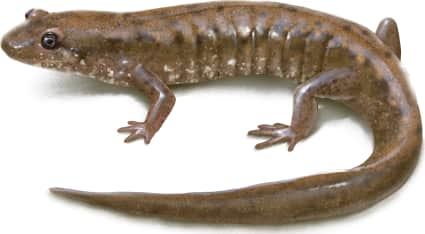
D. catahoula is a relatively robust, lowland “dusky” salamander with a strongly keeled tail. As juveniles they often exsibit 5–6 pairs of dorsal blotches often reddish-brown in color. Adults are generally uniform brown with little patterning. A yellos or orange stripe may be present on the dorsal surfaceo fhte tail. Venter is typically light or cream-colored with indistinct whitish speckling.
Range
D. catahoula has a limited distribution from extreme eastern Texas to central and northern Louisiana. It can be found in the Neches, lower Sabine, lower Red-Sulphur, upper Louisiana Coastal, and lower Lower Red-Ouachita River drainages.
Habitat
D. catahoula lives in seepages, bayheads, and lower-order streams, often associated iwht blluffs. Individuals may often be found in muddy microhabitats under logs and rocks.
Similar species
Name and etymology
Genus
Desmognathus
Greek for jaw (gnathos) ligament (desmos).
Origin
Sources
- Baird, 1850. Journ. Acad. Nat. Sci. Philadelphia, Ser. 2, Vol. 1, p. 282 and p. 285 ↗
Desmognathus. Baird, 1850 - Journ. Acad. Nat. Sci. Philadelphia, Ser. 2, Vol. 1, p. 282 and p. 285
Species epithet
catahoula
Named for the lake and parish when this salamander is found.
Origin
Sources
- The Reptile Database: Desmognathus catahoula ↗
Uetz, P., et al. The Reptile Database. s.v. “Desmognathus catahoula.” https://reptile-database.reptarium.cz/species?genus=Desmognathus&species=catahoula
Explore more names in the etymology index.
At a glance
Range
D. catahoula has a limited distribution from extreme eastern Texas to central and northern Louisiana. It can be found in the…
Habitat
D. catahoula lives in seepages, bayheads, and lower-order streams, often associated iwht blluffs. Individuals may often be fo…
Guide
Reptiles and Amphibians of North America
Range map
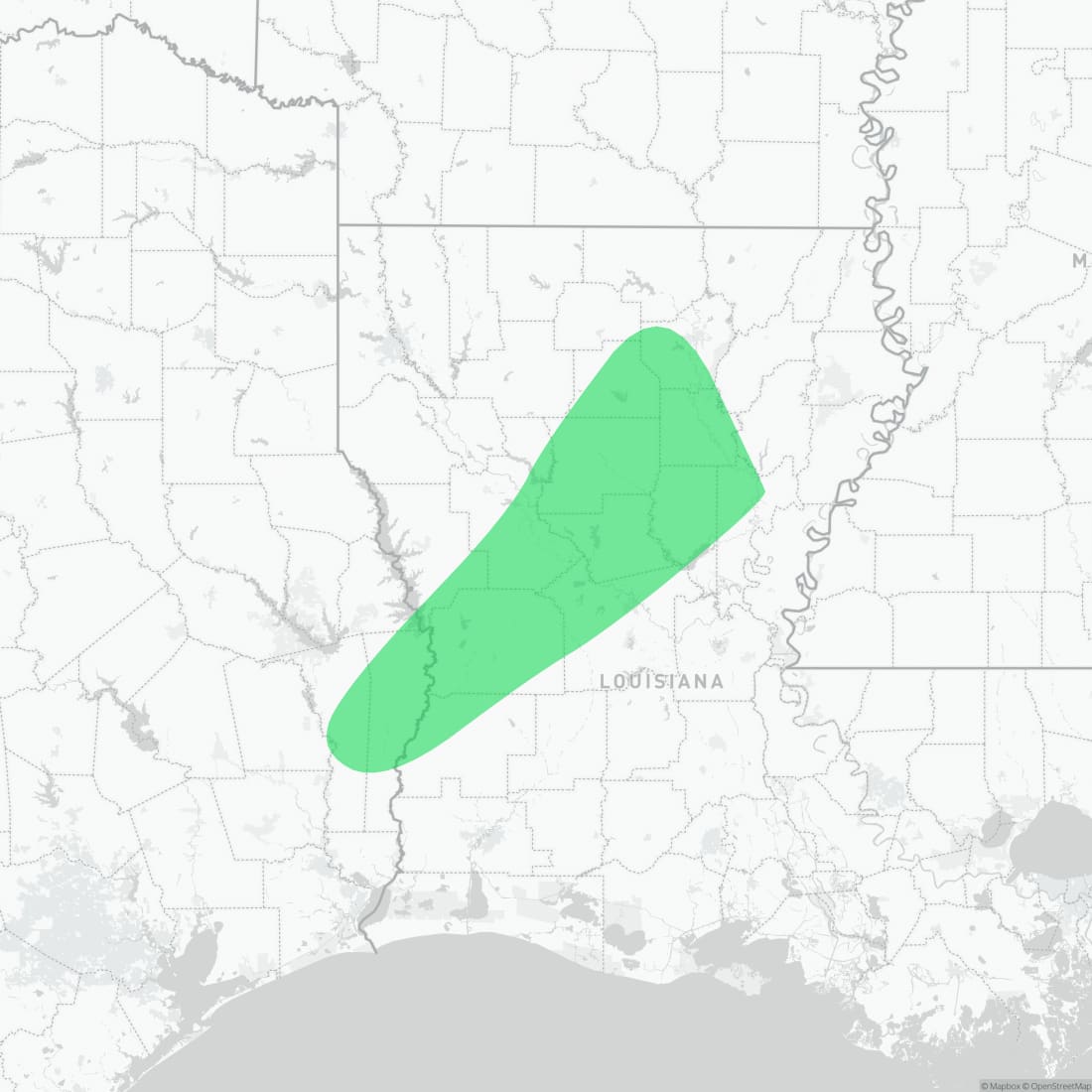
Approximate range. © Mapbox © OpenStreetMap