
Wolf Dusky Salamander
Desmognathus lycos
D. lycos is typically a modest 2.4 to 4.3 inches (6-11 cm) in total length. D. lycos is a large, robust, keel-tailed, boldly patterned species. D. lycos common has some…
How to identify
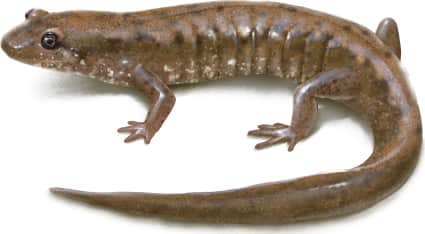
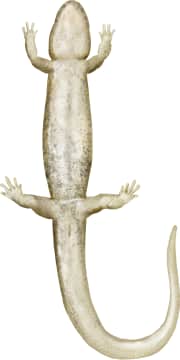
D. lycos is typically a modest 2.4 to 4.3 inches (6-11 cm) in total length. D. lycos is a large, robust, keel-tailed, boldly patterned species. D. lycos common has some separation between dorsal and lateral coloration in nearly all adults. D. lycos has a mostly whitish or cream-colored venter with dark specking mostly on lateral margins.
Range
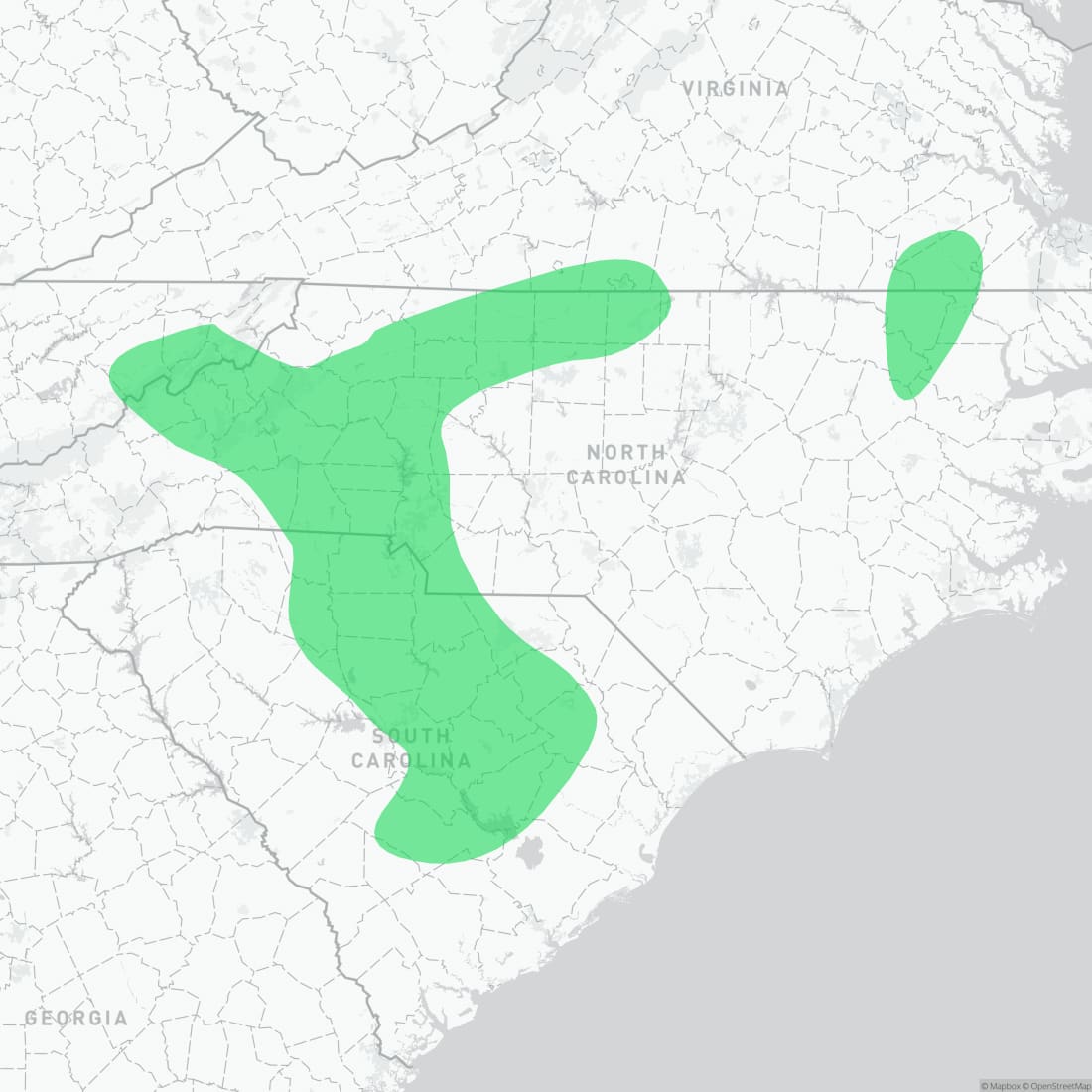
D. lycos inhabits the mid-Atlantic region of the United States. Its range stretches from southern Virginia through North Carolina and into Tennessee and the upper Coastal Plain of eastern South Carolina. There is a also a small and unusually disjunct trans-Appalachian population in northeastern Tennessee
Habitat
D. lycos is widely distributed occuring in a variety of creeks, streams, and swamp habitats. It can be found under rocks, logs, and leaf packs in and around flowing water.
Similar species
D. lycos can be easily confused with its close relatives, such D. catahoula and D. fuscus. However, D. lycos generally has a darker dorsal coloration and a more contrasting pattern between its back and belly compared to other species.
Name and etymology
Genus
Desmognathus
Greek for jaw (gnathos) ligament (desmos).
Origin
Sources
- Baird, 1850. Journ. Acad. Nat. Sci. Philadelphia, Ser. 2, Vol. 1, p. 282 and p. 285 ↗
Desmognathus. Baird, 1850 - Journ. Acad. Nat. Sci. Philadelphia, Ser. 2, Vol. 1, p. 282 and p. 285
Species epithet
lycos
From the latin (Lukos) for Wolf, referring to the large size, brownish color, and aggressive countenance.
Origin
Sources
- The Reptile Database: Desmognathus lycos ↗
Uetz, P., et al. The Reptile Database. s.v. “Desmognathus lycos.” https://reptile-database.reptarium.cz/species?genus=Desmognathus&species=lycos
Explore more names in the etymology index.
More illustrations
At a glance
Range
D. lycos inhabits the mid-Atlantic region of the United States. Its range stretches from southern Virginia through North Caro…
Habitat
D. lycos is widely distributed occuring in a variety of creeks, streams, and swamp habitats. It can be found under rocks, lo…
Guide
Reptiles and Amphibians of North America
Range map
Approximate range. © Mapbox © OpenStreetMap