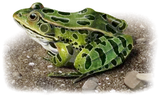
Northern Dusky Salamander
Desmognathus fuscus
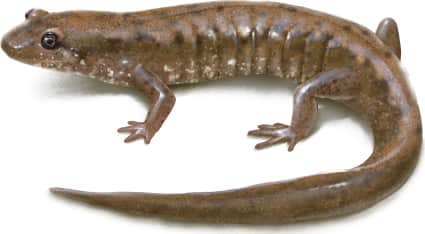
Dorsum ranges from yellow-brown to blackish; possesses 14 costal grooves and around 4 intercostal folds between toes. Jaw muscles and rear legs are muscular and enlarged.…
How to identify
Dorsum ranges from yellow-brown to blackish; possesses 14 costal grooves and around 4 intercostal folds between toes. Jaw muscles and rear legs are muscular and enlarged. Venter ranges from gray to cream in color. Males and females breed in the summer; females lay eggs in June or July. Clutch sizes range from 10 to 30; eggs are held together by outer envelopes.
Range
D. fuscus has a wide range in northeastern North America. It ranges from New Brunswick south to Kentucky, Tennesse, and southern Indiana.
Habitat
Usually inhabit areas near running water including woodland streams, springs, and floodplains. Takes cover under rocks, leaves, and other natural vegetation. Females lay eggs near water sources under rocks or cavities.
Variations
Adults may display light irregular mottling; juveniles display darker irregular mottling.
Similar species
Name and etymology
Genus
Desmognathus
Greek for jaw (gnathos) ligament (desmos).
Origin
Sources
- Baird, 1850. Journ. Acad. Nat. Sci. Philadelphia, Ser. 2, Vol. 1, p. 282 and p. 285 ↗
Desmognathus. Baird, 1850 - Journ. Acad. Nat. Sci. Philadelphia, Ser. 2, Vol. 1, p. 282 and p. 285
Species epithet
fuscus
Latin for dark or dusky.
Origin
Sources
- (Green, 1818). Journ. Acad. Nat. Sci. Philadelphia, Vol. 1, No. 1., p. 357 ↗
Desmognathus fuscus. (Green, 1818) - Journ. Acad. Nat. Sci. Philadelphia, Vol. 1, No. 1., p. 357
Explore more names in the etymology index.
At a glance
Size
6.4 to 14.2 cm
Range
D. fuscus has a wide range in northeastern North America. It ranges from New Brunswick south to Kentucky, Tennesse, and sout…
Habitat
Usually inhabit areas near running water including woodland streams, springs, and floodplains. Takes cover under rocks, leave…
Range map
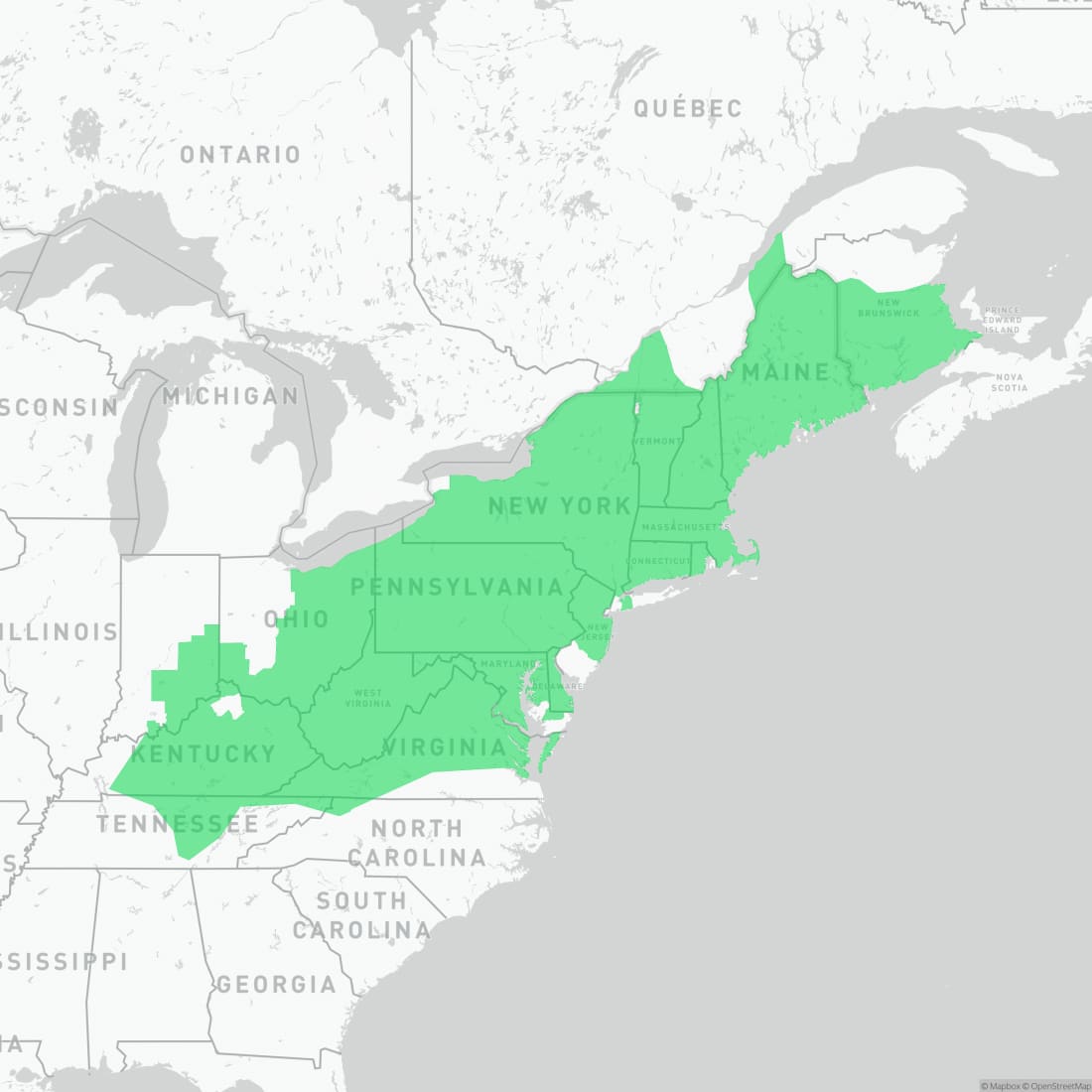
Approximate range. © Mapbox © OpenStreetMap