
Western Pond Turtle
Actinemys marmorata
A medium-sized aquatic turtle averaging 4.5-8.5 inches in carapace length. Its carapace is smooth and wider on the posterior half, giving the peripheral scutes a skirt-li…
How to identify
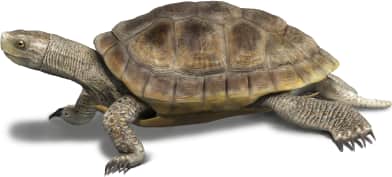
A medium-sized aquatic turtle averaging 4.5-8.5 inches in carapace length. Its carapace is smooth and wider on the posterior half, giving the peripheral scutes a skirt-like appearance when viewed from above. It has a flattened shell when viewed from the side. Its carapace is a dull grey or olive and its plastron is yellow. It has a long tail, large legs, and its skin is primarily dull grey with tan speckling.
Range
Range stretches along the Pacific coast from northern Oregon through western California and the northern Baja Peninsula. It also includes a few patches of range in western Washington.
Habitat
Inhabits a wide variety of permanent and temporary freshwater bodies, including marshes, ponds, lakes, streams, rivers, and ditches. It prefers habitats with lots of boulders, logs, or floating vegetation for basking. Surrounding areas are typically woodland, forest, or grassland.
Variations
Males have a whitish or pale yellow throat. Females are uniform in color and lack the pale throat. Juveniles have dark brown blotchy coloration on their plastron which usually fades to yellow with age.
Similar species
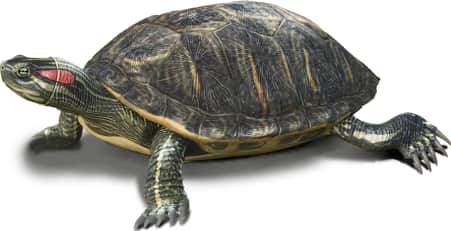
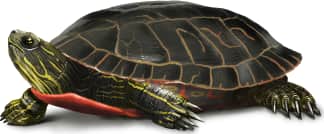
This turtle is much less colorful and patterned than similar species within its range, such as the common pond slider (*Trachemys scripta*) or painted turtle (*Chrysemys picta*).
Name and etymology
Genus
Actinemys
Greek for turtle (emys).
Origin
Sources
- Ritgen, 1828. Nova Acta Acad. Leopold.-Carol., Vol. 14, Pt. 1, p. 272
Clemmys. Ritgen, 1828 - Nova Acta Acad. Leopold.-Carol., Vol. 14, Pt. 1, p. 272
Species epithet
marmorata
Latin for marbled.
Origin
Sources
- (Baird and Girard, 1852). Proc. Acad. Nat. Sci. Philadelphia, Vol. 6, p. 177 ↗
Clemmys marmorata. (Baird and Girard, 1852) - Proc. Acad. Nat. Sci. Philadelphia, Vol. 6, p. 177
Explore more names in the etymology index.
At a glance
Size
110 to 210 mm
Range
Range stretches along the Pacific coast from northern Oregon through western California and the northern Baja Peninsula. It a…
Habitat
Inhabits a wide variety of permanent and temporary freshwater bodies, including marshes, ponds, lakes, streams, rivers, and d…
Range map
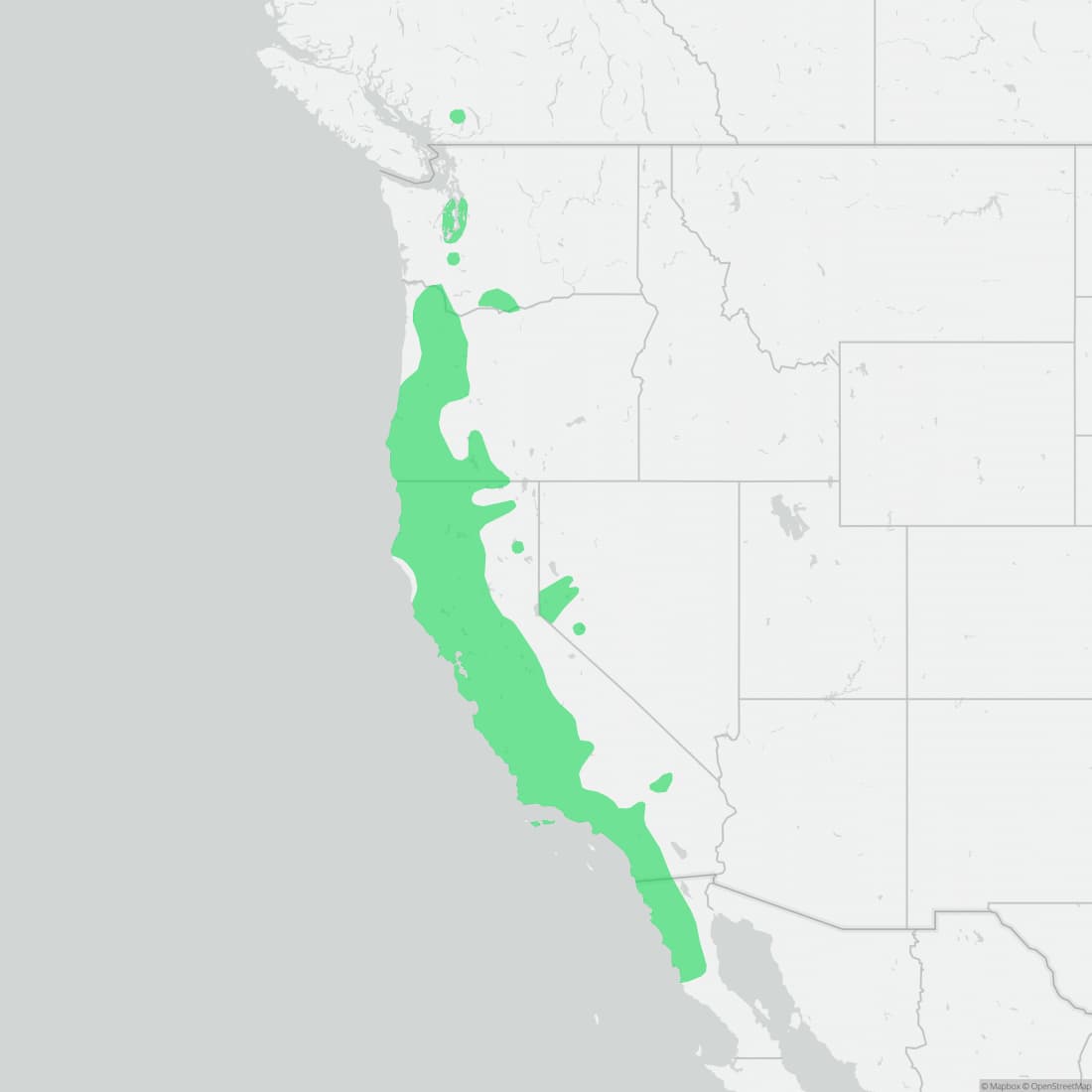
Approximate range. © Mapbox © OpenStreetMap