Pond Slider
Trachemys scripta
Adult length between 4 and 11 inches, with females larger than males. Oval shaped carapace, rough in texture with varying indentations, coloration occurs in shades of gre…
How to identify
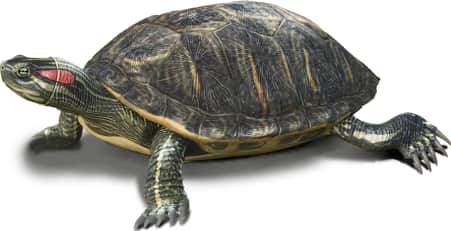
Adult length between 4 and 11 inches, with females larger than males. Oval shaped carapace, rough in texture with varying indentations, coloration occurs in shades of green, yellow, gray, brown, or black. Flat and smooth plastron, lighter in color than carapace with black streaks or spots. Skin dark green and brown. Oblong heads with upward pointing snouts. Webbed feet with five digits on each limb.
Range
Native range is southeastern and central United States and northern Mexico. However, introduced range includes Canada, central Mexico, Hawaii, California, Arizona, Michigan, and the east coast of the United States.
Habitat
Semi-aquatic. Found in freshwater and brackish environments including ponds, lakes, rivers, swamps, streams, lagoons, farm ponds. Can be found terrestrially in forests or grasslands near water.
Variations
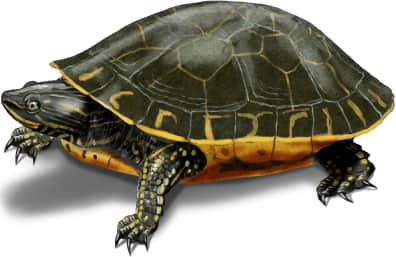
Older males: darker coloration, often completely black. Cumberland sliders: yellow and black lines on legs, yellow markings on neck and behind eyes. Yellow-bellied sliders: thin, vertical yellow and black lines on neck and limbs; two black spots on plastron. Red-eared sliders: horizontal, red streaks behind eyes.
Similar species
Name and etymology
Genus
Trachemys
Greek for rough (trachys) turtle (emys).
Origin
Sources
- Agassiz, 1857. Contr. Nat. Hist. U.S., Vol. 1, p. 434 ↗
Trachemys. Agassiz, 1857 - Contr. Nat. Hist. U.S., Vol. 1, p. 434
Species epithet
scripta
Latin for written, scripted.
Origin
Sources
- (Schoepf, 1792). Hist. Testud., Pts. 1-2, p. 16, pl. 3, figs. 4 and 5
Trachemys scripta. (Schoepf, 1792) - Hist. Testud., Pts. 1-2, p. 16, pl. 3, figs. 4 and 5
Explore more names in the etymology index.
More illustrations
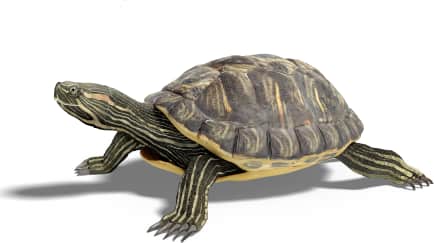
Cumberland Slider
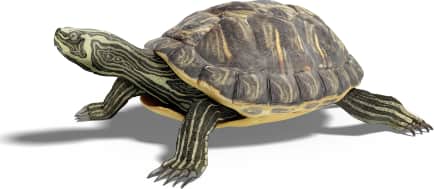
Yellowbelly slider
At a glance
Size
10 to 29 cm
Range
Native range is southeastern and central United States and northern Mexico. However, introduced range includes Canada, centra…
Habitat
Semi-aquatic. Found in freshwater and brackish environments including ponds, lakes, rivers, swamps, streams, lagoons, farm po…
Range map
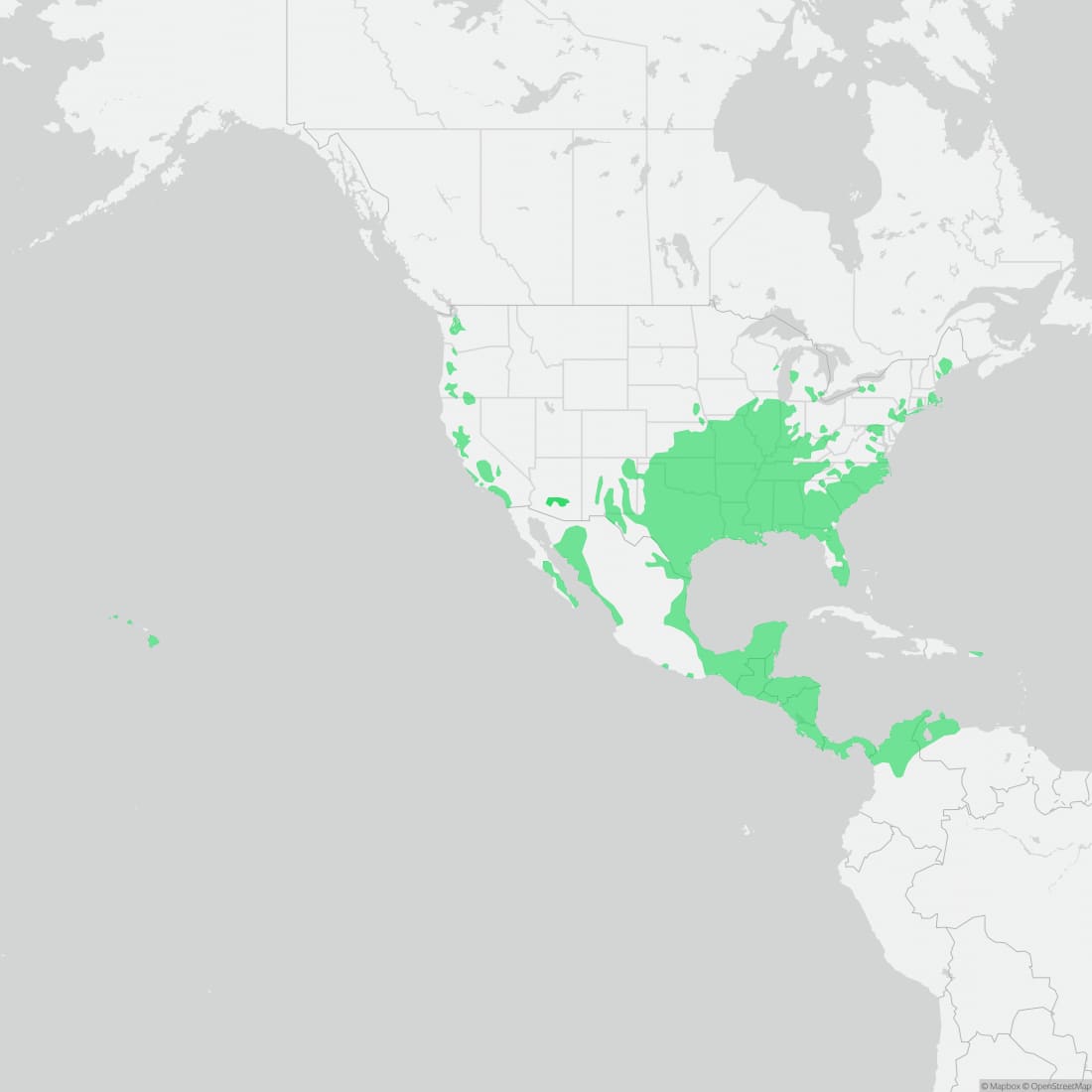
Approximate range. © Mapbox © OpenStreetMap