Chicken Turtle
Deirochelys reticularia
Smooth, dark carapace with very faint orange reticulated pattern, separate from the scute pattern. Plastron is solid orange or yellow. Interface between carapace and plas…
How to identify
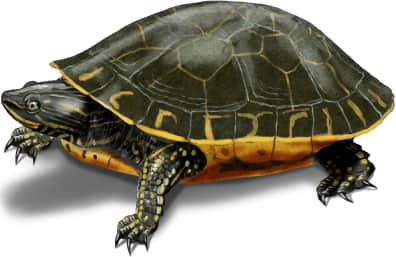
Smooth, dark carapace with very faint orange reticulated pattern, separate from the scute pattern. Plastron is solid orange or yellow. Interface between carapace and plastron is mostly orange with irregular dark patches matching the color of the carapace. Underside color of carapace matches the plastron, and this orange or yellow color is present in a thin line around the edge of the carapace, as seen from above. Turtle's skin is dark green with yellow striping. Skin on throat and ventral neck has more yellow than green. There is a thick yellow stripe down the front of each leg. They have a relatively long neck compared to similar species, and grow to a length of 10-25 cm. Feet are webbed.
Range
Found throughout the coastal southeastern United States, as far west as east Texas, north into southeast Missouri, all over Florida, and up the east coast to North Carolina.
Habitat
Semi-aquatic species that prefers still freshwater ponds, lakes, marshes, etc. They especially like areas with dense vegetation and soft substrate. Will burrow underground as deep as 2 meters when conditions become too dry.
Variations
Carapace color ranges from a lighter brown hue, to a very dark green, almost black. Females are larger with a short tail, while males have a wider, longer tail and longer front claws.
Similar species
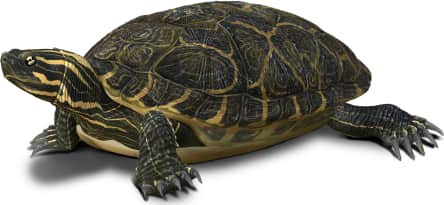
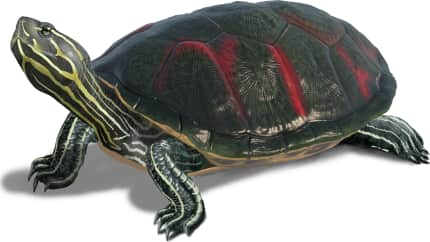
This species could be misidentified as a common slider (*Trachemys scripta*), river cooter (*Pseudemys concinna*), Florida red-bellied cooter (*Pseudemys nelsoni*), or painted turtle (*Chrysemys picta*).
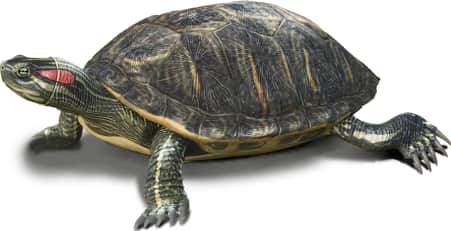
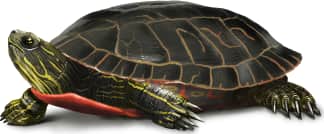
Name and etymology
Genus
Deirochelys
Greek for tortois (chelys) neck (deire).
Origin
Sources
- Agassiz, 1857. Contr. Nat. Hist. U. S., Vol. 1, p. 441 ↗
Deirochelys. Agassiz, 1857 - Contr. Nat. Hist. U. S., Vol. 1, p. 441
Species epithet
reticularia
Latin for net (reticulum) like (-aria).
Origin
Sources
- (Latreille, 1801). Hist. Nat. Rept., Vol. 1, p. 124 ↗
Deirochelys reticularia. (Latreille, 1801) - Hist. Nat. Rept., Vol. 1, p. 124
Explore more names in the etymology index.
At a glance
Size
15.3 to 25.4 cm
Range
Found throughout the coastal southeastern United States, as far west as east Texas, north into southeast Missouri, all over F…
Habitat
Semi-aquatic species that prefers still freshwater ponds, lakes, marshes, etc. They especially like areas with dense vegetati…
Range map
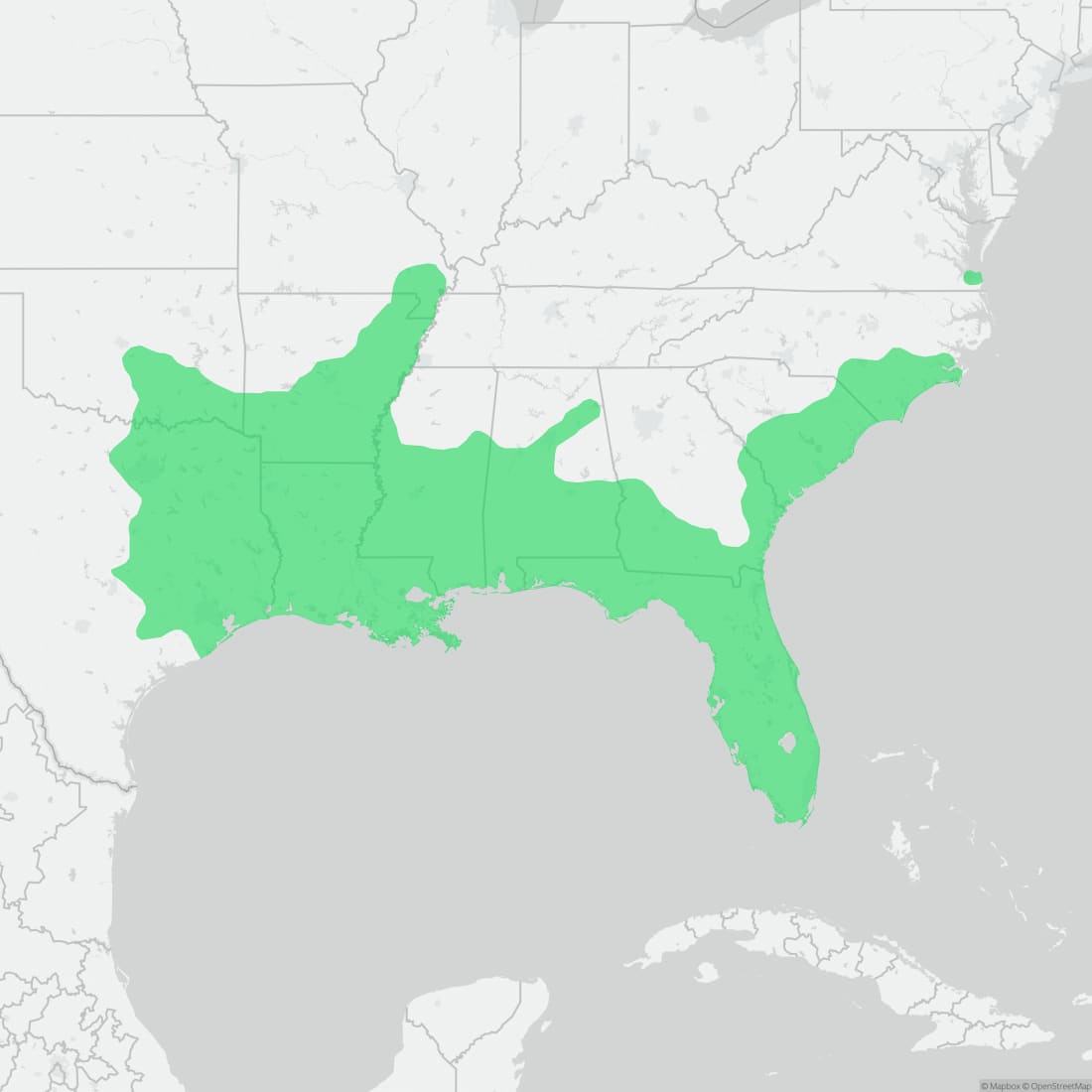
Approximate range. © Mapbox © OpenStreetMap