
River Cooter
Pseudemys concinna
This species has an average carapace length of 22-28 cm, with females outgrowing males and having higher-domed shells. It has an elongated, oval-shaped shell, with mild s…
How to identify
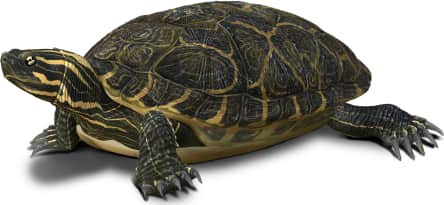
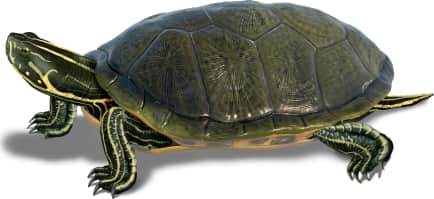
This species has an average carapace length of 22-28 cm, with females outgrowing males and having higher-domed shells. It has an elongated, oval-shaped shell, with mild serrations on the posterior marginal scutes. Its carapace is mostly dark green to black with yellow to greenish markings that are often quite subtle. Its plastron is yellow, often with some faded dark blotches along the seams of the gular and anal scutes. It has black skin with yellow stripes. Its snout is short and blunt.
Range
Native to the central and southeastern United States, from southeastern Kansas to eastern Texas, along the Gulf Coast through northern Florida, and up the Atlantic coast to Virginia. It is only found in a few small patches of West Virginia and Kentucky.
Habitat
This aquatic turtle prefers permanent shallow rivers and lakes with lots of aquatic vegetation. It will sometimes inhabit ponds, swamps, or springs. It rarely strays more than 30 meters from water sources.
Variations
Juveniles have more distinct patterning, while adults often look solid dark.
Similar species
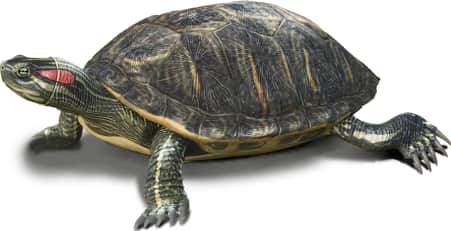
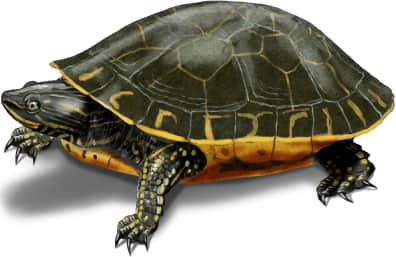
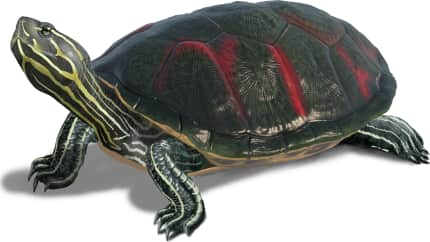
Most likely to be misidentified as the common slider (*Trachemys scripta*) or chicken turtle (*Deirochelys reticularia*), but also similar to the Florida red-bellied cooter (*Pseudemys nelsoni*) and Alabama red-bellied cooter (*Pseudemys alabamensis*).
Name and etymology
Genus
Pseudemys
Greek for false (pseudo) turtle (emys).
Origin
Sources
- Gray, "1855" 1856. Proc. Zool. Soc. London, Jan. 22, 1856, p. 197 ↗
Pseudemys. Gray, "1855" 1856 - Proc. Zool. Soc. London, Jan. 22, 1856, p. 197
Species epithet
concinna
Latin for symmetrical.
Origin
Sources
- (Le Conte, 1830). Ann. Lyc. Nat. Hist. New York, Vol. 3, p. 106 ↗
Pseudemys concinna. (Le Conte, 1830) - Ann. Lyc. Nat. Hist. New York, Vol. 3, p. 106
Explore more names in the etymology index.
At a glance
Size
437 mm
Range
Native to the central and southeastern United States, from southeastern Kansas to eastern Texas, along the Gulf Coast through…
Habitat
This aquatic turtle prefers permanent shallow rivers and lakes with lots of aquatic vegetation. It will sometimes inhabit pon…
Range map
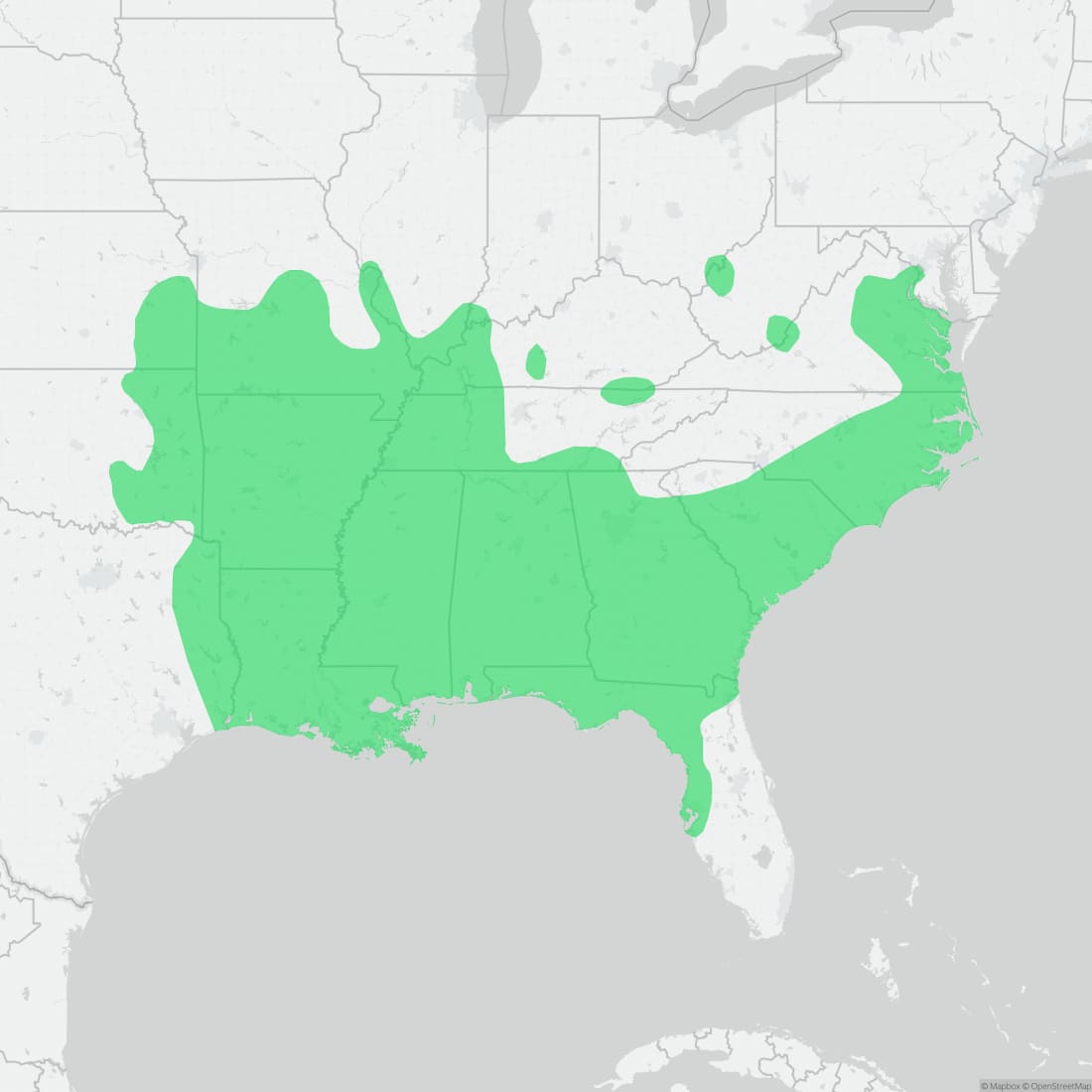
Approximate range. © Mapbox © OpenStreetMap