Red-backed Whiptail
Aspidoscelis xanthonotus
A slender lizard with a long tail and pointed snout that grows up to 4.5 inches from snout to vent. It has granulated scales on the body and keeled scales on the tail. Ju…
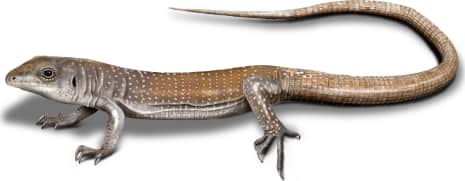
How to identify
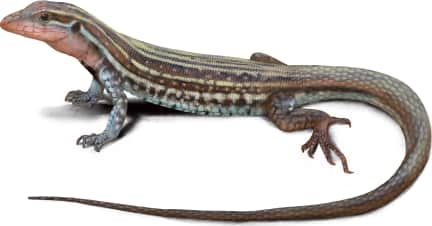
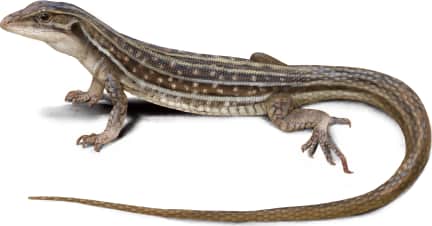
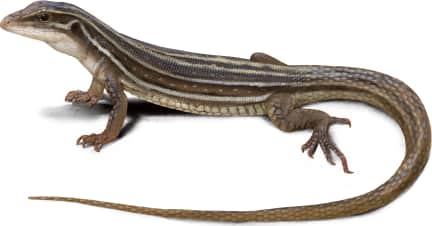
A slender lizard with a long tail and pointed snout that grows up to 4.5 inches from snout to vent. It has granulated scales on the body and keeled scales on the tail. Juveniles start out tan with 6-7 distinct light lines running from the neck to the base of the tail, and rows of light spots between the lines, with brick red tinting on their back. As they age, the lines disappear and break up into more numerous spots. Their legs also develop a light blue tint and the brick red coloration changes to orange or yellow. The head and tail are mostly tan.
Range
Small range in south central Arizona and slightly across the border into Mexico.
Habitat
Inhabits the upland Sonoran Desert scrublands at elevations of 2000-4300 feet. Prefers rocky terrain on canyon slopes, and often lives near permanent water sources.
Variations
Colors and pattern change from juvenile stage to adulthood. Juveniles are more dull with lines and spots, while adults develop more bright coloration, lose the lines, and gain more spots.
Similar species
Could be confused with other whiptail species, including the common spotted whiptail (*Aspidoscelis gularis*), Sonoran spotted whiptail (*Aspidoscelis sonorae*), or Chihuahuan spotted whiptail (*Aspidoscelis exsanguis*).
Name and etymology
Genus
Aspidoscelis
Greek for shield (aspido) leg (skelos).
Origin
Sources
- Wagler, 1830. Nat. Syst. Amph., p. 154
Cnemidophorus. Wagler, 1830 - Nat. Syst. Amph., p. 154
Species epithet
xanthonotus
Greek for orange (xanthos) back (notos).
Origin
Sources
- Duellman and Lowe, 1953. Nat. Hist. Misc. , No. 120, p. 2 ↗
Cnemidophorus xanthonotus. Duellman and Lowe, 1953 - Nat. Hist. Misc. , No. 120, p. 2
Explore more names in the etymology index.
At a glance
Range
Small range in south central Arizona and slightly across the border into Mexico.
Habitat
Inhabits the upland Sonoran Desert scrublands at elevations of 2000-4300 feet. Prefers rocky terrain on canyon slopes, and of…
Guide
Reptiles and Amphibians of North America
Range map
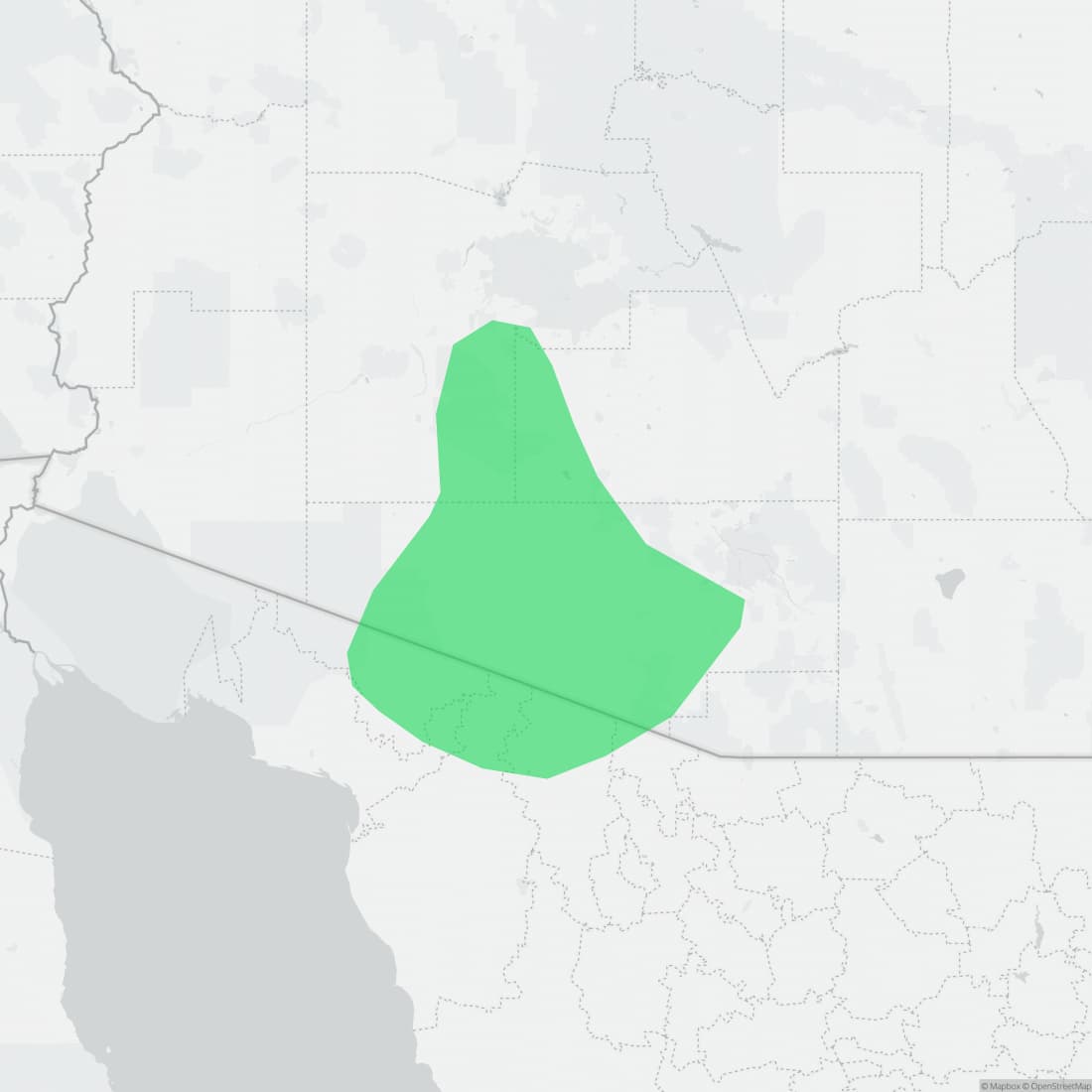
Approximate range. © Mapbox © OpenStreetMap