
Sonoran Spotted Whiptail
Aspidoscelis sonorae
The Sonoran spotted whiptail is a medium-sized (2.4-3.5 inches from snout to vent) and slender lizard with a long olive to brown colored tail and pointed snout. The dorsa…
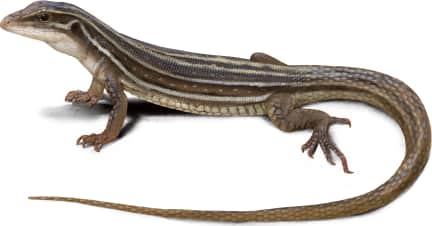
How to identify
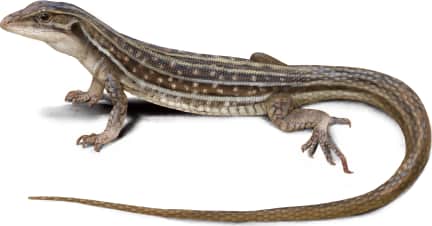
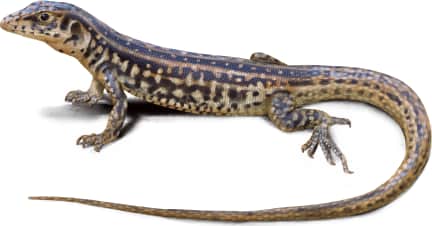
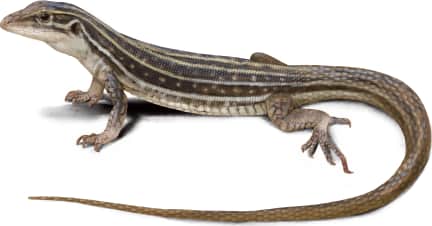
The Sonoran spotted whiptail is a medium-sized (2.4-3.5 inches from snout to vent) and slender lizard with a long olive to brown colored tail and pointed snout. The dorsal background color is brown to black with six yellow dorsal stripes. However, the area between the two central dorsal stripes lacks spots. The scales are granular and small but the scales on the tail are bigger, keeled and rectangular-shaped. The underside of this lizard is plain and cream-colored. Juveniles lack the spots apparent in adults.
Range
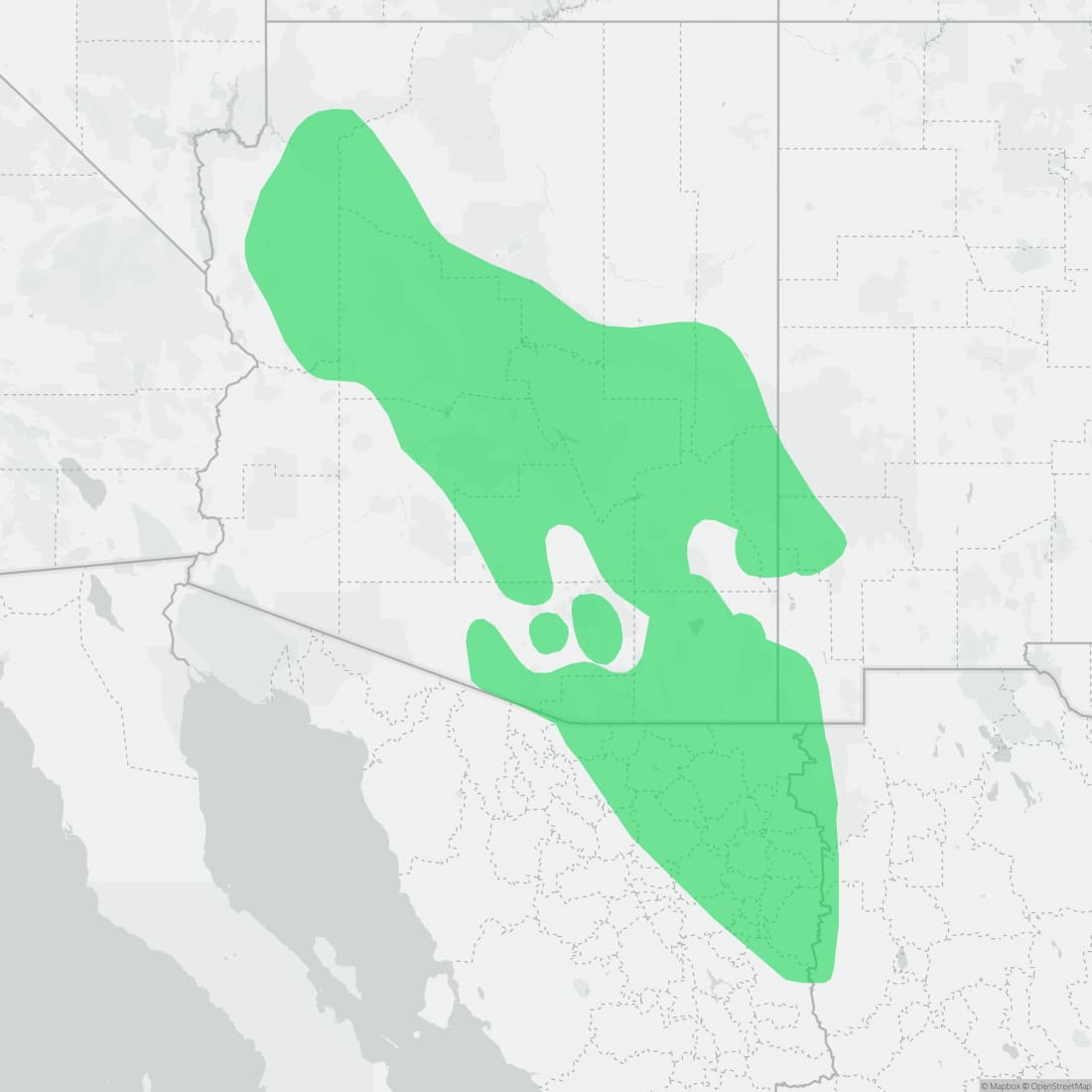
The range of the sonoran spotted whiptail extends from southeastern Arizona to northeast Sonora (where its name originates), then spreads west into New Mexico.
Habitat
They thrive in semi-desert grasslands, evergreen woodlands, and conifer forests. They can be found in a variety of terrains including canyons, wooded hills, flats and, low valleys. Most encounters are along drainages and riparian corridors. They are active in the day and hibernate in winter and late fall. The breeding season is in spring and females lay eggs in clutches of 1-10 in summer. They prey on a variety of insects such as ants, beetles, termites, and caterpillars as well as spiders.
Similar species
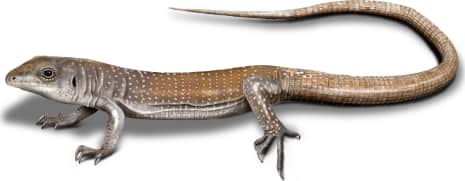
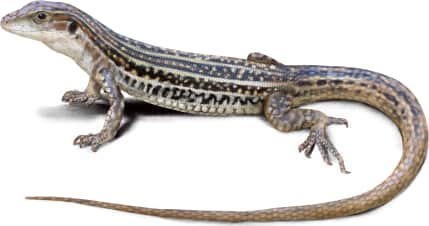
Chihuahuan Spotted Whiptail (Aspidoscelis exsanguis) is roughly similar in size with an average length of 3.9 inches (snout-to-vent). This lizard also has six dorsal stripes but instead of yellow, they appear in a gray-brown coloration. Aspidoscelis exsanguis is more densely spotted, the spots become more brightly colored and assume a bright yellow color on the lower back and hind limbs. The Canyon Spotted Whiptail (Aspidoscelis burti) is the largest whiptail in the USA with an average length of 5.5 inches. It has a reddish-orange head, neck, and tail. Older males have spots instead of stripes and some populations have males that lack stripes entirely. However, the A. sonorae doesn’t have the orange tail present in A. burti. Red-backed Whiptail (Aspidoscelis xanthonotus) is also relatively large and has an average length of 4.5 inches from snout to vent. It is a slender lizard that is burgundy-brown with a pointed snout, a long, thin tail, and an orange color on the lower back. The lizard has spots on the body and the light blue limbs. Chihuahuan Spotted Whiptail (Aspidoscelis exsanguis) is roughly similar in size with an average length of 3.9 inches (snout-to-vent). This lizard also has six dorsal stripes but instead of yellow, they appear in a gray-brown coloration. Aspidoscelis exsanguis is more densely spotted, the spots become more brightly colored and assume a bright yellow color on the lower back and hind limbs. The Canyon Spotted Whiptail (Aspidoscelis burti) is the largest whiptail in the USA with an average length of 5.5 inches. It has a reddish-orange head, neck, and tail. Older males have spots instead of stripes and some populations have males that lack stripes entirely. However, the A. sonorae doesn’t have the orange tail present in A. burti. Red-backed Whiptail (Aspidoscelis xanthonotus) is also relatively large and has an average length of 4.5 inches from snout to vent. It is a slender lizard that is burgundy-brown with a pointed snout, a long, thin tail, and an orange color on the lower back. The lizard has spots on the body and the light blue limbs.
Name and etymology
Genus
Aspidoscelis
Greek for shield (aspido) leg (skelos).
Origin
Sources
- Wagler, 1830. Nat. Syst. Amph., p. 154
Cnemidophorus. Wagler, 1830 - Nat. Syst. Amph., p. 154
Species epithet
sonorae
Belong to the Sonoran Desert.
Origin
Sources
- Lowe and Wright, 1964. Journ. Arizona Acad. Sci., Vol. 3, p. 80
Cnemidophorus sonorae. Lowe and Wright, 1964 - Journ. Arizona Acad. Sci., Vol. 3, p. 80
Explore more names in the etymology index.
More illustrations
Aspidoscelis sonorae variation
At a glance
Range
The range of the sonoran spotted whiptail extends from southeastern Arizona to northeast Sonora (where its name originates),…
Habitat
They thrive in semi-desert grasslands, evergreen woodlands, and conifer forests. They can be found in a variety of terrains i…
Guide
Reptiles and Amphibians of North America
Range map
Approximate range. © Mapbox © OpenStreetMap