
Western Whiptail
Aspidoscelis tigris
The western whiptail is a long and slender lizard with small granular scales in its dorsal regions and a long, thin brown tail. It is medium-sized with an average length…
How to identify
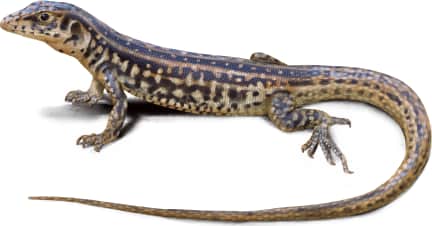
The western whiptail is a long and slender lizard with small granular scales in its dorsal regions and a long, thin brown tail. It is medium-sized with an average length of 4.3 inches (snout-to-vent length) but can reach a total length of about 12 inches. The body has markings with dark reticulations and light-colored stripes. The scales on the tail are keeled, bigger and have a rectangular shape. The males have dark gray chests and throats. Hatchlings have an orange-yellow coloration and dark-brown stripes when they age to juveniles they spot a bright blue tail.
Range
The range of this whiptail spreads through northern Mexico and the western regions of the USA. Its range includes Arizona, California, Colorado, Idaho, Nevada, New Mexico, Oregon and, Utah.
Habitat
These whiptail lizards are often found in hot dry regions without so much foliage. They can also be found in woodlands, riparian environments, chaparral, or deserts. The desert populations thrive in vegetation like sagebrush and use burrows to shelter from the heat. They are a bisexual species and mating occurs in the early half of June or May (depending on if they are in the north or south respectively) for the eggs to hatch in the middle of August. Females lay one clutch a year. The whiptails par on insects, spiders, scorpions, butterflies, moths, crickets, grasshoppers and beetles.
Variations
A. t. aethiops A. t. dickersonae A. t. disparilis A. t. multiscutata A. t. munda A. t. nigroriens A. t. pulchra A. t. punctata A. t. punctilinealis A. t. rubida A. t. septentrionalis A. t. stejnegeri A. t. tigris A. t. vandenburghi A. t. variolosa A. t. vivida
Similar species
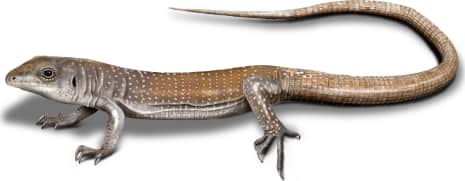
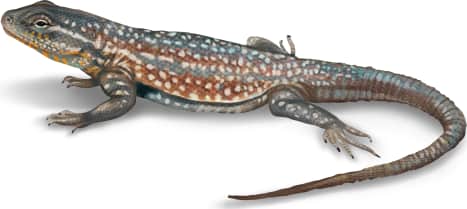
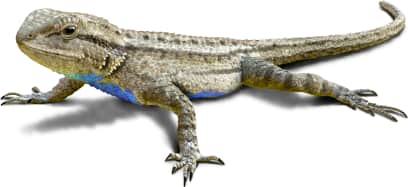
The Red-backed Whiptail (Aspidoscelis xanthonotus) is also large (albeit slightly larger) and has an average length of 4.5 inches from snout to vent. It is a slender lizard that is burgundy-brown with a pointed snout, a long, thin tail, and an orange color on the lower back. The lizard has spots on the body and the light blue limbs. It doesn’t have the dark markings that A. tigris has on the chest and sides. The Common Side-blotched Lizard (Uta stansburiana) is much smaller with an average snout-to-vent length of 2.4 inches and smaller females. This species is iguanid and the males may have blue flecks on the back and tail and sides of yellow or orange. They have a blotch on the side, just behind the front limbs. Some specimens are unpatterned and pattern and coloration vary from one to the other. The Western Fence Lizard (Sceloporus occidentalis) is brown to black and also displays black stripes on the back. Their most distinguishing feature is the bright blue belly they have. But this coloration is absent in females and juveniles.
Name and etymology
Genus
Aspidoscelis
Greek for shield (aspido) leg (skelos).
Origin
Sources
- Wagler, 1830. Nat. Syst. Amph., p. 154
Cnemidophorus. Wagler, 1830 - Nat. Syst. Amph., p. 154
Species epithet
tigris
Latin for tiger.
Origin
Sources
- Baird and Girard, 1852. Proc. Acad. Nat. Sci. Philadelphia, Vol. 6, p. 69 ↗
Uta. Baird and Girard, 1852 - Proc. Acad. Nat. Sci. Philadelphia, Vol. 6, p. 69
- Kennicott, 1859.
Arizona. Kennicott, 1859 -
Explore more names in the etymology index.
More illustrations
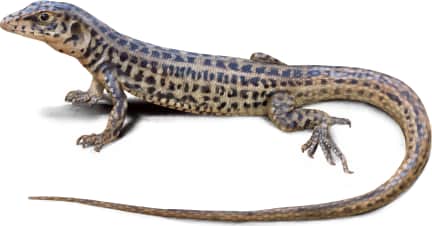
San Diegan Tiger Whiptail
At a glance
Range
The range of this whiptail spreads through northern Mexico and the western regions of the USA. Its range includes Arizona, Ca…
Habitat
These whiptail lizards are often found in hot dry regions without so much foliage. They can also be found in woodlands, ripar…
Guide
Reptiles and Amphibians of North America
Range map
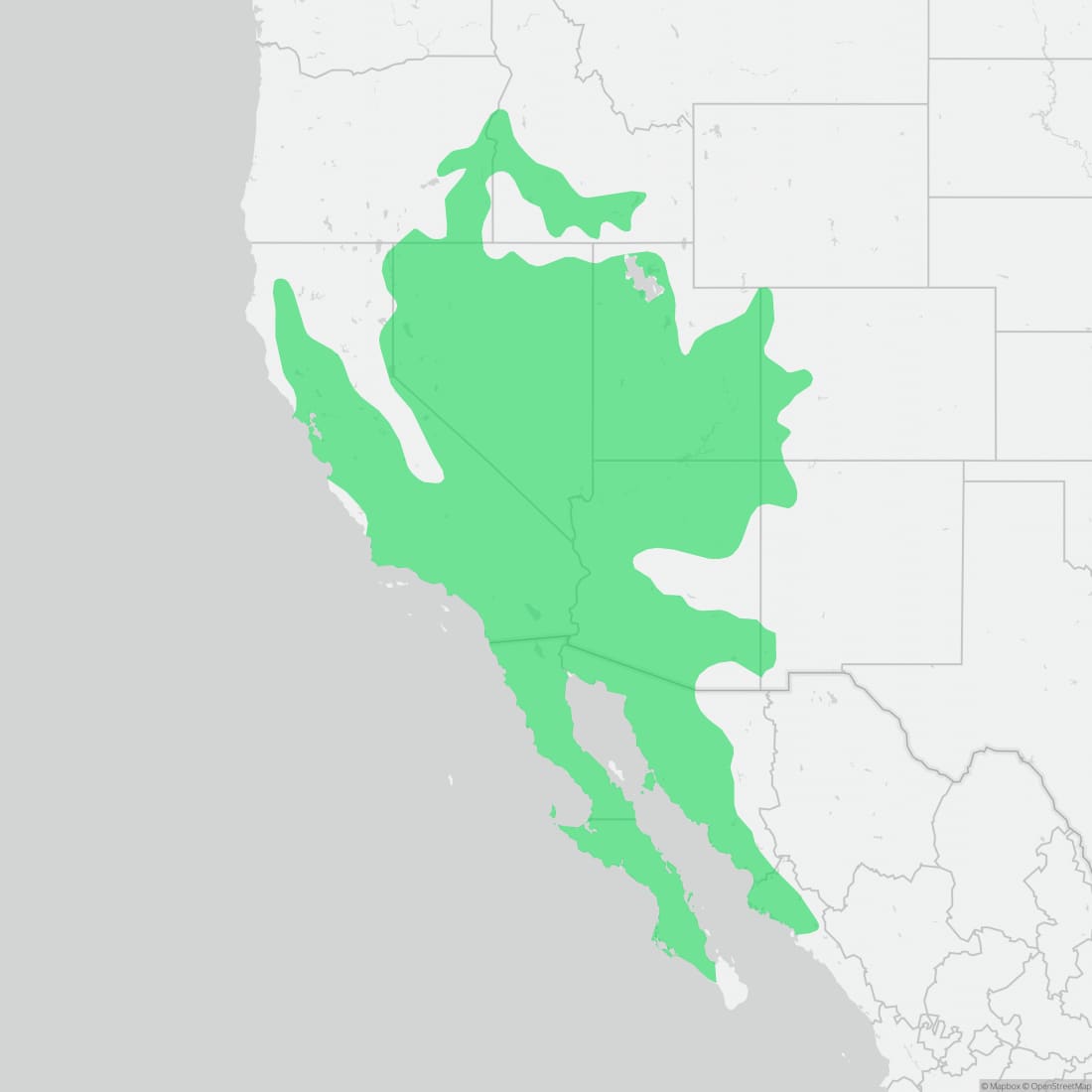
Approximate range. © Mapbox © OpenStreetMap