Common Side-blotched Lizard
Uta stansburiana
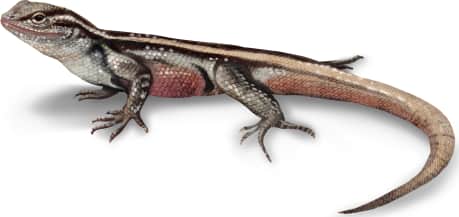
Highly variable in appearance and sexually dimorphic. Characterized by a conspicuous black blotch on each side, just behind the armpit. They have slightly rough scales on…
How to identify
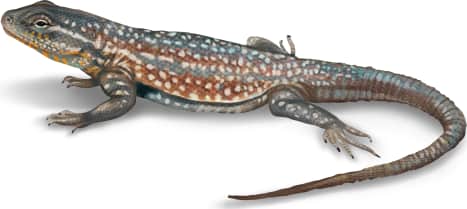
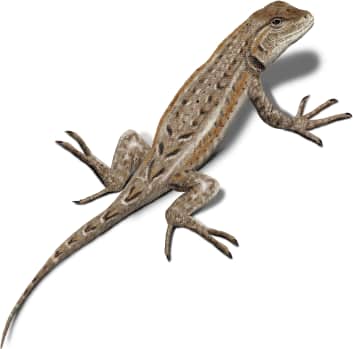
Highly variable in appearance and sexually dimorphic. Characterized by a conspicuous black blotch on each side, just behind the armpit. They have slightly rough scales on their body, and keeled scales on their tail. Males grow up to 2.4 inches in snout to vent length, and are slightly larger than females. They display a wide range of blue, yellow, or orange speckling and stripe patterns, with males generally more colorful than females. They can also be a drab brown.
Range
Southwestern United States up through eastern Oregon, southwestern Idaho, and into southern Washington. Range also extends south into the Baja Peninsula and north central Mexico.
Habitat
Exists in a wide variety of dry habitats within its range. Usually prefers open, sunny areas with nearby desert shrubs.
Variations
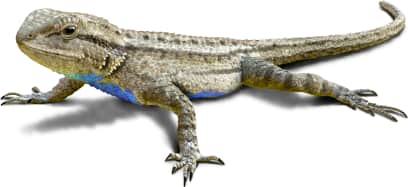
In addition to general variation in appearance, males exhibit polymorphism and occur in one of three color phases; orange, blue, or yellow throated. Each of these phases have different strategies for attracting females.
Similar species
Similar morphology to other desert lizards, such as the western fence lizard (*Sceloporus occidentalis*) or the common sagebrush lizard (*Sceloporus graciosus*), but it's generally more colorful and distinguished by the side blotch. The rose-bellied lizard (*Sceloporus variabilis*) has a dark patch in its armpit region, but has a more distinct pattern of stripes and bars on its back.
Name and etymology
Genus
Uta
Referencing region it was first discovered, Utah.
Origin
Sources
- Baird and Girard, 1852. Proc. Acad. Nat. Sci. Philadelphia, Vol. 6, p. 69 ↗
Uta. Baird and Girard, 1852 - Proc. Acad. Nat. Sci. Philadelphia, Vol. 6, p. 69
Species epithet
stansburiana
Honoring Howard S. Stansbury.
Origin
Honors
Sources
- Baird and Girard, 1852. Proc. Acad. Nat. Sci. Philadelphia, Vol. 6, p. 69 ↗
Uta. Baird and Girard, 1852 - Proc. Acad. Nat. Sci. Philadelphia, Vol. 6, p. 69
Explore more names in the etymology index.
At a glance
Range
Southwestern United States up through eastern Oregon, southwestern Idaho, and into southern Washington. Range also extends so…
Habitat
Exists in a wide variety of dry habitats within its range. Usually prefers open, sunny areas with nearby desert shrubs.
Guide
Reptiles and Amphibians of North America
Range map
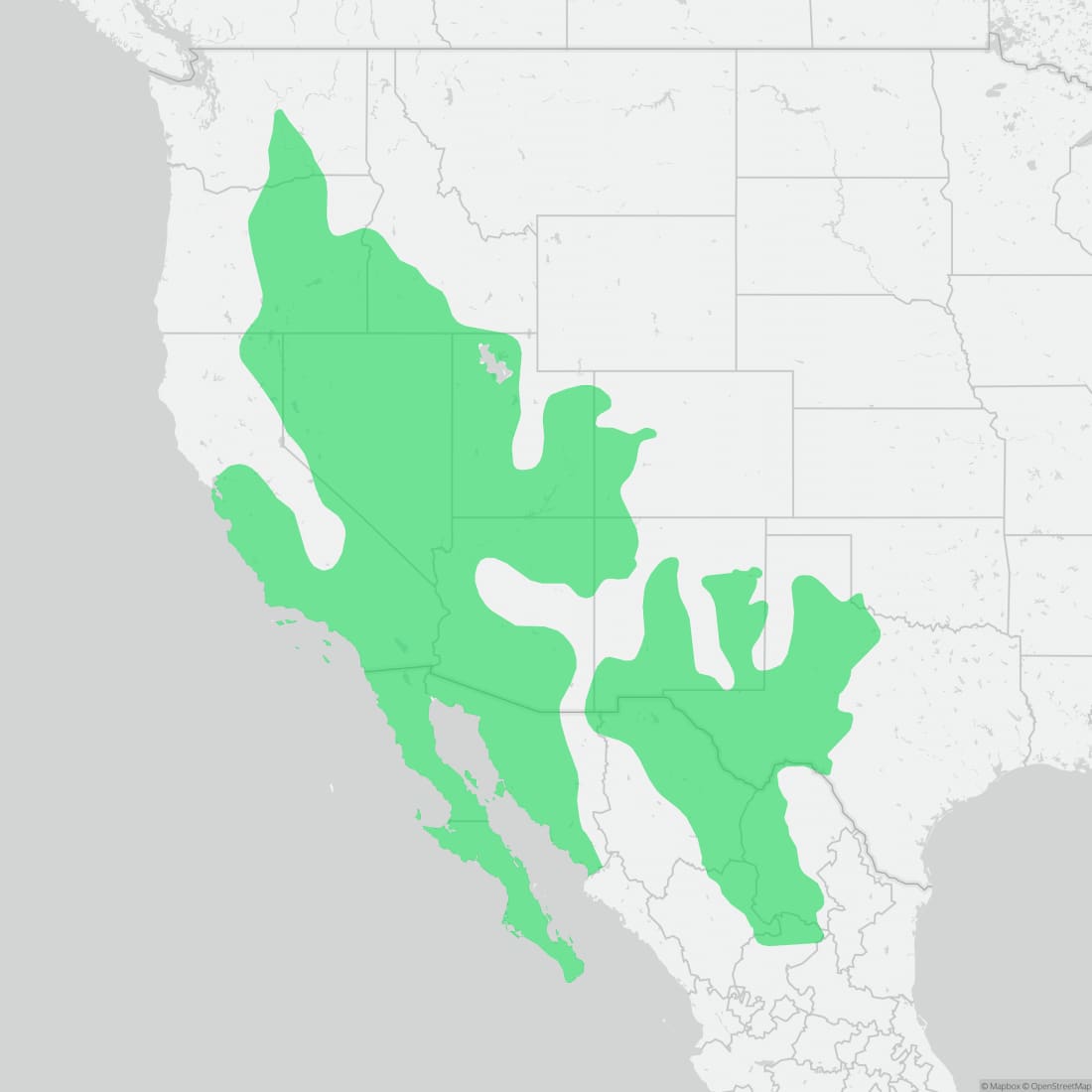
Approximate range. © Mapbox © OpenStreetMap