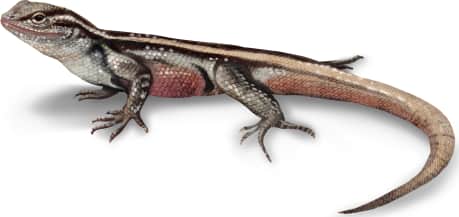
Rose-bellied Lizard
Sceloporus variabilis
A smallish lizard with spiny, keeled dorsal scales, a thick body, and a thin tail. It can reach a total length of 5.5 inches, and has a softly pointed snout. Adults typic…
How to identify
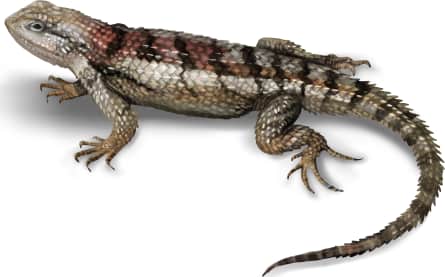
A smallish lizard with spiny, keeled dorsal scales, a thick body, and a thin tail. It can reach a total length of 5.5 inches, and has a softly pointed snout. Adults typically have 2 pale yellowish dorsolateral stripes running from behind the eyes to the base of the tail. Between these light stripes, there are 2 aligned rows of dark blotches, with a thin grey central stripe down the spine. Background coloration is light grey to olive. Males have darker sides below the pale dorsolateral stripes, especially in the groin and armpit regions. They also develop 2 large pink blotches on the sides of the ventrum, which are often bordered with bright blue.
Range
Ranges from south Texas through eastern and the Gulf coast of Mexico, and through Central America.
Habitat
This lizard prefers dry, rocky habitats. It can often be found on fence posts or within patches of cacti.
Variations
Some have orange coloration on their heads or around their mouths. Some are more uniformly grey with subtle patterning, while others have a brown hue on their backs.
Similar species
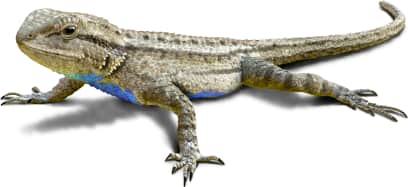
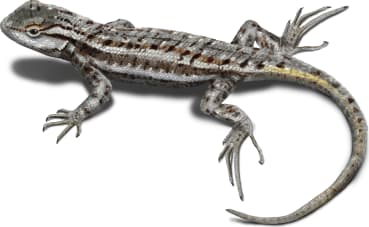
Most likely to be confused with the western fence lizard (*Sceloporus occidentalis*), plateau fence lizard (*Sceloporus tristichus*), or Texas spiny lizard (*Sceloporus olivaceus*).
Name and etymology
Genus
Sceloporus
Greek for leg (skelos) pores (porus), referencing femoral pores on back legs.
Origin
Sources
- Wiegmann, 1828. Isis von Oken, Vol. 21, p. 369 ↗
Sceloporus. Wiegmann, 1828 - Isis von Oken, Vol. 21, p. 369
Species epithet
variabilis
Latin for variable
Origin
Sources
- Wiegmann, 1834. Herp. Mex., p. 51
Sceloporus variabilis. Wiegmann, 1834 - Herp. Mex., p. 51
Explore more names in the etymology index.
At a glance
Range
Ranges from south Texas through eastern and the Gulf coast of Mexico, and through Central America.
Habitat
This lizard prefers dry, rocky habitats. It can often be found on fence posts or within patches of cacti.
Guide
Reptiles and Amphibians of North America
Range map
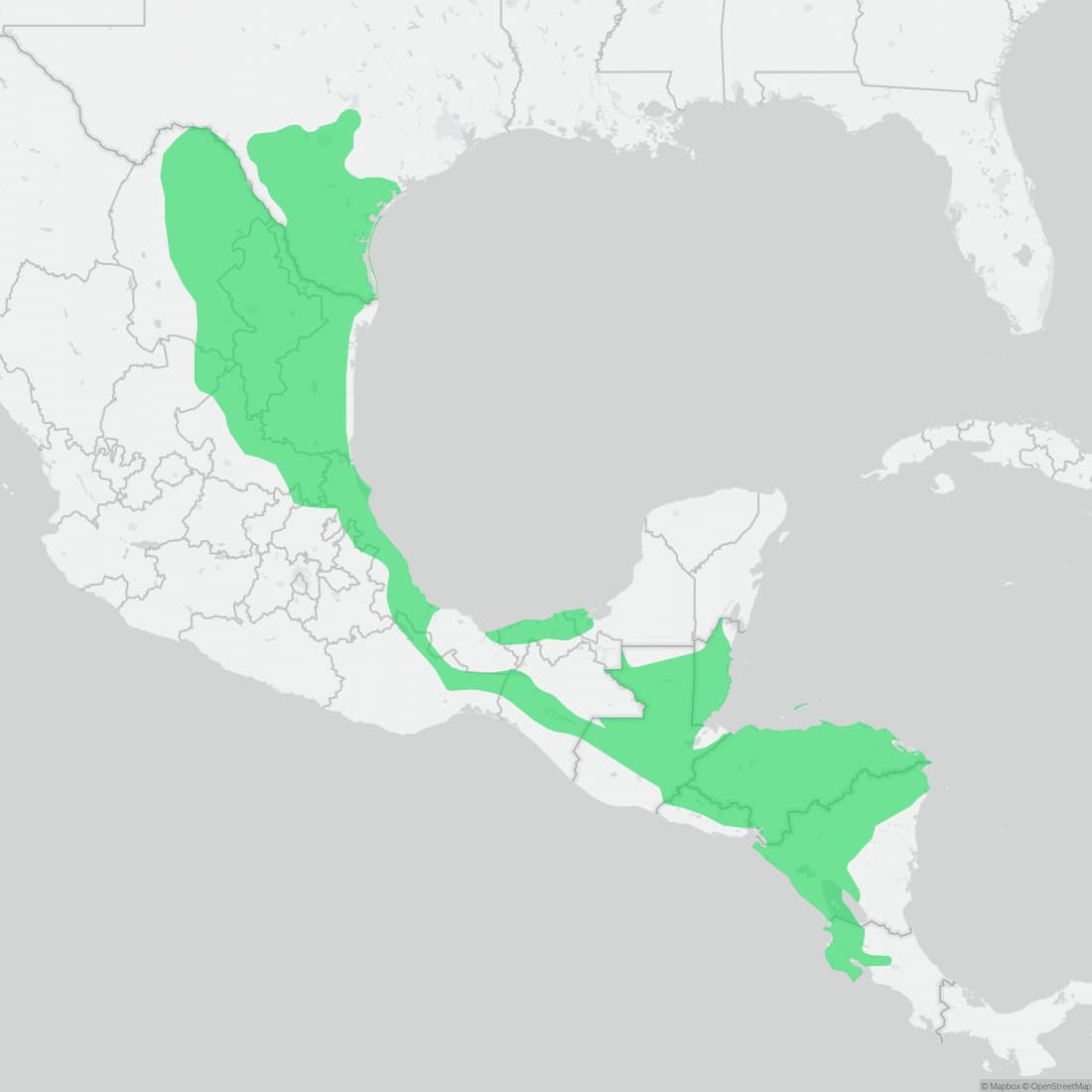
Approximate range. © Mapbox © OpenStreetMap