Texas Spiny Lizard
Sceloporus olivaceus
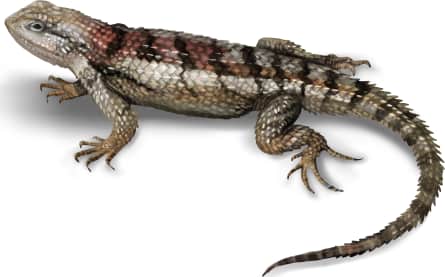
The Texas spiny lizard averages between 7.5-11 inches in total length. This species typically has a grey coloration with blotches of red-brown, black, or white on the bac…
How to identify
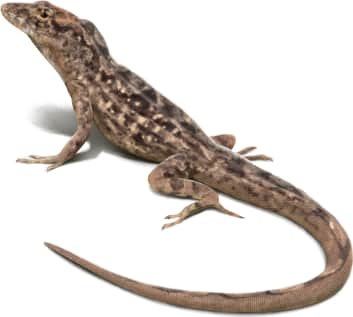
The Texas spiny lizard averages between 7.5-11 inches in total length. This species typically has a grey coloration with blotches of red-brown, black, or white on the back. Geographic location may cause patterns to vary as the pattern and colors are suited to match the bark of trees and the general environment of its habitat. The underside has a uniform light grey color. However, males possess a pair of blue patches a blotch on each side of the belly. The scales are spiny and the toes are long, the claws on their feet are well designed for climbing.
Range
This lizard is endemic to the United States and Mexico. Its range is the south-central USA; Texas, Arizona, and Oklahoma. In northeastern Mexico, it is found in Coahuila, Nuevo León, Tamaulipas, and San Luis Potosi.
Habitat
This is an arboreal lizard that can be found on mesquite trees, oak trees, and others. They can also be found on fence posts, bridges, and buildings. They are associated with scrub vegetation. Mating season is through spring and summer. Females deposit eggs in soil or underground. They prey on insects including beetles.
Similar species
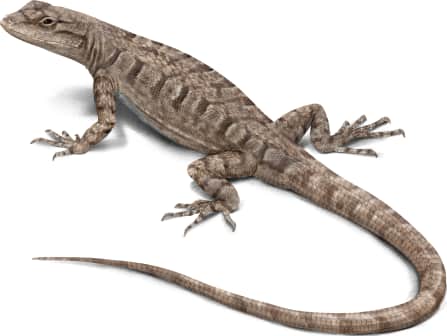
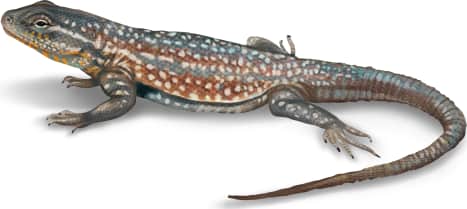
The brown anole (Anolis sagrei) has a total length of 5-8.5 inches. The anole is brown with dark markings on the back and whitish or yellowish tan colors on the sides. They have enlarged toe pads. Males have brightly colored orange, red or yellow dewlaps. Ornate Tree Lizard (Urosaurus ornatus) is smaller as well, with an average snout-to-vent length of 2.3 inches. The ornate tree lizard can be found in a variety of colors. However, one of the salient features is the orange throat coloration among the males. The common side-blotched lizard (Uta stansburiana) is averagely 2.5 inches in length (snout to vent) and has an orange-tan to brown-gray coloration. Each of its lower sides is marked with black blotches just before the forelimb. This lizard may have a variety of markings including stripes, no patterns, and speckles. The side blotches are the most distinguishing feature.
Name and etymology
Genus
Sceloporus
Greek for leg (skelos) pores (porus), referencing femoral pores on back legs.
Origin
Sources
- Wiegmann, 1828. Isis von Oken, Vol. 21, p. 369 ↗
Sceloporus. Wiegmann, 1828 - Isis von Oken, Vol. 21, p. 369
Species epithet
olivaceus
Latin for olive
Origin
Sources
- Smith, 1934. Trans. Kansas Acad. Sci., Vol. 37, p. 277
Sceloporus olivaceus. Smith, 1934 - Trans. Kansas Acad. Sci., Vol. 37, p. 277
Explore more names in the etymology index.
At a glance
Range
This lizard is endemic to the United States and Mexico. Its range is the south-central USA; Texas, Arizona, and Oklahoma. In…
Habitat
This is an arboreal lizard that can be found on mesquite trees, oak trees, and others. They can also be found on fence posts,…
Guide
Reptiles and Amphibians of North America
Range map
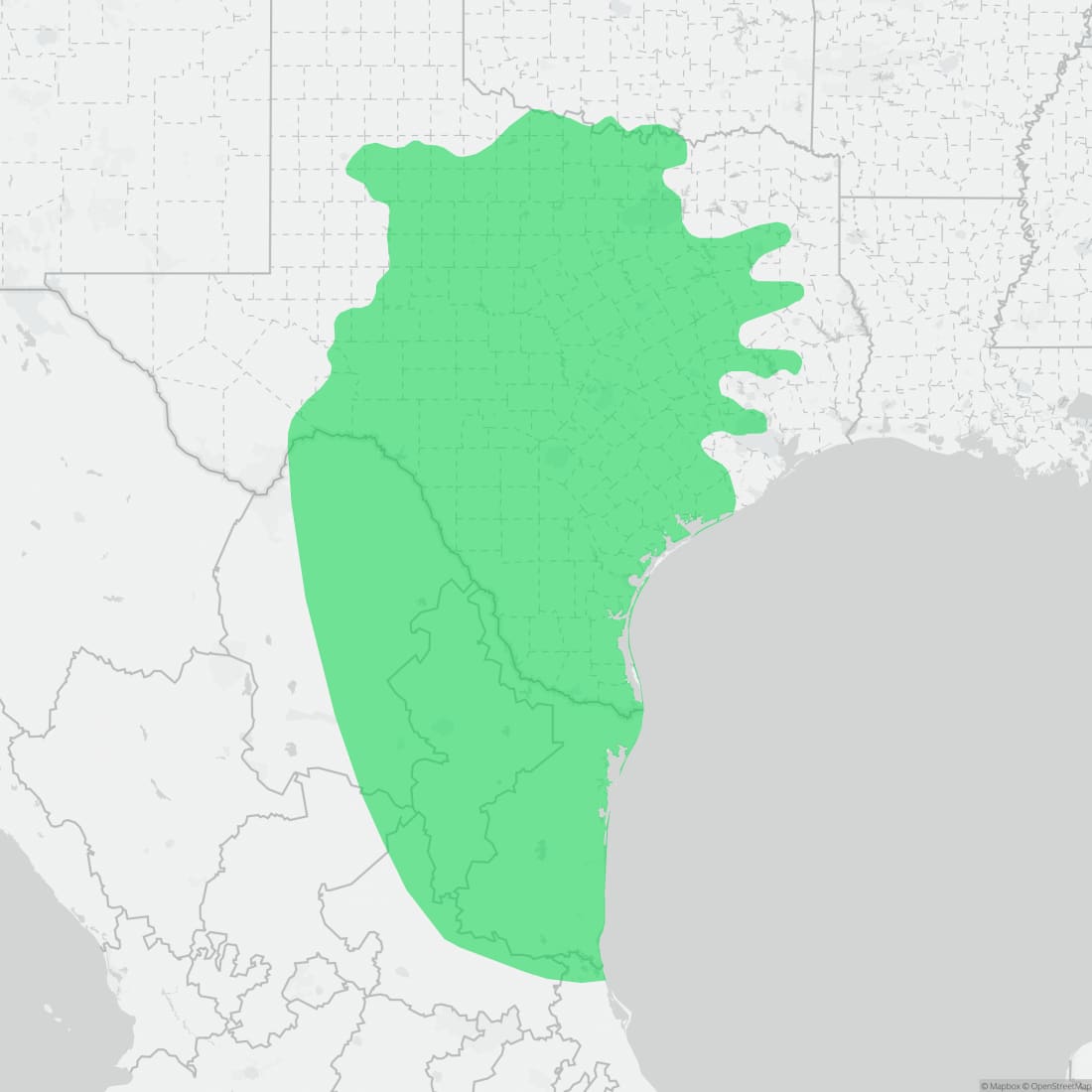
Approximate range. © Mapbox © OpenStreetMap