Brown Anole
Anolis sagrei
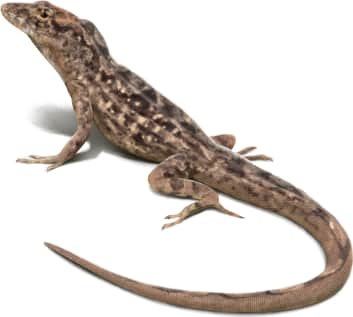
The brown anole is short-snouted and averages a total length of 5 – 8.5 in with some reaching up to 9 in. Males are generally larger (7 – 8 in) than their female counterp…
How to identify
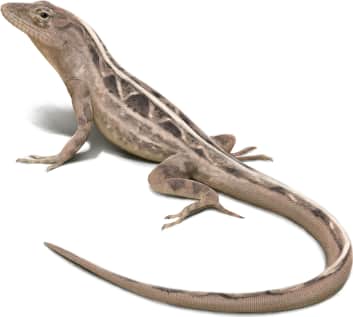
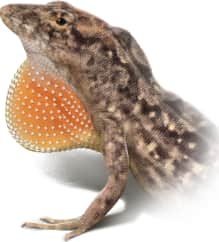
The brown anole is short-snouted and averages a total length of 5 – 8.5 in with some reaching up to 9 in. Males are generally larger (7 – 8 in) than their female counterparts (3 – 6 in). A. sagrei are brown (ranging from light brown to nearly black gray-brown) with dark brown markings on the back and whitish or yellowish tan colors on the sides. It possesses enlarged toe pads. The males, while possessing smaller heads, have brightly colored orange, red or yellow dewlaps (usually with yellow or white edges). The females can be identified with the light-colored line that runs down the middle of the back.
Range
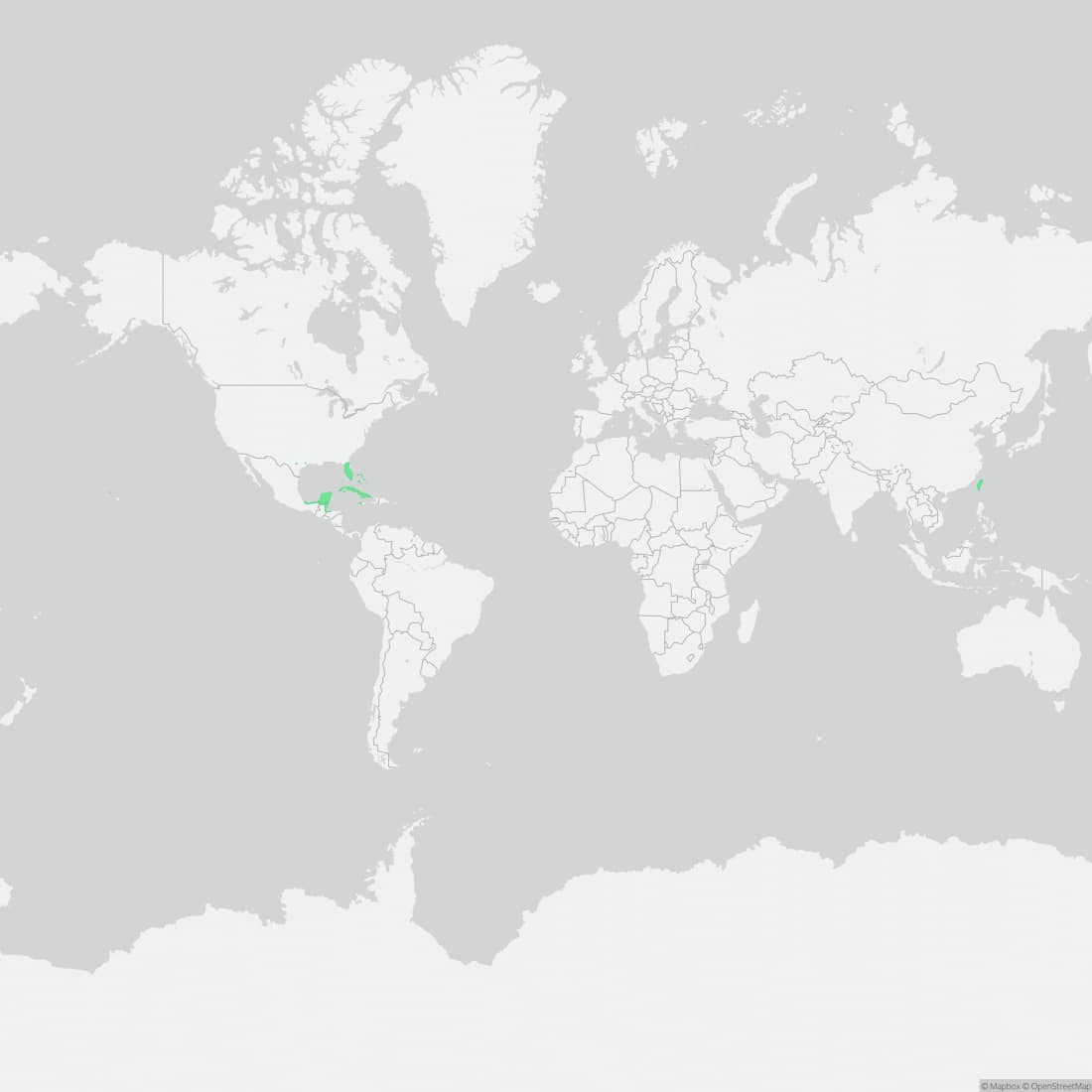
This anole is native to the Caribbean and Central America. It was introduced into southern Florida and expanded northward into Georgia and other states including Texas, Louisiana, Hawaii, California, and North Carolina.
Habitat
The brown anole spends more time roaming the ground than in the treetops. They are diurnal, prefer drier locations and warm weather and can be found basking in vegetation. In cold weather, the anoles seek shelter under shingles, tree barks, in rotten logs. They feed on a variety of invertebrates like insects and spiders. In the warm months, the females each lay a single egg in moist soil or rotten logs at an interval of approximately fourteen days.
Variations
Anolis sagrei mayensis Anolis sagrei sagrei
Similar species
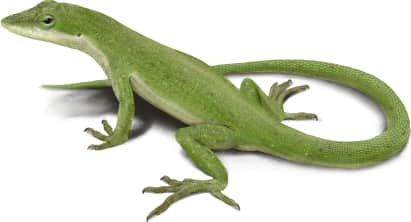
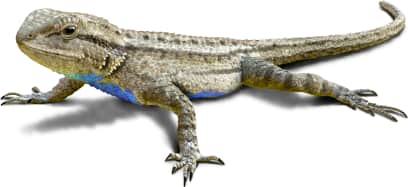
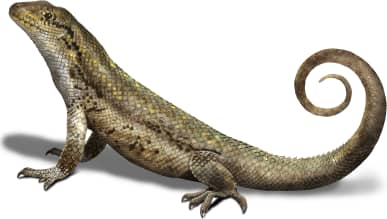
Green Anole or Anolis carolinensis is similar-sized and also has a bright-colored dewlap. The primary difference is in the color; as it possesses a green or lightly-patterned coloration and a red (or pink) dewlap. The Western Fence Lizard or Sceloporus occidentalis has a similar dorsal coloration and roughly equal size, it can be differentiated by the spiky scales and its distinctive blue ventral abdomen. Northern Curly-tailed Lizard or Leiocephalus carinatus is similarly colored and patterned but the difference lies in the granular scales and its unique tail that curls upward when the lizard is horizontally inclined on a surface.
Name and etymology
Genus
Anolis
Antillean name for lizard.
Origin
Sources
- Daudin, 1803. Hist. Nat. Rept., Vol. 4, p. 50 ↗
Anolis. Daudin, 1803 - Hist. Nat. Rept., Vol. 4, p. 50
Species epithet
sagrei
Honoring of Spanish botanist Ramón de la Sagra
Origin
Honors
Sources
- Wikipedia: Anolis sagrei ↗
“Anolis sagrei.” Wikipedia. https://en.wikipedia.org/wiki/Brown_anole
Explore more names in the etymology index.
More illustrations
Brown Anole Female
Dewlap
At a glance
Range
This anole is native to the Caribbean and Central America. It was introduced into southern Florida and expanded northward int…
Habitat
The brown anole spends more time roaming the ground than in the treetops. They are diurnal, prefer drier locations and warm w…
Guide
Reptiles and Amphibians of North America
Range map
Approximate range. © Mapbox © OpenStreetMap