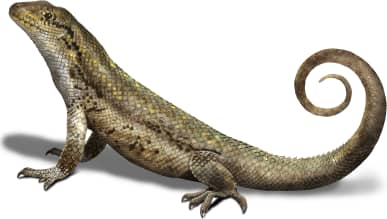
Northern Curly-tailed Lizard
Leiocephalus carinatus
This primarily grey or brown spiny-scaled lizard is named for its unusual tail that curls upward. The keeled scales are aligned in longitudinal rows down the body, but it…
How to identify
This primarily grey or brown spiny-scaled lizard is named for its unusual tail that curls upward. The keeled scales are aligned in longitudinal rows down the body, but it has thin light crossbars of coloration across the back. Their overall patterning is quite subtle, but the tail is more distinctly banded. They can reach 10 inches in total length. The tail is not permanently curled, and can be straightened.
Range
Native to the Bahamas, Cayman Islands, and Cuba, but introduced to Palm Beach, Florida and now established in several areas throughout the state.
Habitat
Ground dwelling species that prefers habitats with loose, rocky substrate. It will readily burry itself when escaping danger. Often seen basking on rocks or residing in suburban areas.
Variations
Breeding adults can have a black patch behind each shoulder. Coloration varies from shades of brown and tan to shades of grey.
Similar species
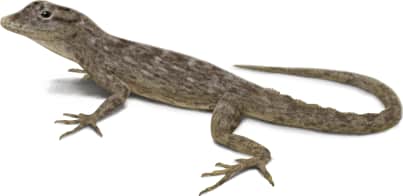
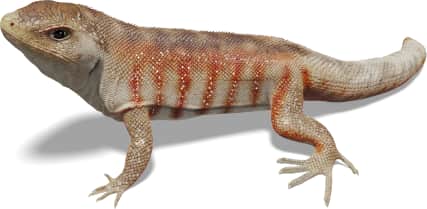
Its relative, the red-sided curly-tailed lizard (*Leiocephalus schreibersii*), is also introduced in Florida, but has a noticeably different appearance. It could possibly be confused with the similarly patterned bark anole (*Anolis distichus*).
Name and etymology
Genus
Leiocephalus
Greek for little (-ius) smooth (leio) head (kephale).
Origin
Sources
- Wikipedia: Leiocephalus ↗
“Leiocephalus.” Wikipedia. https://en.wikipedia.org/wiki/Curly-tailed_lizard
Species epithet
carinatus
Latin for keeled.
Origin
Sources
- (Gray, "1855" 1856). Proc. Zool. Soc. London, Jan. 22, 1856, p. 199 ↗
Sternotherus carinatus. (Gray, "1855" 1856) - Proc. Zool. Soc. London, Jan. 22, 1856, p. 199
Explore more names in the etymology index.
At a glance
Range
Native to the Bahamas, Cayman Islands, and Cuba, but introduced to Palm Beach, Florida and now established in several areas t…
Habitat
Ground dwelling species that prefers habitats with loose, rocky substrate. It will readily burry itself when escaping danger.…
Guide
Reptiles and Amphibians of North America
Range map
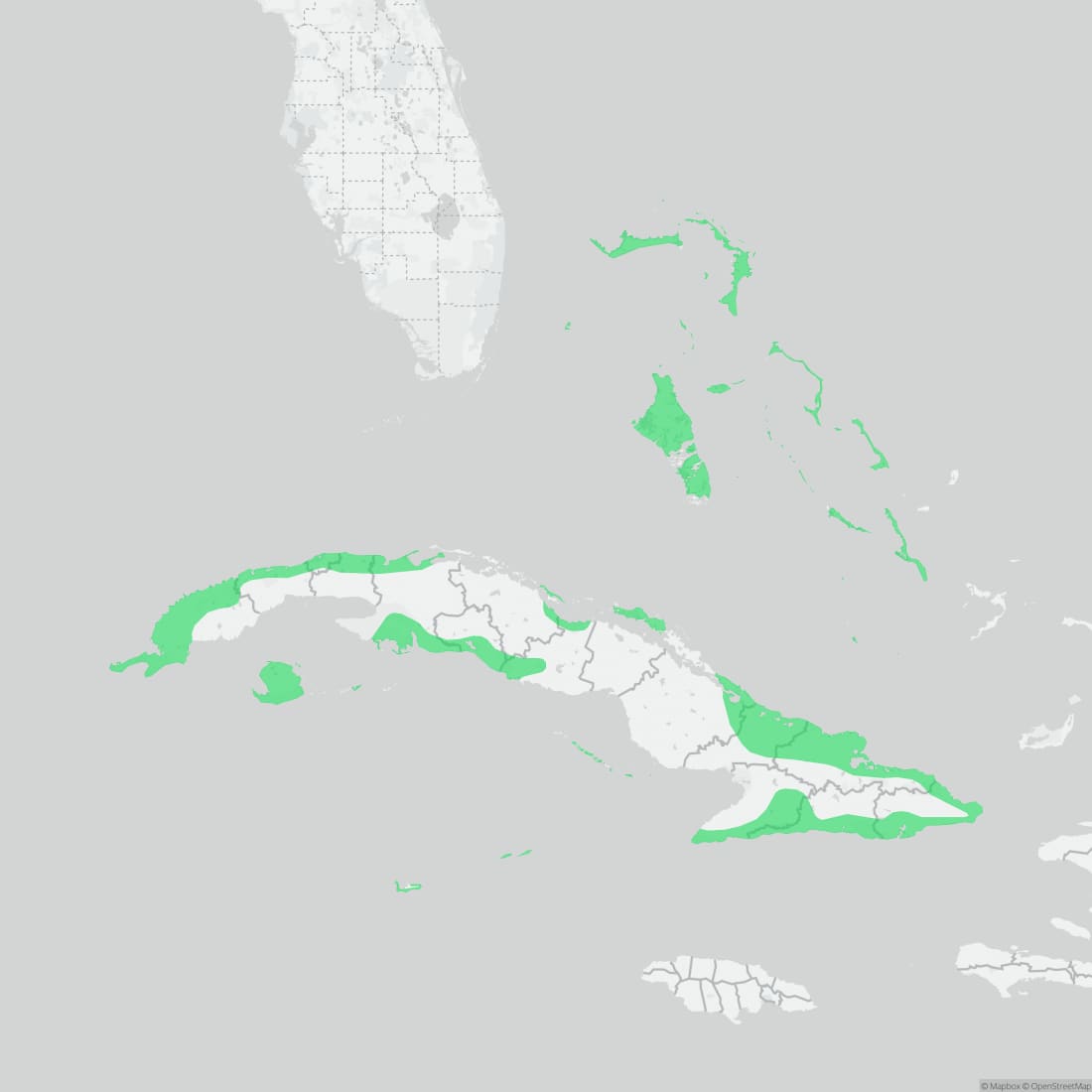
Approximate range. © Mapbox © OpenStreetMap