Bark Anole
Anolis distichus
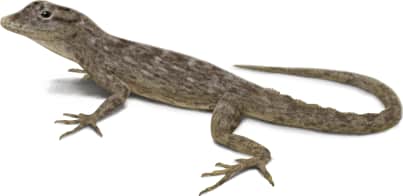
Colors in the anole vary widely because there are so many subspecies. Its body colors can range from the gray-brown similar to tree barks to green. The dewlaps are bright…
How to identify
Colors in the anole vary widely because there are so many subspecies. Its body colors can range from the gray-brown similar to tree barks to green. The dewlaps are brightly colored and vary from bright tints of yellow to red or orange. Sometimes, dewlaps can even be white. Bark anoles are relatively small – averagely 5.0 in. in length.
Range
The bark anole comes from many parts of Hispaniola, including Haiti and the Dominican Republic. This is why it has earned the name Hispaniolan gracile anole. In the USA, it was introduced to South Florida and subsequently recorded for the first time in 1946.
Habitat
As the name implies, the bark anole spends most of its time on tree trunks. In cold weather, anoles can be found under barks, in rotted out logs or man-made contraptions like shingles. This species of anole are oviparous and in the warm months, females lay eggs in rotten wood and moist soil. The eggs hatch in about 30 – 70 days.
Variations
There are many subspecies of this anole: A. d. distichus A. d. biminiensis A. d. dapsilis A. d. distichoides A. d. floridanus A. d. juliae A. d. ocior A. d. patruelis A. d. sejunctus A. d. suppar A. d. tostus
Similar species
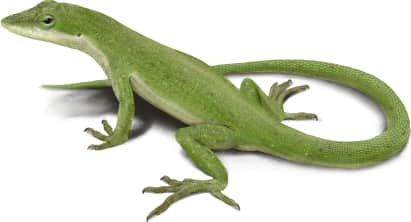
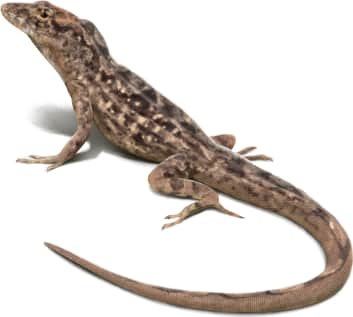
The anole is very easy to misidentify because it is very similar to many species. One of them is the brown anole (Anolis sagrei) but the brown anole, aside from the fact that it is generally brown, is averagely larger than the bark anole. Another one is the Puerto Rican bush anole (Anolis pulchellus). This anole is found more in Puerto Rico than any other place and is distinguished by the purple and crimson dewlap it has. And there’s the Carolina anole (Anolis carolinensis) or green anole. Because the bark anole can appear as green or brown, it is easy to group this two. However, the Carolina anole can change its color from several brown hues and this is why it has earned the name American chameleon.
Name and etymology
Genus
Anolis
Antillean name for lizard.
Origin
Sources
- Daudin, 1803. Hist. Nat. Rept., Vol. 4, p. 50 ↗
Anolis. Daudin, 1803 - Hist. Nat. Rept., Vol. 4, p. 50
Species epithet
distichus
Greek for two (di) lines (stikhos).
Origin
Sources
- Wikipedia: Anolis distichus ↗
“Anolis distichus.” Wikipedia. https://en.wikipedia.org/wiki/Anolis_distichus
Explore more names in the etymology index.
More illustrations
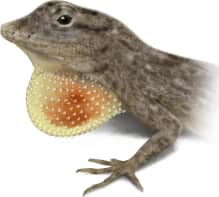
Dewlap
At a glance
Range
The bark anole comes from many parts of Hispaniola, including Haiti and the Dominican Republic. This is why it has earned the…
Habitat
As the name implies, the bark anole spends most of its time on tree trunks. In cold weather, anoles can be found under barks,…
Guide
Reptiles and Amphibians of North America
Range map
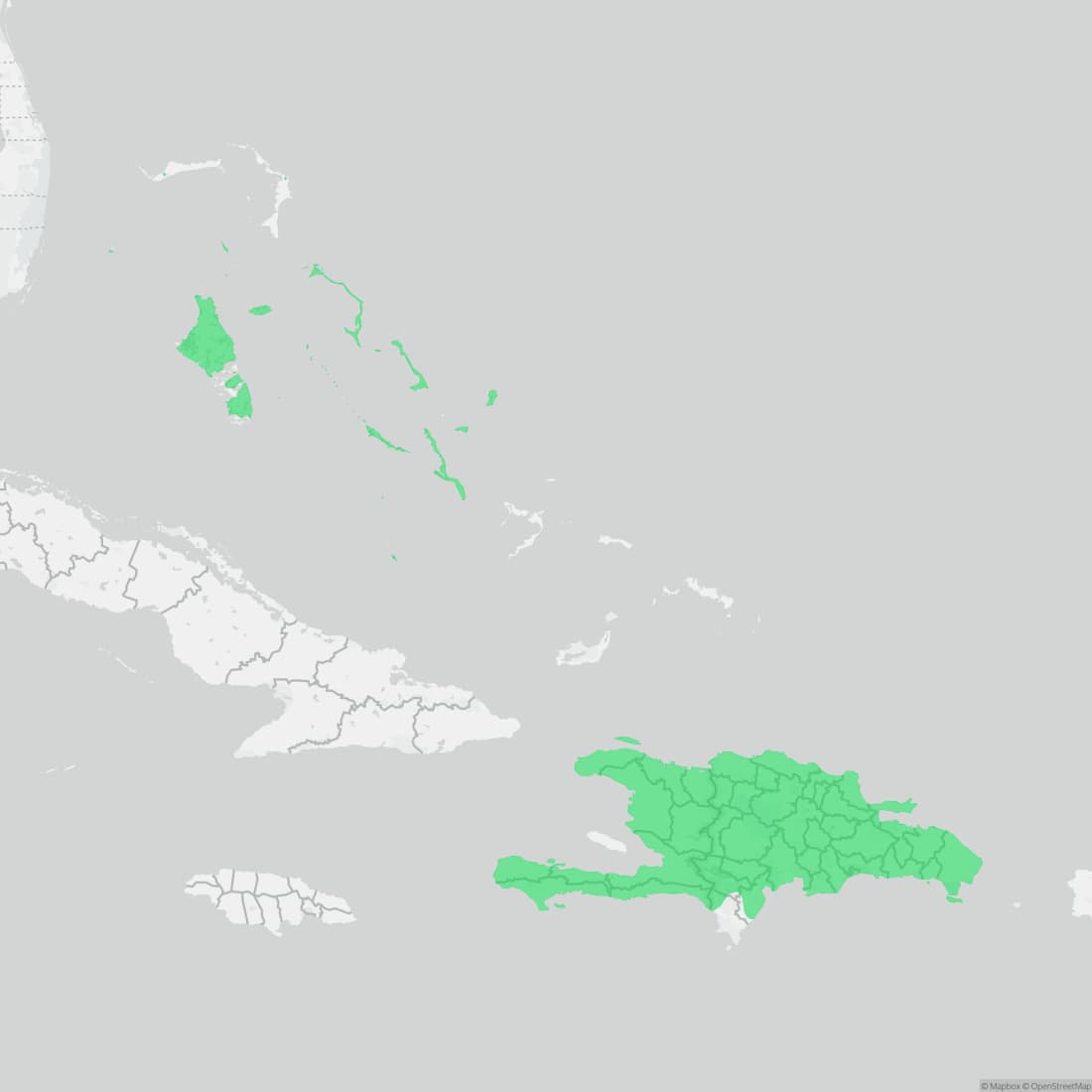
Approximate range. © Mapbox © OpenStreetMap