Common Sagebrush Lizard
Sceloporus graciosus
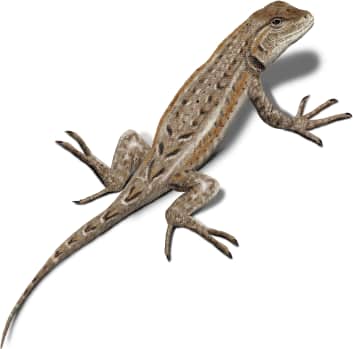
A small (2-3.5 inches snout to vent length) lizard with rough, keeled scales. They are mostly light brown and tan on their dorsum, with horizontal zigzag patterns running…
How to identify
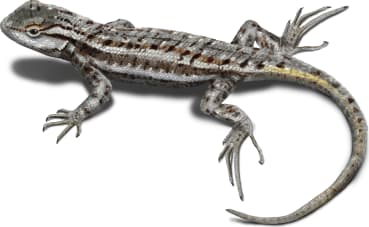
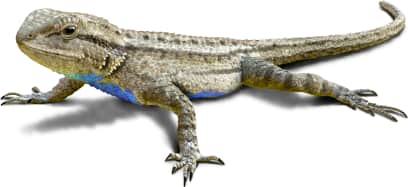
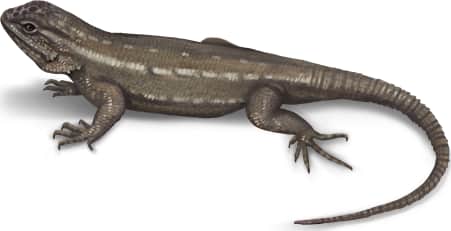
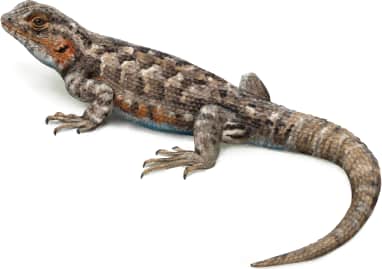
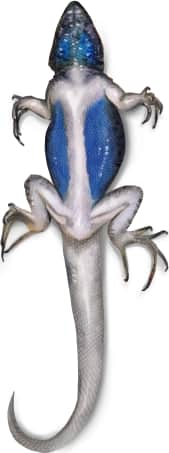
A small (2-3.5 inches snout to vent length) lizard with rough, keeled scales. They are mostly light brown and tan on their dorsum, with horizontal zigzag patterns running across lighter dorsolateral and lateral lines on each side. They have a small black patch on each shoulder, and males have bright blue patches on each side of their ventral abdomen and throat.
Range
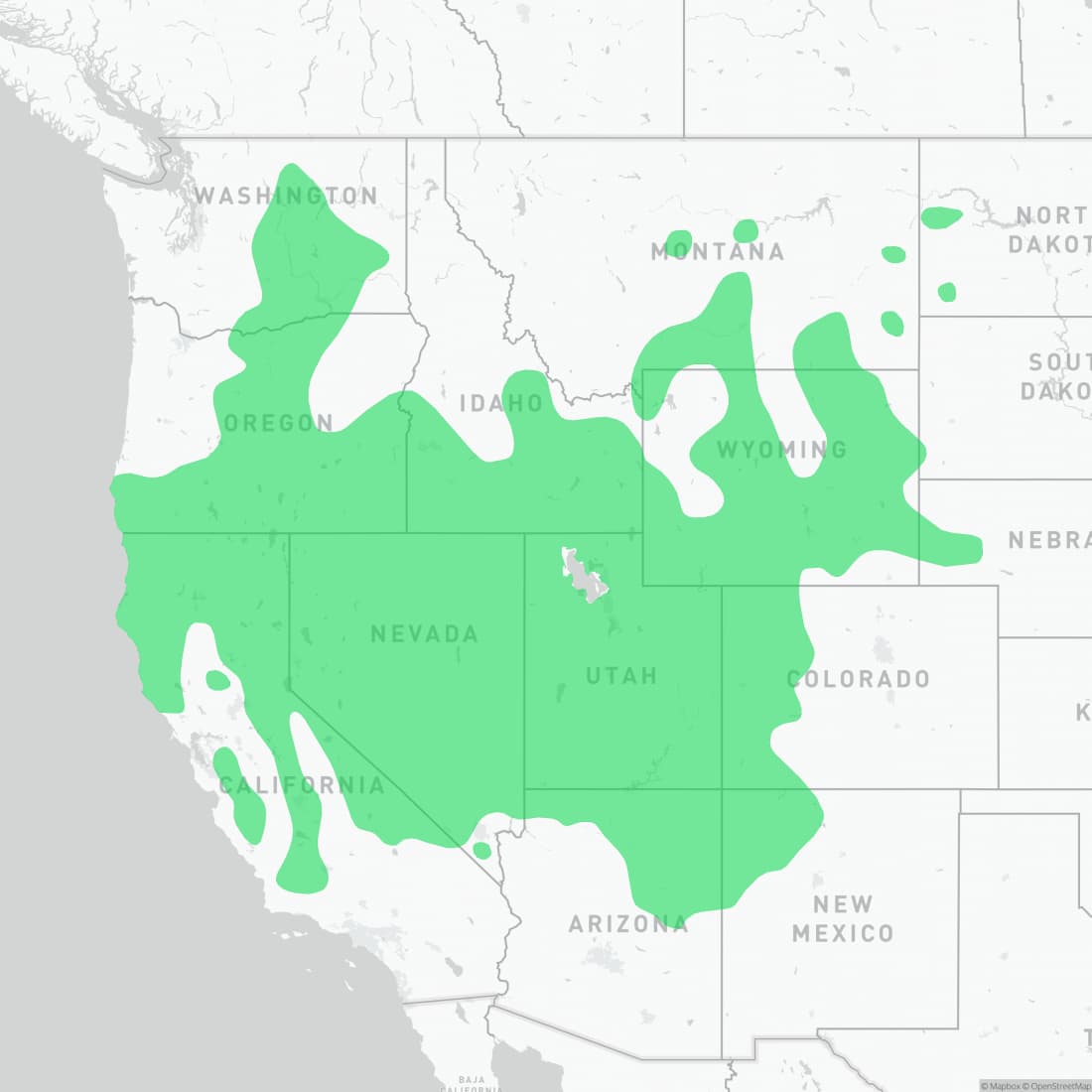
Found throughout much of the central western half of the United States.
Habitat
Lives at mid to high altitudes, commonly near sagebrush and other shrubland vegetation. Also found in conifer forests and piñon-juniper woodlands. They like to bask on logs and boulders.
Variations
Can have hints of blue or green in their dorsal scales. Males develop orange shading on their sides during breeding season. The blue throat may be absent on some males.
Similar species
This lizard is very similar to the western fence lizard (*Sceloporus occidentalis*), which is larger and has fewer scales and shares much of the same range. Also looks like the plateau fence lizard (*Sceloporus tristichus*) which shares some range, or the southwestern fence lizard (*Sceloporus cowlesi*) which is found further southeast.
Name and etymology
Genus
Sceloporus
Greek for leg (skelos) pores (porus), referencing femoral pores on back legs.
Origin
Sources
- Wiegmann, 1828. Isis von Oken, Vol. 21, p. 369 ↗
Sceloporus. Wiegmann, 1828 - Isis von Oken, Vol. 21, p. 369
Species epithet
graciosus
Latin for full of (-osus) grace (gracilis).
Origin
Sources
- Baird and Girard, 1852. Proc. Acad. Nat. Sci. Philadelphia, Vol. 6, p. 69 ↗
Uta. Baird and Girard, 1852 - Proc. Acad. Nat. Sci. Philadelphia, Vol. 6, p. 69
Explore more names in the etymology index.
More illustrations
At a glance
Range
Found throughout much of the central western half of the United States.
Habitat
Lives at mid to high altitudes, commonly near sagebrush and other shrubland vegetation. Also found in conifer forests and piñ…
Guide
Reptiles and Amphibians of North America
Range map
Approximate range. © Mapbox © OpenStreetMap