Southern Sagebrush Lizard
Sceloporus vandenburgianus
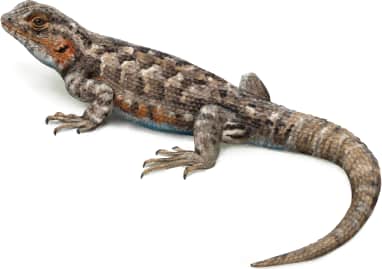
S. vandenburgianus is a relatively small lizard, with adults reaching a snout-to-vent length of 1.9 to 2.9 inches (4.8 - 7.3 cm). There is usually a black bar on the shou…
How to identify
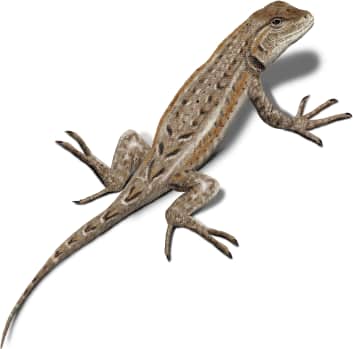
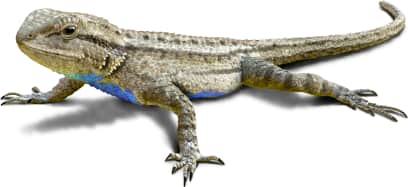
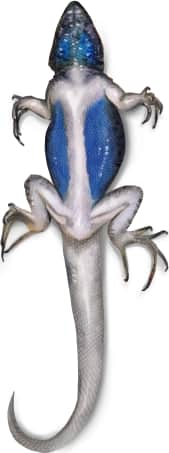
S. vandenburgianus is a relatively small lizard, with adults reaching a snout-to-vent length of 1.9 to 2.9 inches (4.8 - 7.3 cm). There is usually a black bar on the shoulder. Males typically have a grayish-brown body with darker blotches along the back and a bold blue patch on their belly. During breeding season, this blue patch becomes even more vibrant. Females tend to be duller in color than males, with a brownish-gray body and faint markings. Both sexes have a distinctive dark lateral stripe running along the side and a row of enlarged, keeled (ridged) scales on their dorsal surface.
Range
S. vandenburgianus is a resident of both the United States and Mexico. In the US, it inhabits higher elevation mountains in southern California, while in Mexico, it's found in northern Baja California. This species is considered a sky-island endemic, meaning its populations are isolated on mountaintops like ecological islands surrounded by unsuitable habitat.
Habitat
These lizards prefer open areas with scattered low bushes and plenty of sunshine. They are often found near rocky outcrops, logs, brush piles, or rodent burrows, utilizing them for basking, hiding, and escaping predators.
Similar species
S. vandenburgianus can be confused with the Western Fence Lizard (S. occidentalis), which also occurs in California. However, there are some key differences. S. vandenburgianus is generally smaller than S. occidentalis. S. vandenburgianus males have a more prominent blue belly patch, while S. occidentalis males typically have a combination of orange and blue belly patches.
Name and etymology
Genus
Sceloporus
Greek for leg (skelos) pores (porus), referencing femoral pores on back legs.
Origin
Sources
- Wiegmann, 1828. Isis von Oken, Vol. 21, p. 369 ↗
Sceloporus. Wiegmann, 1828 - Isis von Oken, Vol. 21, p. 369
Species epithet
vandenburgianus
Honoring herpetologist John Van Denburgh
Origin
Sources
- Cope, 1896. Amer. Nat., Vol. 30, p. 834 * * ↗
Sceloporus vandenburgianus. Cope, 1896 - Amer. Nat., Vol. 30, p. 834 * *
Explore more names in the etymology index.
More illustrations
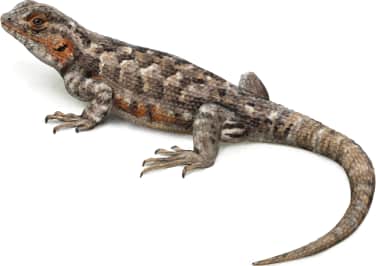
Female
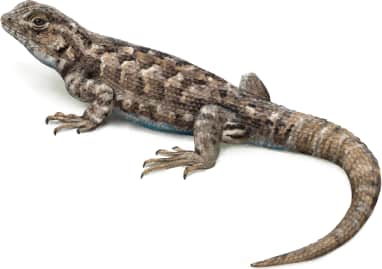
Male
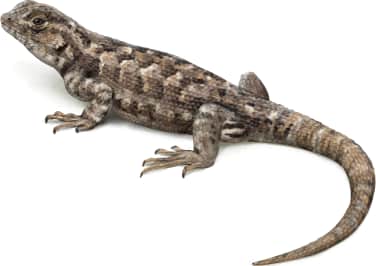
Female
At a glance
Range
S. vandenburgianus is a resident of both the United States and Mexico. In the US, it inhabits higher elevation mountains in s…
Habitat
These lizards prefer open areas with scattered low bushes and plenty of sunshine. They are often found near rocky outcrops, l…
Guide
Reptiles and Amphibians of North America
Range map
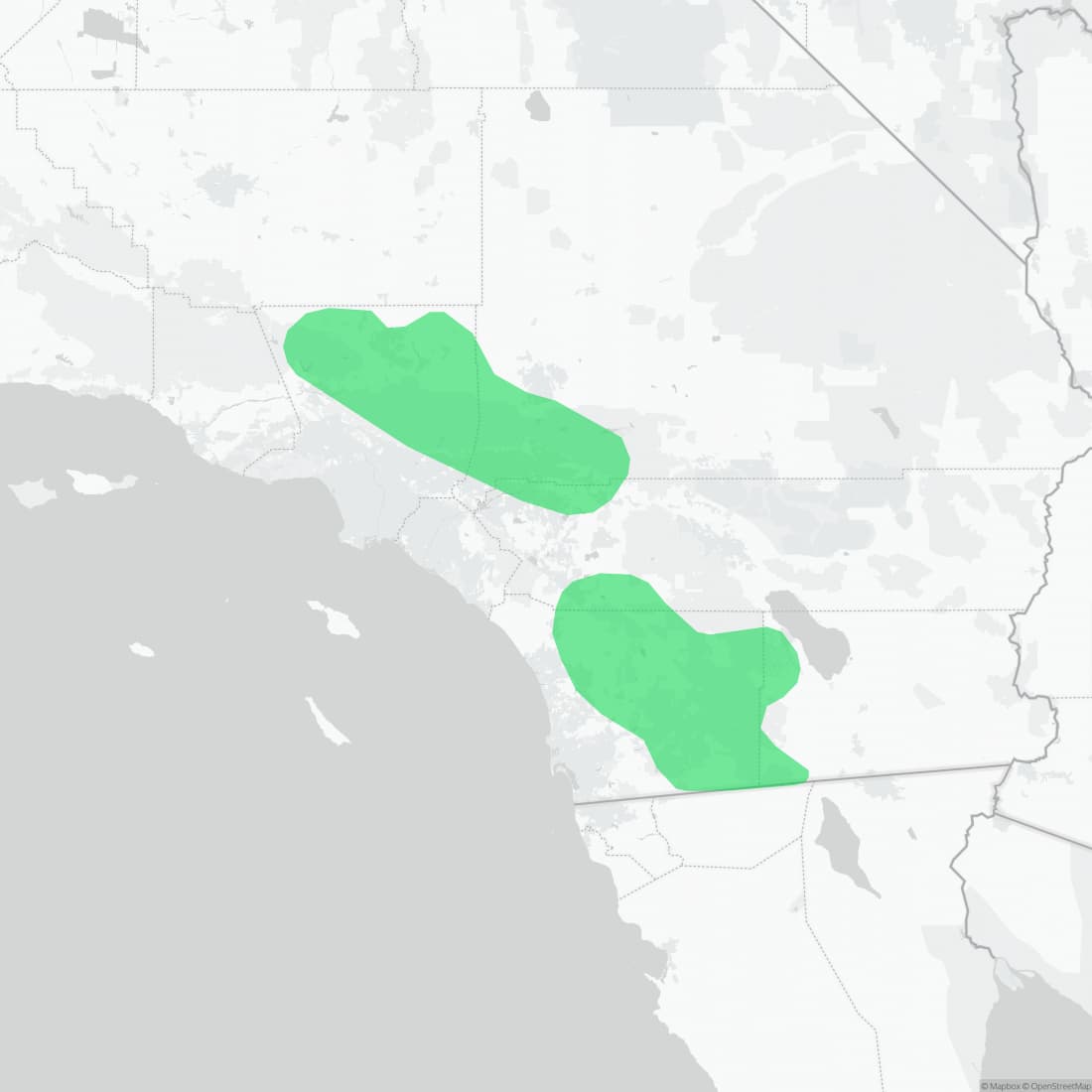
Approximate range. © Mapbox © OpenStreetMap