Giant Spotted Whiptail
Aspidoscelis stictogrammus
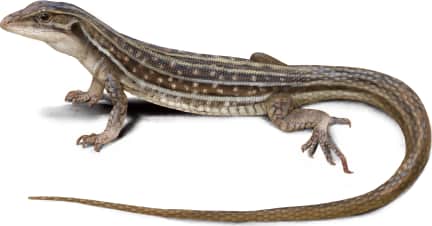
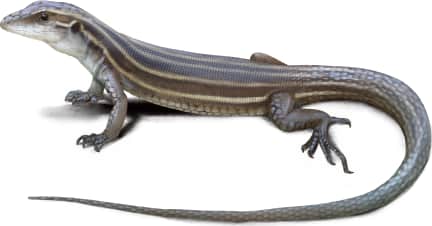
The largest species of whiptail in Arizona, this lizard can reach 51 cm in total length. Its tail is often twice as long as its body, and has keeled scales. The body scal…
How to identify
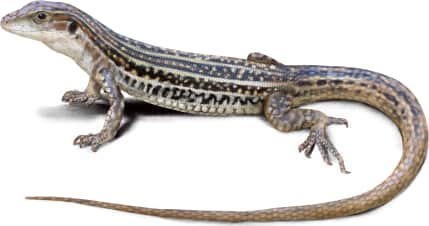
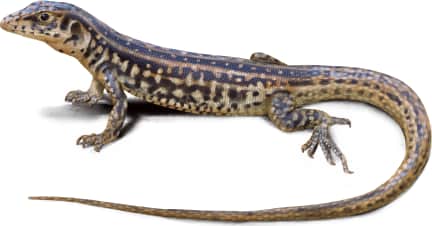
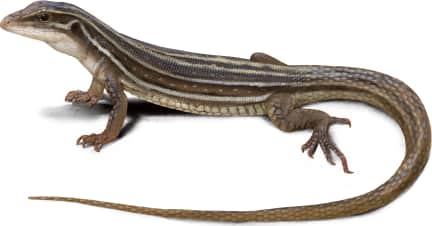
The largest species of whiptail in Arizona, this lizard can reach 51 cm in total length. Its tail is often twice as long as its body, and has keeled scales. The body scales are granular. Like all whiptails, it has a pointed face with plate-like scales on the head. Juveniles start out with 6 (sometimes 7) light longitudinal lines from the neck to the base of the tail on a dark background. With age, spots form between the light lines and the lines eventually break up into more spots. Spots also develop on the legs of adults. Juveniles start out with an orange tail that fades to tan with age.
Range
Southeastern Arizona into northwest Mexico.
Habitat
A ground-dwelling lizard found in a variety of habitats, including desert scrub, chaparral, semi-desert grassland, and oak or pine woodland. It prefers canyons, slopes, and foothills, rather than valley floors. Often found in dense thickets lining arroyos.
Variations
The light markings may be tinted yellow, blue, or green on lizards of all ages. If juveniles have a 7th line, it is often broken and incomplete.
Similar species
This lizard shares many similarities with other overlapping species of whiptail, including the western whiptail (*Aspidoscelis tigris*), Sonoran spotted whiptail (*Aspidoscelis sonorae*), desert grassland whiptail (*Aspidoscelis uniparens*), and Chihuahuan spotted whiptail (*Aspidoscelis exsanguis*).
Name and etymology
Genus
Aspidoscelis
Greek for shield (aspido) leg (skelos).
Origin
Sources
- Wagler, 1830. Nat. Syst. Amph., p. 154
Cnemidophorus. Wagler, 1830 - Nat. Syst. Amph., p. 154
Species epithet
stictogrammus
Greek for dotted (stiktos) writing (gramme).
Origin
Sources
- Burger, 1950. Nat. Hist. Misc. , No. 65, p. 5 ↗
Cnemidophorus burti stictogrammus. Burger, 1950 - Nat. Hist. Misc. , No. 65, p. 5
Explore more names in the etymology index.
At a glance
Range
Southeastern Arizona into northwest Mexico.
Habitat
A ground-dwelling lizard found in a variety of habitats, including desert scrub, chaparral, semi-desert grassland, and oak or…
Guide
Reptiles and Amphibians of North America
Range map
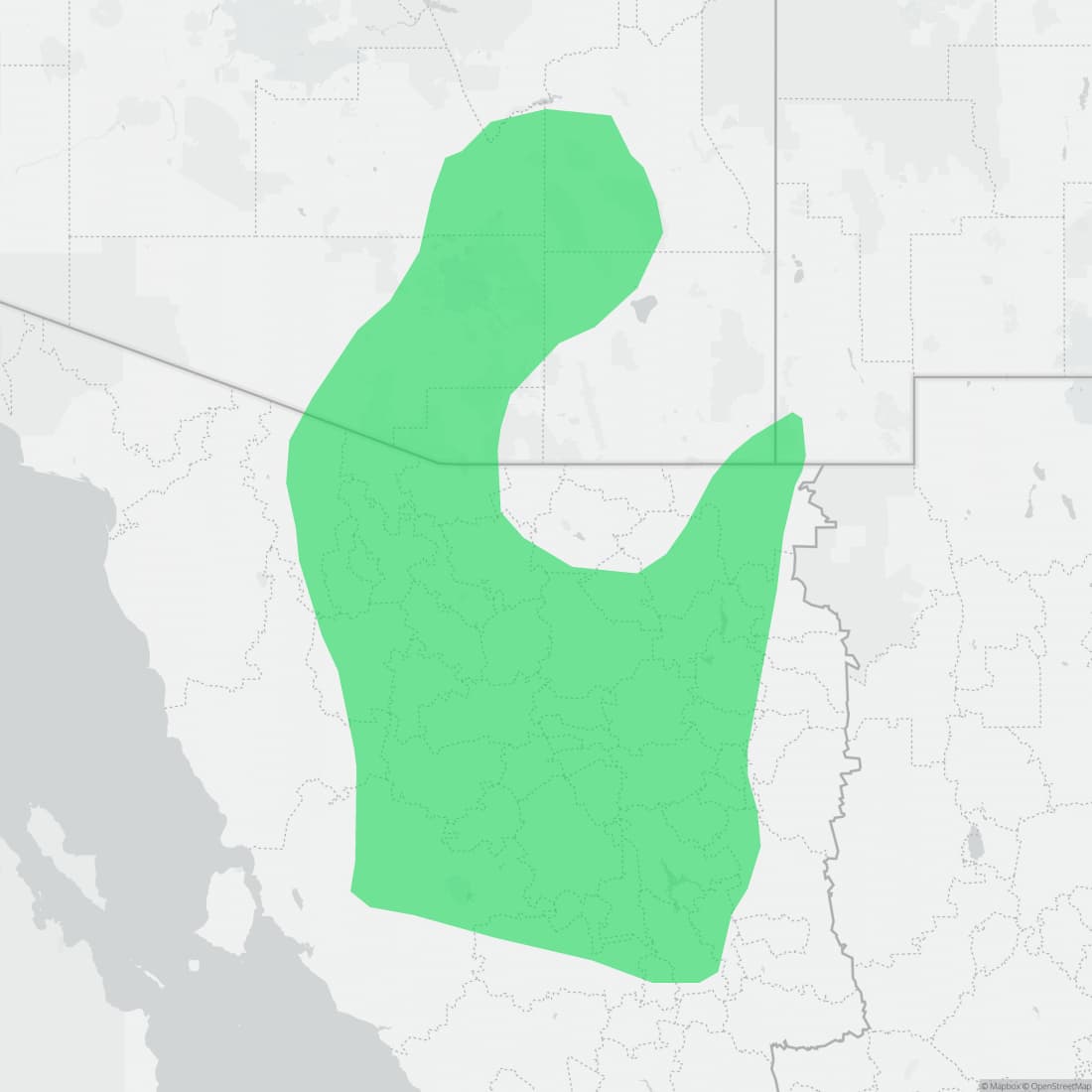
Approximate range. © Mapbox © OpenStreetMap