Chihuahuan Spotted Whiptail
Aspidoscelis exsanguis
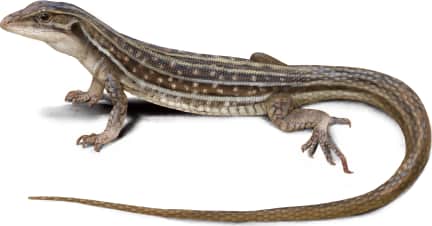
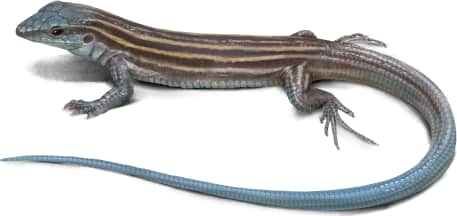
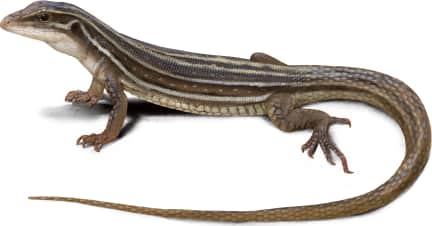
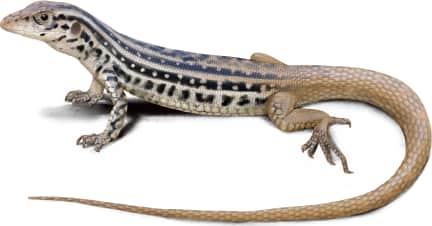
Dorsum is dark brown with 6 faded tan stripes that run the length of its body and tail and many small light tan spots between the lines and on the hind legs. Ventral side…
How to identify
Dorsum is dark brown with 6 faded tan stripes that run the length of its body and tail and many small light tan spots between the lines and on the hind legs. Ventral side is light cream and unmarked. This lizard reaches 9-12 inches and has a very pointed face. Tail is almost 3 times the body length. Tail scales are keeled.
Range
Central and southern New Mexico, Texas panhandle, southeastern Arizona, and into northern Mexico.
Habitat
Found in a variety of arid to moist regions including desert, dry grassland, basin forest, and woodland habitats.
Variations
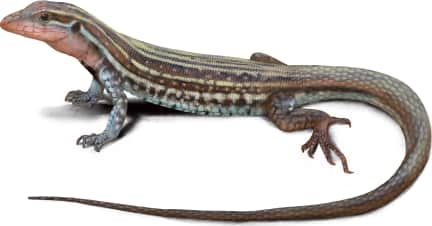
Brown coloration can have a reddish hue, and ventrum is sometimes pale blue. Spots on lower back and hind legs can be bright yellow.
Similar species
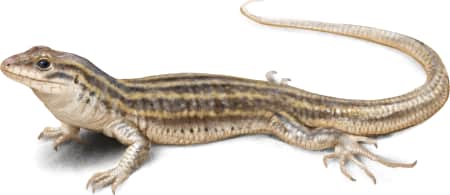
Similar appearance to several other whiptail species listed below, but tends to be distinguished by its many obvious spots and less distinct stripes. Common spotted whiptail (*Aspidoscelis gularis*) New Mexico whiptail (*Aspidoscelis neomexicanus*) Sonoran spotted whiptail (*Aspidoscelis sonorae*) Little striped whiptail (*Aspidoscelis inornatus*) Plateau spotted whiptail (*Aspidoscelis scalaris*)
Name and etymology
Genus
Aspidoscelis
Greek for shield (aspido) leg (skelos).
Origin
Sources
- Wagler, 1830. Nat. Syst. Amph., p. 154
Cnemidophorus. Wagler, 1830 - Nat. Syst. Amph., p. 154
Species epithet
exsanguis
Latin for similar to (ex) its family (sanguis)
Origin
Sources
- Lowe, 1956. Bull. Chicago Acad. Sci., Vol. 10, p. 138 ↗
Cnemidophorus exsanguis. Lowe, 1956 - Bull. Chicago Acad. Sci., Vol. 10, p. 138
Explore more names in the etymology index.
At a glance
Range
Central and southern New Mexico, Texas panhandle, southeastern Arizona, and into northern Mexico.
Habitat
Found in a variety of arid to moist regions including desert, dry grassland, basin forest, and woodland habitats.
Guide
Reptiles and Amphibians of North America
Range map
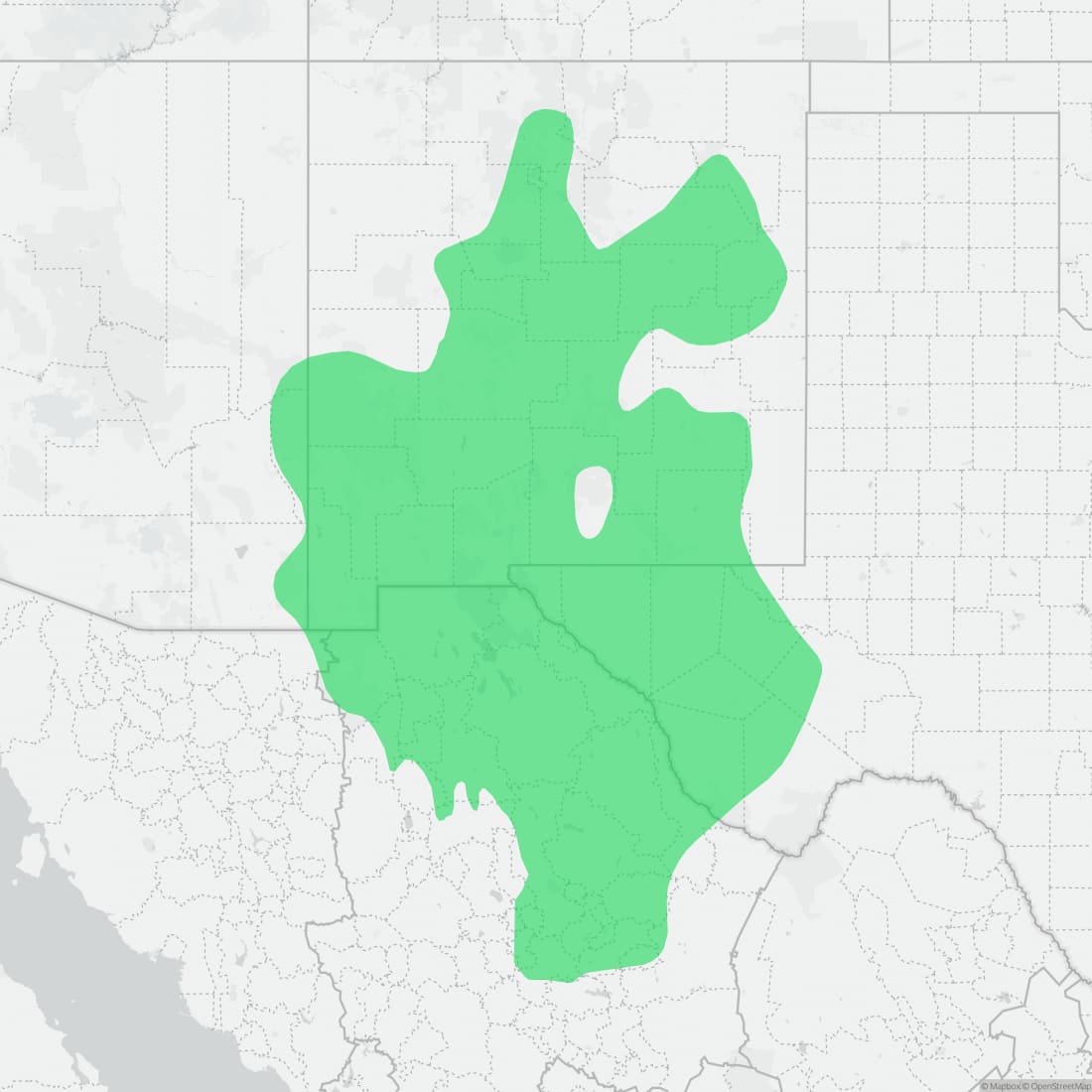
Approximate range. © Mapbox © OpenStreetMap