New Mexico Whiptail
Aspidoscelis neomexicanus
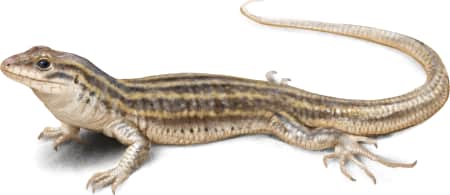
Exhibits a brown to black dorsum; seven yellow stripes run from head to tail. May display light colored markings between stripes. Throat varies from blue to green and bel…
How to identify
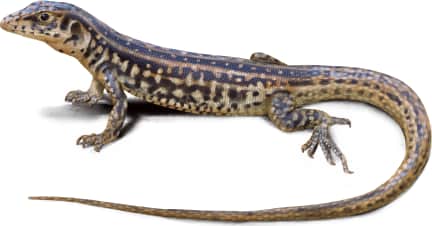
Exhibits a brown to black dorsum; seven yellow stripes run from head to tail. May display light colored markings between stripes. Throat varies from blue to green and belly can be light blue or white. All members of species are female; reproduction occurs through parthenogenesis, during which eggs can develop and be laid without fertilization by a sperm. Young are hatched in the summer; display blue tails.
Range
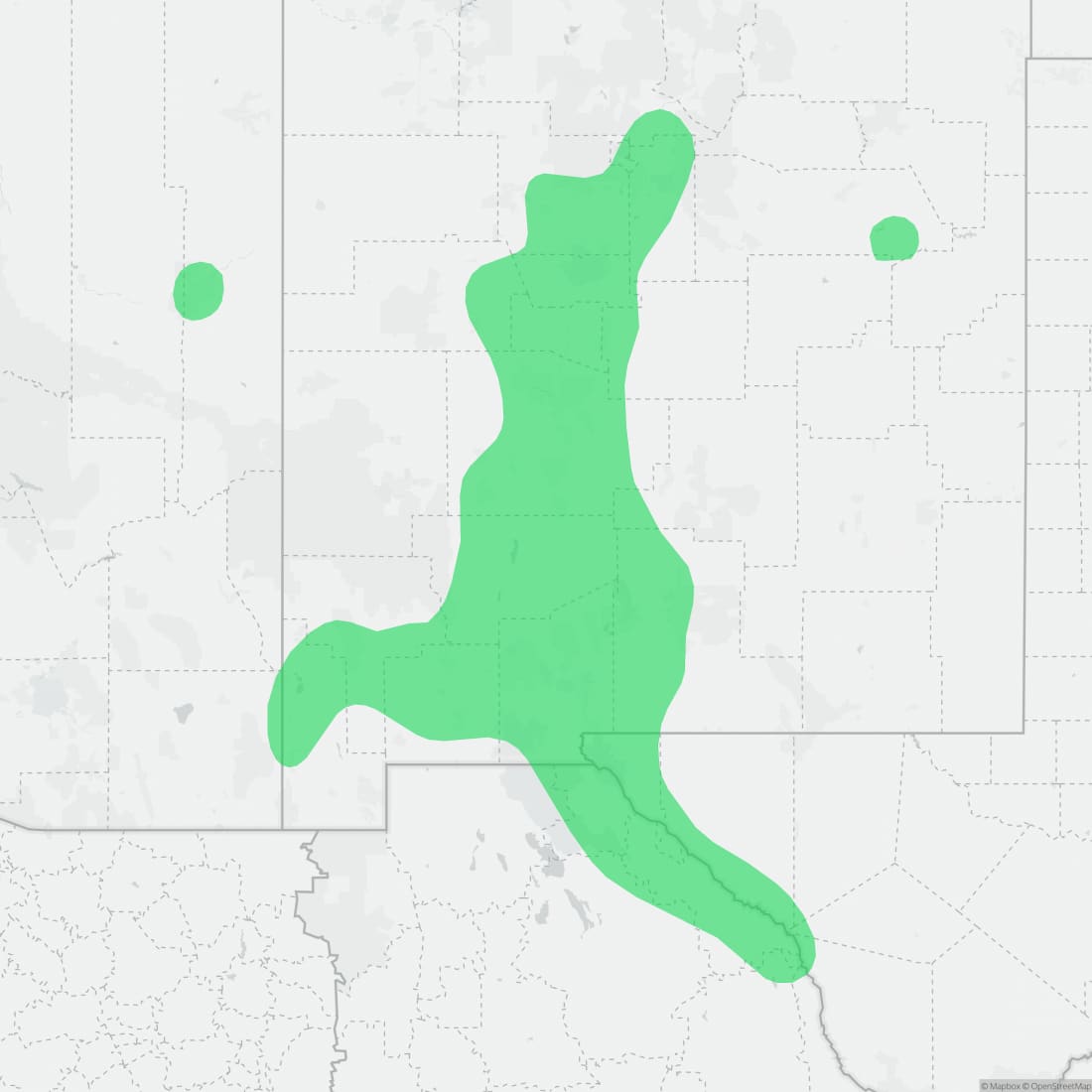
Parts of southern United States and Northern Mexico; in northwestern Texas, Chihuahua, and Apache County, Conchas Lake, and Fort Sumner New Mexico.
Habitat
Generally inhabits disturbed, drainage habitats along the Rio Grande. This can include grasslands, shrublands, woodlands, and deserts. Prefers sandy areas that contain sparse vegetation. Can also be found on fences and under rubble.
Variations
Adult's total length can range from 16-24 cm (6.5-9.5 in).
Similar species
Name and etymology
Genus
Aspidoscelis
Greek for shield (aspido) leg (skelos).
Origin
Sources
- Wagler, 1830. Nat. Syst. Amph., p. 154
Cnemidophorus. Wagler, 1830 - Nat. Syst. Amph., p. 154
Species epithet
neomexicanus
Belonging to New Mexico.
Origin
Sources
- Lowe and Zweifel, 1952. Bull. Chicago Acad. Sci., Vol. 9, p. 230 ↗
Cnemidophorus neomexicanus. Lowe and Zweifel, 1952 - Bull. Chicago Acad. Sci., Vol. 9, p. 230
Explore more names in the etymology index.
At a glance
Range
Parts of southern United States and Northern Mexico; in northwestern Texas, Chihuahua, and Apache County, Conchas Lake, and F…
Habitat
Generally inhabits disturbed, drainage habitats along the Rio Grande. This can include grasslands, shrublands, woodlands, and…
Guide
Reptiles and Amphibians of North America
Range map
Approximate range. © Mapbox © OpenStreetMap