
Pai Striped Whiptail
Aspidoscelis pai
This whiptail averages 3.4 inches from snout to vent. Like all whiptails, it has a pointed snout, plate-like scales on its head, granular body scales, and sharply keeled…
How to identify
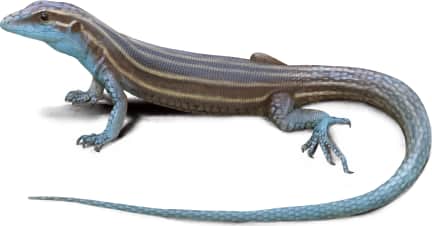
This whiptail averages 3.4 inches from snout to vent. Like all whiptails, it has a pointed snout, plate-like scales on its head, granular body scales, and sharply keeled scales on its whip-like tail. It has 6 light longitudinal lines on a dark brown to black background from behind the eyes to the base of the tail, which is bright blue. Its legs, face, and ventrum are tinted pale blue.
Range
Endemic to the Colorado Plateau of northern Arizona, with a small disjunct population in central Arizona.
Habitat
This ground-dwelling species is usually found in plains or grassland habitats, and sometimes into conifer woodlands or chaparral. It likes to forage through ground debris during the day.
Variations
It may have a central 7th line that is often incomplete. Lines are cream to yellow in color. Background body color is reddish brown to black.
Similar species
This species is quite similar to the Arizona striped whiptail (*Aspidoscelis arizonae*), plateau striped whiptail (*Aspidoscelis velox*), and desert grassland whiptail (*Aspidoscelis uniparens*).
Name and etymology
Genus
Aspidoscelis
Greek for shield (aspido) leg (skelos).
Origin
Sources
- Wagler, 1830. Nat. Syst. Amph., p. 154
Cnemidophorus. Wagler, 1830 - Nat. Syst. Amph., p. 154
Species epithet
pai
Referencing the Pai tribes of .
Sources
- Wright and Lowe, 1993 J. Arizona. Nevada Acad. Sci. 27:129-157
Cnemidophorus pai. Wright and Lowe, 1993 J. Arizona-Nevada Acad. Sci. 27:129-157
Explore more names in the etymology index.
At a glance
Range
Endemic to the Colorado Plateau of northern Arizona, with a small disjunct population in central Arizona.
Habitat
This ground-dwelling species is usually found in plains or grassland habitats, and sometimes into conifer woodlands or chapar…
Guide
Reptiles and Amphibians of North America
Range map
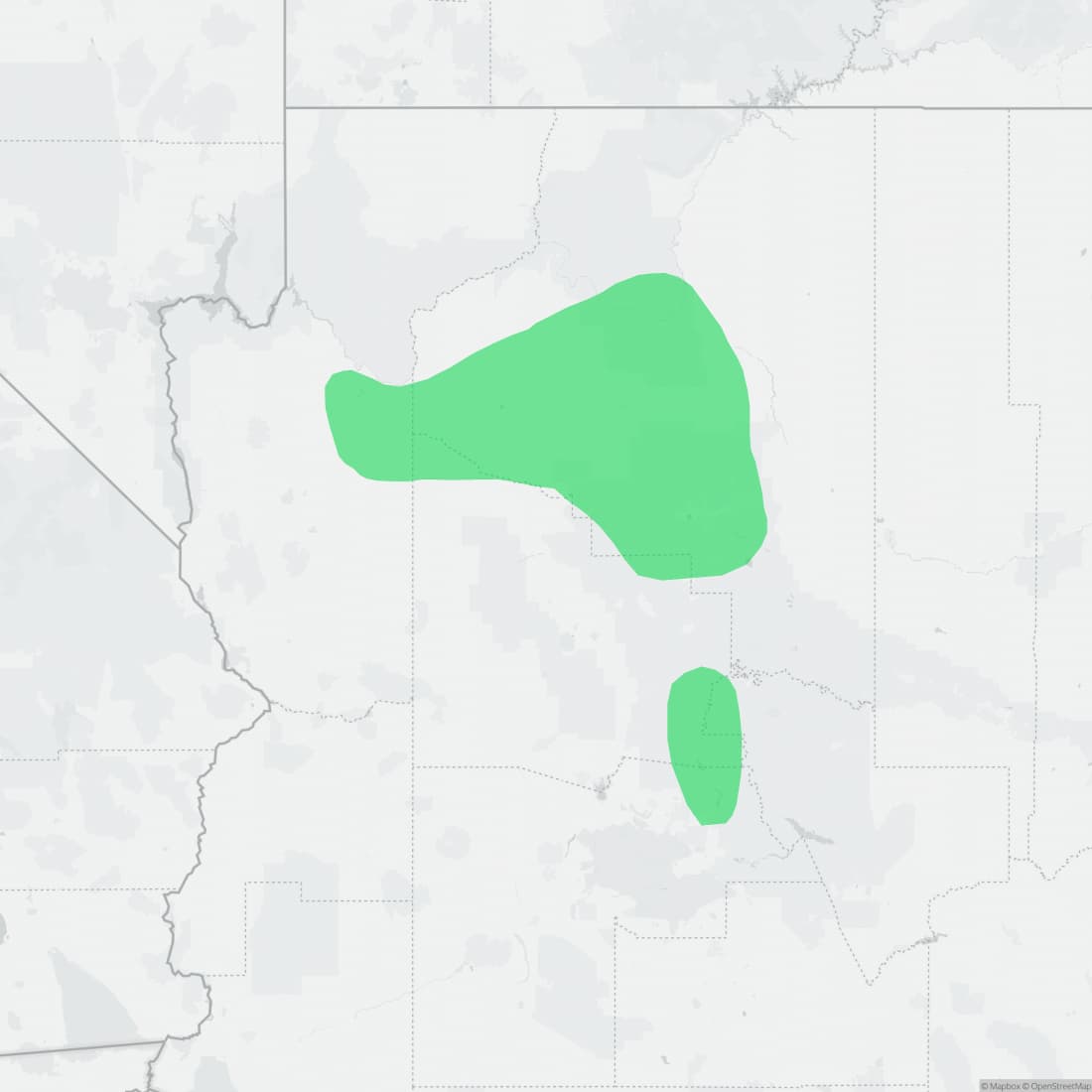
Approximate range. © Mapbox © OpenStreetMap