Reef Gecko
Sphaerodactylus notatus
This tiny gecko reaches just 2-2.25 inches in total length. It is rather dull in appearance, being primarily grey with light brown speckling. It has keeled, overlapping s…
How to identify
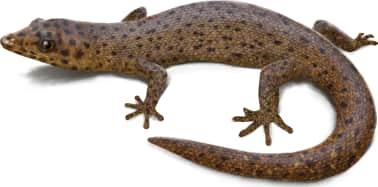
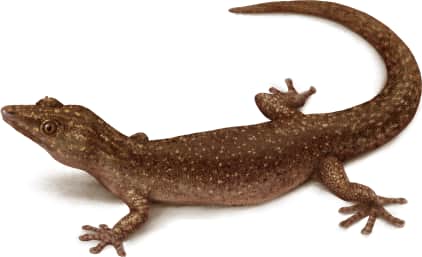
This tiny gecko reaches just 2-2.25 inches in total length. It is rather dull in appearance, being primarily grey with light brown speckling. It has keeled, overlapping scales, and a narrow head with a sharply pointed snout. It has very small toe pads for gripping surfaces. Its brown markings typically start out as 3 wide stripes on its head, which quickly break up into diffuse speckling over the rest of its body, past the neck. Its ventrum is pale grey and unmarked.
Range
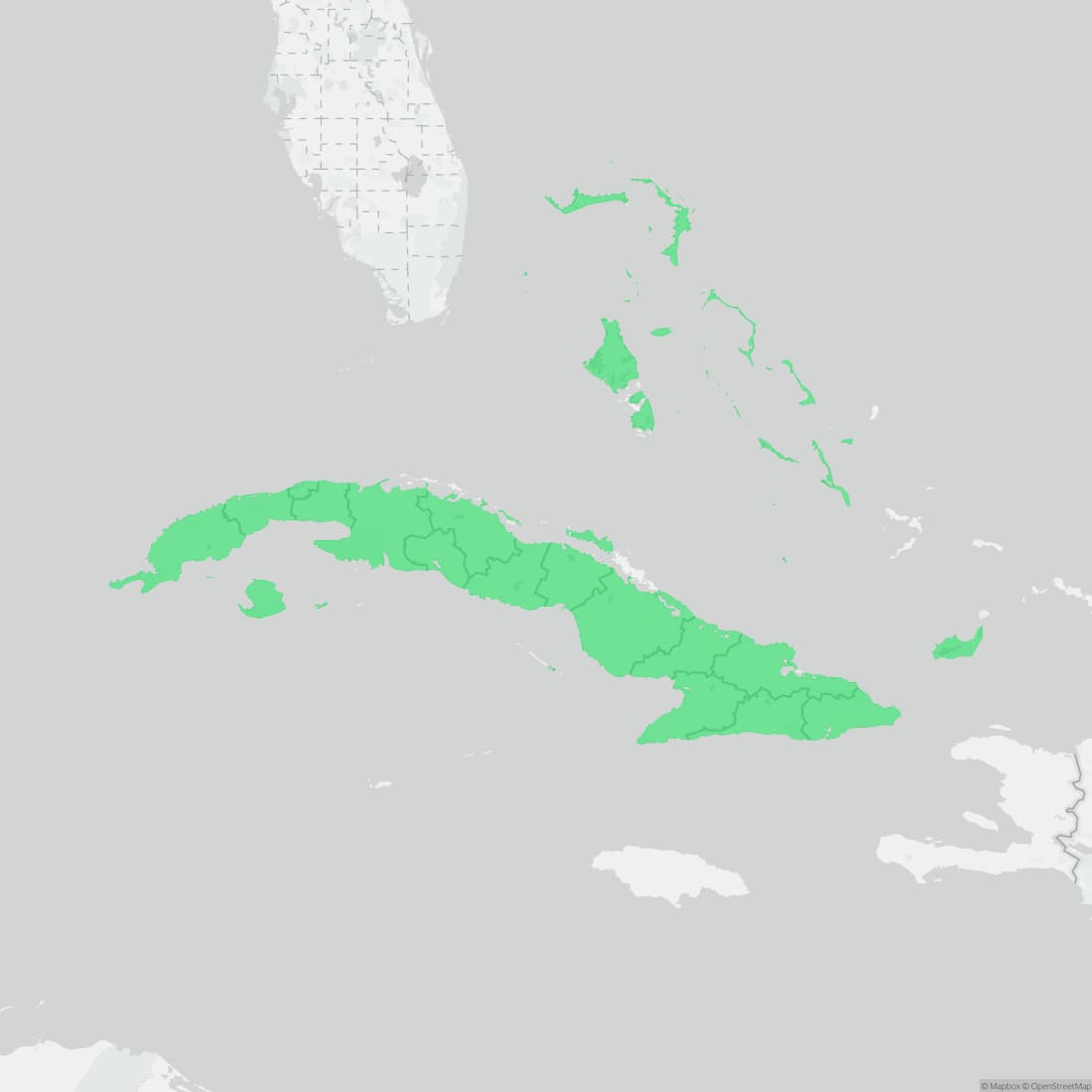
Native to Cuba, the Bahamas, and extreme southern Florida and the Florida Keys.
Habitat
This ground-dwelling gecko inhabits leaf litter and other debris in a variety of habitats, including woodlands, forests, coppices, coconut groves, gardens, cave entrances, and vacant lots. It can be found around abandoned buildings and manmade debris, but rarely lives around human activity. It is commonly found under beach debris just above the high tide zone.
Variations
Some develop an orange hue on their face and head, and a yellowish hue on their tail. Some are lighter all over, and have a pale yellowish background color, instead of grey. Some have head and neck stripes but lack speckling on the rest of their body.
Similar species
Most likely to be confused with the ashy gecko (*Sphaerodactylus elegans*).
Name and etymology
Genus
Sphaerodactylus
Greek for ball-like (sphaira) finger (dactylos).
Origin
Sources
- Wagler, 1830. Nat. Syst. Amph., p. 143
Sphaerodactylus. Wagler, 1830 - Nat. Syst. Amph., p. 143
Species epithet
notatus
Latin for marked.
Origin
Sources
- Baird, 1858. Proc. Acad. Nat. Sci. Philadelphia, Vol. 11, p. 254 ↗
Sphaerodactylus notatus. Baird, 1858 - Proc. Acad. Nat. Sci. Philadelphia, Vol. 11, p. 254
Explore more names in the etymology index.
At a glance
Range
Native to Cuba, the Bahamas, and extreme southern Florida and the Florida Keys.
Habitat
This ground-dwelling gecko inhabits leaf litter and other debris in a variety of habitats, including woodlands, forests, copp…
Guide
Reptiles and Amphibians of North America
Range map
Approximate range. © Mapbox © OpenStreetMap