Sonoran Shovel-nosed Snake
Sonora palarostris
The Sonoran Shovel-nosed snake is a small non-venomous snake that is native to the Sonoran Desert. It is cross-banded with black, yellow or whitish and red bands. It has…
How to identify
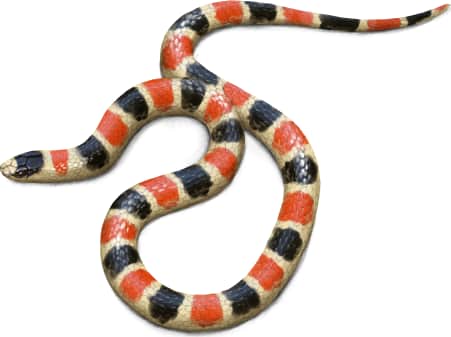
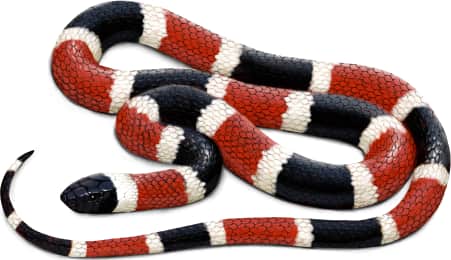
The Sonoran Shovel-nosed snake is a small non-venomous snake that is native to the Sonoran Desert. It is cross-banded with black, yellow or whitish and red bands. It has a black snout with bands that go all the way around with a solid yellow belly. Its smooth dorsal rows are neatly arranged in 15 rows at mid-body and it usually achieves a maximum length of 15 inches.
Range
The Sonora palarostris is found in the range of western Pima County in Arizona. It is a unique resident of the Sonoran desert in North America. It is especially found in Organ Pipe Cactus National Monument in the Western Pima County.
Habitat
They are found in desert scrub areas near gravelly washes along mildly sloping badajas. They occupy very rocky terrains and found primarily in evenings and being nocturnal. It is a ground dweller most active in the spring and hibernates in the late months of fall and winter. It is a good burrower that spends most of its time in the soil. The Sonoran shovel-nosed snake feeds on insects, spiders, centipedes and a couple of other invertebrates and are known to mate in the spring laying a clutch of up to 5 eggs in summer.
Variations
The Organ Pipe shovel-nosed snake (Sonora palarostris organica) is also called Organ Pipe Shovel-nosed snake. It is known to be active in the evening and at night near washes. They are found in the locality 5 miles south of Magdalena, Sonora, Mexico. It is a relatively small snake known to measure between 10 – 17 inches long with a flattened head adapted to moving through sand or soft soil in arid vegetation. Females have been reportedly found with four clutches of eggs.
Similar species
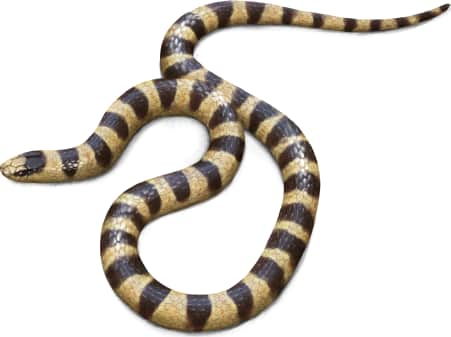
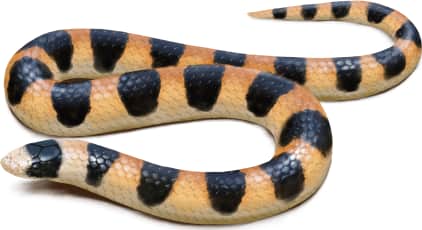
The Mojave Shovel-nosed snake (Sonora occipitalis) is a snake found across Arizona, California, Nevada in the United States and Mexico. It grows up to 15 inches in length with about 20 dark brown or black bands on a light yellow background. It has a light snout that distinguishes it from similar-looking snakes that have black snouts. The Variable Sand snake (Sonora stramineus) is a small rounded snake that grows to a maximum of 11 inches. It has smooth shiny scales, a narrow head, flattened snout, nasal valves and counter set jaws. It is also equipped with a concave belly having a general ground color of cream to reddish or yellowish-orange. The Sonoran Coral Snake (Micruroides Euryxanthus) is a small snake measuring up to 24 inches that is slender, brightly colored with red, cream or black rings that completely encircle the body and possess a white snout.
Name and etymology
Genus
Sonora
Referencing the region of Sonora.
Origin
Sources
- Baird and Girard, 1853. Cat. N. Amer. Rept., Pt. 1, p. 117 ↗
Sonora. Baird and Girard, 1853 - Cat. N. Amer. Rept., Pt. 1, p. 117
Species epithet
palarostris
Latin for stakes (palar) of the nose (rostris)
Origin
Sources
- Wikipedia: Sonora palarostris ↗
“Sonora palarostris.” Wikipedia. https://en.wikipedia.org/wiki/Sonora_palarostris
Explore more names in the etymology index.
At a glance
Range
The Sonora palarostris is found in the range of western Pima County in Arizona. It is a unique resident of the Sonoran desert…
Habitat
They are found in desert scrub areas near gravelly washes along mildly sloping badajas. They occupy very rocky terrains and f…
Guide
Reptiles and Amphibians of North America
Range map
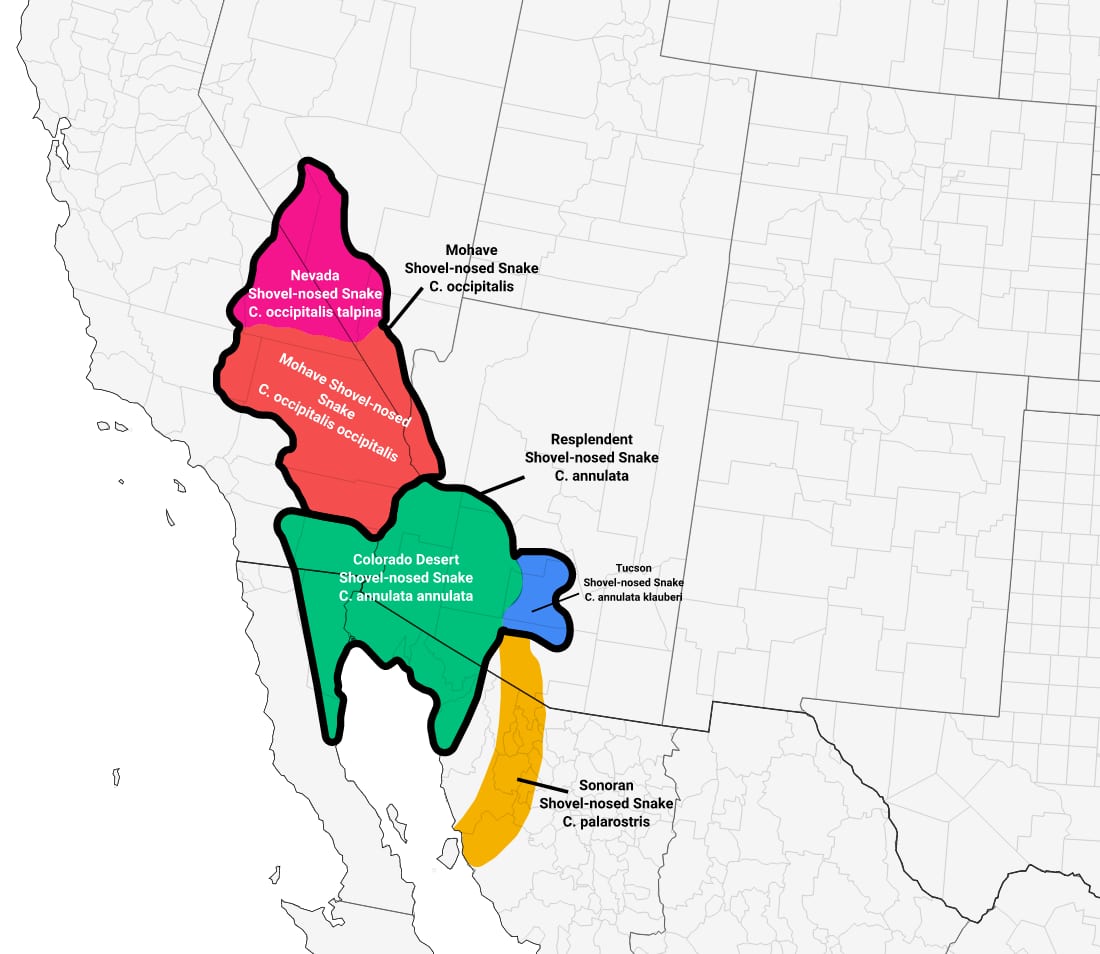
Approximate range. © Mapbox © OpenStreetMap