Banded Sand Snake
Sonora cincta
It is a small snake measuring up to 11 inches, it is smoothly rounded has shiny scales with a narrow head and flat snout. It has nasal valves with counter set lower jaws,…
How to identify
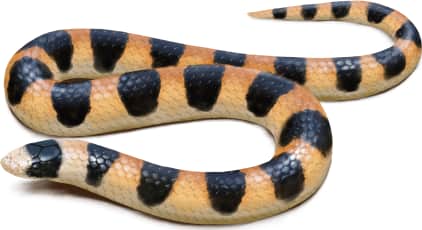
It is a small snake measuring up to 11 inches, it is smoothly rounded has shiny scales with a narrow head and flat snout. It has nasal valves with counter set lower jaws, small upturned jaws, and a concave abdomen. It has dorsal saddles on its back colored black or brown which usually circles its body. Its ground color varies from cream to yellow or reddish-orange to strawberry and it has a cream to pale yellow abdomen without markings. Its inter-nasal scales are separated by large rostral scales. It has round pupils and a head not distinct from its thick neck.
Range
The Sonora cincta is found primarily in the area of south-central Arizona with isolated populations in the southwestern part of the state extending far west as the vicinity of Liguria in Yuma County.
Habitat
They are found in arid deserts with sandy or loamy soils, creosote bush flats, arroyos and areas grown with mesquite and saguaro. They are nocturnal snakes’ barely making appearances during the day consistently burrowing for invertebrates such as grasshoppers, cockroaches, and centipedes. They are usually found full of eggs between June and July with mating taking place in late spring and an average of four clutches of eggs laid in the summer. It is known to hibernate during winter months.
Similar species
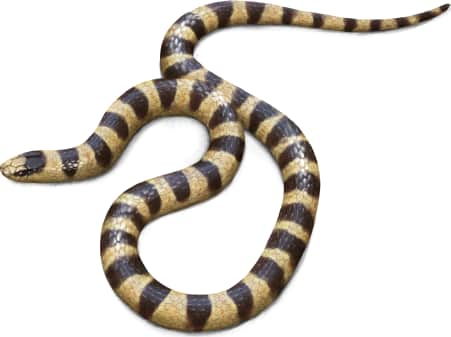
The Resplendent Desert Shoveled Nose Snake (Sonora annulata) is a small rounded snake without keels. It has shiny scales with a narrow head possessing a massive spade like scale at the tip of its shovel-like snout. It has a cream to yellowish ground color with a body usually entirely circled with maximum of 25 bands. The Variable Ground snake (Sonora semiannulata) is a secretive non-poisonous snake with a round body, smooth scales and a head almost as wide as its neck. It varies in colors and remains underground during daytime appearing only at night and during periods of heavy rainfall.
Name and etymology
Genus
Sonora
Referencing the region of Sonora.
Origin
Sources
- Baird and Girard, 1853. Cat. N. Amer. Rept., Pt. 1, p. 117 ↗
Sonora. Baird and Girard, 1853 - Cat. N. Amer. Rept., Pt. 1, p. 117
Species epithet
stramineus
Latin for straw.
Origin
Sources
- Wikipedia: Sonora cincta ↗
“Sonora cincta.” Wikipedia. https://en.wikipedia.org/wiki/Sonora_cincta
Explore more names in the etymology index.
At a glance
Range
The Sonora cincta is found primarily in the area of south-central Arizona with isolated populations in the southwestern part…
Habitat
They are found in arid deserts with sandy or loamy soils, creosote bush flats, arroyos and areas grown with mesquite and sagu…
Guide
Reptiles and Amphibians of North America
Range map
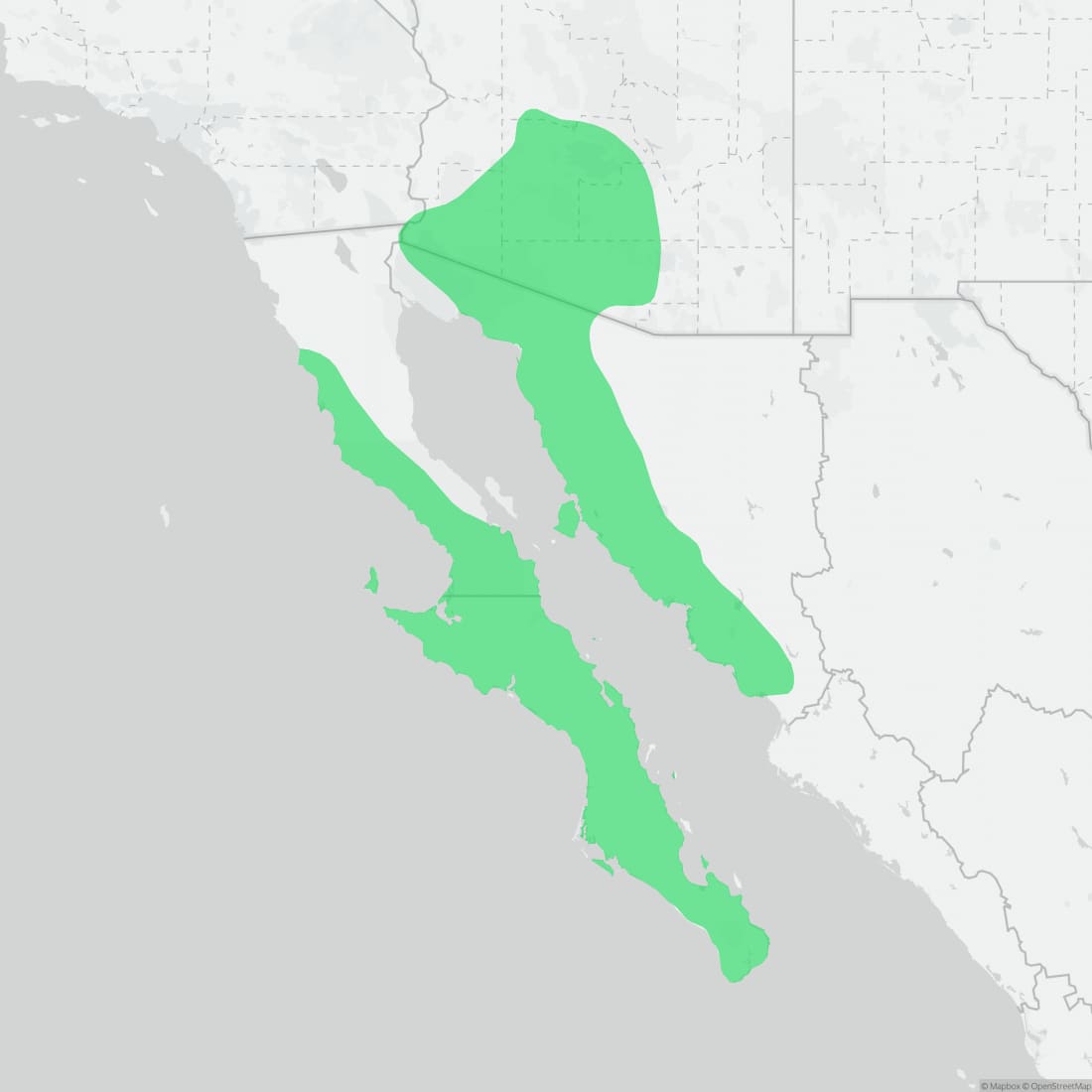
Approximate range. © Mapbox © OpenStreetMap