Central American Indigo Snake
Drymarchon melanurus
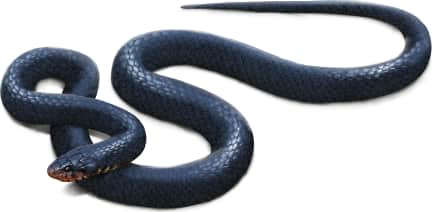
A large non-venomous mostly bluish-black snake with smooth, glossy scales. The ventral surface and sides of face and neck are light tan to orange with lateral black bands…
How to identify
A large non-venomous mostly bluish-black snake with smooth, glossy scales. The ventral surface and sides of face and neck are light tan to orange with lateral black bands. Adults can be 6-8 feet long, 2-3 inches wide, and weigh 5-6 pounds. They have 2 vertical and 1 diagonal black line under each eye. Undivided anal plate.
Range
In the US, this species is only found in deep south Texas, but its range extends along the east and west coasts of Mexico, through Central America, and into the coastal region of northwestern South America.
Habitat
Lives in riparian areas of mesquite woodlands or thorn scrub. They will climb into the lower branches of trees to hunt over the edges of ponds or streams. Can be found from sea level up to elevations of 6,200 feet.
Variations
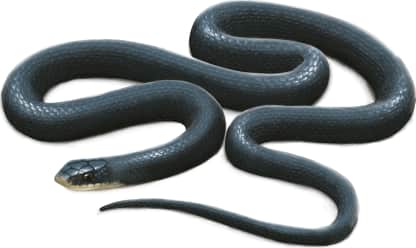
The lighter ventral surface varies from off-white to tan and orange. Some individuals are a dark grey or olive-brown instead of black.
Similar species
There are several other species and subspecies of indigo snake similar to this one, and they all have different natural ranges and vary in coloration. *Drymarchon corais* is only found throughout northern South America. The eastern indigo snake (*Drymarchon couperi*) is only found in the southeastern US. The Central American indigo snake could also be confused with the North American racer (*Drymarchon couperi*) which is mostly black when full grown, but is a smaller snake overall and lacks any distinct pattern once grown.
Name and etymology
Genus
Drymarchon
Greek for forest (drymos) chief (archos).
Origin
Sources
- Fitzinger, 1843. Syst. Rept., p. 26 ↗
Thamnophis. Fitzinger, 1843 - Syst. Rept., p. 26
Species epithet
melanurus
Greek for black (melas) tail (oura).
Origin
Sources
- Wikipedia: Drymarchon melanurus ↗
“Drymarchon melanurus.” Wikipedia. https://en.wikipedia.org/wiki/Middle_American_indigo_snake
Explore more names in the etymology index.
At a glance
Range
In the US, this species is only found in deep south Texas, but its range extends along the east and west coasts of Mexico, th…
Habitat
Lives in riparian areas of mesquite woodlands or thorn scrub. They will climb into the lower branches of trees to hunt over t…
Guide
Reptiles and Amphibians of North America
Range map
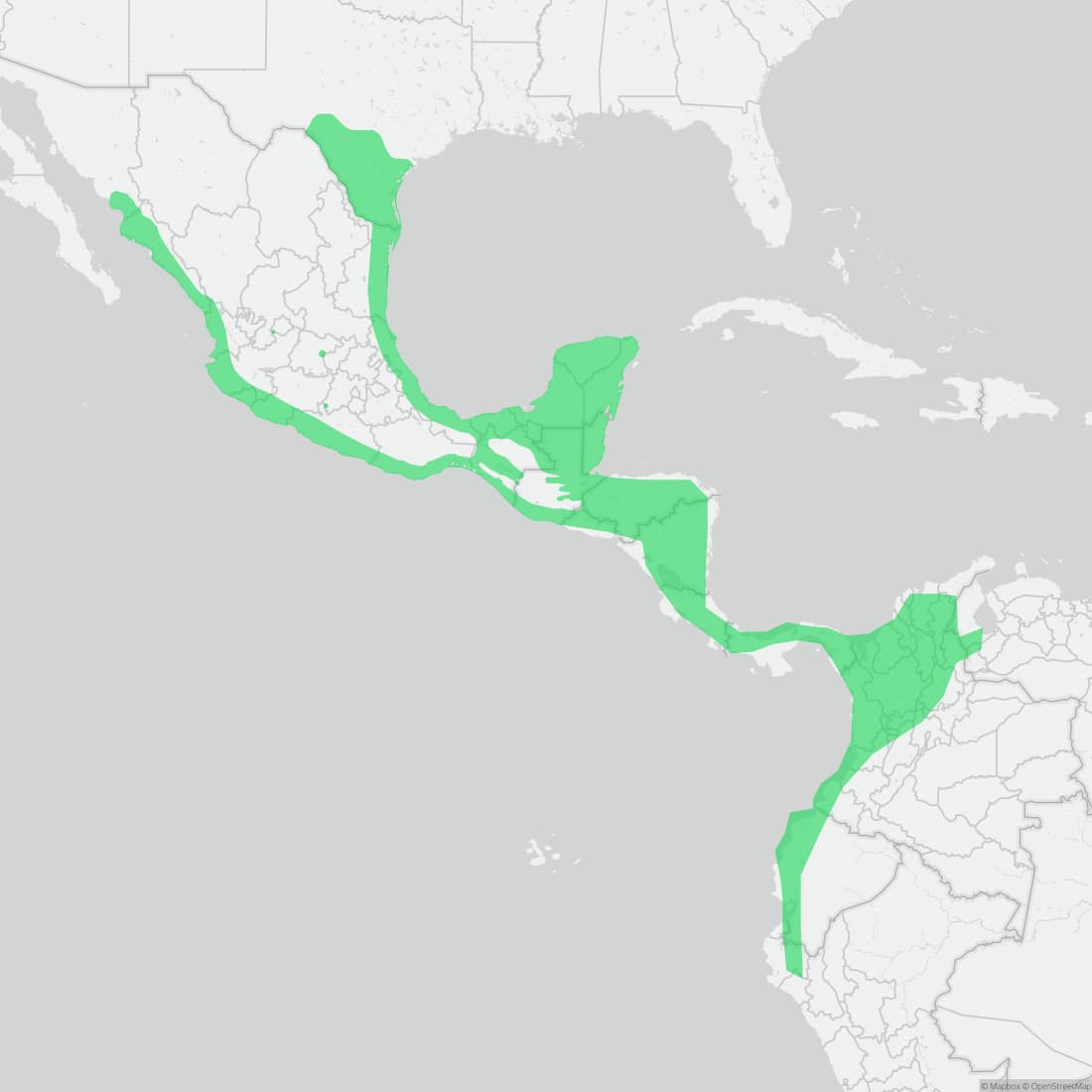
Approximate range. © Mapbox © OpenStreetMap