
Big Bend Blackhead Snake
Tantilla cucullata
Growing up to a length of 8-17 inches, the big bend black head snake is the largest species of tantilla found in the United States. At mid body it has 15 dorsal scale row…
How to identify
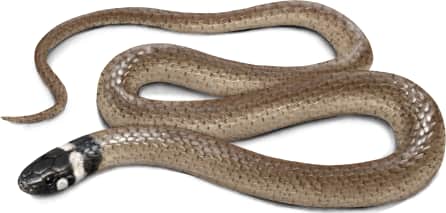
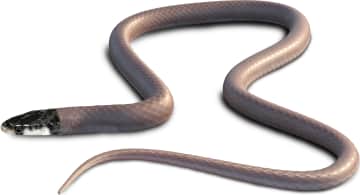
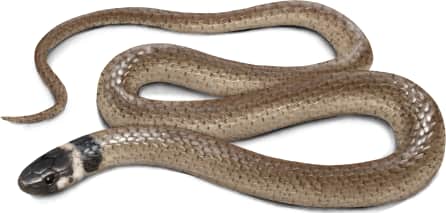
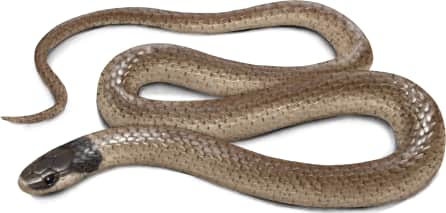
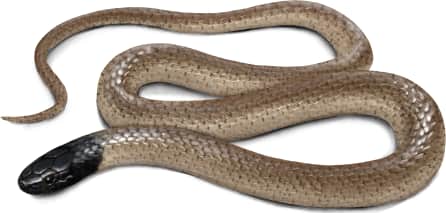
Growing up to a length of 8-17 inches, the big bend black head snake is the largest species of tantilla found in the United States. At mid body it has 15 dorsal scale rows and a separated anal plate. It has a tan dorsal surface and a white underbelly. The head is black and extends for a minimum of five dorsal scale rows. There are however, two distinct patterns associated with the cucullata. One pattern is all black and the second has a white band separating the head and the base of the neck. It also has white below the eyes and occasionally on the snout.
Range
It has a restricted range and is found only in the state of Texas, particularly in the eastern parts of the Trans-Pecos near Del Rio and the Big Bend.
Habitat
They are found in the limestone hills of the Chihuahuan desert hiding in the cracks and crevices of rocks away from predators. They are shy and not very frequently seen. They feed on insects and invertebrates such as centipedes and spiders. They are oviparous laying a clutch of three eggs around June.
Variations
The big bend black head snake has a white collared varient. It has a white band which separates the black head from a black neck.
Similar species
The southeastern crown snake or Tantilla coronata grows up to 8-10 inches, has a reddish brown dorsum and a yellowish collar band. The Florida crowned snake or Tantilla relicta is endemic to Florida, grows to a maximum of 11.5 inches, has a golden brown dorsum and a darker head. The rim rock crowned snake or Tantilla oolitica has a brown dorsum with hues of tan to beige and a black head.
Name and etymology
Genus
Tantilla
Latin for something small and insignificant.
Origin
Sources
- Baird and Girard, 1853. Cat. N. Amer. Rept., Pt. 1, p. 131 ↗
Tantilla. Baird and Girard, 1853 - Cat. N. Amer. Rept., Pt. 1, p. 131
Species epithet
cucullata
Latin for hooded.
Origin
Sources
- Minton, 1956. Fieldiana, Zoology, Chgo. Natl. Hist. Mus., Vol. 34, No. 39, p. 449
Tantilla cucullata. Minton, 1956 - Fieldiana, Zoology, Chgo. Natl. Hist. Mus., Vol. 34, No. 39, p. 449
Explore more names in the etymology index.
More illustrations
At a glance
Range
It has a restricted range and is found only in the state of Texas, particularly in the eastern parts of the Trans-Pecos near…
Habitat
They are found in the limestone hills of the Chihuahuan desert hiding in the cracks and crevices of rocks away from predators…
Guide
Reptiles and Amphibians of North America
Range map
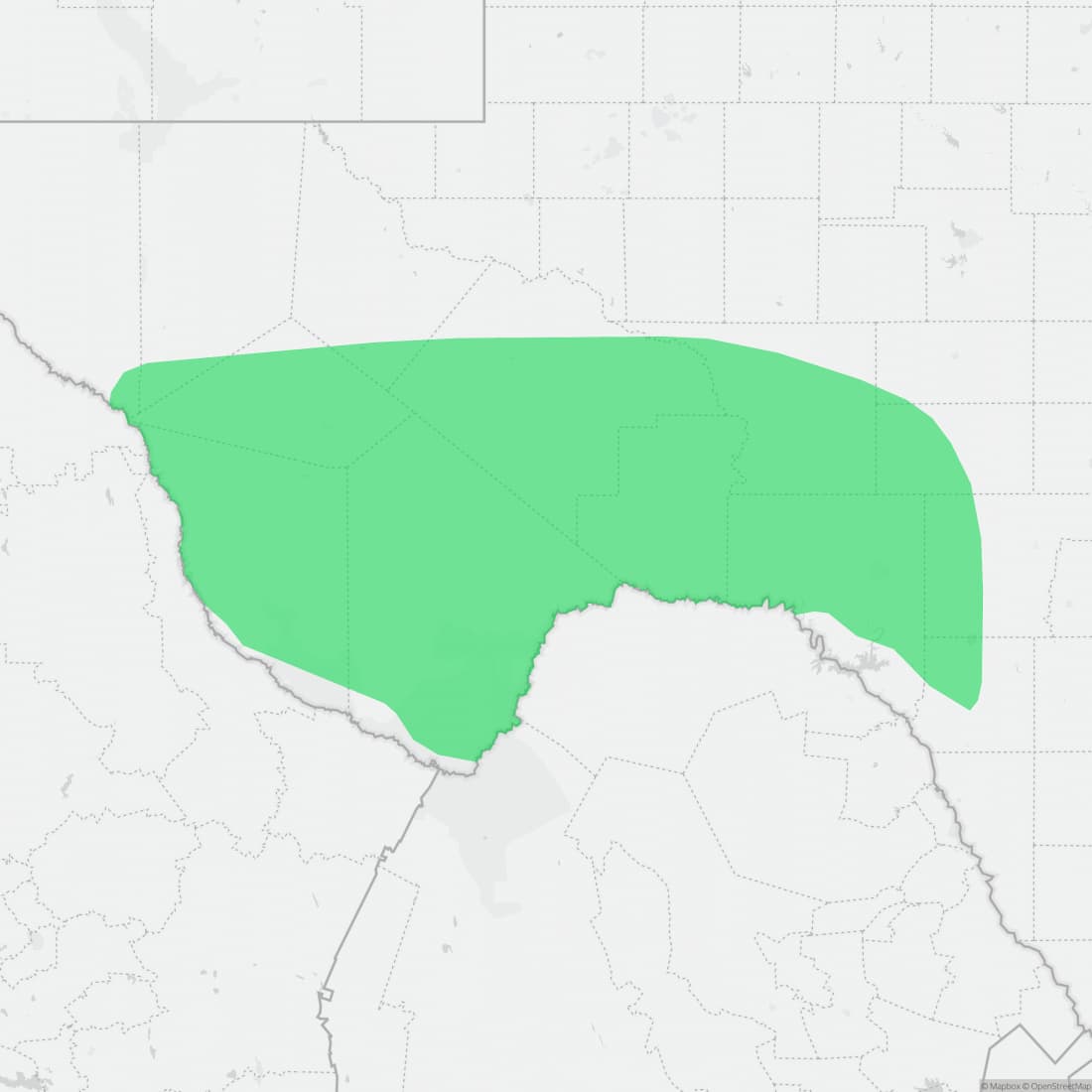
Approximate range. © Mapbox © OpenStreetMap