Florida Crowned Snake
Tantilla relicta
A small, skinny, worm-like snake averaging 7-9 inches long. It has smooth glossy scales and a small flattened head. Its body is a solid light tan to salmon color, and its…
How to identify
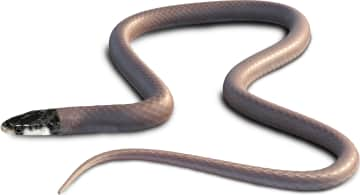
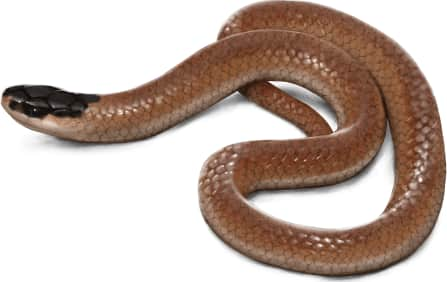
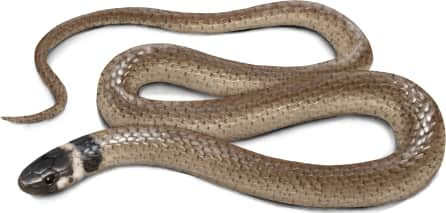
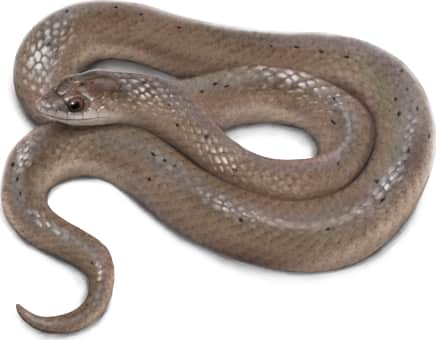
A small, skinny, worm-like snake averaging 7-9 inches long. It has smooth glossy scales and a small flattened head. Its body is a solid light tan to salmon color, and its ventrum is pale and unmarked. It either has a solid dark grey or black head and neck, or the dark coloration is separated by a light cross band between the back of the head and the neck. The latter creates a separate cap and collar appearance.
Range
Ranges through north central Florida with a few patches along the east and west coast of southern Florida.
Habitat
Common within its range, this snake is found in pine forests, hammocks, and well-drained sand dunes.
Variations
Head and neck may be solid dark, or it may have a light band separating the dark cap and dark collar.
Similar species
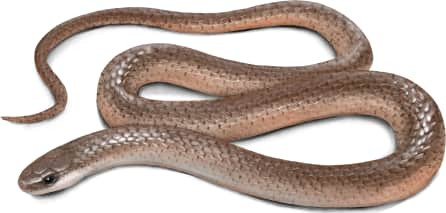
Similar species include the southeastern crowned snake (*Tantilla coronata*), plains black-headed snake (*Tantilla nigriceps*), flat-headed snake (*Tantilla gracilis*), southwestern black-headed snake (*Tantilla hobartsmithi*), and the smooth earthsnake (*Virginia valeriae*), which is the only one that may potentially overlap in northern Florida.
Name and etymology
Genus
Tantilla
Latin for something small and insignificant.
Origin
Sources
- Baird and Girard, 1853. Cat. N. Amer. Rept., Pt. 1, p. 131 ↗
Tantilla. Baird and Girard, 1853 - Cat. N. Amer. Rept., Pt. 1, p. 131
Species epithet
relicta
Latin for remainder.
Origin
Sources
- Telford, 1966. Bull. Florida State Mus. Biol. Sci., Vol. 10, No. 7, p. 270
Tantilla relicta. Telford, 1966 - Bull. Florida State Mus. Biol. Sci., Vol. 10, No. 7, p. 270
Explore more names in the etymology index.
At a glance
Range
Ranges through north central Florida with a few patches along the east and west coast of southern Florida.
Habitat
Common within its range, this snake is found in pine forests, hammocks, and well-drained sand dunes.
Guide
Reptiles and Amphibians of North America
Range map
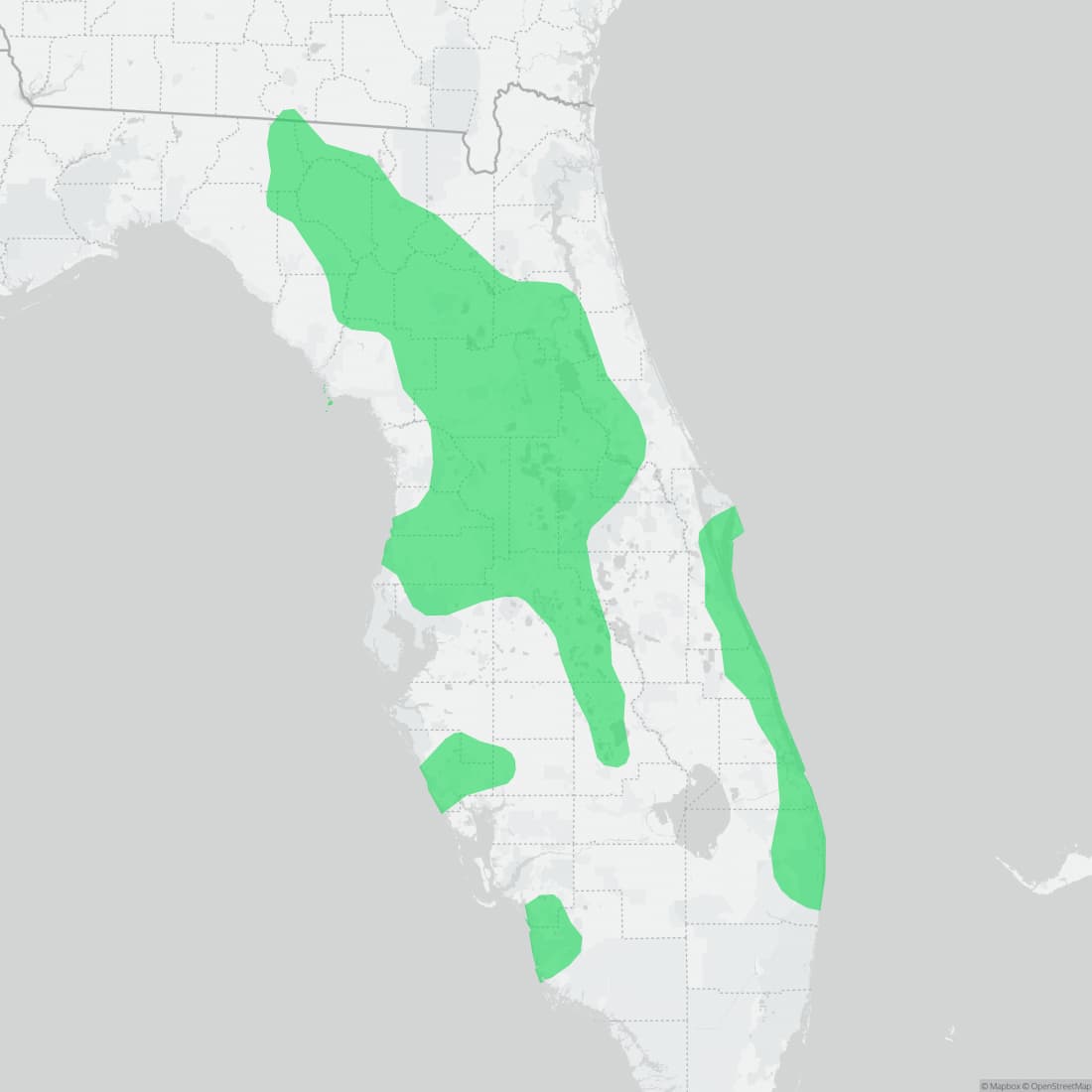
Approximate range. © Mapbox © OpenStreetMap