Plains Black-headed Snake
Tantilla nigriceps
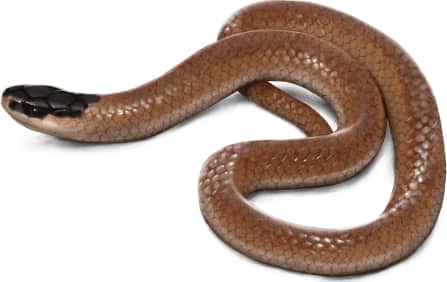
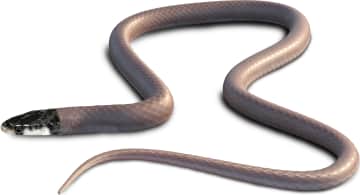
Dorsum either tan or cream in color. Black or gray-brown marking on top of head. Pink, red, or orange stripe runs down the center of underside. Body is slender and smooth…
How to identify
Dorsum either tan or cream in color. Black or gray-brown marking on top of head. Pink, red, or orange stripe runs down the center of underside. Body is slender and smooth overall. Head can be hard to distinguish from body; rear upper jaw contains enlarged teeth. Males and females breed in late April and May. Females lay eggs in summer or fall; clutches usually contain 1 to 3 eggs.
Range
Central United States and northern Mexico; south from southeastern Wyoming and southern Nebraska through south central United States and into Chihuahua, Durango, Coahuila, Nuevo Leon, and Tamaulipas.
Habitat
Inhabits grassland, rocky canyons, shrubland, and woodlands. Prefers areas near streams. Although its venom is harmless to humans, it is lethal to its invertebrate prey. Venom is delivered to prey through enlarged teeth in the back of mouth.
Variations
Although largely a nocturnal burrow dweller, it can be seen above ground on especially moist summer and spring days under logs and rocks. During cold weather in fall and winter, it hibernates and will rarely be spotted above ground.
Similar species
Name and etymology
Genus
Tantilla
Latin for something small and insignificant.
Origin
Sources
- Baird and Girard, 1853. Cat. N. Amer. Rept., Pt. 1, p. 131 ↗
Tantilla. Baird and Girard, 1853 - Cat. N. Amer. Rept., Pt. 1, p. 131
Species epithet
nigriceps
Latin for black (niger) head (ceps).
Origin
Sources
- Kennicott, 1860. Proc. Acad. Nat. Sci. Philadelphia, Vol. 12, p. 328 ↗
Tantilla nigriceps. Kennicott, 1860 - Proc. Acad. Nat. Sci. Philadelphia, Vol. 12, p. 328
Explore more names in the etymology index.
At a glance
Range
Central United States and northern Mexico; south from southeastern Wyoming and southern Nebraska through south central United…
Habitat
Inhabits grassland, rocky canyons, shrubland, and woodlands. Prefers areas near streams. Although its venom is harmless to hu…
Guide
Reptiles and Amphibians of North America
Range map
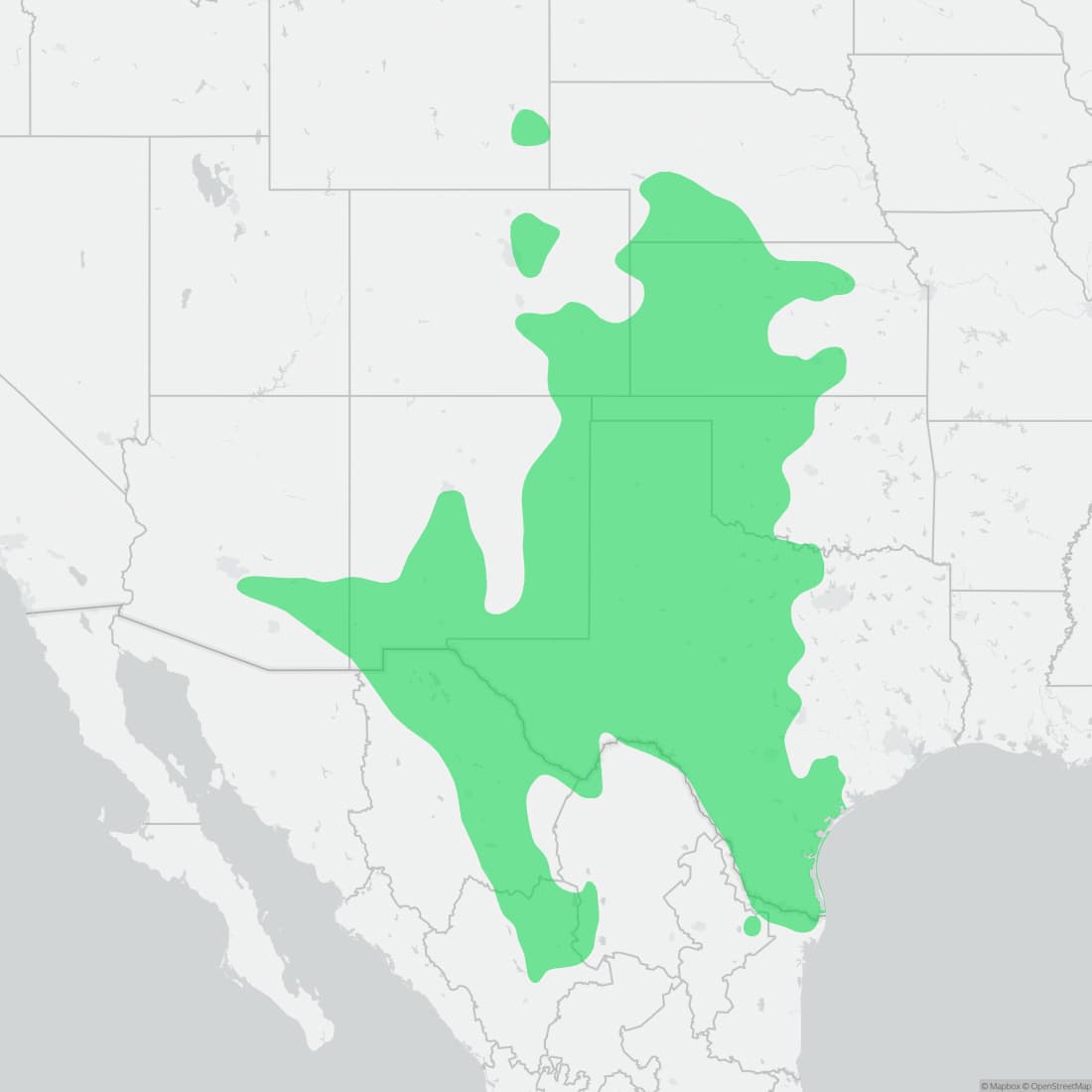
Approximate range. © Mapbox © OpenStreetMap