Mojave Fringe-toed Lizard
Uma scoparia
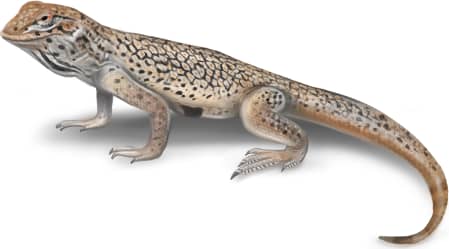
This desert lizard averages 5.5-8 inches in total length. It has a moderately wide, flattened body and a small head with a sharp edged, wedge-shaped snout. It is named fo…
How to identify
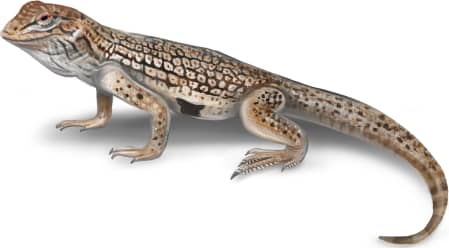
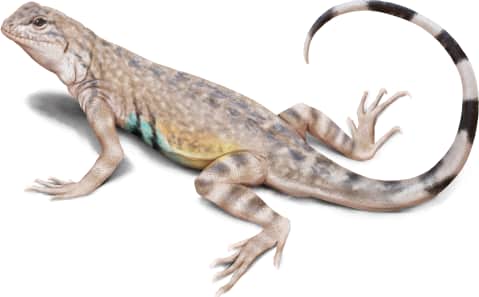
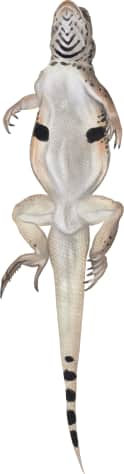
This desert lizard averages 5.5-8 inches in total length. It has a moderately wide, flattened body and a small head with a sharp edged, wedge-shaped snout. It is named for the rows of triangular, fringe-like scales lining the back edges of its hind toes. These are used to help it burry into soft sand. It has soft, granular scales. It is primarily pale tan to white with an ornate black reticulated pattern on its back. Within the reticulations are orange spots. It has light grey spots on its legs. Its ventrum is white and unmarked, except for 4-5 black bands on the ventral end of the tail, 2 black patches on the sides of the belly, and a series of U to V shaped bands on its throat.
Range
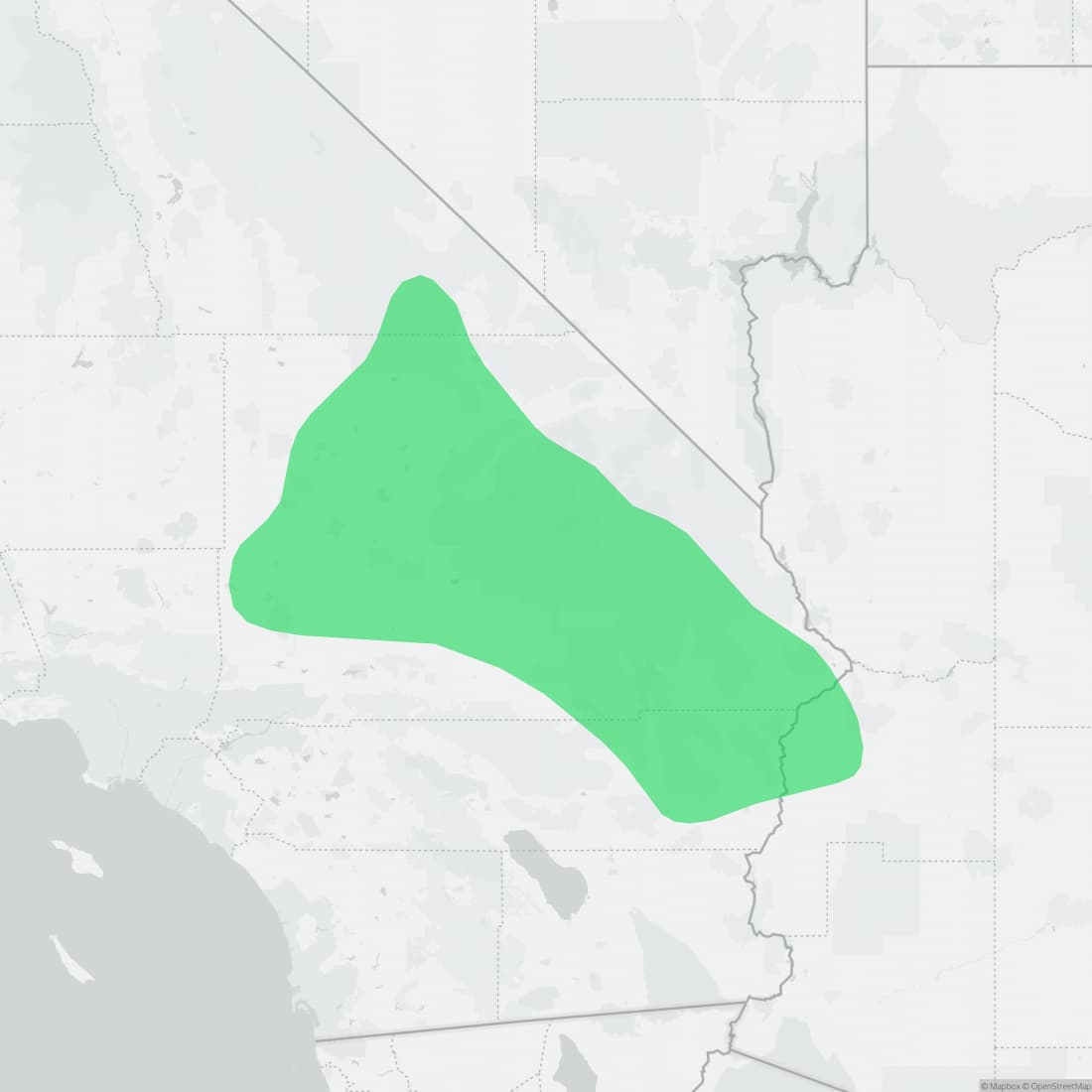
Southeastern California and slightly into western Arizona.
Habitat
This species prefers sparsely vegetated desert dune habitats, with loose, fine, windblown sand. It will often be found in washes or along river banks.
Variations
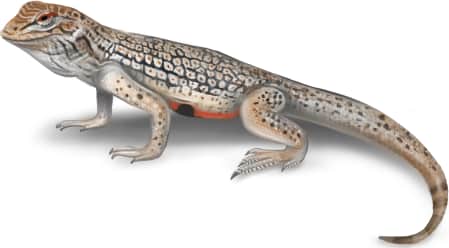
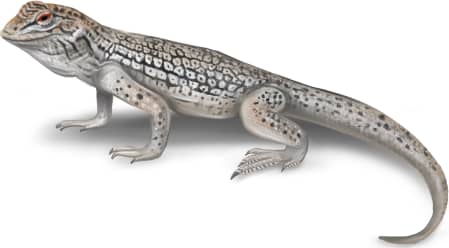
Breeding adults develop pinkish orange coloration on the sides of the body and tail, and around the eyes, more so on females. Breeding males develop a greenish tint on their belly.
Similar species
Quite similar to the Coachella Valley fringe-toed lizard (*Uma inornata*), Colorado Desert fringe-toed lizard (*Uma notata*), and Yuman Desert fringe-toed lizard (*Uma rufopunctata*), but all of these species have a reticulated pattern partially aligned in longitudinal rows, which the Mojave species lacks. It could also be confused with the similar zebra-tailed lizard (*Callisaurus draconoides*).
Name and etymology
Genus
Uma
Referencing the Yuma indigenous group.
Origin
Sources
- Baird, 1858. Proc. Acad. Nat. Sci. Philadelphia, Vol. 10, p. 253 ↗
Uma. Baird, 1858 - Proc. Acad. Nat. Sci. Philadelphia, Vol. 10, p. 253
Species epithet
scoparia
Latin for having (-ari) twigs (scopa).
Origin
Sources
- Cope, 1894. Amer. Nat., Vol. 28, p. 435 ↗
Uma scoparia. Cope, 1894 - Amer. Nat., Vol. 28, p. 435
Explore more names in the etymology index.
More illustrations
At a glance
Range
Southeastern California and slightly into western Arizona.
Habitat
This species prefers sparsely vegetated desert dune habitats, with loose, fine, windblown sand. It will often be found in was…
Guide
Reptiles and Amphibians of North America
Range map
Approximate range. © Mapbox © OpenStreetMap