Zebra-tailed Lizard
Callisaurus draconoides
Dorsum is either tan or yellow; grayish brown blotches on middle of back. Displays long legs and tail. Each thigh has a dark, horizontal line. Namesake tail displays blac…
How to identify
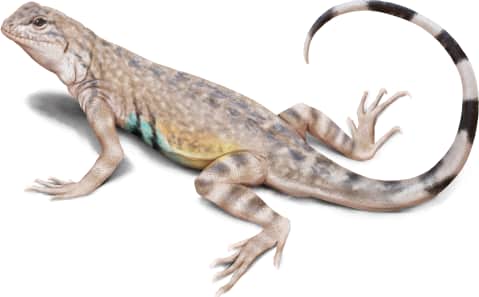
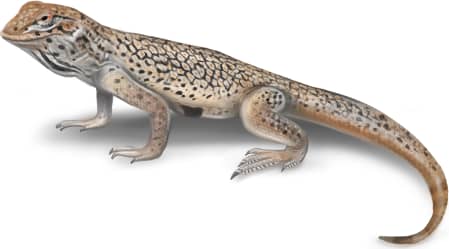
Dorsum is either tan or yellow; grayish brown blotches on middle of back. Displays long legs and tail. Each thigh has a dark, horizontal line. Namesake tail displays black and white horizontal bars similar to those of a zebra. Venter usually yellow. Snout vent length can reach as long as 102 mm.
Range
Southwestern United States and northern Mexico; from southeastern California east to extreme southwestern Utah and southwestern New Mexico and as far south as southern Sinaloa and northern Baja California.
Habitat
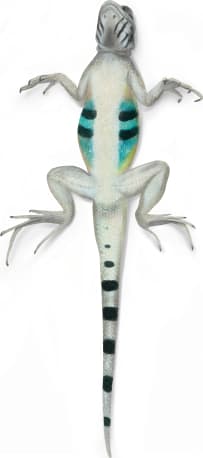
Prefers areas with little vegetation including deserts, dunes, beaches, or floodplains. Will sometimes be found on rocky, shady areas at high elevations. Females lay eggs under natural protection like rocks, or underground. During breeding season, mature males exhibit bluish green colors on either side of belly. Zebra-tailed lizards are insectivores but may be found consuming plant material and shed skin of other reptiles. They hunt scorpions, worms, spiders, carrions and many other small invertebrates.
Variations
C. d. bogerti C. d. brevipes C. d. carmenensis C. d. crinitus C. d. draconoides C. d. inusitanus C. d. myurus C. d. rhodostictus C. d. ventralis
Similar species
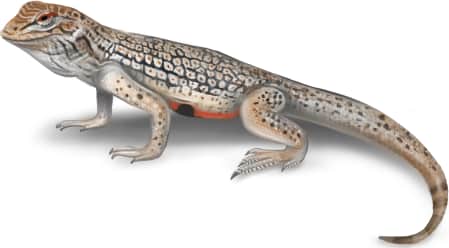
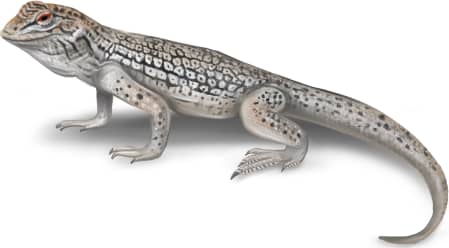
Elegant Earless Lizard or Holbrookia elegans while earless and roughly similar in size, has a tail longer than its body. While it has dark rows of blotches, it doesn’t quite have the same dark lateral lines that constitute the pattern on C. draconoides. Common Side-blotched Lizard or Uta stansburiana has a wide variety of colorful patterns and flecks. They also have a distinct blotch on the sides, behind the front limbs. Mojave Fringe-toed Lizard or Uma scoparia shares similar habitat and range. However, this lizard has a light-colored (white or gray) body with black spots.
Name and etymology
Genus
Callisaurus
Greek for beautiful (kalos) lizard (saurus).
Origin
Sources
- Blainville, 1835. Nouv. Ann. Mus. Hist. Nat. Paris, Vol. 4, p. 286 ↗
Callisaurus. Blainville, 1835 - Nouv. Ann. Mus. Hist. Nat. Paris, Vol. 4, p. 286
Species epithet
draconoides
Greek for dragon (draco) like (-eidos).
Origin
Sources
- Blainville, 1835. Nouv. Ann. Mus. Hist. Nat. Paris, Vol. 4, p. 286, pl. 24, fig. 2 ↗
Callisaurus draconoides. Blainville, 1835 - Nouv. Ann. Mus. Hist. Nat. Paris, Vol. 4, p. 286, pl. 24, fig. 2
Explore more names in the etymology index.
More illustrations
At a glance
Size
152 to 232 mm
Range
Southwestern United States and northern Mexico; from southeastern California east to extreme southwestern Utah and southweste…
Habitat
Prefers areas with little vegetation including deserts, dunes, beaches, or floodplains. Will sometimes be found on rocky, sha…
Range map
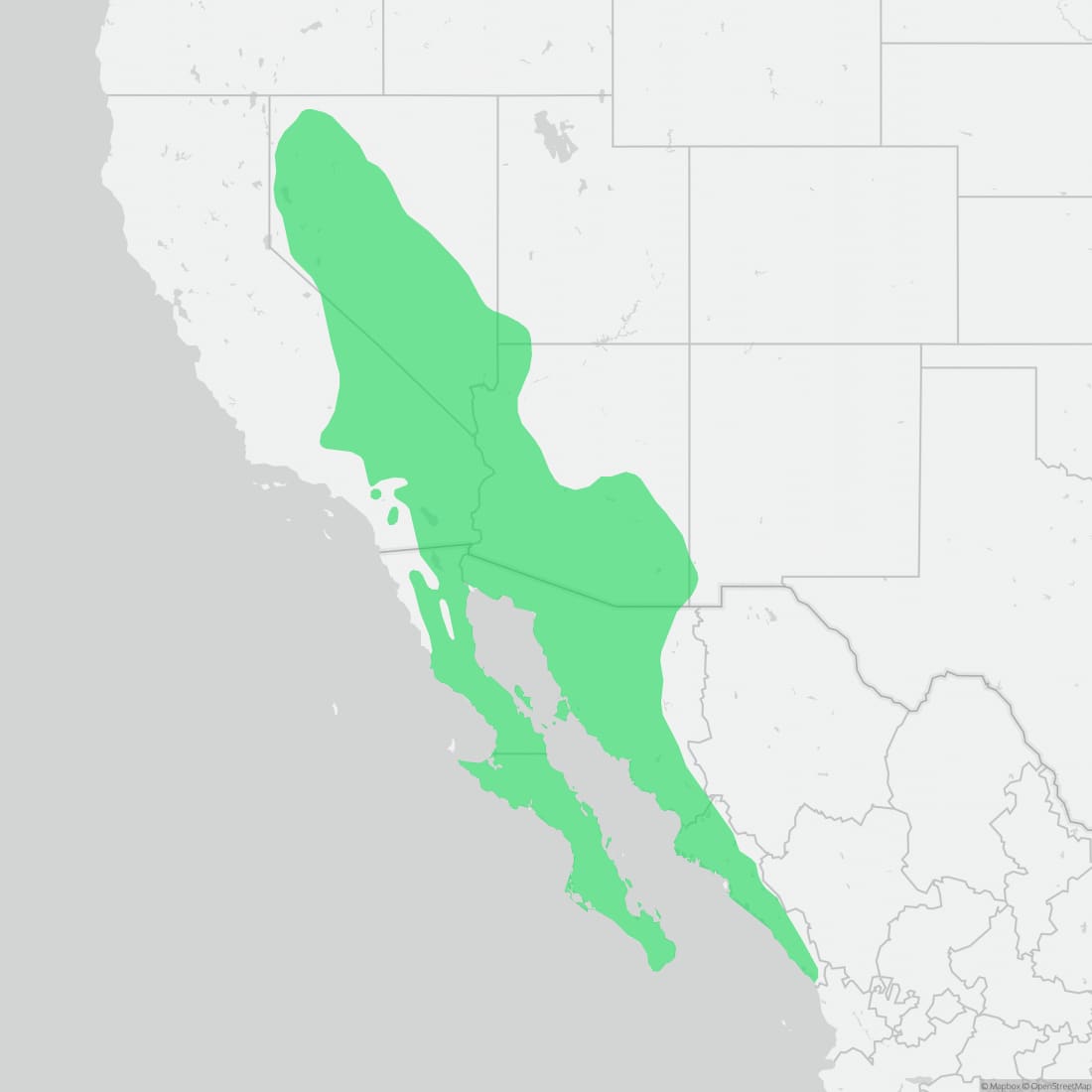
Approximate range. © Mapbox © OpenStreetMap