Coachella Valley Fringe-toed Lizard
Uma inornata
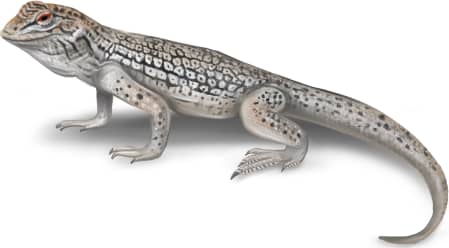
A very pale, almost white lizard with intricate black patterning that is a mix of striping and reticulation. It has rusty orange irregular spots between the black marking…
How to identify
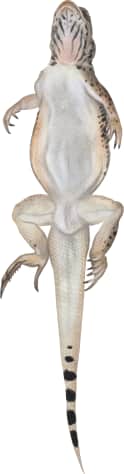
A very pale, almost white lizard with intricate black patterning that is a mix of striping and reticulation. It has rusty orange irregular spots between the black markings on its back. Its head is shaded slightly tan with a wedge-shaped rostrum for burrowing in sand. The ventral surface is completely white, except for thin diagonal black stripes on its throat, and the distal half of its tail which has black bars that increase in width closer to the tip of the tail. Its named for the pointed, fringe-like scales protruding from the edges of its hind toes. 7-12 cm from snout to vent.
Range
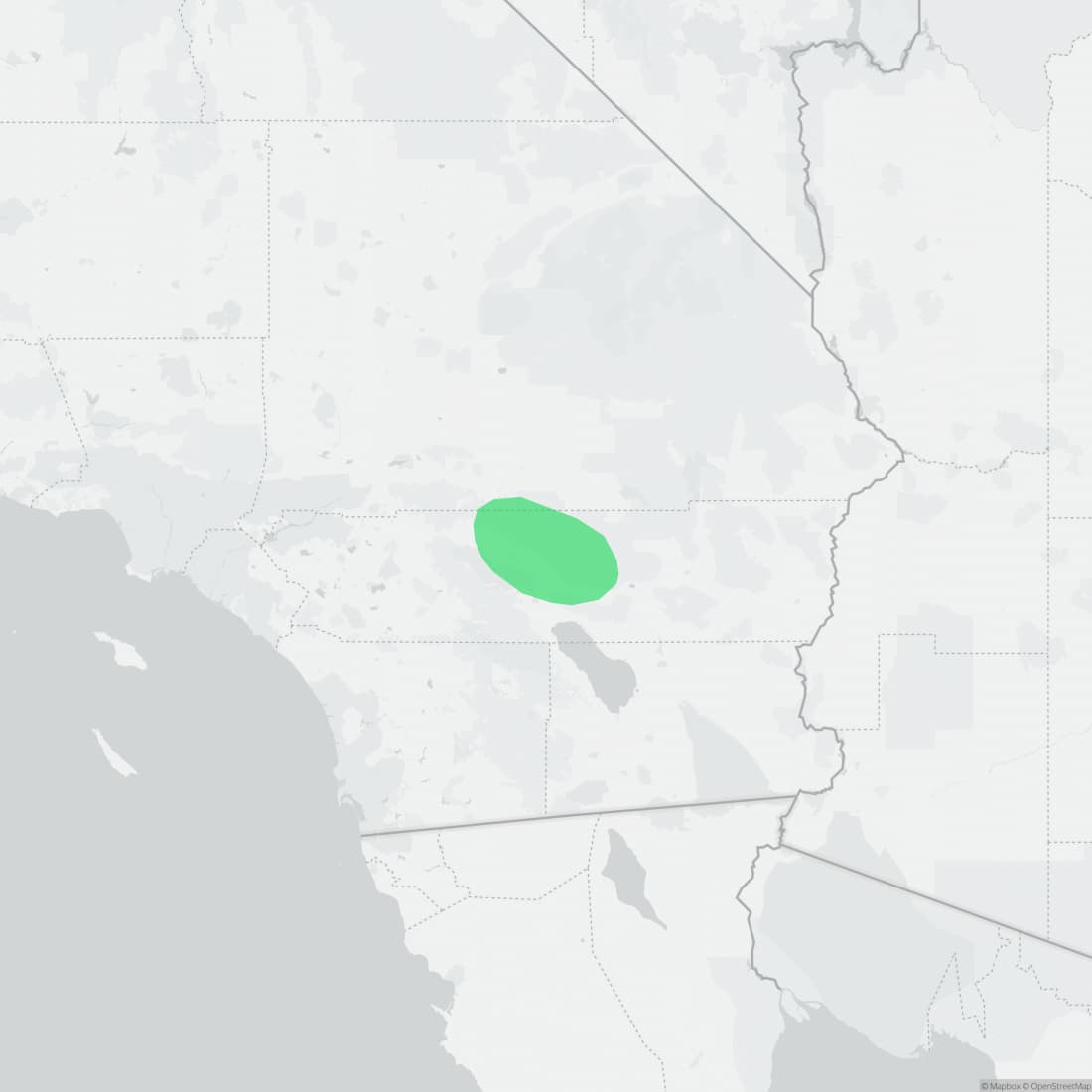
Very small range in the Coachella Valley of southern California.
Habitat
They live in and around sparse desert plants growing in sandy, windblown environments, such as dunes and washes. They will burrow in the sand to escape danger, sleep, or during extreme temperatures.
Variations
Breeding males display bright red tiny splotches around their eyelids, and a pink hue on their sides and under the tail. Gravid females have bright orange markings on the sides of their flanks, face, and proximal tail.
Similar species
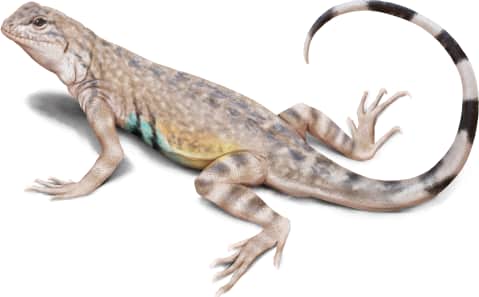
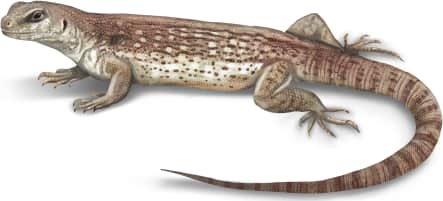
Looks most similar to the zebra-tailed lizard (*Callisaurus draconoides*) which overlaps in range but has complete bands around the end of the tail and lacks the black pattern on its back. Could also be mistaken for the larger desert iguana (*Dipsosaurus dorsalis*) that shares its range.
Name and etymology
Genus
Uma
Referencing the Yuma indigenous group.
Origin
Sources
- Baird, 1858. Proc. Acad. Nat. Sci. Philadelphia, Vol. 10, p. 253 ↗
Uma. Baird, 1858 - Proc. Acad. Nat. Sci. Philadelphia, Vol. 10, p. 253
Species epithet
inornata
Latin for not marked.
Origin
Sources
- Cope, 1895. Amer. Nat., Vol. 29, p. 93 ↗
Uma notata inornata. Cope, 1895 - Amer. Nat., Vol. 29, p. 93
Explore more names in the etymology index.
More illustrations
At a glance
Size
7 to 12.2 cm
Range
Very small range in the Coachella Valley of southern California.
Habitat
They live in and around sparse desert plants growing in sandy, windblown environments, such as dunes and washes. They will bu…
Range map
Approximate range. © Mapbox © OpenStreetMap