Yuman Desert Fringe-toed Lizard
Uma rufopunctata
The Yuman Desert Fringe-toed Lizard is a medium sized lizard with a flat body and a fragile tail. As a result of growth, the lizard grows in size ranging from 0 to 5cm as…
How to identify
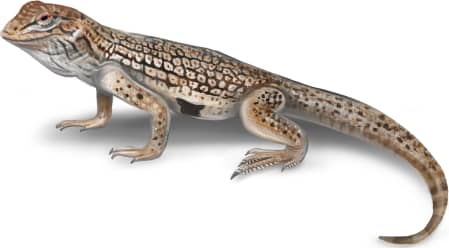
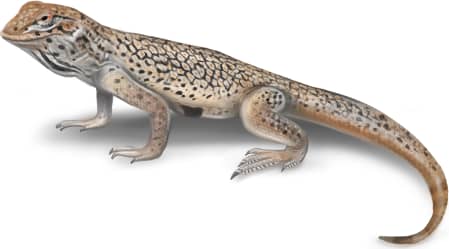
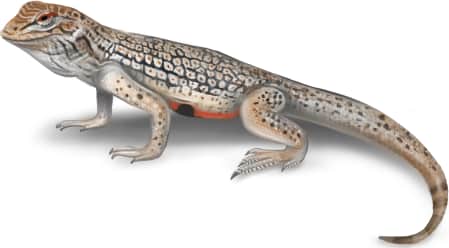
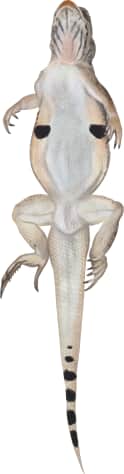
The Yuman Desert Fringe-toed Lizard is a medium sized lizard with a flat body and a fragile tail. As a result of growth, the lizard grows in size ranging from 0 to 5cm as juveniles and 7 to.12.2cm for adults in total length. The body parts consists of a pointed snout for easy burrowing, moderately large eyes with interlocking eyelids, a countersunk lower jaw, flaps over the ear openings and valves in the nasal passages. It has small, harsh and granular scales. Usually, they are cream, tan and reddish-brown in colour but specifically, cream in the underside with blatant dark spots on the belly sides as well as on the throat. The unique orange coloration on the belly during breeding season as well as the dark lines on the neck and shoulders distinguish this lizard from the similar species. The dorsal side is marked with small orange spots and on the neck through to the shoulder, the spots form lines and eventually appear in rows. The scales on the back edges of the toes are special and pointed, looking like a fringe hence, the name by which it is called.
Range
The Yuman Desert Fringe-toed Lizard (Uma Rufopunctata) is endemic to the extreme southwestern region of the United States and the extreme northwestern region of Mexico.
Habitat
The lizard’s habitation is influenced by sand characteristics such as grain size and densification. The lizards enjoy regions with distributed vegetation, windblown sand and sand dune, particularly for easy burrowing. They are omnivores and so feed on small insects along side leaves, flowers, buds and seeds. Occasionally, the adult fringe-toed lizards may also be seen devouring hatchling lizards as well. In the real sense, the lizard relies on the “blowsand” for its long-term survival and so has adaptation features like its fringe toes to aid its sustenance on loose sand. This lizard is not in any way, a nocturnal animal but could be considered a cold-blooded animal. Although, it requires external heat to operate effectively, it buries itself underground at night then sticks out its head to warm up in the morning using the rays from the sun. Once it is sufficiently warmed up, the lizard emerges to begin it’s day to day activities. The Yuman desert fringe-toed lizard is often considered a seasonal breeder. The females lay up to five eggs between 4 months after mating. After the eggs hatch, incubation period begins and lasts for about 60 days.
Similar species
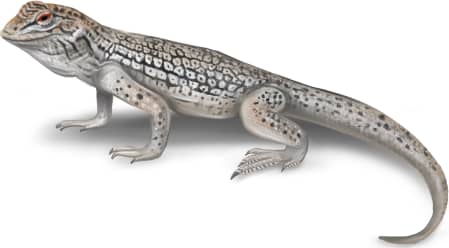
The Colorado Desert Fringe-toed Lizard (Uma norata) is a medium sized lizard, usually 2 to 5 inches long from snout to vent. The base coloration is white but with a contrasting pattern of dark broken vertical lines and round spots. The belly sides have permanent orange or pinkish stripe unlike the Yuman desert fringe-toed lizard. It also has thicker markings in the throat and most importantly, fringed scales on the trailing edge of its feet. The Mojave Fringe-toed Lizard (Uma scoparia) appears as a medium-sized, flat bodied and smooth skinned lizard. It is a white (or gray) reptile with dark markings that do not connect unlike similar species. It has unique and dark crescent-shaped lines on the throat. They are typically 4 to 5 inches in total length. The Coachella Valley Fringe-toed Lizard (Uma inornata) has a flattened body but unlike similar species, has a wedge-shaped snout. They are measured up to 10 inches in total length. The lizard is pale and has a regular pattern of round spots. The distinctive feature in this species is the row of elongated scales that covers the ears and the edge of the toes.
Name and etymology
Genus
Uma
Referencing the Yuma indigenous group.
Origin
Sources
- Baird, 1858. Proc. Acad. Nat. Sci. Philadelphia, Vol. 10, p. 253 ↗
Uma. Baird, 1858 - Proc. Acad. Nat. Sci. Philadelphia, Vol. 10, p. 253
Species epithet
rufopunctata
Latin for red (rufus) punctuated (punctata).
Origin
Sources
- Cope, 1895. Amer. Nat., Vol. 29, p. 939 ↗
Uma notata rufopunctata. Cope, 1895 - Amer. Nat., Vol. 29, p. 939
Explore more names in the etymology index.
More illustrations
At a glance
Range
The Yuman Desert Fringe-toed Lizard (Uma Rufopunctata) is endemic to the extreme southwestern region of the United States and…
Habitat
The lizard’s habitation is influenced by sand characteristics such as grain size and densification. The lizards enjoy regions…
Guide
Reptiles and Amphibians of North America
Range map
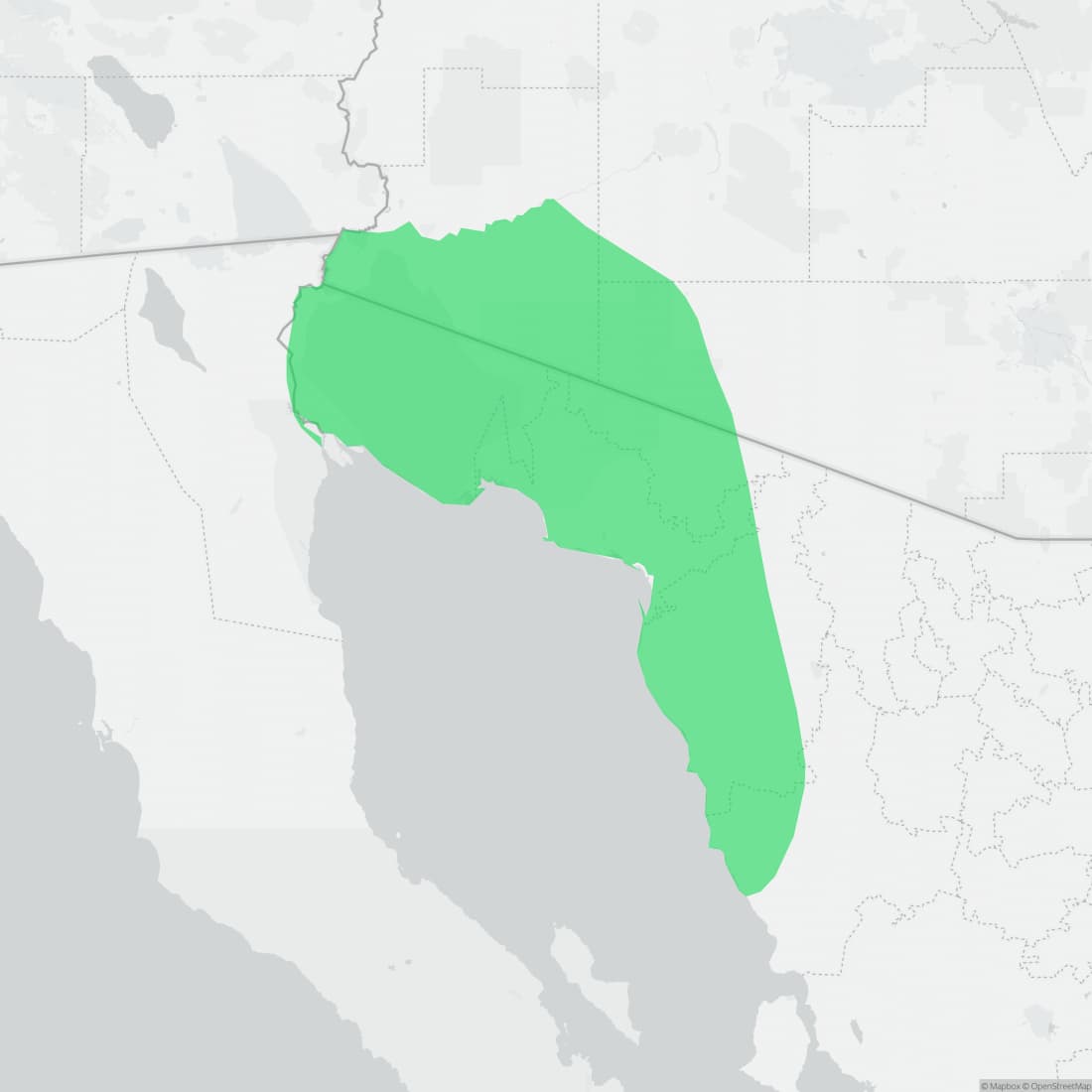
Approximate range. © Mapbox © OpenStreetMap