Mohawk Dunes Fringe-toed Lizard
Uma thurmanae
Like other fridge-toed lizards is a medium sized lizard with a flat body and a fragile tail. As a result of growth, the lizard grows in size ranging from 0 to 5cm as juve…
How to identify
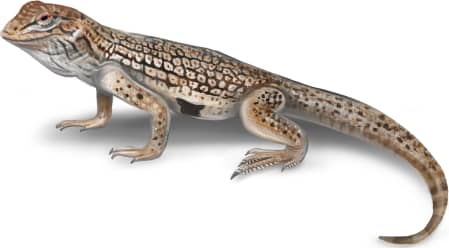
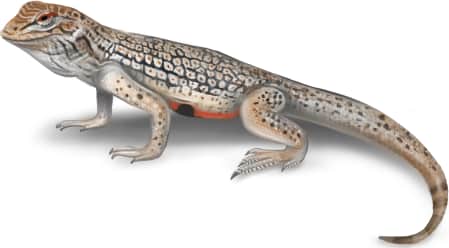
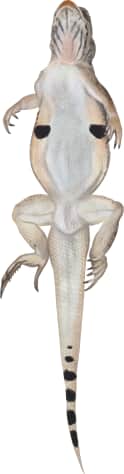
Like other fridge-toed lizards is a medium sized lizard with a flat body and a fragile tail. As a result of growth, the lizard grows in size ranging from 0 to 5cm as juveniles and 7 to.12.2cm for adults in total length. The body parts consists of a pointed snout for easy burrowing, moderately large eyes with interlocking eyelids, a countersunk lower jaw, flaps over the ear openings and valves in the nasal passages. It has small, harsh and granular scales. Usually, they are cream, tan and reddish-brown in colour but specifically, cream in the underside with blatant dark spots on the belly sides as well as on the throat. The unique orange coloration on the belly during breeding season as well as the dark lines on the neck and shoulders distinguish this lizard from the similar species. The dorsal side is marked with small orange spots and on the neck through to the shoulder, the spots form lines and eventually appear in rows. The scales on the back edges of the toes are special and pointed, looking like a fringe hence, the name by which it is called.
Range
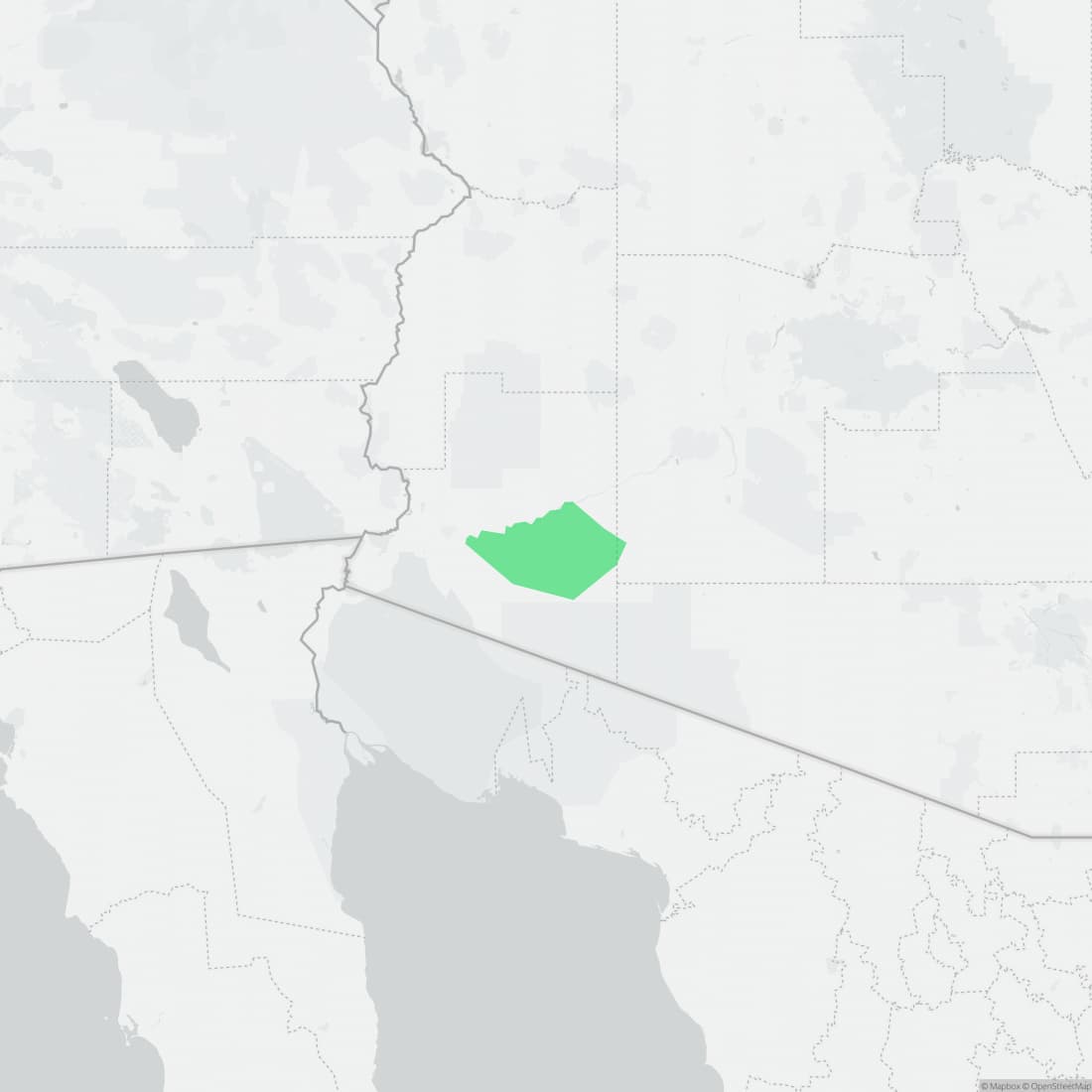
Uma thurmanae is restricted to the Mohawk Dunes in the Mohawk Mountains of Arizona.
Similar species
Uma thurmanae is a cryptic species that doesn't show morphological differences between it and other species in the Uma notata complex. It is best differentiated from other fringe-toad lizards by range.
Name and etymology
Genus
Uma
Referencing the Yuma indigenous group.
Origin
Sources
- Baird, 1858. Proc. Acad. Nat. Sci. Philadelphia, Vol. 10, p. 253 ↗
Uma. Baird, 1858 - Proc. Acad. Nat. Sci. Philadelphia, Vol. 10, p. 253
Species epithet
thurmanae
Honoring American actress Uma Karuna Thurman.
Origin
Honors
Sources
- Wikipedia: Uma thurmanae ↗
“Uma thurmanae.” Wikipedia. https://en.wikipedia.org/wiki/Mohawk_Dunes_fringe-toed_lizard
Explore more names in the etymology index.
More illustrations
At a glance
Range
Uma thurmanae is restricted to the Mohawk Dunes in the Mohawk Mountains of Arizona.
Guide
Reptiles and Amphibians of North America
Range map
Approximate range. © Mapbox © OpenStreetMap