Mojave Desert Tortoise
Gopherus agassizii
This medium-sized tortoise averages 12-14 inches in carapace length and can weigh up to 15 lbs, with females being slightly smaller than males. Hatchlings start out prima…
How to identify
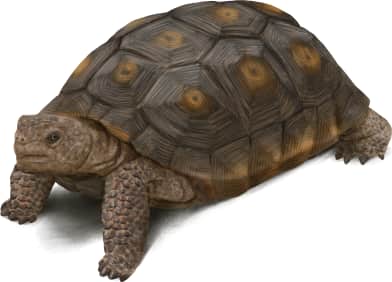
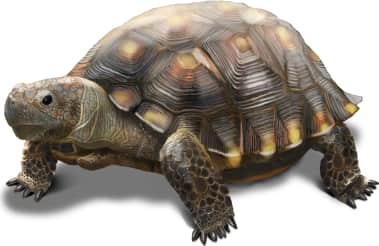
This medium-sized tortoise averages 12-14 inches in carapace length and can weigh up to 15 lbs, with females being slightly smaller than males. Hatchlings start out primarily yellowish tan with dark grey-brown seams between the carapace scutes, and a solid yellowish tan plastron. As they age, the light coloration slowly disappears and they become grey all over, except the plastron which remains yellowish tan. When viewed from above, adults have a rectangular shape. When viewed from the side, their carapace is flat on top, slightly sloped at the front, and steeply sloped at the back. Their front legs are wide with large, hardened scales, and their hind legs are thinner and less armored. They use their strong front legs to cover and protect their face when pulled into their shell, and for digging burrows. Their carapace scutes have very slight pyramiding, and they have 2 elongated gular scutes at the front of the plastron.
Range
Range is centered around the southern border of Nevada and California, including most of southeastern California, southern Nevada, western Arizona, and the southwest corner of Utah.
Habitat
This strictly terrestrial species is specialized for desert living. It spends most of its time burrowed underground to avoid extreme temperatures. It is most active in early spring, and becomes completely inactive during the winter months. Due to its burrowing needs, this species prefers habitats with sandy loam soil that crumbles easily but does not collapse easily. It can be found in a variety of desert habitats at elevations from sea level to 3,500 feet.
Variations
Males have a concave plastron, while females have a flat plastron. Males also have larger tails and gular scutes. Some adults retain faint tan coloration in the center of their scutes for many years.
Similar species
It is most akin to the Sonoran desert tortoise (*Gopherus morafkai*), which ranges further south into Mexico. It also resembles the Texas tortoise (*Gopherus berlandieri*) and gopher tortoise (*Gopherus polyphemus*). However, it most commonly gets confused with the non-native African spurred tortoise (*Centrochelys sulcata*), a common pet species that often escapes or becomes abandoned in suburban desert areas.
Name and etymology
Genus
Gopherus
French for small burrowing animal (gaufre).
Origin
Sources
- Rafinesque, 1832. Atlantic Journ., Vol. 1, No. 2, p. 64
Gopherus. Rafinesque, 1832 - Atlantic Journ., Vol. 1, No. 2, p. 64
Species epithet
agassizii
Honoring Jean Louis R. Agassiz.
Origin
Honors
Sources
- (Cooper, 1863). Proc. California Acad. Sci., Vol. 2, p. 120 ↗
Gopherus agassizii. (Cooper, 1863) - Proc. California Acad. Sci., Vol. 2, p. 120
Explore more names in the etymology index.
At a glance
Size
15 to 36 cm
Range
Range is centered around the southern border of Nevada and California, including most of southeastern California, southern Ne…
Habitat
This strictly terrestrial species is specialized for desert living. It spends most of its time burrowed underground to avoid…
Range map
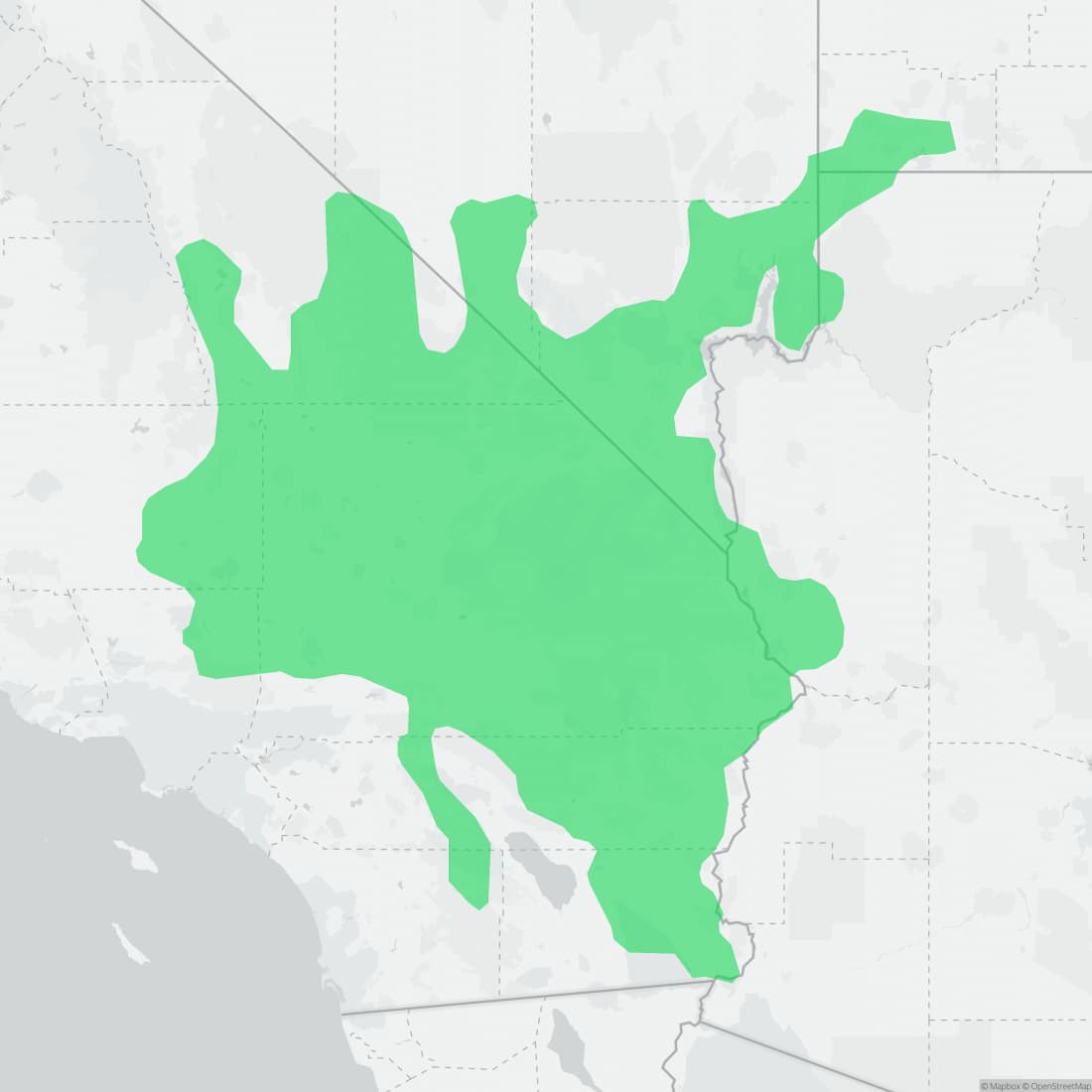
Approximate range. © Mapbox © OpenStreetMap