Flat-headed Salamander
Desmognathus planiceps
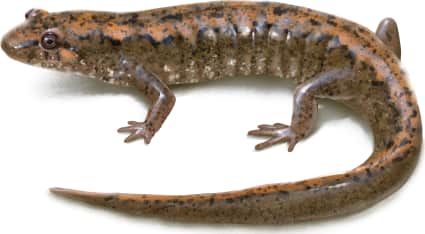
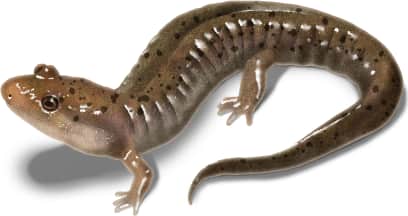
Named for its wide, flat head (reminiscent of a frog's head), this thick-bodied salamander is primarily brown with dark speckling on its back and light speckling on its s…
How to identify
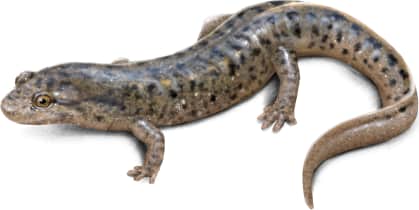
Named for its wide, flat head (reminiscent of a frog's head), this thick-bodied salamander is primarily brown with dark speckling on its back and light speckling on its sides. It has a laterally flattened tail, and a pale ventrum with tan speckles. It has thick hind legs and skinny front legs, 14 costal grooves, and 3-5 intercostal grooves. It may have enlarged cheeks or pointed mental glands under the jaw. It typically has an undefined black spot on the back of its head, and a different shade of brown on its back than on its sides. It averages 2-6 cm in snout to vent length, with males being larger.
Range
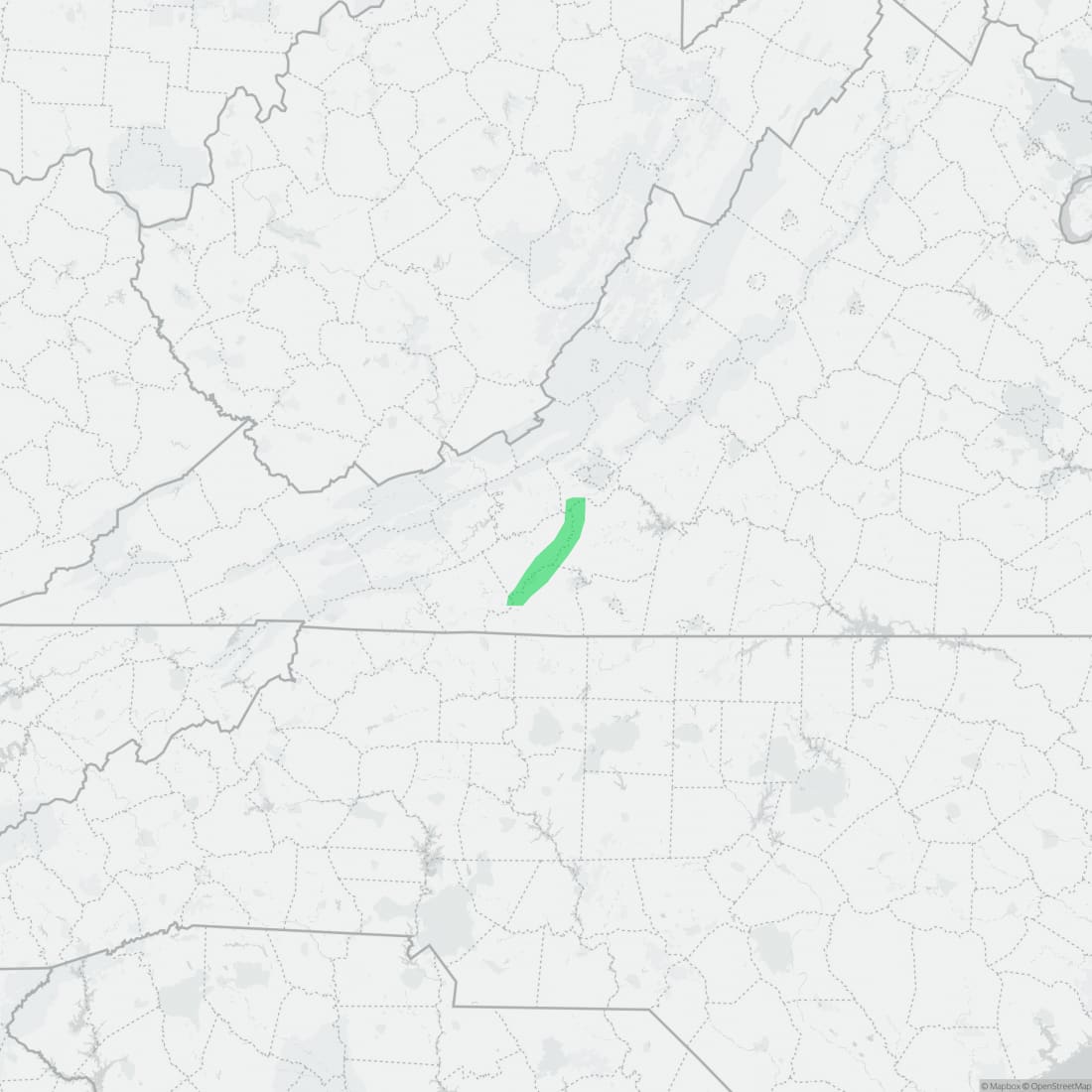
Small narrow range in the Appalachian mountains of south central Virginia.
Habitat
This species prefers to live in and around cool, shallow, swift-moving streams with lots of shade and ground debris.
Variations
Ranges from light brown to dark brown shades. Some have more defined blotchy patterning, while others are simply speckled.
Similar species
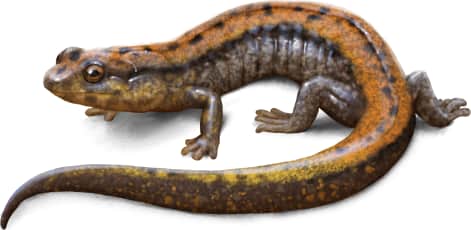
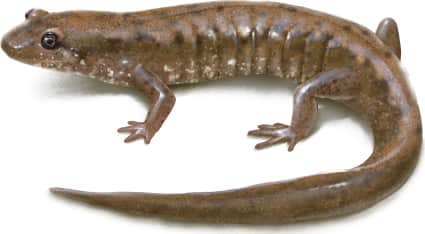
Many species in this genus look similar, including the northern dusky salamander (*Desmognathus fuscus*), spotted dusky salamander (*Desmognathus conanti*), Allegheny Mountain dusky salamander (*Desmognathus ochrophaeus*), and seal salamander (*Desmognathus monticola*).
Name and etymology
Genus
Desmognathus
Greek for jaw (gnathos) ligament (desmos).
Origin
Sources
- Baird, 1850. Journ. Acad. Nat. Sci. Philadelphia, Ser. 2, Vol. 1, p. 282 and p. 285 ↗
Desmognathus. Baird, 1850 - Journ. Acad. Nat. Sci. Philadelphia, Ser. 2, Vol. 1, p. 282 and p. 285
Species epithet
planiceps
Latin for flat (planus) head (ceps).
Origin
Sources
- (Blainville, 1835). Nouv. Ann. Mus. Hist. Nat. Paris, Vol. 4, p. 294, pl. 27, figs. 3-3b ↗
Tantilla planiceps. (Blainville, 1835) - Nouv. Ann. Mus. Hist. Nat. Paris, Vol. 4, p. 294, pl. 27, figs. 3-3b
Explore more names in the etymology index.
At a glance
Range
Small narrow range in the Appalachian mountains of south central Virginia.
Habitat
This species prefers to live in and around cool, shallow, swift-moving streams with lots of shade and ground debris.
Guide
Reptiles and Amphibians of North America
Range map
Approximate range. © Mapbox © OpenStreetMap