Seal Salamander
Desmognathus monticola
The seal salamander is medium-sized (with an average length of 4.5 inches) and semi-aquatic. The body is stout and its hind limbs are larger than the forelimbs. It has pr…
How to identify
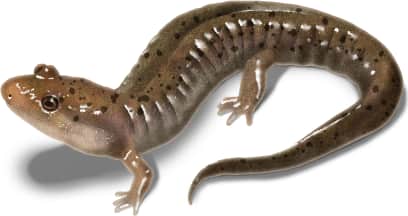
The seal salamander is medium-sized (with an average length of 4.5 inches) and semi-aquatic. The body is stout and its hind limbs are larger than the forelimbs. It has protruding eyes and a tail flattened at the sides. It has a dark brown ground coloration with a faint patterns on the dorsum. The dorsal patterns are black markings on lines of light brown, gray, or buff. The salamander has a diagonal line below each eye. Juveniles have more spots on the back and tail. And the larvae possess small gills.
Range
Seal salamanders have a range that extends through the southern Appalachians from the western parts of Pennsylvania to the northern parts of Alabama and Georgia.
Habitat
Seal salamanders thrive in ravines with shades and streams supported by spring seepages with a sandstone or clay bed. They can also be found in mixed-hardwood slope forest with cool, well-aerated water. They shelter in burrows or underneath ground objects. They are terrestrial and may descend below the ground in drought or cold weather. The reproduction is aquatic and breeding occurs in July – November. The eggs are deposited around streams or creeks and underneath rocks. Larvae feed on arthropods.
Similar species
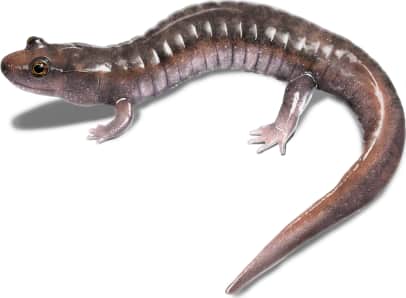
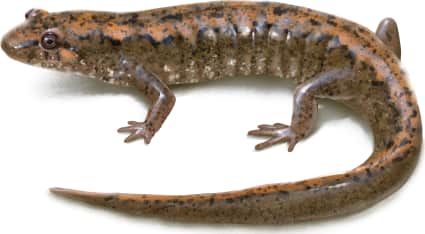
Southern Dusky Salamander (Desmognathus auriculatus) reaches lengths between 3-6 inches. Usually, the ground color is dark brown to black. It has a long tail and hind limbs which are longer and relatively larger than the front legs. The Spotted Dusky Salamander (Desmognathus conanti is similarly stout and sturdy but is smaller (between 2.5-5.0 inches). It has a golden-flecked body on a variety of ground colors.
Name and etymology
Genus
Desmognathus
Greek for jaw (gnathos) ligament (desmos).
Origin
Sources
- Baird, 1850. Journ. Acad. Nat. Sci. Philadelphia, Ser. 2, Vol. 1, p. 282 and p. 285 ↗
Desmognathus. Baird, 1850 - Journ. Acad. Nat. Sci. Philadelphia, Ser. 2, Vol. 1, p. 282 and p. 285
Species epithet
monticola
Latin for inhabiting (colo) the mountain (mons).
Origin
Sources
- Dunn, 1916. Proc. Biol. Soc. Washington, Vol. 29, p. 73 ↗
Desmognathus monticola. Dunn, 1916 - Proc. Biol. Soc. Washington, Vol. 29, p. 73
Explore more names in the etymology index.
At a glance
Range
Seal salamanders have a range that extends through the southern Appalachians from the western parts of Pennsylvania to the no…
Habitat
Seal salamanders thrive in ravines with shades and streams supported by spring seepages with a sandstone or clay bed. They ca…
Guide
Reptiles and Amphibians of North America
Range map
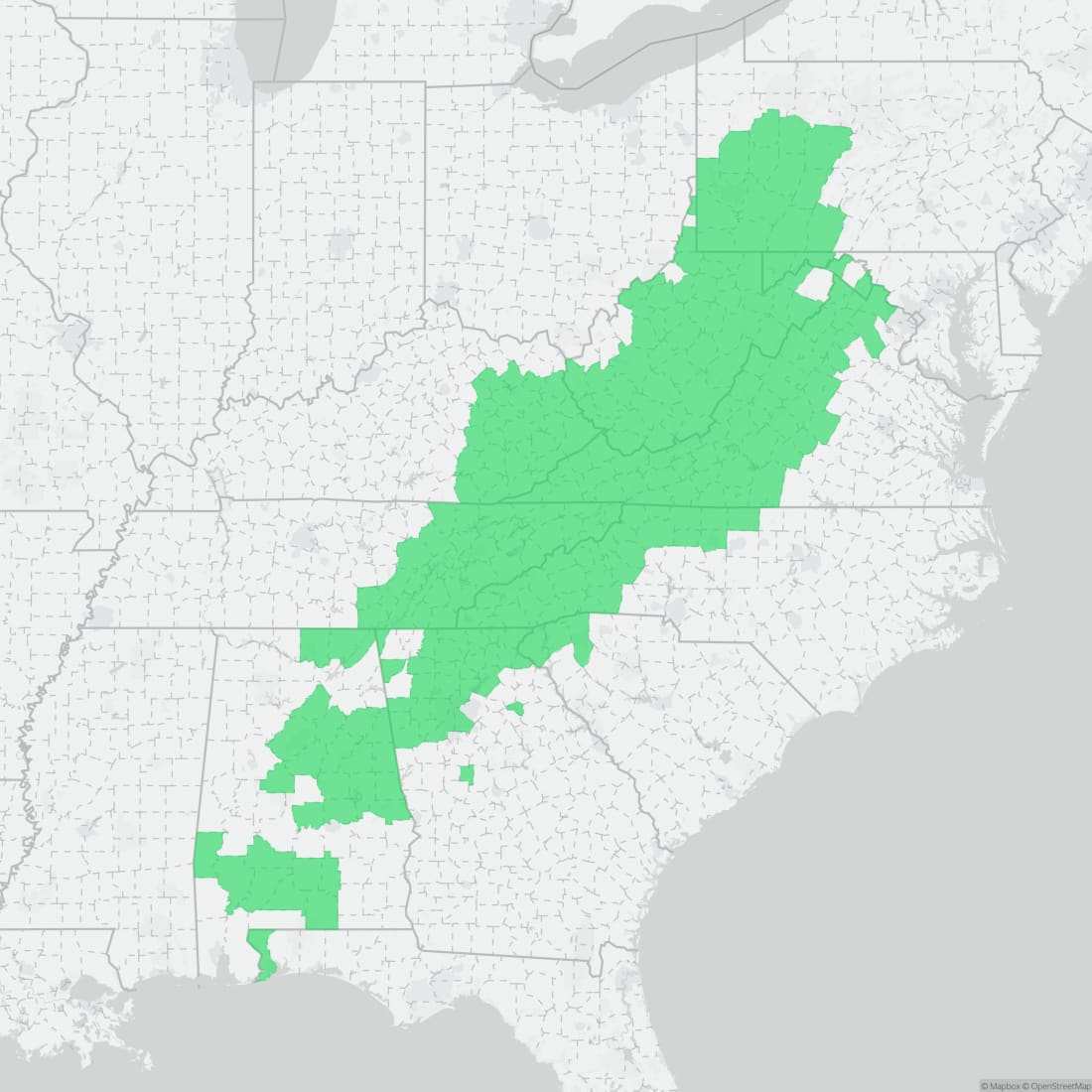
Approximate range. © Mapbox © OpenStreetMap