
Holbrook’s Southern Dusky Salamander
Desmognathus auriculatus
D. auriculatus is a medium-sized salamander. The body color varies from brown to almost black, often with two rows of white or reddish-orange spots on either side. The…
How to identify
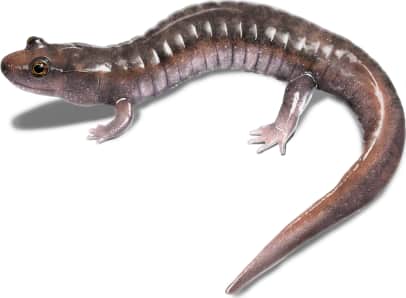
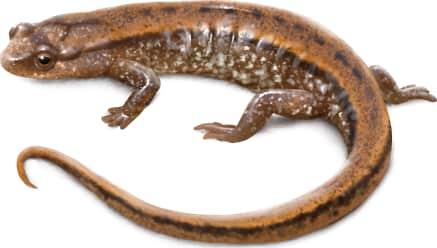
D. auriculatus is a medium-sized salamander. The body color varies from brown to almost black, often with two rows of white or reddish-orange spots on either side. The laterally compressed tail may also have a reddish-orange stripe running down its center. The belly is typically dark brown with scattered white or pale yellow flecks. A key diagnostic feature is a light stripe extending from the eye to the jawline.
Range
While historically thought to have a wider range, recent genetic studies have redefined the distribution of D. auriculatus. D. auriculatus, occupies the Atlantic coastal plain from southern Georgia down the Florida peninsula and west to the Florida Panhandle and southern Alabama. Importantly, populations north of Georgia are now considered separate species.
Habitat
D. auriculatus prefers slow-moving water bodies within the coastal plain. Stagnant pools, swamps, and even ditches with abundant leaf litter and decaying logs are prime habitat. They are primarily aquatic as adults but can venture onto land at night, especially in damp areas.
Similar species
D. auriculatus can be confused with several closely related dusky salamanders. The recently described species D. valtos is particularly similar, but tends to be larger with a proportionally longer body and a thicker tail. Texas populations were previously considered D. auriculatus but are now classified as D. conanti.
Name and etymology
Genus
Desmognathus
Greek for jaw (gnathos) ligament (desmos).
Origin
Sources
- Baird, 1850. Journ. Acad. Nat. Sci. Philadelphia, Ser. 2, Vol. 1, p. 282 and p. 285 ↗
Desmognathus. Baird, 1850 - Journ. Acad. Nat. Sci. Philadelphia, Ser. 2, Vol. 1, p. 282 and p. 285
Species epithet
auriculatus
Latin for eared.
Origin
Sources
- (Holbrook, 1838). N. Amer. Herp., Ed. 1, Vol. 3, p. 115, pl. 28 ↗
Desmognathus auriculatus. (Holbrook, 1838) - N. Amer. Herp., Ed. 1, Vol. 3, p. 115, pl. 28
Explore more names in the etymology index.
At a glance
Range
While historically thought to have a wider range, recent genetic studies have redefined the distribution of D. auriculatus.…
Habitat
D. auriculatus prefers slow-moving water bodies within the coastal plain. Stagnant pools, swamps, and even ditches with abun…
Guide
Reptiles and Amphibians of North America
Range map
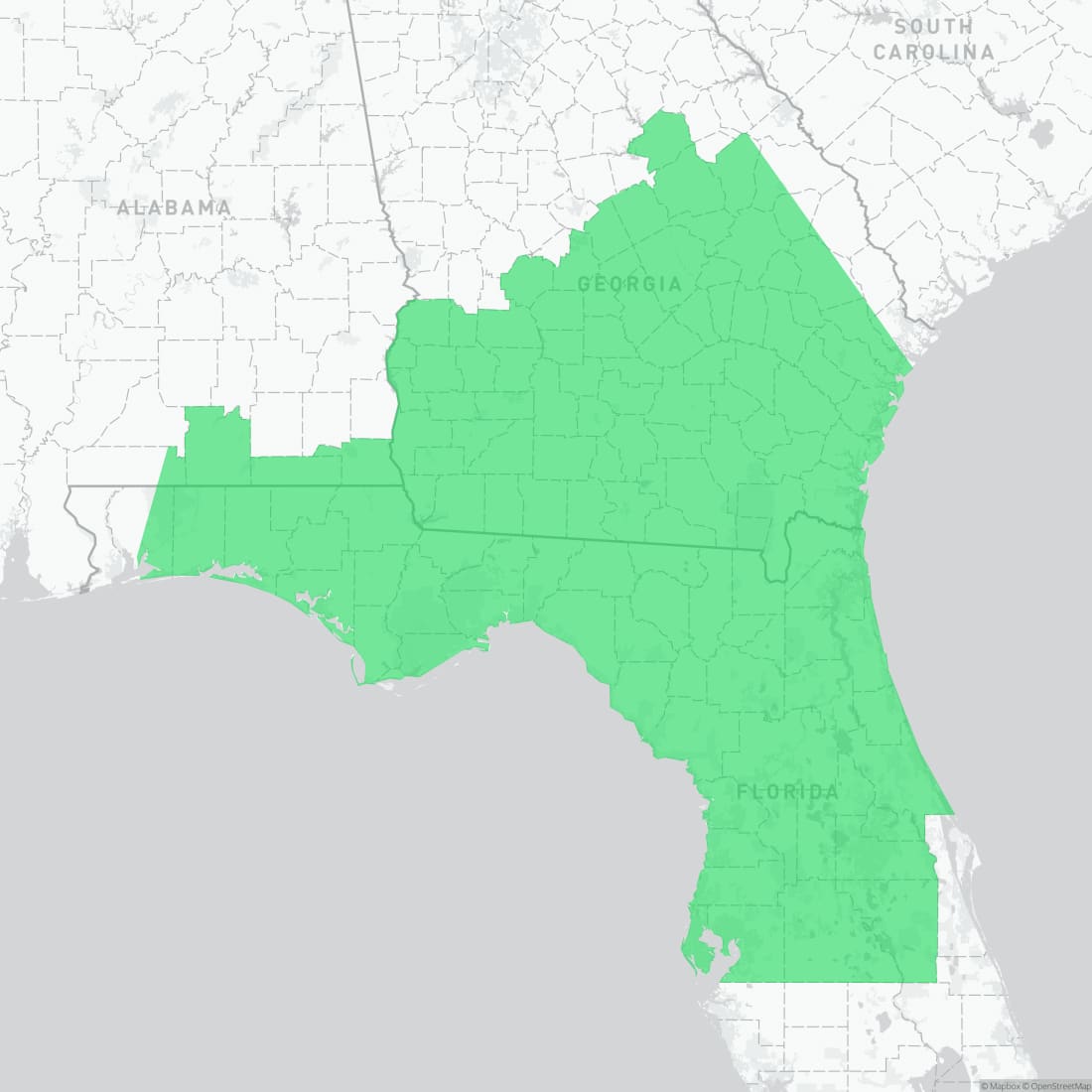
Approximate range. © Mapbox © OpenStreetMap