Three-toed Amphiuma
Amphiuma tridactylum
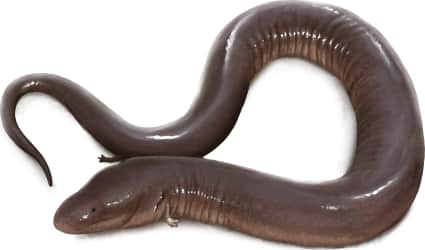
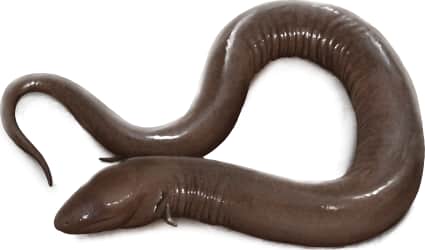
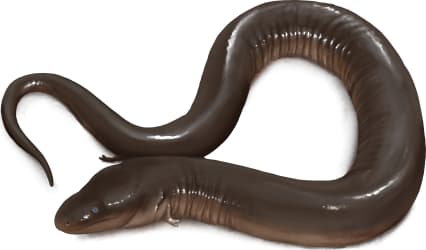
The three-toed amphiuma or amphiuma tridactylum looks like an eel in appearance with an elongated dark brown colored body. It also possesses tiny vestigial legs. The spec…
How to identify
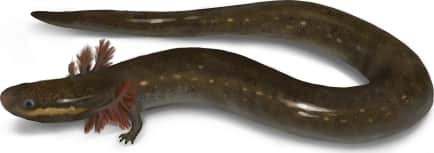
The three-toed amphiuma or amphiuma tridactylum looks like an eel in appearance with an elongated dark brown colored body. It also possesses tiny vestigial legs. The species has a typical size of 18-30 inches. Eyes are small and lidless and the gill have slits. Presence of four tiny legs each having three toes is a distinguishing feature of the three-toed amphiuma. There’s an average of 62 coastal grooves.
Range
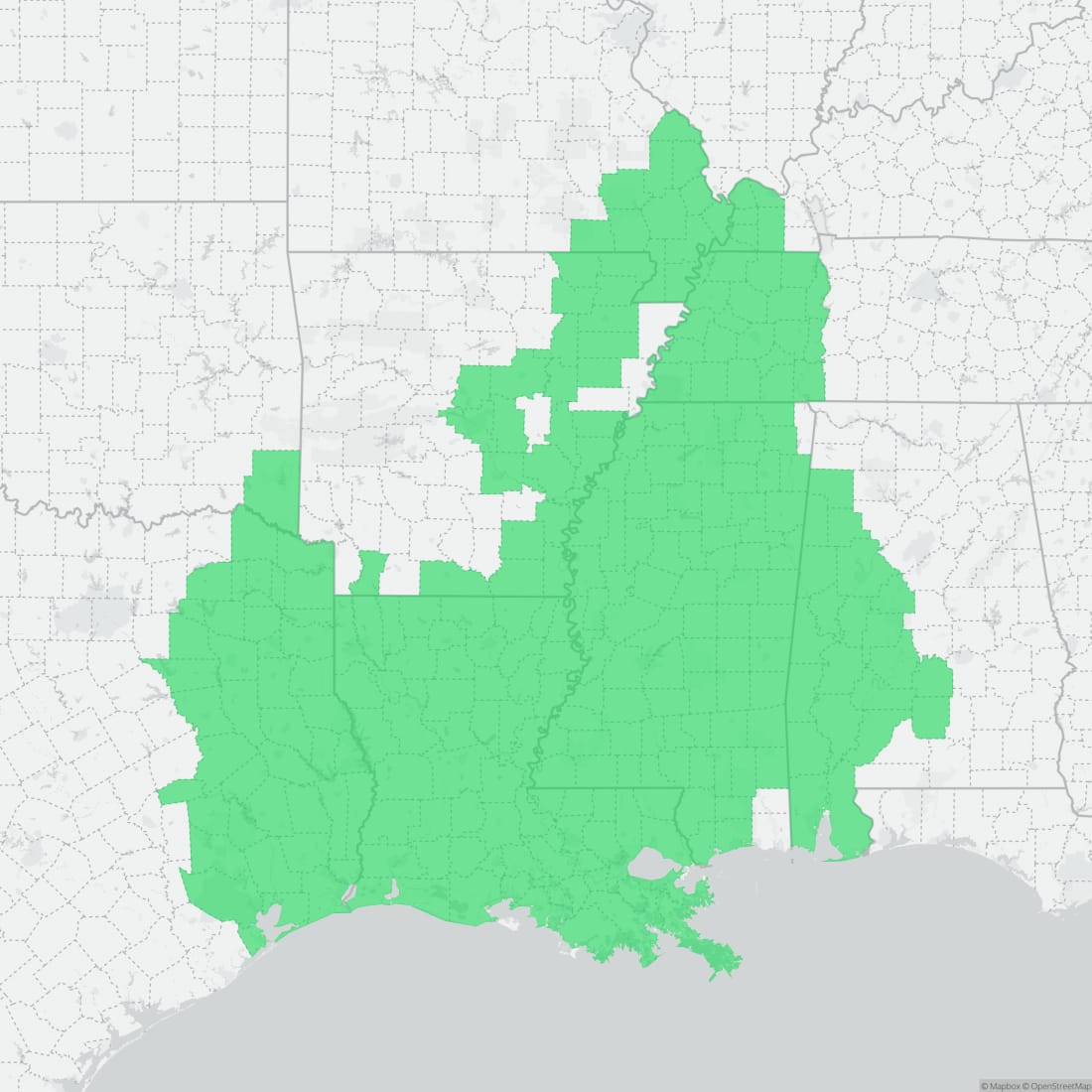
This species of aquatic salamander is native to the Southeastern United States. It ranges from Alabama to Texas, Tennessee and Kentucky, north to Missouri and Arkansas.
Habitat
This species inhabits bottomland marshes and lakes, cypress sloughs, streams found in hilly regions and bayous. It is nocturnal in nature and feeds on fish, earthworms, tadpoles, snails, crustaceans and other small invertebrates. Fertilization is internal, which is unlike other amphiumas. An average of 200 eggs is laid in a single strand which becomes tangled in cavity.
Similar species
The one-toed amphiuma or amphiuma pholeter has a skin color that ranges from gray-black to purplish-brown. This species has the same color on its dorsum as that of its belly, distinguishing it from other amphiuma. It also possesses a cone-shaped head and one toe on each foot just like its name. It is also the smallest of the genus amphiuma. The two-toed amphiuma or amphiuma means has four vestigial legs having two toes each. The head of this species is pointed and shaped like a wedge. Its eyes are small and adults have a single gill found on each side of the head. The two-toed amphiuma is black, dark brown or dark grey in color. The Western lesser siren or Siren intermedia nettingi has feathery gills and does not possess hind limbs.
Name and etymology
Genus
Amphiuma
Greek for breathing (pneuma) both sides (amphi).
Origin
Sources
- Garden, 1821.
Amphiuma. Garden, 1821 -
Species epithet
tridactylum
Greek for three (tri) fingers (daktylos).
Origin
Sources
- Cuvier, 1827. Mem. Mus. Hist. Nat. Paris, Vol. 14, p. 7, pl. 1, figs. 4-6, pl. 2, figs. 9-18 ↗
Amphiuma tridactylum. Cuvier, 1827 - Mem. Mus. Hist. Nat. Paris, Vol. 14, p. 7, pl. 1, figs. 4-6, pl. 2, figs. 9-18
Explore more names in the etymology index.
At a glance
Size
61 to 1170 mm
Range
This species of aquatic salamander is native to the Southeastern United States. It ranges from Alabama to Texas, Tennessee an…
Habitat
This species inhabits bottomland marshes and lakes, cypress sloughs, streams found in hilly regions and bayous. It is nocturn…
Range map
Approximate range. © Mapbox © OpenStreetMap