Mink Frog
Lithobates septentrionalis
A small frog growing no more than 3 inches in length, named for its scent that is reminiscent of a mink's scent (similar to rotting onions). It is bright green with dense…
How to identify
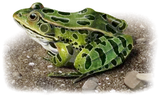
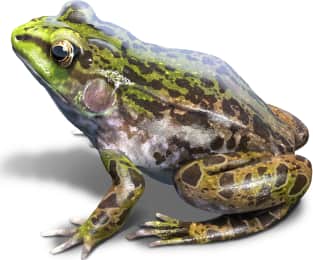
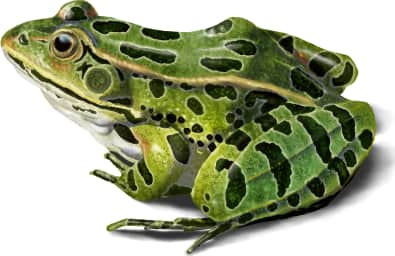
A small frog growing no more than 3 inches in length, named for its scent that is reminiscent of a mink's scent (similar to rotting onions). It is bright green with dense dark mottled patterning all over its back and legs. Its face has more green coloration than the rest of the body, especially around its mouth. Its belly is pale and unmarked, while the throat is yellow or white. It has lightly textured skin, but no bumps or warts. It lacks dorsolateral skin folds.
Range
Ranges through the northern midwest and New England in the United States, and from southeastern Manitoba through southern Ontario and Quebec and slightly into Newfoundland and Labrador in Canada.
Habitat
A mostly aquatic species that lives in or around ponds, streams, and swamps in wooded habitats. It is often seen resting on floating debris or vegetation, such as lily pads.
Variations
Males have a bright yellow throat and a tympanum that is larger than their eye, while females have a white throat and a smaller tympanum.
Similar species
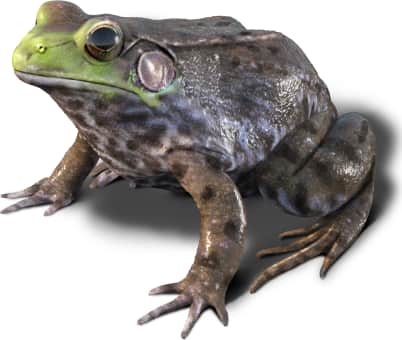
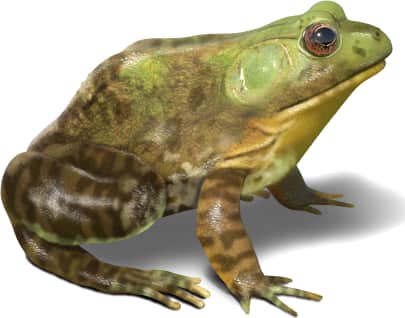
Most often mistaken for the green frog (*Lithobates clamitans*), American bullfrog (*Lithobates catesbeianus*), or northern leopard frog (*Lithobates pipiens*), all of which overlap in range.
Name and etymology
Genus
Lithobates
Greek for rock (litho-) climber (bates).
Origin
Sources
- Linnaeus, 1758. Syst. Nat., 10th ed., Vol. 1, p. 210 ↗
Rana. Linnaeus, 1758 - Syst. Nat., 10th ed., Vol. 1, p. 210
Species epithet
septentrionalis
Latin for northern.
Origin
Sources
- Dumeril and Bibron, 1841. Erp. Gen., Vol. 8, p. 538 ↗
Osteopilus septentrionalis. Dumeril and Bibron, 1841 - Erp. Gen., Vol. 8, p. 538
- Baird, 1854. Proc. Acad. Nat. Sci. Philadelphia, Vol. 7, p. 61 ↗
Rana septentrionalis. Baird, 1854 - Proc. Acad. Nat. Sci. Philadelphia, Vol. 7, p. 61
- (Kennicott, 1859).
Leptodeira septentrionalis. (Kennicott, 1859) -
Explore more names in the etymology index.
At a glance
Range
Ranges through the northern midwest and New England in the United States, and from southeastern Manitoba through southern Ont…
Habitat
A mostly aquatic species that lives in or around ponds, streams, and swamps in wooded habitats. It is often seen resting on f…
Guide
Reptiles and Amphibians of North America
Range map
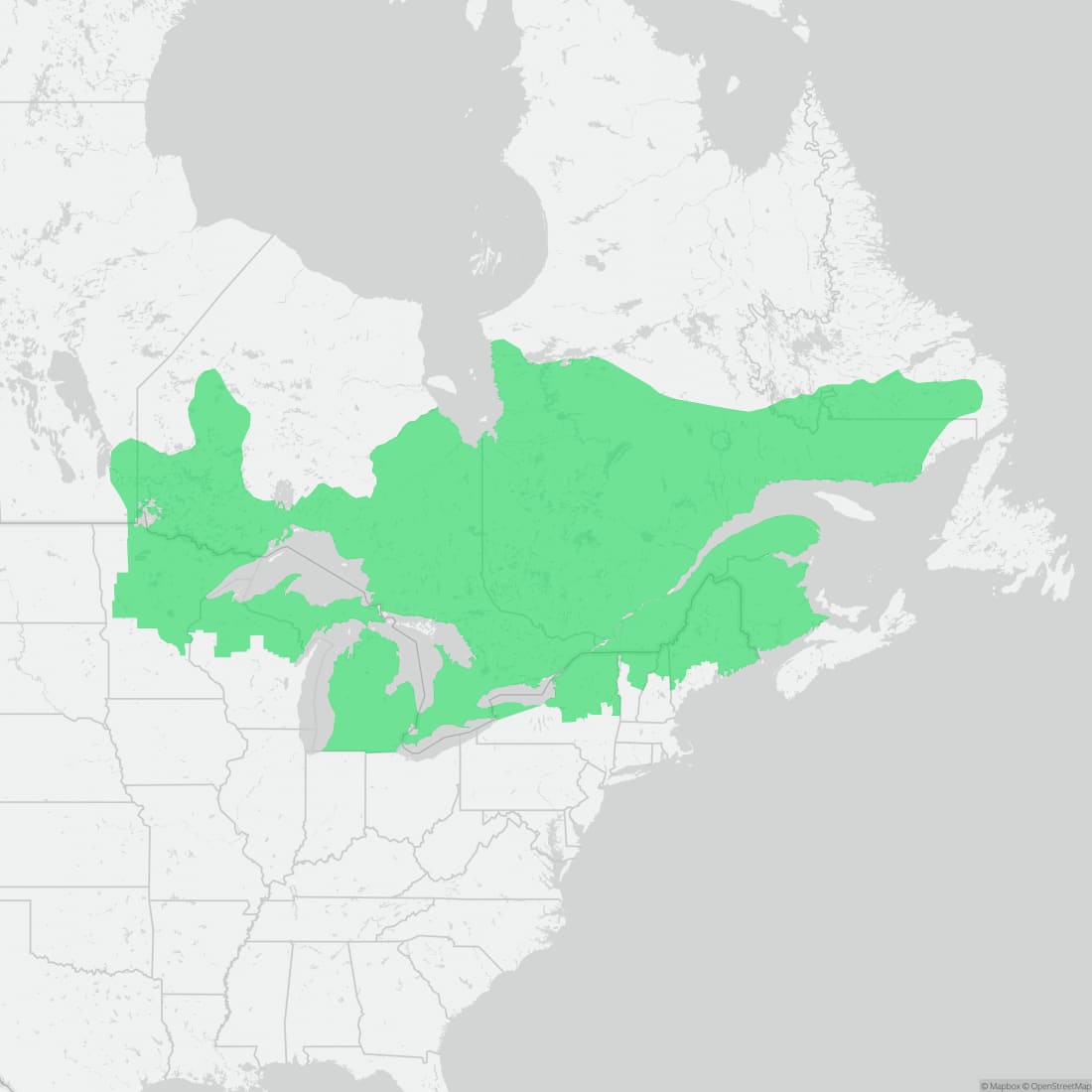
Approximate range. © Mapbox © OpenStreetMap