Reticulate Collared Lizard
Crotaphytus reticulatus
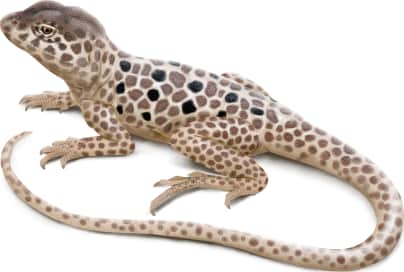
This intricately-patterned lizard grows to about 16 inches in total length. It has granular scales, a large head, and a very distinct neck. Its mid-section is wide and fl…
How to identify
This intricately-patterned lizard grows to about 16 inches in total length. It has granular scales, a large head, and a very distinct neck. Its mid-section is wide and flat, and its waist and hips are narrow. Its tail and legs are long and slender. It has a small dewlap and extra folds of skin in the neck region. It is named for the distinct reticulated pattern on its dorsum, consisting of cream-colored lines and mostly brown patches, with a few black patches intermixed on its back (often aligned in rows). The pattern extends onto the dorsal surfaces of its legs and head, but is usually less defined in those areas. Aside from its throat, its ventrum is white and unmarked.
Range
Range spans both sides of the US/Mexico border in southwestern Texas.
Habitat
This species prefers semi-arid rocky areas, but will also live in shrubland and grassland habitats. It can be found among mesquite or desert thorn-scrub, and likes to bask on rocks, branches, or fence posts. It will quickly retreat to burrows or under vegetation when approached.
Variations
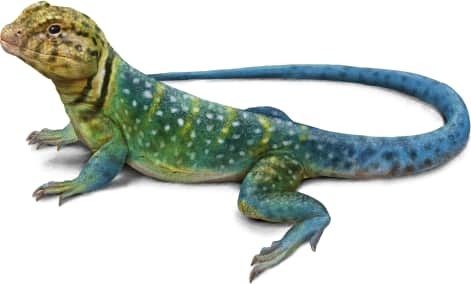
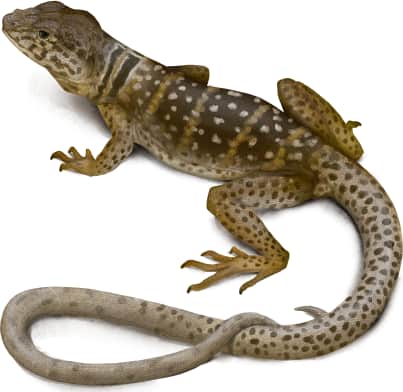
During breeding season, they are sexually dimorphic. Males have a black dewlap, and females have a whitish or yellow dewlap. Males develop a black collar, which is only complete on the ventral surface. They also display a yellow tint on their chest and throat. Orange bars develop on the sides of gravid females.
Similar species
Most similar to the eastern collared lizard (*Crotaphytus collaris*) or Great Basin collared lizard (*Crotaphytus bicinctores*).
Name and etymology
Genus
Crotaphytus
Greek for side of head (krotaphos), referencing small plates on the head.
Origin
Sources
- Holbrook, 1842. N. Amer. Herp., Ed. 2, Vol. 2, p. 79 ↗
Crotaphytus. Holbrook, 1842 - N. Amer. Herp., Ed. 2, Vol. 2, p. 79
Species epithet
reticulatus
Latin for bearing a net.
Origin
Sources
- Baird, 1858. Proc. Acad. Nat. Sci. Philadelphia, Vol. 10, p. 253 ↗
Uma. Baird, 1858 - Proc. Acad. Nat. Sci. Philadelphia, Vol. 10, p. 253
Explore more names in the etymology index.
At a glance
Range
Range spans both sides of the US/Mexico border in southwestern Texas.
Habitat
This species prefers semi-arid rocky areas, but will also live in shrubland and grassland habitats. It can be found among mes…
Guide
Reptiles and Amphibians of North America
Range map
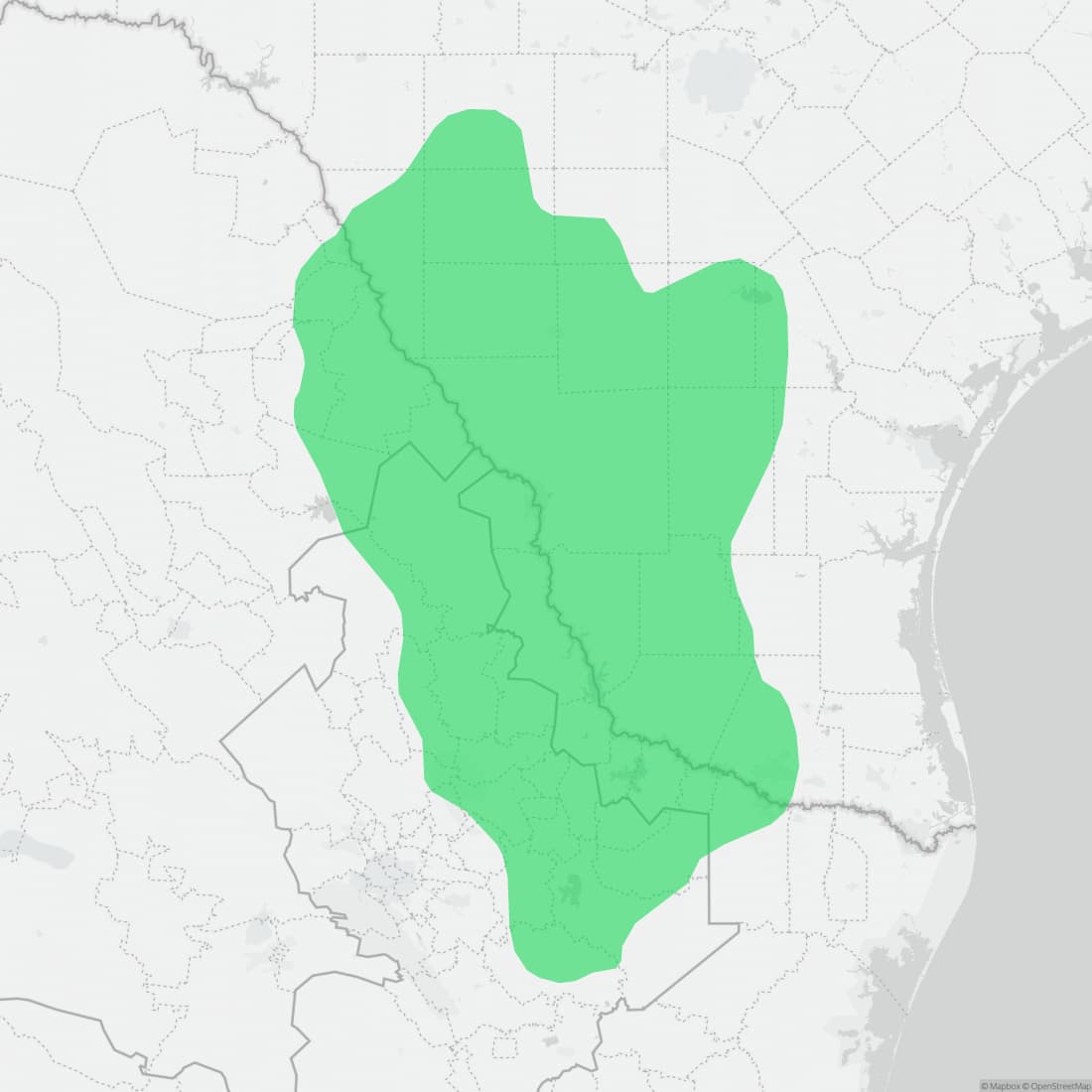
Approximate range. © Mapbox © OpenStreetMap