
Desert Collared Lizard
Crotaphytus bicinctores
Most distinguishable by the black and white bands on its neck that resemble a collar. Dorsum is either olive or brown flecked with white dots; brown and black stripes run…
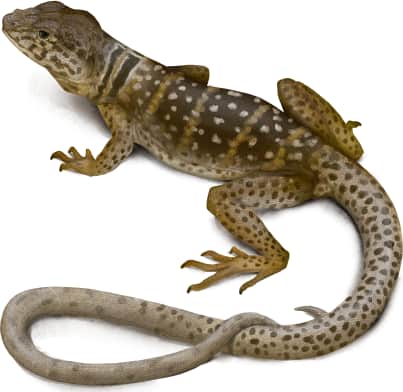
How to identify
Most distinguishable by the black and white bands on its neck that resemble a collar. Dorsum is either olive or brown flecked with white dots; brown and black stripes run from forelimbs to hindlimbs. Flattened vertical tail with brown dots on either side. Belly is usually completely white. Overall appearance can be compared to that of a small dinosaur. Males and females have noticeable differences including more visible body stripes on males, the throat band extending around to the underside on males, and males having larger heads overall than females. Males also usually exhibit a stripe on the tail which is absent on females.
Range
Southeastern California and western Arizona north to Nevada, central Utah, southeastern Oregon, and southern Idaho.
Habitat
Primarily inhabits rocky deserts with some vegetation. Can be found resting on rocks, hiding under rocks, or underground in burrows. Females also utilize these sheltered locations to lay their eggs. Varied diet includes spiders, insects, small snakes, other small lizards, and vegetation.
Variations
The time of year females lay eggs varies depending on location. Females in Utah have been observed laying eggs in June while in Arizona, females lay their eggs in June or July. When reaching high speeds, some individuals are observed to rise up to a "standing" position with only their hind legs on the ground.
Similar species
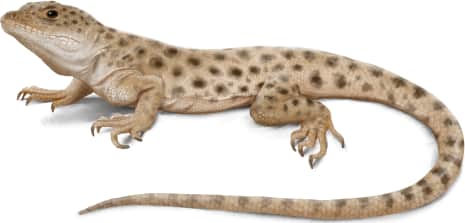
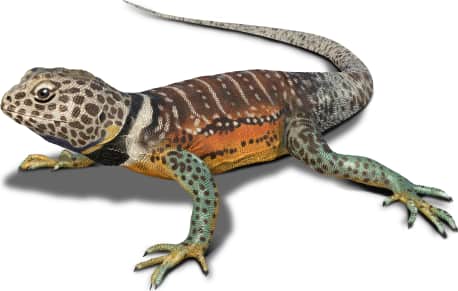
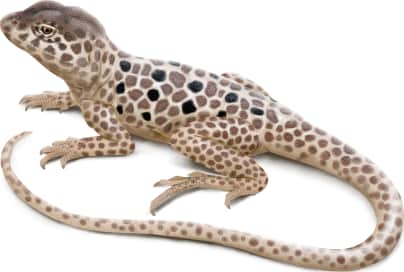
Baja California Collared Lizard - Crotaphytus vestigium Reticulate Collared Lizard - Crotaphytus reticulatus Long-nosed Leopard Lizard - Gambelia wislizenii
Name and etymology
Genus
Crotaphytus
Greek for side of head (krotaphos), referencing small plates on the head.
Origin
Sources
- Holbrook, 1842. N. Amer. Herp., Ed. 2, Vol. 2, p. 79 ↗
Crotaphytus. Holbrook, 1842 - N. Amer. Herp., Ed. 2, Vol. 2, p. 79
Species epithet
bicinctores
Latin for two (bi) bands (cinctus), referencing two black bands on neck and shoulder.
Origin
Sources
- Smith and Tanner, 1972. Great Basin Nat., Vol. 32, p. 27 ↗
Crotaphytus bicinctores. Smith and Tanner, 1972 - Great Basin Nat., Vol. 32, p. 27
Explore more names in the etymology index.
At a glance
Range
Southeastern California and western Arizona north to Nevada, central Utah, southeastern Oregon, and southern Idaho.
Habitat
Primarily inhabits rocky deserts with some vegetation. Can be found resting on rocks, hiding under rocks, or underground in b…
Guide
Reptiles and Amphibians of North America
Range map
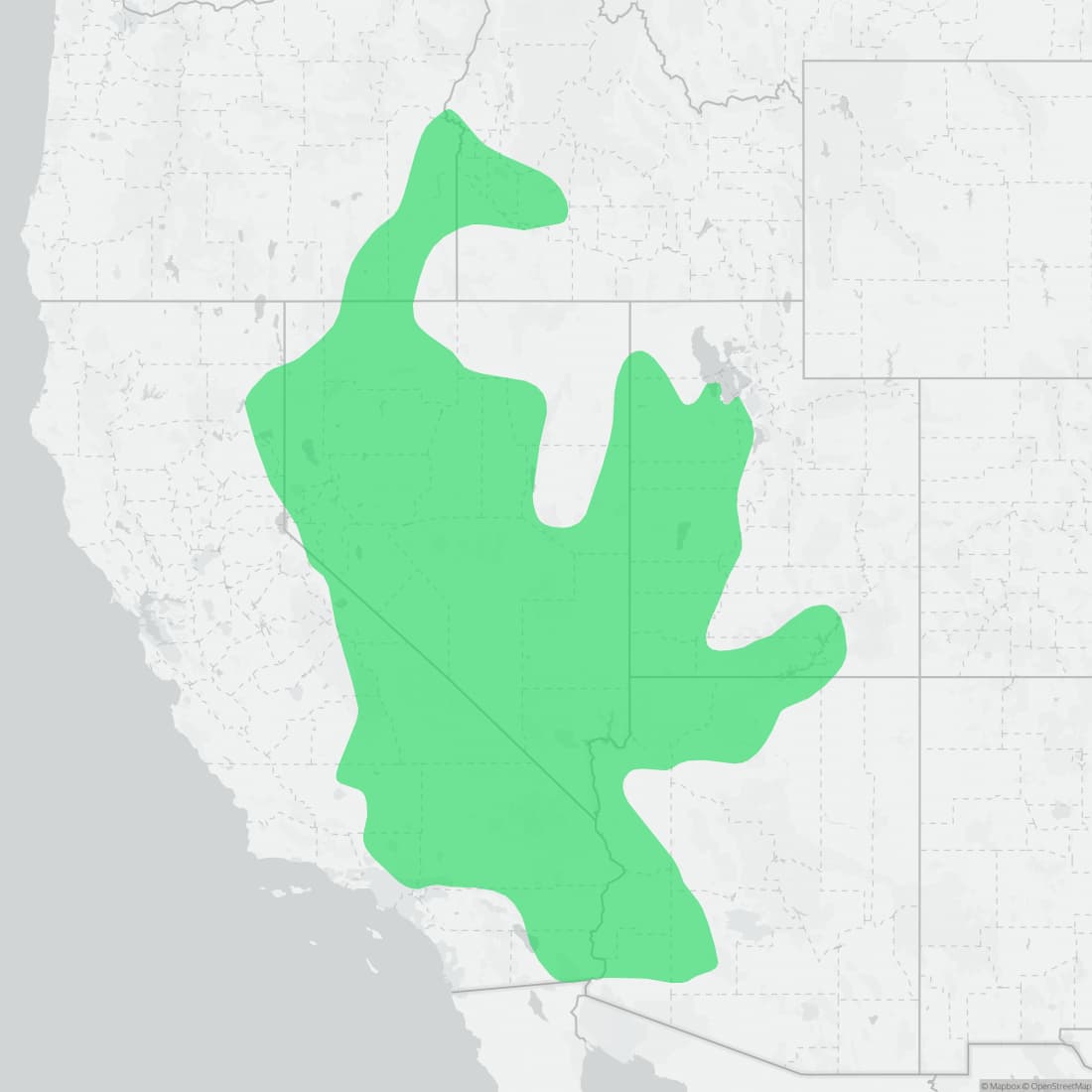
Approximate range. © Mapbox © OpenStreetMap