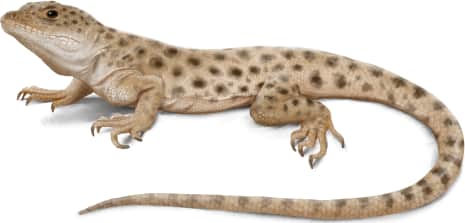
Long-nosed Leopard Lizard
Gambelia wislizenii
Males have an average snout vent length of 12 cm (4.8 in) while the female has an average snout vent length of 15 cm (5.8 in). Undergoes two distinct color phases: the "…
How to identify
Males have an average snout vent length of 12 cm (4.8 in) while the female has an average snout vent length of 15 cm (5.8 in). Undergoes two distinct color phases: the "light phase" during which the base color is gray, yellow, or brown, and the "dark phase" during which the base color is brown and exhibits lighter blotches and bands. Belly is usually light; throat usually exhibits gray blotches. Young have rust-colored markings on back and red and yellow markings on thighs and under tail. Females lay eggs between May and June; on average, clutches range from 1-11 eggs.
Range
Western and south central United States and most of northern Mexico; starts as far west as Oregon and eastern and southern California and continues eastward through southern Idaho, Utah, western Colorado, Nevada, Arizona, New Mexico, and western Texas. Exists in most of northeastern and north central Mexico.
Habitat
Especially prefers desert areas with many rodent burrows and some ground vegetation. Avoids areas with dense vegetation that will prevent running. Although spends most of its time on the ground, some individuals can be found in bushes when threatened. Diet includes spiders, lizards, insects, small mammals, and some plant material.
Variations
During the breeding season, females have orange blotches underneath tail and on sides; males will exhibit red color on throat and body.
Similar species
Name and etymology
Genus
Gambelia
Honoring William Gambel.
Origin
Honors
Sources
- Baird, 1859. U.S. Mex. Bound. Surv., Vol. 2, Pt. 2, p. 7 ↗
Gambelia. Baird, 1859 - U.S. Mex. Bound. Surv., Vol. 2, Pt. 2, p. 7
Species epithet
wislizenii
Honoring Friedrich Adolph Wislizenus.
Origin
Honors
Sources
- (Baird and Girard, 1852). Proc. Acad. Nat. Sci. Philadelphia, Vol. 67, p. 69 ↗
Gambelia wislizenii. (Baird and Girard, 1852) - Proc. Acad. Nat. Sci. Philadelphia, Vol. 67, p. 69
Explore more names in the etymology index.
More illustrations
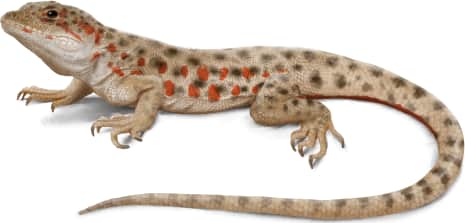
Female with breeding colors
At a glance
Range
Western and south central United States and most of northern Mexico; starts as far west as Oregon and eastern and southern Ca…
Habitat
Especially prefers desert areas with many rodent burrows and some ground vegetation. Avoids areas with dense vegetation that…
Guide
Reptiles and Amphibians of North America
Range map
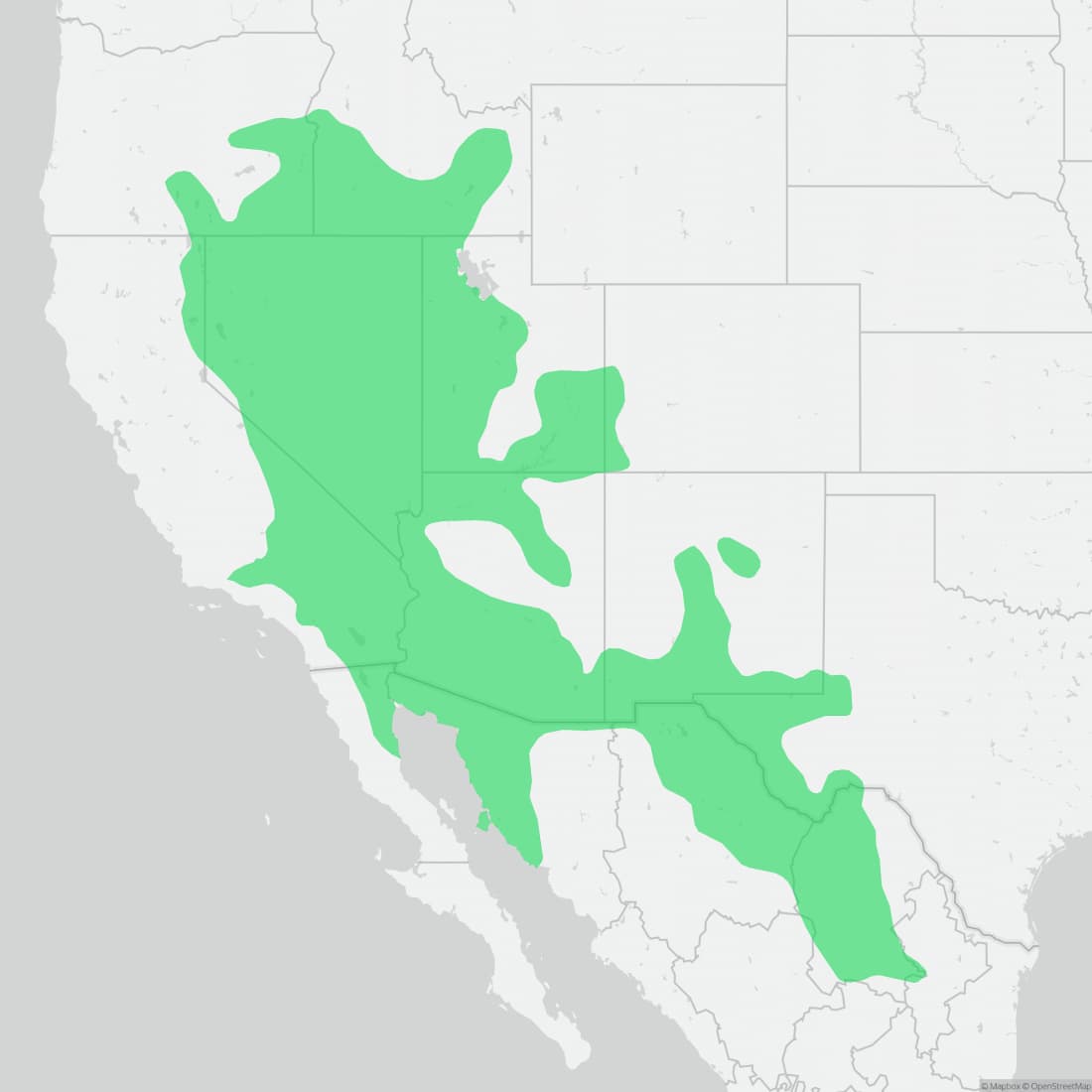
Approximate range. © Mapbox © OpenStreetMap