Wintu Shasta Salamander
Hydromantes wintu
Wintu Shasta Salamander is a relatively small but full-bodied salamander. It is able to develop and measure up to 11cm in total length. Although the entirety of the body…
How to identify
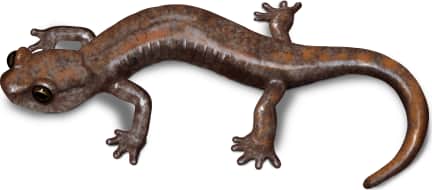
Wintu Shasta Salamander is a relatively small but full-bodied salamander. It is able to develop and measure up to 11cm in total length. Although the entirety of the body is flattened, it is not as flat as similar species and because of the back structure, the body appears elongated and block-shaped. The long and fleshy tongue can stick out up to 6cm from the tip of the mouth. The legs are fairly long and fold when clasped to the trunk. They have a short, narrowed, and edgeless tail. The feet are long, well-developed, and are webbed towards the base, hence its common name, Webbed-toed salamander. Generally, the base coloration ranges from sheen brown to gray with yellow or red markings above while the underside is usually gray.
Range
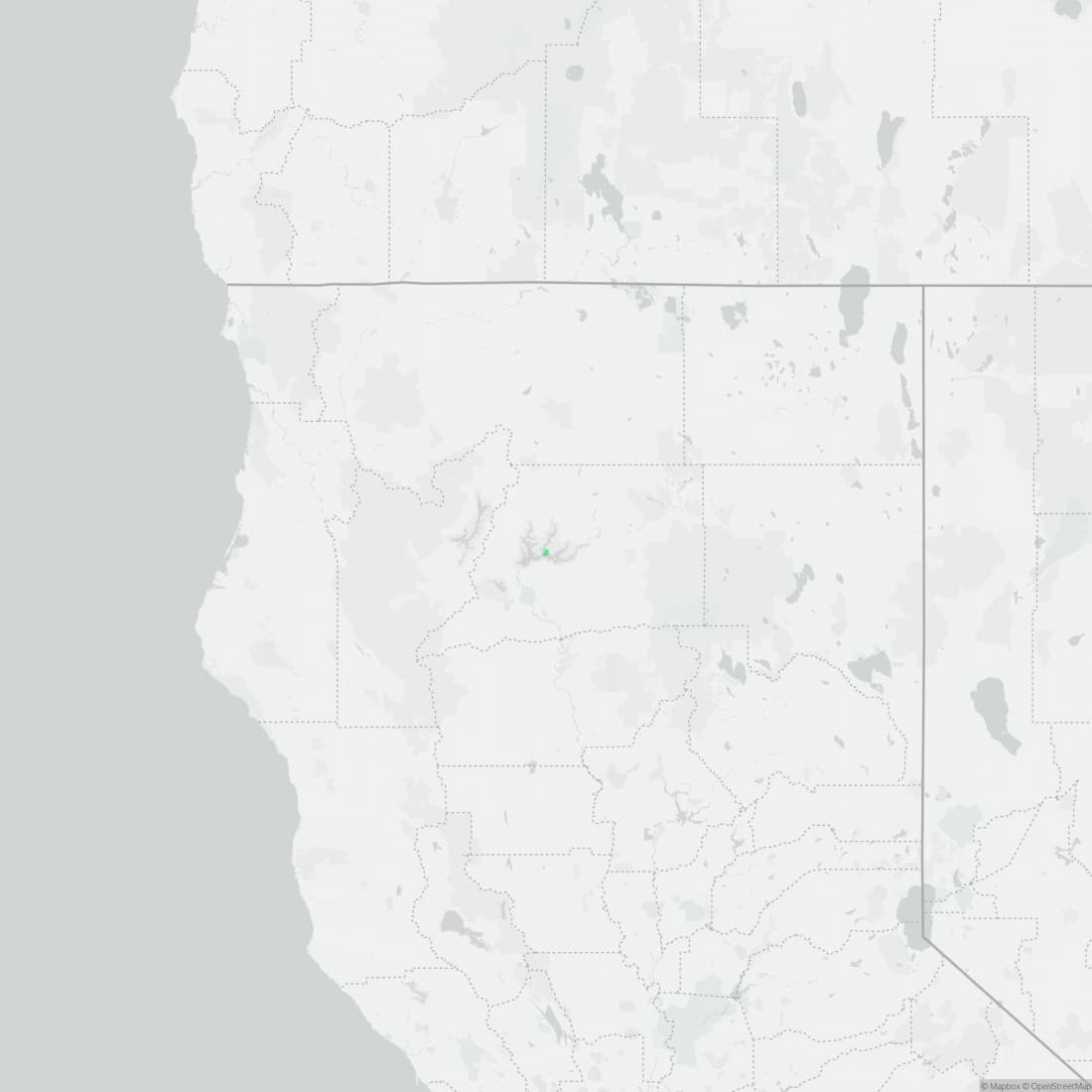
The Wintu Shasta Salamander is native to the United States; precisely, Shasta County in California.
Habitat
Wintu Shasta Salamanders are forest-dwelling creatures. They are in fact, diurnal and so spend quality time perching and climbing cliffs, walls, oaks but most specifically, live in damp caves and crevices. They are regarded as excellent climbers because of their strong ability to climb on slick and sheen surfaces. These salamanders are insectivores but also, feast on other small invertebrates. After regular mating sessions, the females lay and shelter eggs in damp crevices, after which the egg is hatched. Unlike relative species, as larvae, the Wintu Shasta Salamander does not brood nor live in water bodies. This salamander, although terrestrial, lives in moist areas basically because of its system of respiration whereby breathing is done through cells and the skin. Notably, they do not dwell in water but can thrive for a little period of time when they eventually find themselves in water. These animals communicate by lifting the head and tail, deliberately shrinking its body, discharging skin fluids, firmly rolling the body and tail, etc. especially as escape mechanisms.
Similar species
Samwel Shasta salamander (Hydromantes Samweli) The Samwel Salamander is one of the webbed-toed salamanders. It is a moderately-sized salamander with a body length of about 70mm. The head remains as broad but appears flatter compared to other species. The legs are fairly long and overlap on the block-shaped trunk when clasped together. The toes are sturdy and are uniquely webbed from the base. Notably, there are elongated teeth in male individuals that stick out of the mouth. It has a small and edgeless tail. Shasta Salamander (Hydromantes shastae) This is a fairly large salamander that develops slightly beyond 70mm in total length. The Shasta Salamander, like relative species, are webbed-toed and have unusually long tongues. Its base coloration varies from green to gray, tan, beige, or red on the dorsal parts while the chest and abdomen appear yellow-orange with white blotches. Amazingly, juveniles greatly resemble the adult species. The Limestone Salamander (Hydromantes brunus) This is the largest of all webbed-toed salamanders. Typically, it measures up to 7.5cm snout to vent length with its short and edgeless tail. It has a flattened head, a broad and rectangular trunk and a tail shorter than the whole body. It is the only uniformly colored specie of its genus such that while the matured individuals are brownish and pale, the young individuals appear yellow or green in color.
Name and etymology
Genus
Hydromantes
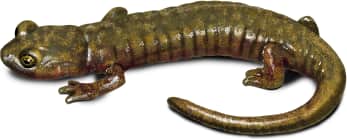
Greek for water (hydro) prophet (mantis).
Origin
Sources
- Gistel, 1848. Naturgesch. Thierr., p. xi
Hydromantes. Gistel, 1848 - Naturgesch. Thierr., p. xi
Species epithet
wintu
Referencing the Wintu indigenous tribe.
Origin
Sources
- Wikipedia: Hydromantes wintu ↗
“Hydromantes wintu.” Wikipedia. https://en.wikipedia.org/wiki/Wintu_Shasta_salamander
Explore more names in the etymology index.
At a glance
Range
The Wintu Shasta Salamander is native to the United States; precisely, Shasta County in California.
Habitat
Wintu Shasta Salamanders are forest-dwelling creatures. They are in fact, diurnal and so spend quality time perching and clim…
Guide
Reptiles and Amphibians of North America
Range map
Approximate range. © Mapbox © OpenStreetMap