Limestone Salamander
Hydromantes brunus
This pudgy salamander with well-developed legs has a compact body, relatively short tail, and a wide, flat head. It has 13 costal grooves and partially webbed toes. It av…
How to identify
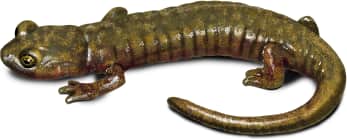
This pudgy salamander with well-developed legs has a compact body, relatively short tail, and a wide, flat head. It has 13 costal grooves and partially webbed toes. It averages 6.5-7 cm in snout to vent length. Juveniles start out greenish yellow and they transition to dark brown with age. Its ventrum is light grey.
Range
Tiny range on the western slopes of the Sierra Nevada Mountains in central California; specifically in the Merced River Canyon.
Habitat
This species lives on steep canyon slopes in moist areas with mossy limestone, chaparral, and rocks and logs for hiding. It will take shelter in caves and rock crevices.
Variations
Males have oval mental glands.
Similar species
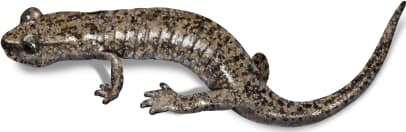
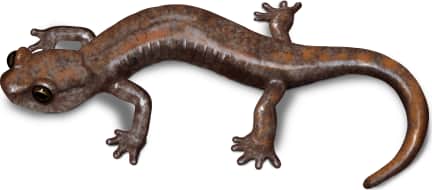
Similar morphology to the Mount Lyell salamander (*Hydromantes platycephalus*), which may overlap in range. It also looks a lot like the Shasta salamander (*Hydromantes shastae*) which is found in northern California.
Name and etymology
Genus
Hydromantes
Greek for water (hydro) prophet (mantis).
Origin
Sources
- Gistel, 1848. Naturgesch. Thierr., p. xi
Hydromantes. Gistel, 1848 - Naturgesch. Thierr., p. xi
Species epithet
brunus
Latin for brown.
Origin
Sources
- Gorman, 1954. Herpetologica, Vol. 10, p. 153
Hydromantes brunus. Gorman, 1954 - Herpetologica, Vol. 10, p. 153
Explore more names in the etymology index.
At a glance
Range
Tiny range on the western slopes of the Sierra Nevada Mountains in central California; specifically in the Merced River Canyo…
Habitat
This species lives on steep canyon slopes in moist areas with mossy limestone, chaparral, and rocks and logs for hiding. It w…
Guide
Reptiles and Amphibians of North America
Range map
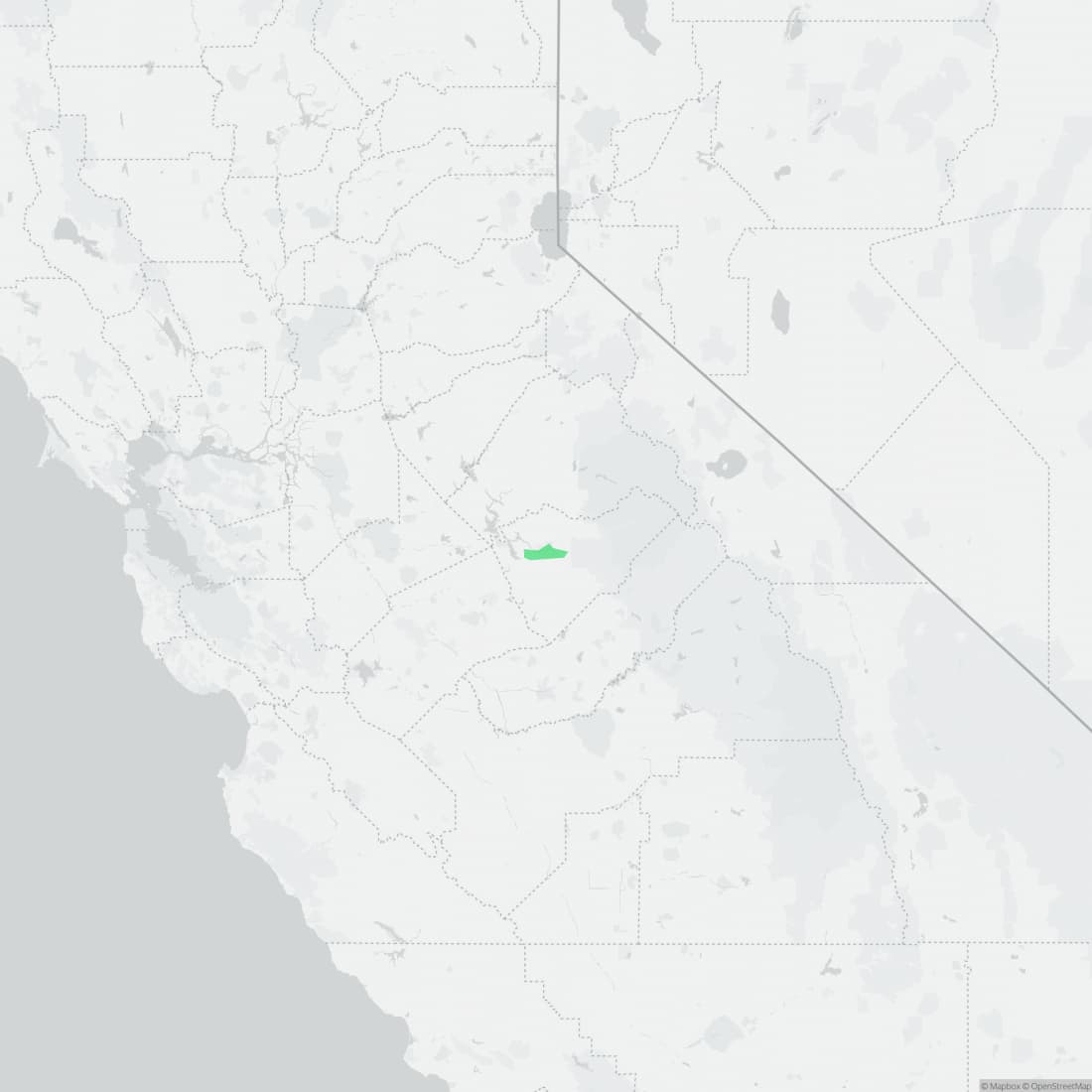
Approximate range. © Mapbox © OpenStreetMap