Black Spiny-tailed Iguana
Ctenosaura similis
A moderately large species of iguana named for the even rows of spiny keeled scales on its tail. It averages 3-4 feet in total length. It has a single row of elongated po…
How to identify
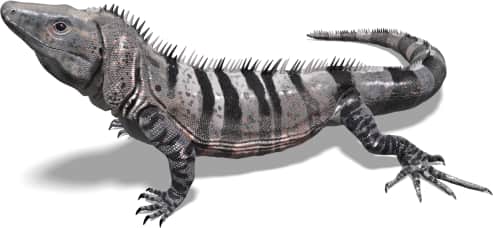
A moderately large species of iguana named for the even rows of spiny keeled scales on its tail. It averages 3-4 feet in total length. It has a single row of elongated pointy scales down its spine. Adults are primarily light grey with black bands on the body. They are sexually dimorphic. Males are heavier-bodied and longer, have large jowls, and their dorsal spikes are much longer. Breeding males also develop orange, blue, and pink coloration on their head, throat, and jowls. Females are usually dull grey-brown with little to no banding.
Range
Native to southern Mexico and Central America, but introduced populations are established in coastal southern Florida.
Habitat
They love to climb and prefer rocky habitats with lots of trees and sun. They can be found in savannahs, coastal lagoons, beaches, farmland, marshes, and urban areas.
Variations
Pattern of banding varies greatly between individuals. Some have distinct bands while others are more blotchy. Some have many bands, while others have few.
Similar species
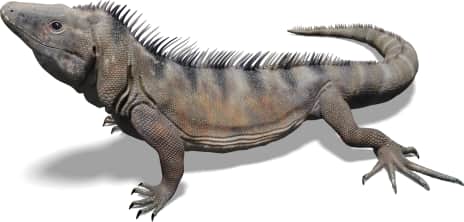
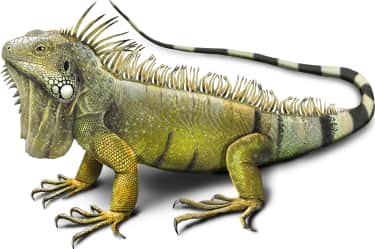
In the United States, this species is most similar to the western spiny-tailed iguana (*Ctenosaura pectinata*) which is also introduced. It could also be confused with the non-native green iguana (*Iguana iguana*).
Name and etymology
Genus
Ctenosaura
Greek for comb (ctenos) lizard (saura), refereing to the comblike spines on its back and tail.
Origin
Sources
- Wikipedia: Ctenosaura ↗
“Ctenosaura.” Wikipedia. https://en.wikipedia.org/wiki/Ctenosaura
Species epithet
similis
Latin for similar to.
Origin
Sources
- Wikipedia: Ctenosaura similis ↗
“Ctenosaura similis.” Wikipedia. https://en.wikipedia.org/wiki/Ctenosaura_similis
Explore more names in the etymology index.
At a glance
Range
Native to southern Mexico and Central America, but introduced populations are established in coastal southern Florida.
Habitat
They love to climb and prefer rocky habitats with lots of trees and sun. They can be found in savannahs, coastal lagoons, bea…
Guide
Reptiles and Amphibians of North America
Range map
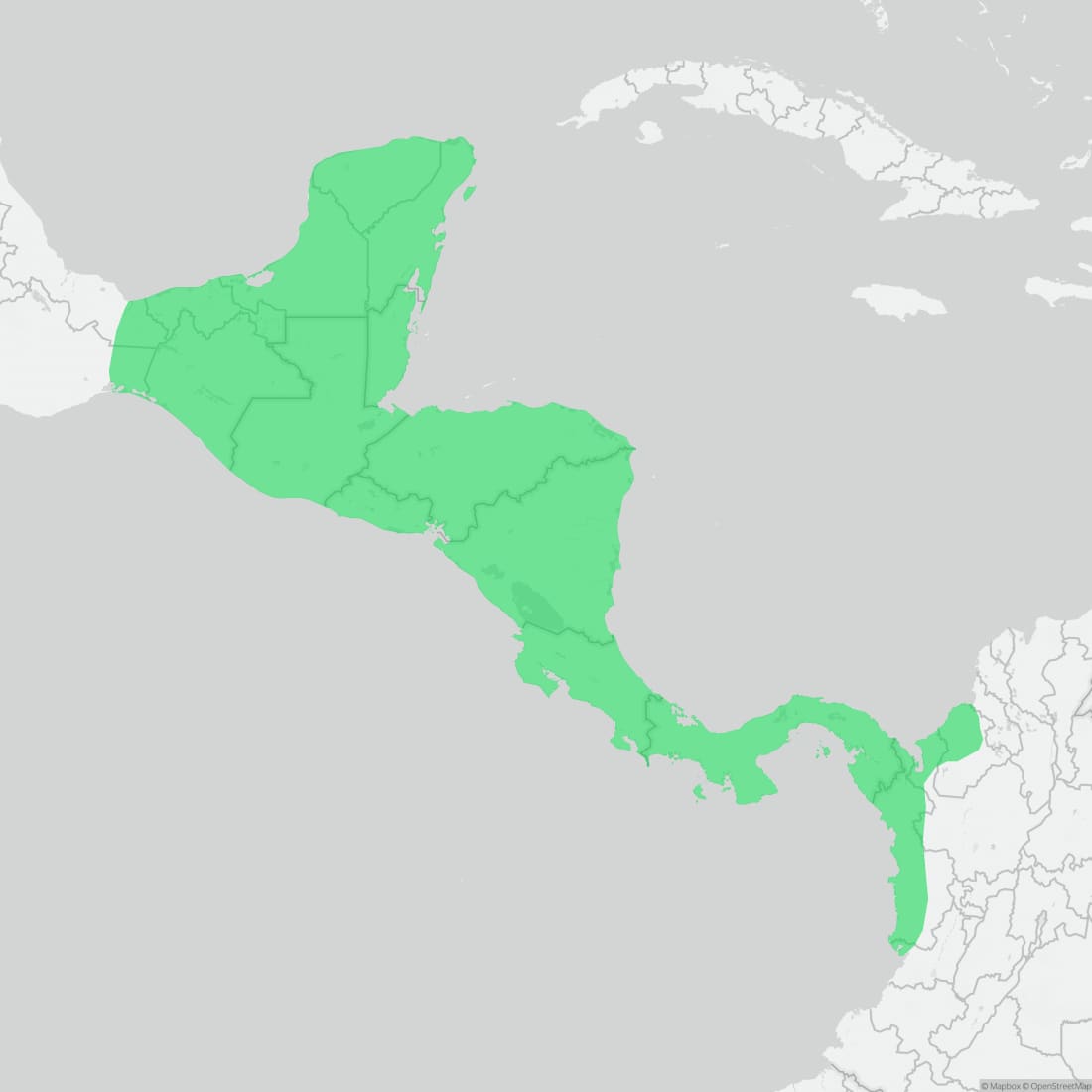
Approximate range. © Mapbox © OpenStreetMap