Western Spiny-tailed Iguana
Ctenosaura pectinata
This species is one of the largest of its genus, and can reach 4.3 feet in total length, with males being slightly larger than females. It is named for the bands of sharp…
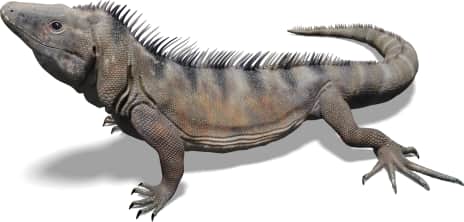
How to identify
This species is one of the largest of its genus, and can reach 4.3 feet in total length, with males being slightly larger than females. It is named for the bands of sharply keeled scales on its tail. The rest of its body has rough granular scales. Adults are primarily dull dark grey with some patchy or speckly tan markings. Hatchlings are bright green and they slowly transition to dark grey with age. Older juveniles are a banded mixture of green and grey. It has a row of spiked scales down its spine. It has a narrow, elongated head which is somewhat flat. They do not develop large jowls like the green iguana, but they do have folds of excess skin on their sides.
Range
Native to western and southern Mexico, but introduced populations are established in Brownsville, Texas, and south Florida, near Miami.
Habitat
These iguanas are proficient climbers and they tend to live in social groups, often in urban environments. They prefer large rocky areas with plenty of crevices, and surrounding trees to climb. They will frequently be seen on rooftops or rock walls.
Variations
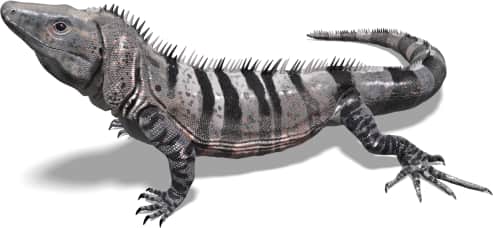
Pattern of tan markings varies greatly and is quite random, or completely absent.
Similar species
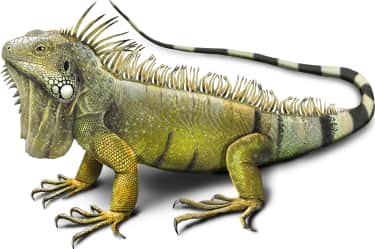
It is most similar to other species of spiny-tailed iguana found only in Mexico. In the US, it could be confused with the Gray's spiny-tailed iguana (*Ctenosaura similis*) which has also been introduced to south Florida. Juveniles could be easily confused with the green iguana (*Iguana iguana*), but adults look quite different.
Name and etymology
Genus
Ctenosaura
Greek for comb (ctenos) lizard (saura), refereing to the comblike spines on its back and tail.
Origin
Sources
- Wikipedia: Ctenosaura ↗
“Ctenosaura.” Wikipedia. https://en.wikipedia.org/wiki/Ctenosaura
Species epithet
pectinata
Latin for combed.
Origin
Sources
- Wikipedia: Ctenosaura pectinata ↗
“Ctenosaura pectinata.” Wikipedia. https://en.wikipedia.org/wiki/Ctenosaura_pectinata
Explore more names in the etymology index.
At a glance
Range
Native to western and southern Mexico, but introduced populations are established in Brownsville, Texas, and south Florida, n…
Habitat
These iguanas are proficient climbers and they tend to live in social groups, often in urban environments. They prefer large…
Guide
Reptiles and Amphibians of North America
Range map
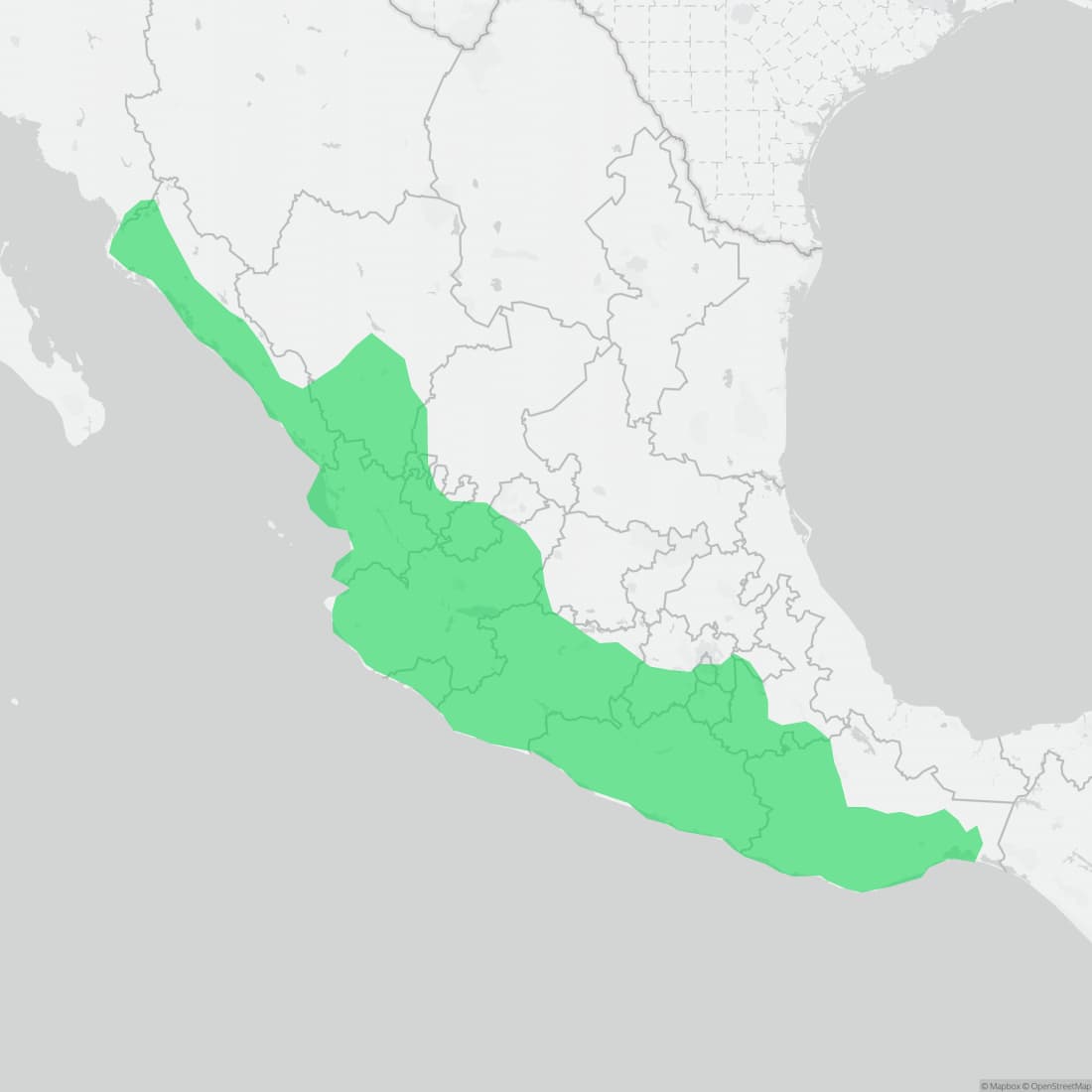
Approximate range. © Mapbox © OpenStreetMap