
Oklahoma Salamander
Eurycea tynerensis
This species of salamander is often neotenic, but sometimes metamorphosizes into adult, terrestrial form. Little is known about this species, but it has been measured at…
How to identify
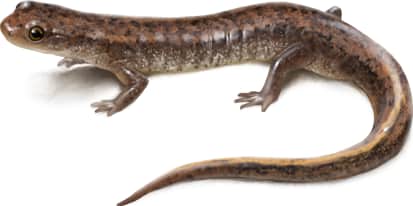
This species of salamander is often neotenic, but sometimes metamorphosizes into adult, terrestrial form. Little is known about this species, but it has been measured at 2.6 cm in snout to vent length. It has a slender body, scrawny legs, and a laterally compressed tail. It is primarily grey-brown with a jagged-edged lighter dorsal stripe and white frosting on its sides. It usually has a light yellowish stripe on the top of its tail.
Range
Northeastern Oklahoma, northwestern Arkansas, and southwestern Missouri.
Habitat
Neotenic individuals remain entirely aquatic and can be found hiding amongst coarse gravel or rocks at the bottoms of clear, cool, flowing streams or small springs where invertebrate prey is plentiful. Fully metamorphosized adults often live a subterranean lifestyle, but can be found in moist leaf litter and detritus over muddy ground or seepage areas.
Variations
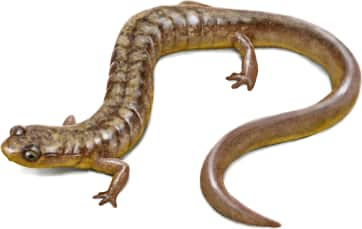
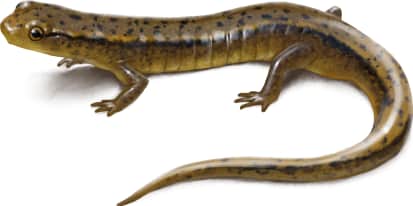
Neotenic individuals retain external gills and have a more flattened, shovel-shaped head.
Similar species
Most similar to the many-ribbed salamander (*Eurycea multiplicata*) or northern two-lined salamander (*Eurycea bislineata*).
Name and etymology
Genus
Eurycea
Probably honoring Eurydice the wife of Orpheus in Greek mythology. Although Rafinesque, who named the genus, only wrote "mythological"
Origin
Honors
Sources
- Rafinesque, 1822. Kentucky Gazette, Lexington, N. S., Vol. 1, No. 9, Feb. 28, p. 3, column 6
Eurycea. Rafinesque, 1822 - Kentucky Gazette, Lexington, N. S., Vol. 1, No. 9, Feb. 28, p. 3, column 6
Species epithet
tynerensis
Belonging to Tyner Creek, Oklahoma.
Origin
Sources
- Moore and Hughes, 1939. Amer. Midland Nat., Vol. 22, No. 3, p. 697 ↗
Eurycea tynerensis. Moore and Hughes, 1939 - Amer. Midland Nat., Vol. 22, No. 3, p. 697
Explore more names in the etymology index.
At a glance
Range
Northeastern Oklahoma, northwestern Arkansas, and southwestern Missouri.
Habitat
Neotenic individuals remain entirely aquatic and can be found hiding amongst coarse gravel or rocks at the bottoms of clear,…
Guide
Reptiles and Amphibians of North America
Range map
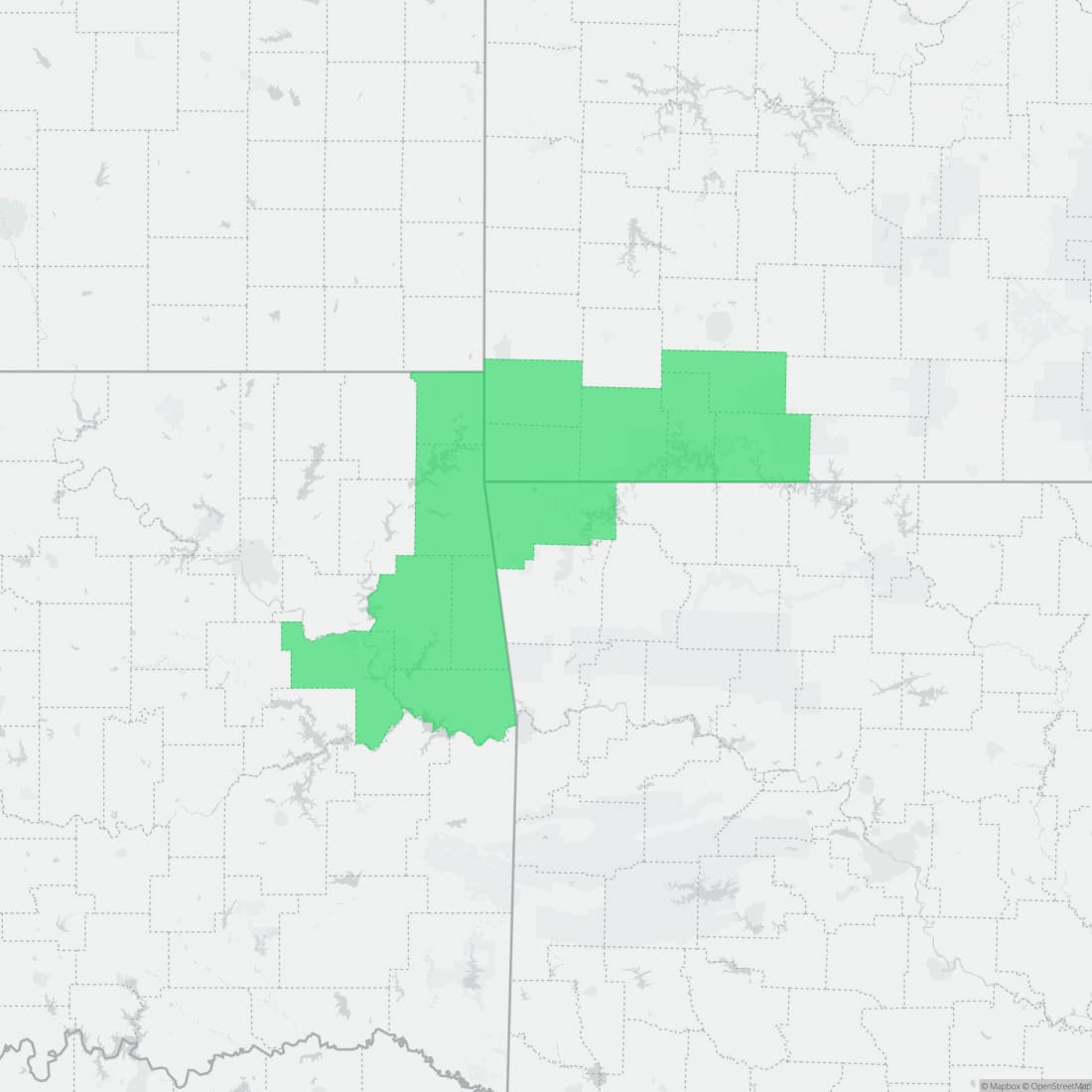
Approximate range. © Mapbox © OpenStreetMap